Cherry Audio Ensoniq ESQ-1 – An Impressive Vintage Hybrid Makes an Official Return

 4,5 / 5,0 |

Once again, Cherry Audio resurrect a left-field vintage classic with official approval. Can the Ensoniq ESQ-1 deliver the magic of the original hardware?
The Cherry Audio production line does not know when to stop. Nor, it seems, do they show any sign of ending a winning streak of releases that stretches back a good number of years! This time, in a unique and prestigious collaboration, they enter the world of Ensoniq, a brand born out of the 1980s home computer revolution, which went on to arm the less well-heeled musician with powerful musical instruments.
Cherry Audio Ensoniq ESQ-1 – Review
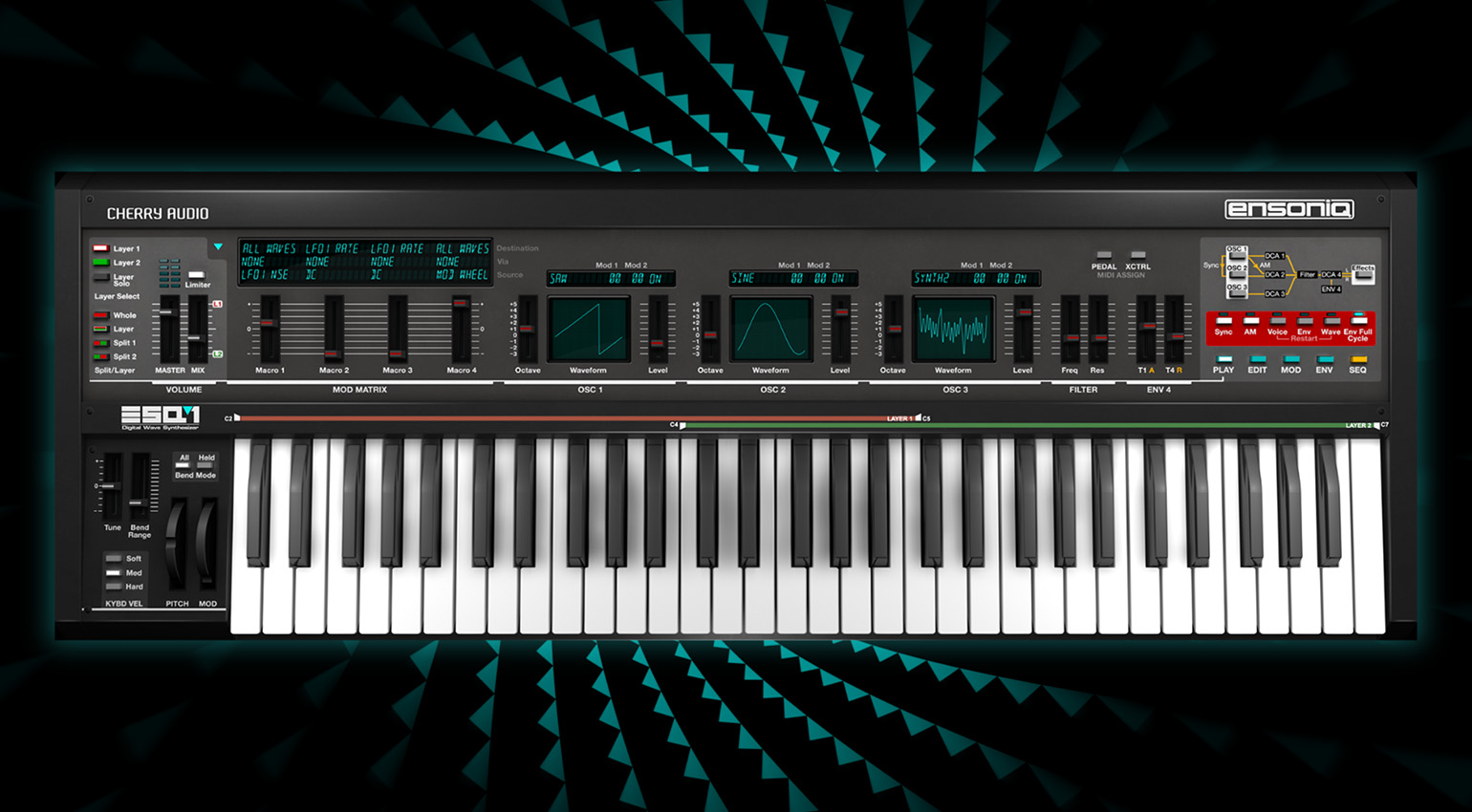
Cherry Audio Ensoniq ESQ-1 Key Highlights
- Up to 64 note polyphony across dual layers
- MPE compatibility
- Faithful recreation of the original hardware
- Import and export of original hardware SysEx
- Powerful FX section
- Deep modulation matrix
A Potted History
For those of you who weren’t around in the mid 1980s, or who are too young to remember, the world of synthesizers was a hugely exciting place. We had entered the decade with a barrage of new synth-based musical acts, comprised of people making music with the relics of the previous decade.
Soon, however, we began to see manufacturers rushing to develop new and exciting tools. 1983 saw the dawn of digital with the DX7, and all of a sudden, we had the sound that matched the visual aesthetic of the decade; sharp, clean and very digital.
At the same time, there was a revolution in home computing. What was once the sole domain of the wealthy and educational establishments was fast becoming the must-have piece of technology for the average home. These machines promised much, and musicians were a target market.
From Commodore to Ensoniq
By far the most popular brand in this field was Commodore. Their Commodore 64 dominated the home market, helped greatly by its use of the MOS 6581 SID chip, designed by Bob Yannes. Primitive by today’s standards, this three-channel sound synthesis chip gave the C64 a huge sonic edge over its competitors.
Disillusioned by the direction that Commodore was heading, a group of engineers left the company, including the aforementioned Bob Yannes. This team of very clever people began working on synthesizers and just three short years after leaving Commodore, their new company, Ensoniq, released its first synthesizer, the Mirage.
The Ensoniq Mirage was jumping on the sampling bandwagon started five years previously by Fairlight. By now, the cost of RAM, processors and the technology overall, had begun to drop significantly, and the Ensoniq team had developed a low-cost way for the average musician on the street to take advantage of this burgeoning synthesis technology.
The Birth of the Ensoniq ESQ-1
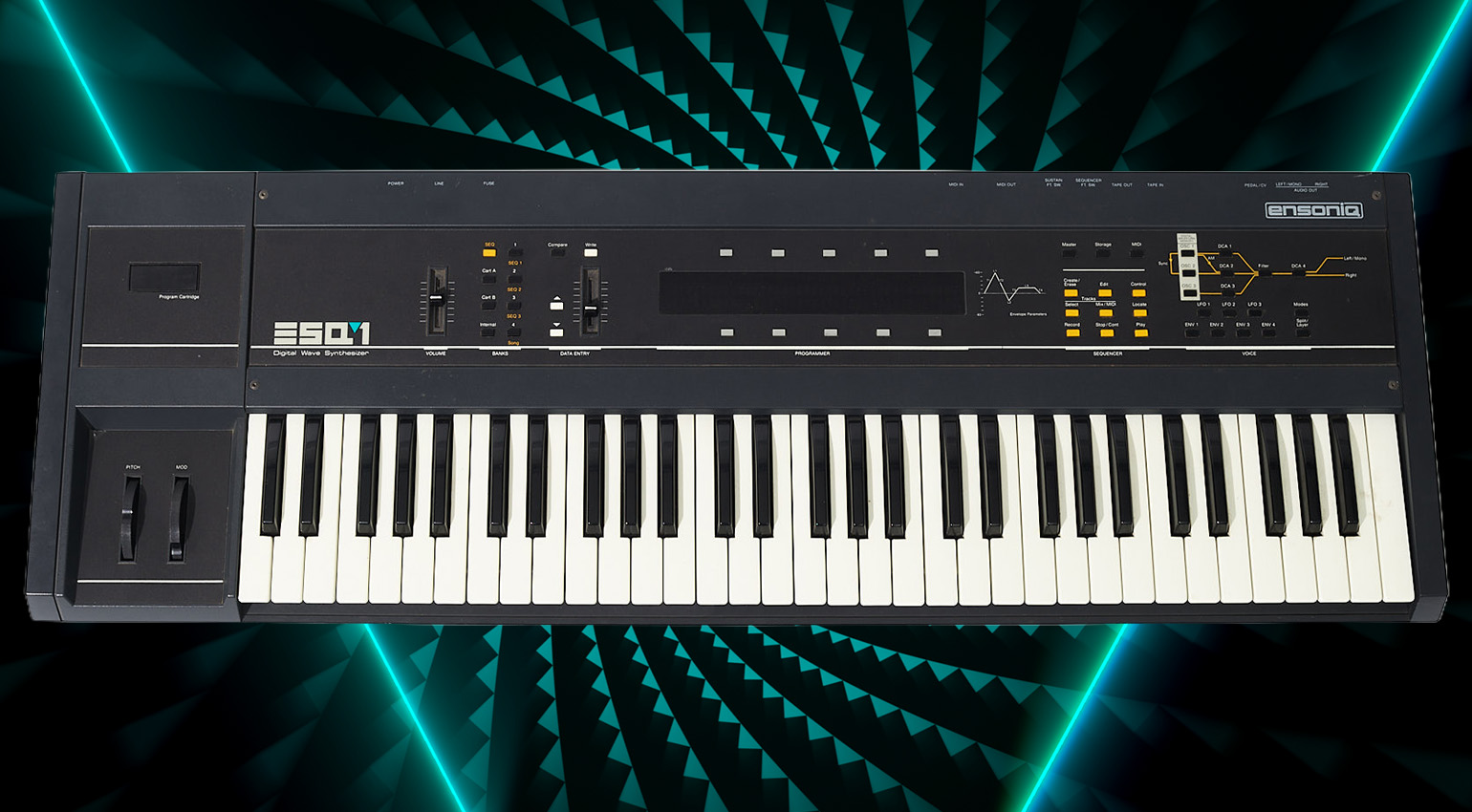
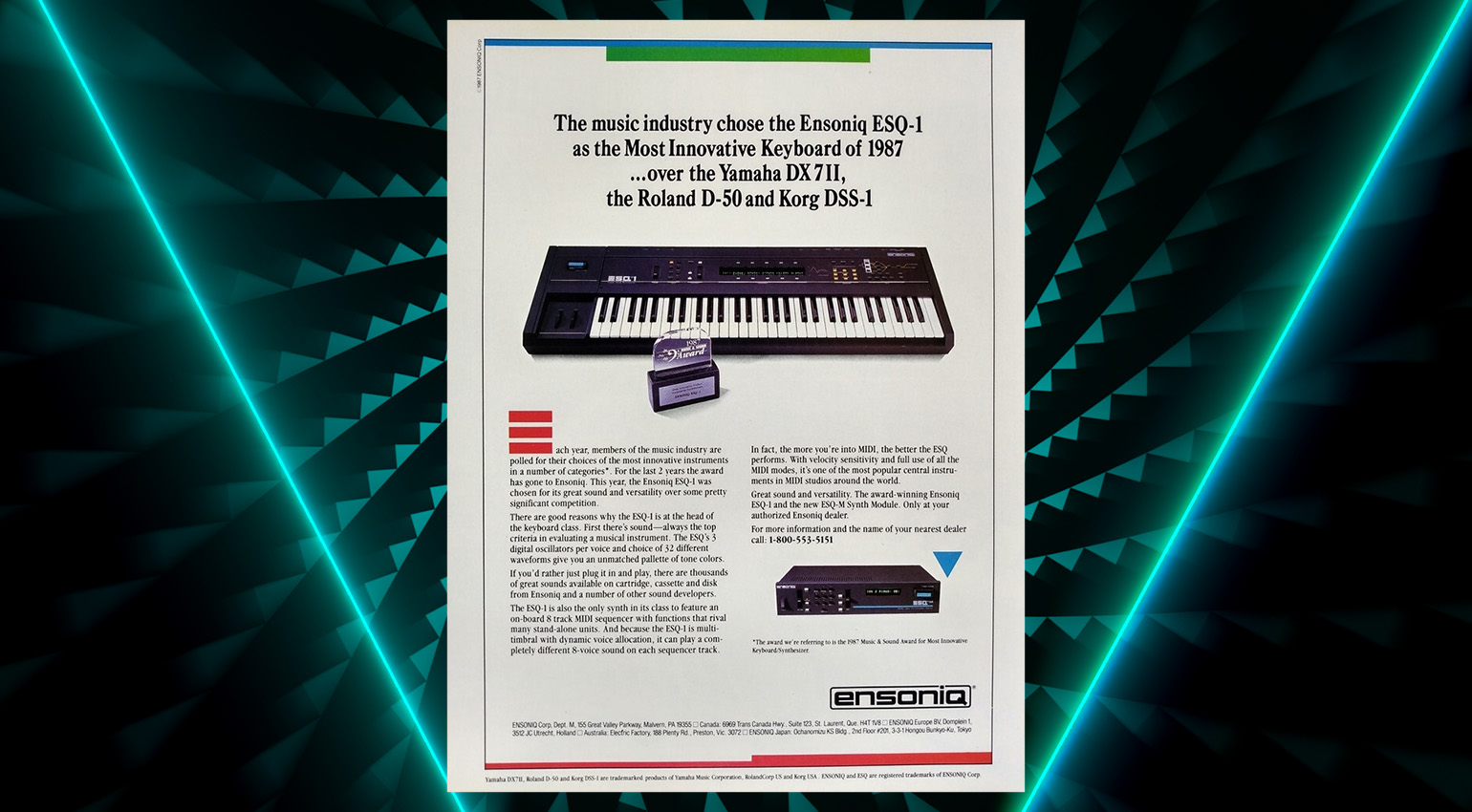
Buoyed by the success of the Mirage, Ensoniq set about creating a new digital synth with the same, affordable ethos behind it. This became the Ensoniq ESQ-1, and it went about creating its sound in a different way, using in-house designed digital oscillators and analog CEM 3379 low-pass filters.
The oscillators, handled by the Ensoniq 5503 chip, which generated three of each for the ESQ-1’s eight voices, used 32 single-cycle sampled waveforms before passing through the CEM filters. It also featured a built-in multitrack MIDI sequencer that delivered a capacity of 24,000 notes spread over 10 songs. It could be said that the ESQ-1 was a workstation well before the phrase was coined a few years later!
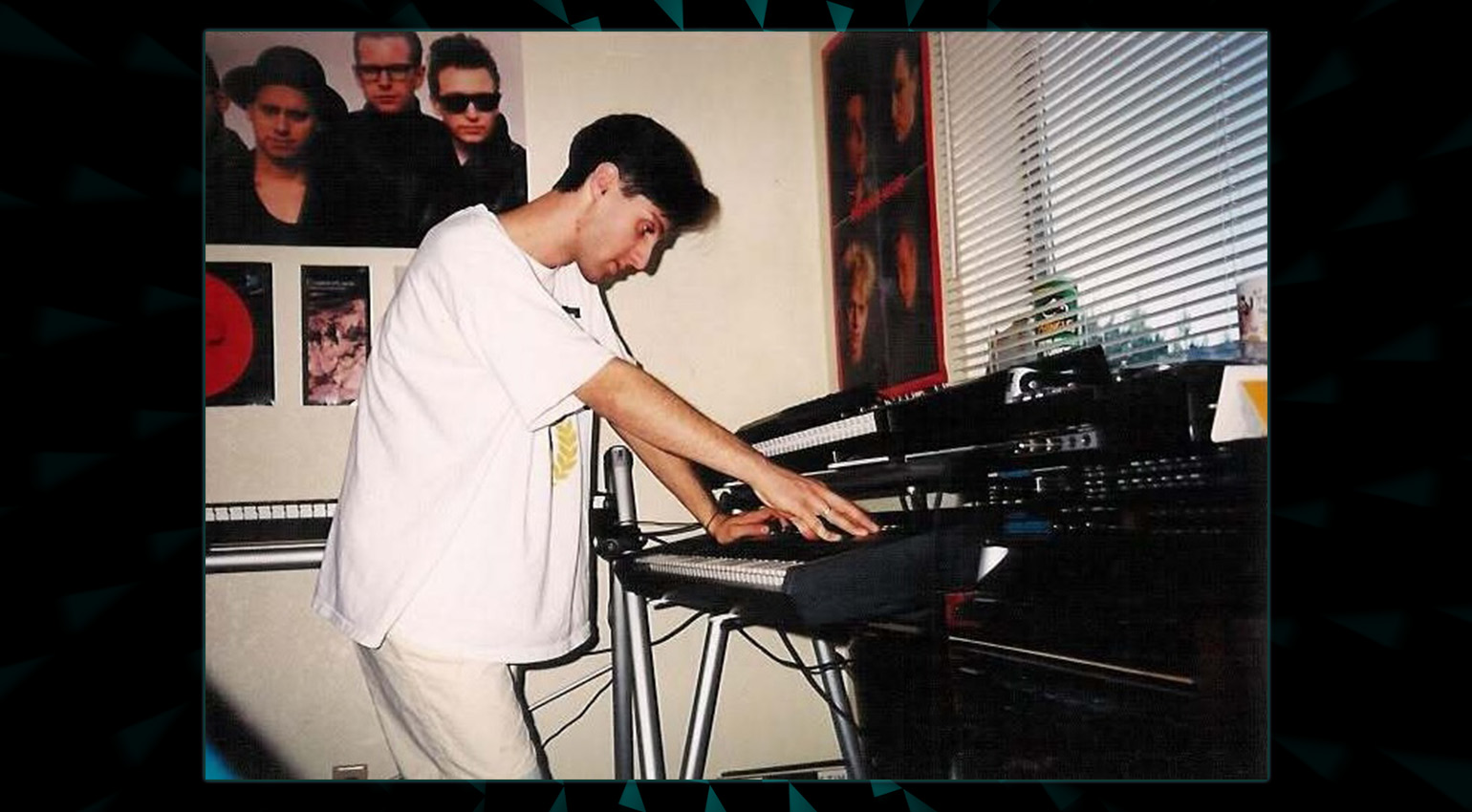
Like the Mirage before it, the Ensoniq ESQ-1 sold incredibly well, priced at around the same point as a DX7 was just three years earlier. It found a home in the studios and bedrooms of amateur and professional musicians alike, favouring it for its rough-around-the-edges sound, its price or both!
Ensoniq went on to create a bunch of now-iconic instruments that, to this day, maintain a cult following amongst those who know what they are capable of. The Ensoniq brand was eventually absorbed into the Creative Technology business in the late 1990s, and that, as they say, was that.
The Cherry Audio Ensoniq ESQ-1
However, in recent years, a number of developers have sought to resurrect that sound, but none have been officially sanctioned, nor have they been able to use the still-copyrighted sampled waveforms. Until now! Cherry Audio have acquired the licence to use the original 32 ESQ-1 waveforms and has produced the first new instrument to bear the Ensoniq brand name since 2002’s Ensoniq Halo!
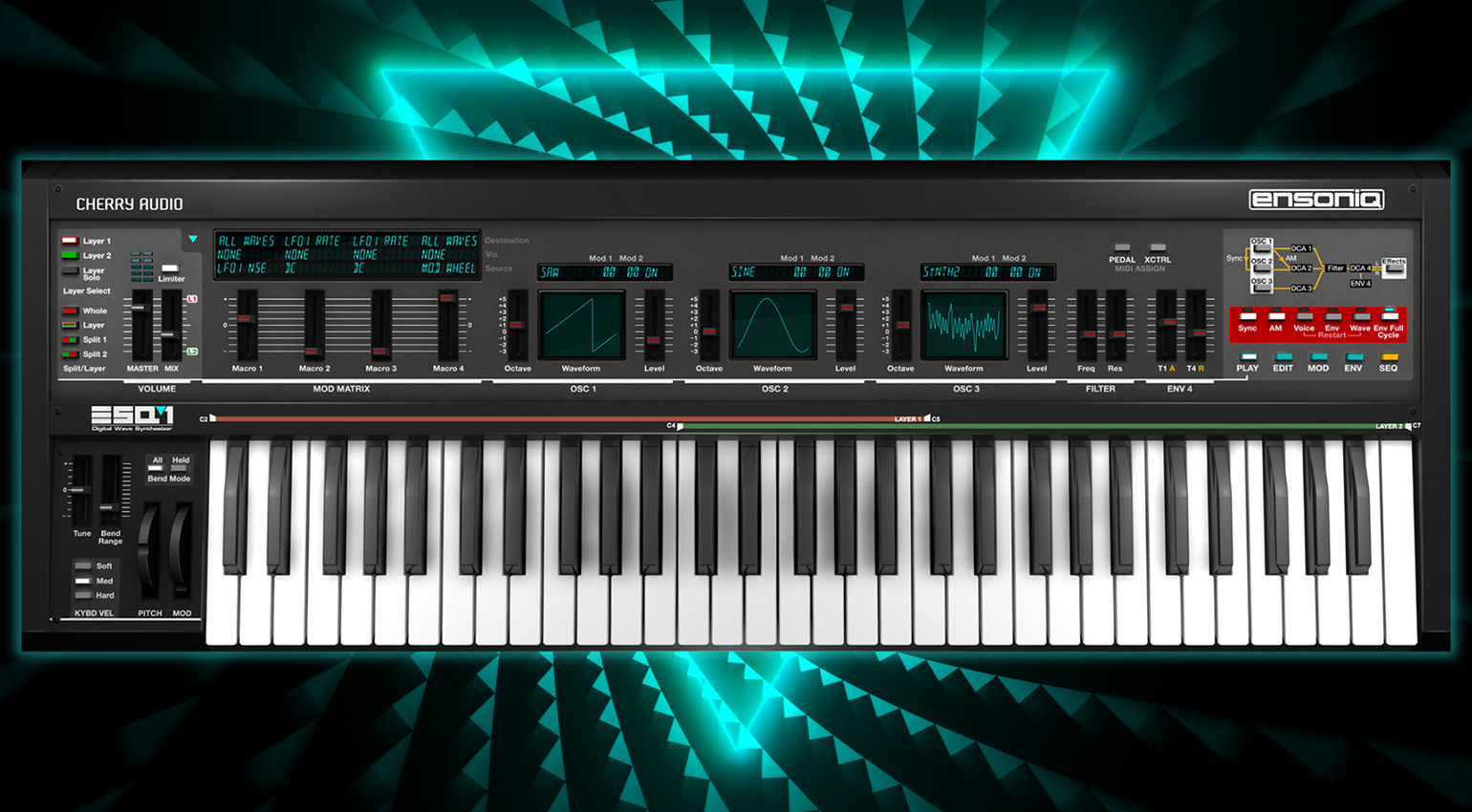
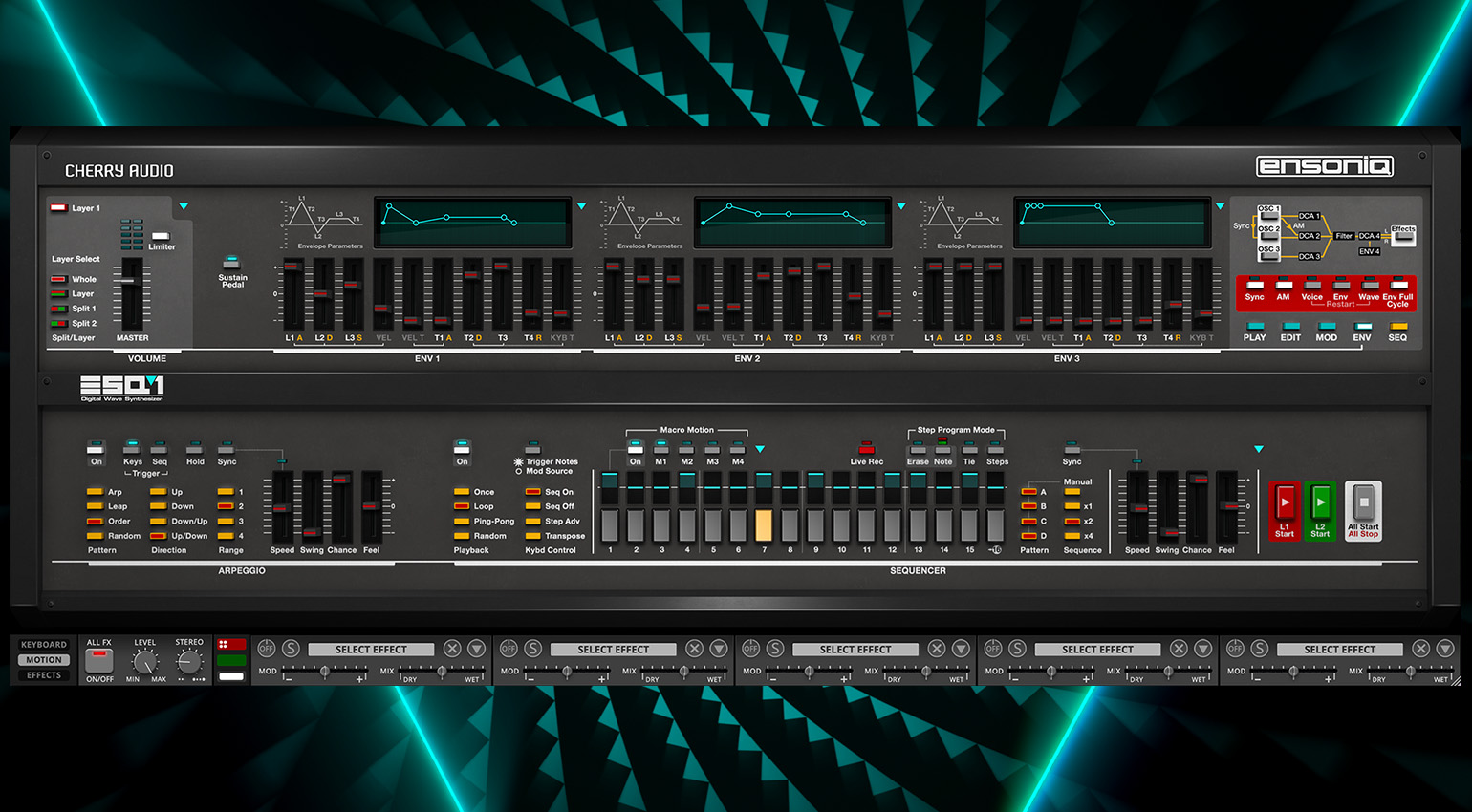
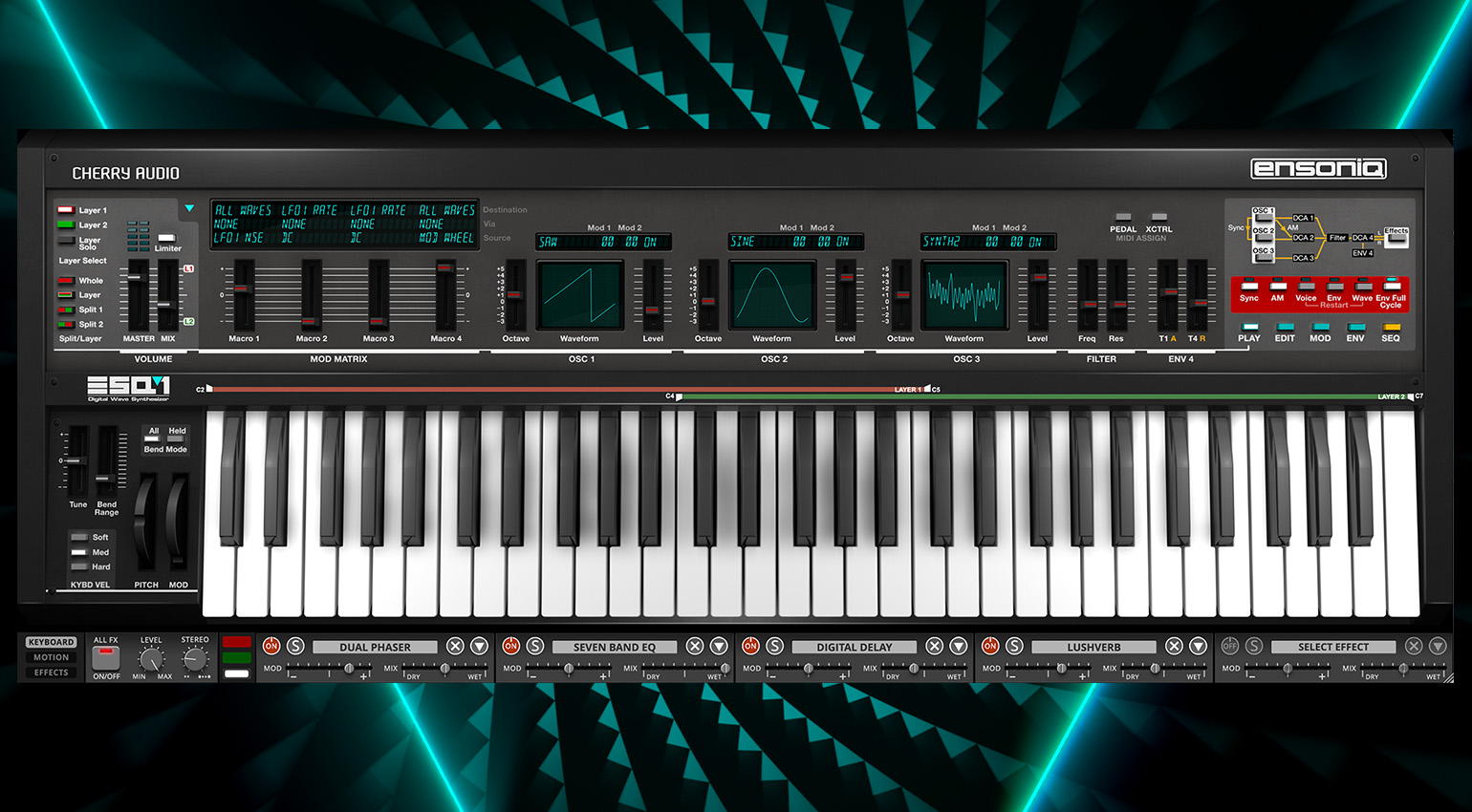
As you would expect from a Cherry Audio recreation, the Ensoniq ESQ-1 plugin faithfully replicates the original hardware, using those original waveforms as well as recreating the CEM 3379 filters, DCAs, envelopes, LFOs and more. As well as those original filters, Cherry Audio have added a 2-pole 12db/Oct filter with low, high and band pass settings.
The Ensoniq ESQ-1 is so much like the original that it also supports drag and drop importing of individual patches and banks from ESQ-1 hardware SysEx files. This functionality also allows for exporting patches from the plugin to the original hardware!
Improving and Extending the ESQ-1
But the real magic comes in all the improvements, enhancements and new features that can be added by a hugely competent company like Cherry Audio in today’s world of software synthesizer plugins. Most notably, the interface has been redesigned to deliver a much more pleasant programming experience, whilst maintaining the look and feel of the original.
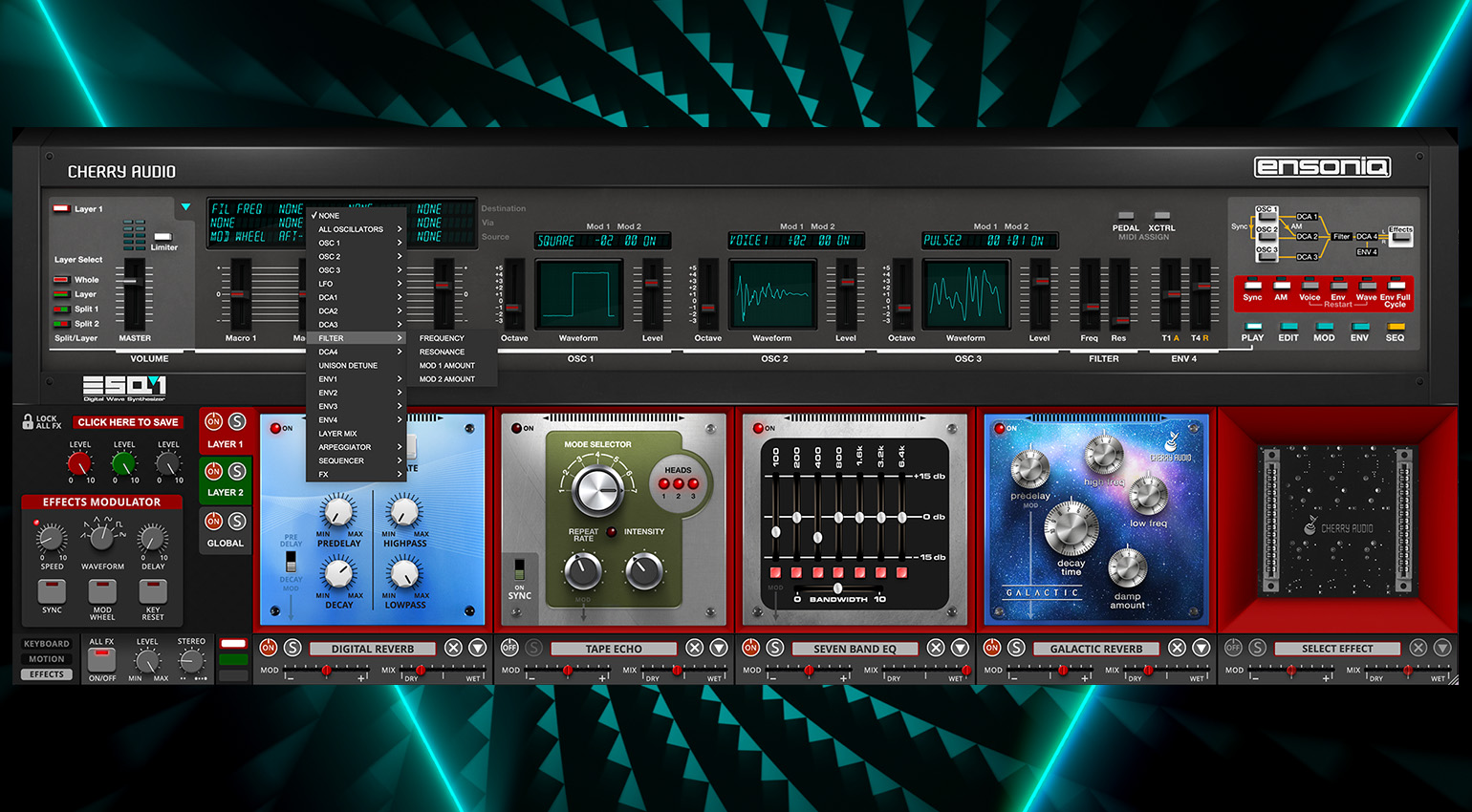
The Cherry Audio version of the Ensoniq ESQ-1 now features a dual-layer architecture with each layer supporting 32-note polyphony! This allows for much more powerful multitimbral splitting and layering, far exceeding what the original ESQ-1 could do! And then there’s the now customary suite of excellent and hugely useful effects that Cherry Audio now provide with all of their synths.
Performance Tools and MPE
There’s an arpeggiator and a 16×4 programmable polyphonic sequencer, featuring humanise settings and macro motions for patterns, further extending the capabilities of the original ESQ-1. For those wishing to delve into modulating within the ESQ-1, there’s a click-to-assign mod matrix too.
Fans of MPE will be extremely delighted to see full MPE support within the ESQ-1, which is entirely appropriate given that Ensoniq were one of the few companies still advocating for polyphonic aftertouch in an era that mostly shunned such things.
In Conclusion
Overall, the Cherry Audio Ensoniq ESQ-1 perfectly captures the looks, sound and feel of the original hardware, whilst at the same time delivering new and exciting possibilities through such things as enhanced polyphony, MPE and powerful modulation options.
The Ensoniq range of synths commands a lot of love and respect, especially from original users. You will often hear people my age say, “I wish I’d hung on to my Ensoniq <insert synth here>”. The appeal, as far as I am concerned anyway, is the rough diamond quality of their gear.
They took synthesis concepts that were being done by the likes of PPG and Fairlight, put their own spin on them, and made them for a price that regular people could afford. In doing so, they empowered a generation of musicians on tight budgets.
Ironically, they also found favour amongst many of the big names too, adding a level of kudos to their product line. Now, Cherry Audio are doing something similar. They’re taking instruments that once cost a lot of money, or were rare and delicate, and are bringing them back to life in the world of software, at prices everyone can afford.
Once again, Cherry Audio have bucked the trend and brought back a cult classic with enormous attention to detail, enabling those of us who are old enough to wallow in nostalgia, and those of you who aren’t, to discover something decidedly different and every bit as exciting as the more well-known classics.
Their take on the Ensoniq ESQ-1 is both faithful, respectful and yet completely at home in a 21st-century music-making world. The sound is there, the feel is there, and it looks cool too! If the ESQ-1 is a success, and I have every confidence it will be, I hope to see more of the Ensoniq portfolio delivered in plugin form!
Pros and Cons
Pros
- MPE Capability
- Two way SysEx compatibility with the original hardware
- 32 voices per layer
- Expanded and enhanced user interface
Cons
- No ability to import user waveforms
- ‘Buttons’ are slightly small
Price and Availability
Cherry Audio’s Ensoniq ESQ-1 is available to buy now for just $67.00/€69.00/£60.00*. There is also an extra bank of sounds, designed by James Dyson, called ‘Soniq Odysseys’, available for $9.99, which will add over 100 presets to the ESQ-1 and features 25 bonus MPE patches.


*Note: This article contains advertising links that help us pay for this site. Don’t worry: the price for you will always be the same! If you buy something through these links, we will receive a small commission. Thank you for your support!

This might also interest you
5 responses to “Cherry Audio Ensoniq ESQ-1 – An Impressive Vintage Hybrid Makes an Official Return”
You are currently viewing a placeholder content from Facebook. To access the actual content, click the button below. Please note that doing so will share data with third-party providers.
More InformationYou are currently viewing a placeholder content from Instagram. To access the actual content, click the button below. Please note that doing so will share data with third-party providers.
More InformationYou are currently viewing a placeholder content from X. To access the actual content, click the button below. Please note that doing so will share data with third-party providers.
More Information
I loved my ESQ-1 that I bought 2nd hand for £100 in the 90s, made loads of tunes with it until somebody stole it from my house along with a Roland XP50 I’d just started paying installments on and an original BassStation. Gutted 🙁
It is already available from Arturia. 🥱
No, Arturia do the SQ-80 V. The Cherry Audio Ensoniq ESQ-1 is the only one that uses the original waveforms, licensed directly from Creative Technology.
We all bought the ESQ1 because we were too broke to buy what we REALLY wanted: Jupiter 8’s. OBXa’s, PPG’s, Chroma’s etc.
I’m not sure that an emulation of what for most of us was a massive compromise forced on us by being too broke to afford what we actually wanted makes sense, when for basically the same money now we can afford what we would have bought back then if we weren’t broke!
Nostalgia ain’t what it used to be! 🤣
I’ve had the original since 1988; I didn’t spend a lot of time creating new patches, but I knew its sequencer inside out. It was the sequencing centre of my modest bedroom setup and I loved how it was possible to select different 8-track patterns on the fly for live performances, or experimenting with song arrangements (something I missed when I moved to Steinberg Pro 24 a couple of years later). I know the Cherry version doesn’t have the sequencer, but I can’t wait to buy this when I’m back!