Top 10 Mistakes Beginner Producers Make (And How to Avoid Them)
How to get around some of the pitfalls as a beginner in music production.

 4,1 / 5,0 |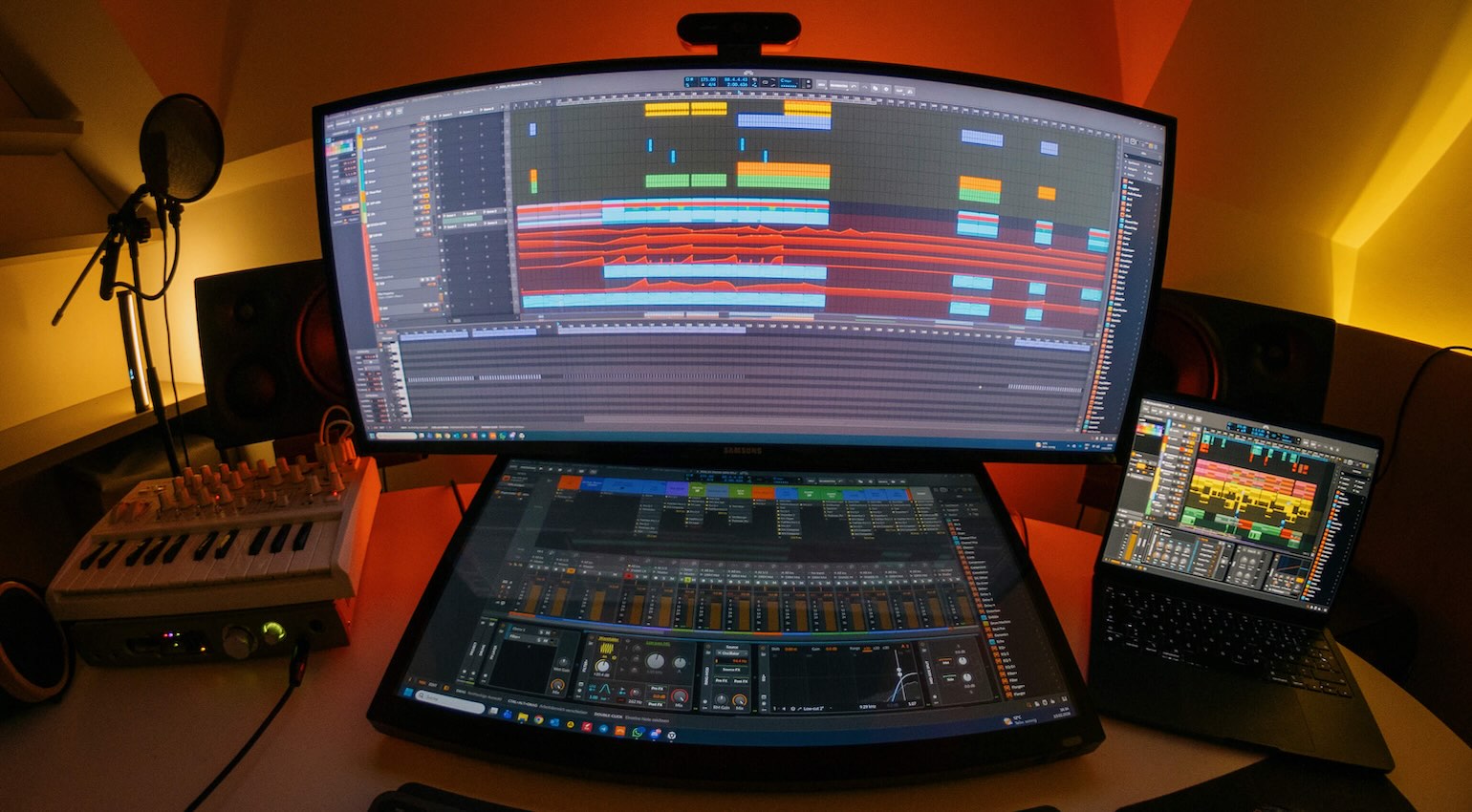

We look at common mistakes beginner producers make, and some ways you can get around them to make your journey into production a little easier.
In this Article:
In your formative stages as an artist or music producer, even the little things like matching a drum loop to a bassline feel exciting. However, with a seemingly endless sea of plugins and tutorials to navigate online, it’s easy to become overwhelmed. Rather than aiding or streamlining your creative process, you can get bogged down and even develop habits that slow your progress.
It’s a relief to realize that, as in life, making mistakes is part of growing as a music producer. The trick is to learn how to recognize these potential potholes in the road, so you can remain productive even as a beginner. Let’s take a look at some of the mistakes often made by newbies and how to avoid them.
Mistakes Beginner Producers Make: Plugin Overload
Plugin overload is one of the first obstacles lying in wait for new producers, and this comes from the assumption that using more plugins will somehow result in a superior sound. Beginners often fall prey to redundancy, stacking multiple instances of the same compressor or EQ without really knowing how the sound is being affected.
The reality is that a professional engineer mixes through their decision-making process rather than an endless processing chain. By using an abundance of plugins, you can actually reduce headroom, overload your CPU, and end up creating a muddy mix.
You can avoid this by:
Developing a core lineup of tools that you understand deeply, rather than a massive library of options you don’t. If you can produce results with a few stock plugins in your DAW, you’re on the right track, and this will provide a good foundation to build your skills.
Mistakes Beginner Producers Make: Neglecting The Arrangement
When you’re starting out, moving from that initial loop to a full arrangement is a major challenge. To compensate, beginners will often have a well-developed groove pattern with decent sounds, while the structure lacks a meaningful progression or any kind of variation.
To keep listeners engaged, a song requires a developmental arc or dynamic, and by improving our arrangement skills, we can flesh out loops and sketches into fully-fledged songs.
You can avoid this by:
Paying close attention to the song structure in your favourite tracks. The easiest way to start is to find a song with a similar style and tempo to the one you’re working on and drag it into your DAW. Look carefully at the construction of the intro and breakdown, as well as the transitions and how the arrangement builds throughout the song’s duration.


Mistakes Beginner Producers Make: Moving into the Mix Phase Prematurely
One sure way to kill productivity is to focus on the sounds rather than completing the arrangement. A common rookie mistake is to spend hours on the EQ of a single drum hit when the song isn’t even finished. By moving into a more technical process, we interrupt the creative thread needed to structure the song, and this can lead to a pile-up of unfinished tracks.
You can avoid this by:
Creating a distinctive workflow in which writing and mixing are separate stages. When composing, focus on the groove and the flow of energy throughout the song, while saving the precise sound sculpting for after the arrangement is completed.
Mistakes Beginner Producers Make: Too Many Sounds
Inexperienced producers often think you need layers of sounds to build impactful songs. As a result, their songs are often overpopulated with sounds that are fighting for room in the mix. In contrast, a professional producer has more confidence in simple ideas that get the groove and emotion of the track across in a straightforward way, with well-chosen, meaningfully placed sounds.
You can avoid this by:
Choosing each sound to serve a particular purpose in the track. If there are two elements trying to perform the same role, try leaving one out. This methodology becomes especially apparent when using hardware, because the finite number of channels on a mixer or a set number of sequencer tracks on a sampler groovebox forces us to achieve more with less.

Mistakes Beginner Producers Make: Gain Staging
Another beginner’s mistake is leaving little or no headroom on your channels. Because of the amazing signal-to-noise ratio in the average DAW, there’s no need to aggressively push levels like we did in the days of analogue tape machines. A soft but focussed mix is far easier to work with for a final mix or mastering engineer than an unbalanced, overdriven mix with poor gain structure.
You can avoid this by:
Keep your channels at a moderate level in the production phase, peaking between -12 and -6 dB. Ensure you leave sufficient headroom for recording vocals, as well as mixing and mastering.
Mistakes Beginner Producers Make: Don’t Be a DAW Novice
In today’s online media-driven landscape, we often end up spending more time learning about the software we don’t own than the DAW we have installed. A non-fluent DAW user works much more slowly, and without knowing the strengths and weaknesses of a particular platform, it’s easy to buy plugins you don’t actually need. Being able to act on instinct requires familiarity, and this could mean RTFM from time to time.
You can avoid this by:
Learning the keyboard shortcuts you’re likely to use most often for audio and MIDI editing, arrangement, and automation. Creating a template for beat production or tracking instruments makes your workflow more efficient, so you get more work done.

Mistakes Beginner Producers Make: Too Much Reverb
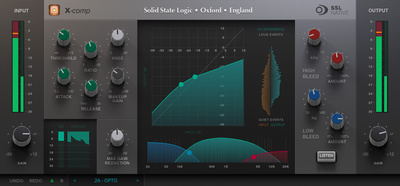
While reverb can immediately transform a sound to feel larger and more atmospheric, beginners tend to add it to every sound they can find. With the overuse of reverb, especially a combination of different kinds, the mix quickly loses focus and becomes hazy. Unless it’s executed with purpose, too much reverb can reduce the impact of your vocals, drums, and melodic elements.
You can avoid this by:
Use reverb with intention by creating 2-3 aux buses with reverbs designed specifically for your song. This gives you more control than inserting massive reverbs on every channel, while EQ can avoid mud and tame high frequencies.
Mistakes Beginner Producers Make: Not Using Reference Tracks
A common beginner approach is to work in a vacuum without any real-world references. Apart from knowing whether your track is actually complete or not, it’s hard to make definitive calls on key aspects such as the strength of the arrangement, the overall loudness, the stereo width, and tonal balance. With reference tracks in the appropriate genre, you can gain perspective.
You can avoid this by:
Import one or more reference tracks into your DAW session and use them to compare the mix at matched volume levels. Focus on aspects like vocal placement, low-end articulation, balance, and energy, rather than trying to mimic parts of the reference track.


Mistakes Beginner Producers Make: GAS Instead of Skills
Gear acquisition syndrome can affect beginners and experienced pros alike. We’re often led to believe that simply by purchasing a high-end piece of equipment, our production sound will drastically improve overnight. While a well-selected array of gear certainly helps, there is no substitute for techniques and knowledge about the music production process. Besides that, we’ve seen so many great albums produced on modest home studio setups over the years.
You can avoid this by:
Upgrading your skills first, and your equipment second. Hone your techniques in arrangement, sound design, critical listening, and the basics of mixing. A skilled producer can get professional results on almost any setup.
Mistakes Beginner Producers Make: Never Finishing Tracks
One of the biggest mistakes often made by beginners is to keep sketching down new song ideas and loops without ever turning them into complete songs. By finishing tracks, we develop crucial problem-solving skills and learn to make decisions more confidently when it comes to arrangement. A batch of unfinished loops is not a catalogue.
You can avoid this by:
Creating a realistic timeline that suits your schedule. Even if the songs aren’t perfect at the beginning, each track becomes a stepping stone that you can refer to and check your progress. Remember that consistency is more important than perfection.
Conclusion:
Making mistakes is an important part of learning, and some of these can even lead to the formation of a cohesive sound or artistic identity over time. However, forming good habits around the creative process keeps you motivated, as you create systems that help you improve on your mistakes rather than repeating them.
Music production requires vision and taste, which only happens through extensive exploration and repeating processes that aren’t necessarily loads of fun. Luckily, getting better at it doesn’t require loads of expensive gear and plugins or a perfect acoustic environment. Instead, having a good foundational understanding, a straightforward workflow, and practicing often will get you there.
The producers who develop skills quickly do not necessarily have all the gear in the world; they are simply relentless in their efforts and keep refining their creative process from one project to the next.
More Info:
*Note: This article contains promotional links that help us fund our site. Don’t worry: the price for you always stays the same! We will receive a small commission if you buy something through these links. We appreciate your support!

This might also interest you

3 responses to “Top 10 Mistakes Beginner Producers Make (And How to Avoid Them)”
Really great article despite the obvious ads in between. Very thoughtful observations with good key points. Keep it up!
Good points, that said, what differences do you notice between those that use DAWs and those that are exclusively playing/recording live ?
It’s hard to compare directly, because so many parts of music and audio are genre dependent. Skills like playing instruments are essential in some styles of music and completely irrelevant in others.