The 7 Best Boost Pedals of 2026: Make it Louder Better!
From transparent volume lift to iconic preamp coloration!

 1,0 / 5,0 |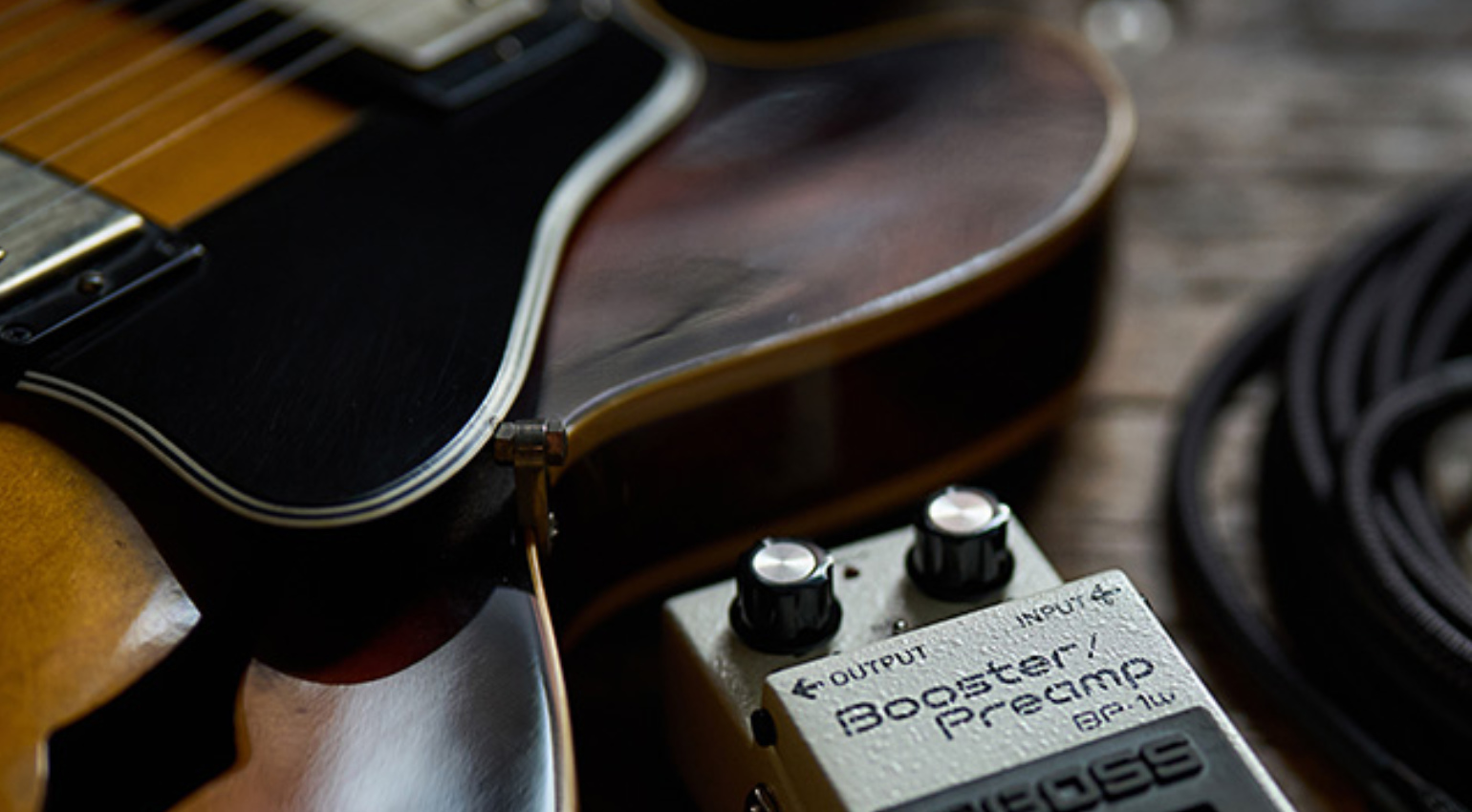

Finding the best boost pedal sounds simple until you realize just how many different kinds of “boost” there are. Some boosts are designed to sound completely transparent. Others deliberately color your tone and make it sound more analog. And of course, depending on where you place a boost in your signal chain, it can either make your solos louder, tighten up a high-gain amp, or completely reshape your core tone.
Our Picks:
The Best Boost Pedals: How Did We Get Here
Boost pedals originally emerged as a simple solution for one problem: getting louder for solos. Before there were boost pedals, guitarists relied on amp volume controls, treble boosters, or even tape echo preamps to push tube amps harder. One of the most famous examples was the Dallas Rangemaster treble booster, used by players like Brian May and Tony Iommi to add sustain, bite, and harmonic richness.
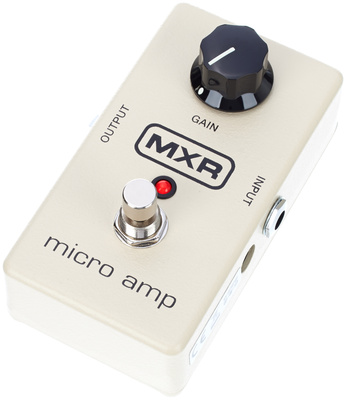
By the late ’70s and ’80s, pedals like the MXR Micro Amp helped popularize the idea of a transparent clean boost. Later, guitarists became obsessed with the coloration of vintage Echoplex preamps. Today, boost pedals are no longer just louder switches. Many modern guitar players use them to shape EQ, tighten high-gain tones, add sparkle to clean amps, or create an always-on foundation sound for an entire rig.
What to Look for When Buying the Best Boost Pedals
The biggest mistake guitarists can make is assuming all boost pedals sound transparent. In reality, some boosts can significantly alter your EQ and gain structure. Before buying one of these best boost pedals, you need to decide whether you’re looking for pure clean volume, additional saturation, extra mids for solos, or coloration that enhances your amp tone even when left on permanently.
Also consider where the pedal will sit in your chain. Placed before an overdrive or amp input, a boost not only increases gain but also saturation. Placed after distortion, it acts more like a true volume lift for solos.
EQ controls, additional headroom, internal voltage options, and whether the pedal uses JFET, op-amp, or transistor circuitry can also dramatically influence feel and response.
Let’s check out these seven best boost pedals of 2026!
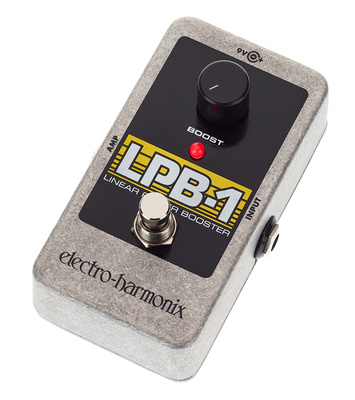
Electro Harmonix LPB-1
Make no mistake, despite its price, the LPB-1 is still one of the best boost pedals on the market, and a legendary one, too. Originally introduced in 1968, it helped popularize the concept of using a preamp pedal to slam the front end of a tube amp harder.
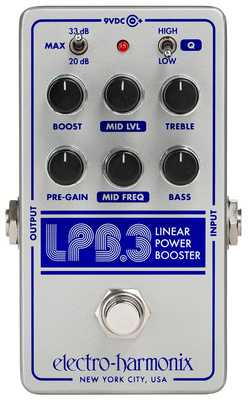
By comparison, the LPB-3* takes the original concept and modernizes it. While the LPB-1 is more of a one-knob “more everything” pedal, the LPB-3 adds a full EQ section and significantly more tone-shaping capability. Check them out at Thomann*.


TC Electronic Spark Mini
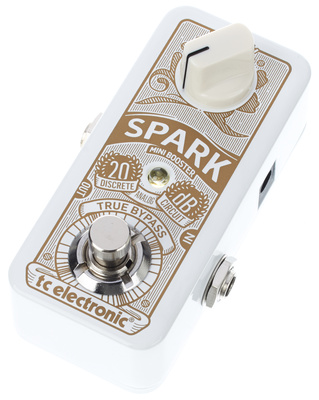
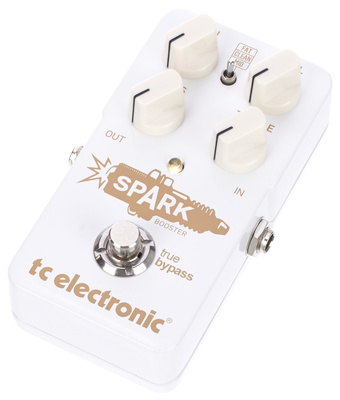
The TC Electronic Spark Mini has become one of the most popular entries in the best boost pedals category for a reason. It’s affordable, easy to fit on most pedalboards, and delivers up to 20 dB of clean boost.
One clever feature is TC Electronic’s “PrimeTime” switching, which allows the pedal to work momentarily while holding down the footswitch. Get it from Thomann*.

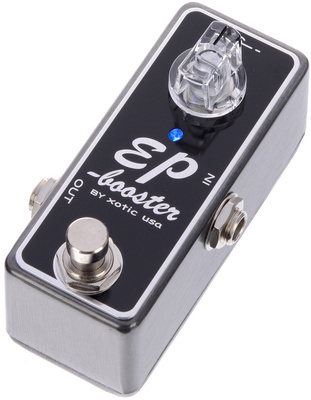
Xotic EP Booster
The Xotic EP Booster is often viewed as one of the most popular pedals in the best boost pedals category. Based on the preamp section of the legendary Echoplex EP-3 tape echo, this boost is less about a transparent volume boost and more about adding analog warmth and a subtle sense of compression.
Its single knob offers up to 20 dB of boost, while internal DIP switches let your tweak EQ and the boost voicing. Plus, the pedal’s discrete FET circuit behaves more like an old preamp than a clean boost, so it’s even more effective for pushing tube amps. Buy it from Thomann*.

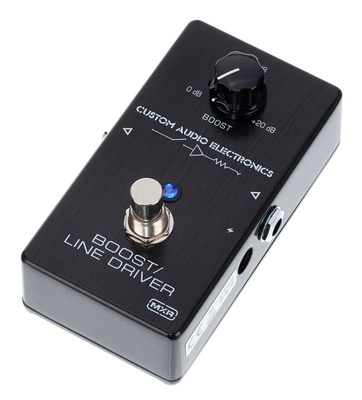
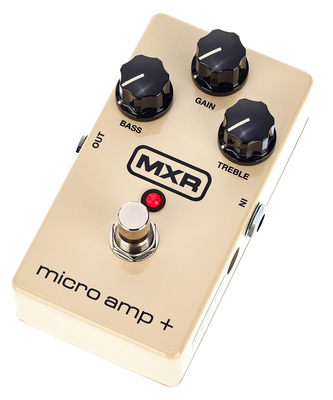
MXR M 233 Micro Amp Plus
While the original Micro Amp became famous for its simple one-knob boost sound, the Micro Amp Plus adds active Bass and Treble controls while boosting up to +26 dB. That makes it one of the more versatile options in the best boost pedals category.
Unlike more transparent clean boosts, the Micro Amp Plus has the same sonic character that made the original such a studio and live favorite. For this version, MXR also upgraded the circuit with low-noise op-amps and true-bypass switching. One of the best boost pedals on the market, certainly one of the most iconic ones. Check it out at Thomann*.

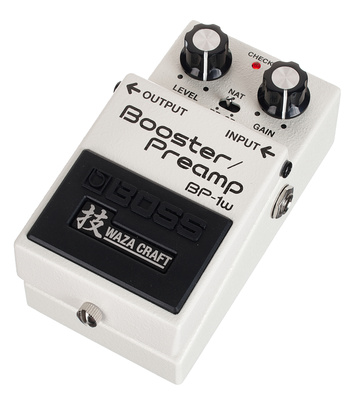
Boss BP-1W
The Boss BP-1W Waza Booster/Preamp is one of the most interesting modern entries in the best boost pedals category because it combines three boost voices into a single pedal. Boss based these around the preamp sections of the legendary CE-1 Chorus Ensemble and Roland RE-201 Space Echo, alongside a transparent clean boost.
Its gain control lets it move from subtle sweetening to low-gain overdrive territory, while the selectable Standard and Vintage buffer modes help tailor the rig’s overall feel and response. Get two iconic analog preamp voicings, a clean boost, and a tour-roughness-approved metal case from Thomann*.

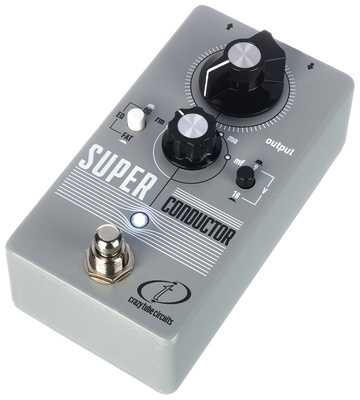
Crazy Tube Circuits Super Conductor
The Crazy Tube Circuits Super Conductor combines four classic boost circuits into a single pedal. Among these are emulations of a Dallas Rangemaster-style treble booster, an Echoplex EP-3 preamp circuit, an MXR Micro Amp-style clean boost, and a MOSFET boost inspired by pedals like the Z.Vex Super Hard On. This thing boost, but it doesn’t do so cleanly.
Compared to many one-knob boost pedals, this pedal gives players far more control over how the pedal interacts with amps, fuzzes, and overdrives. It’s available from Thomann*.

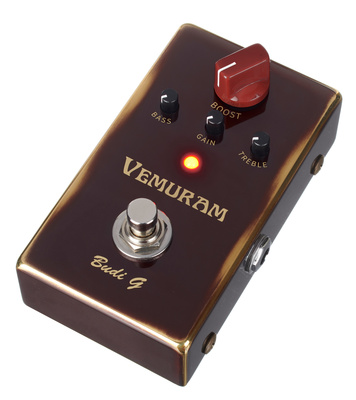
Vemuram Budi-G Boost
The Vemuram Budi-G Boost is the most high-end entry in our best boost pedals category. Its is designed to behave more like an extension of a tube amp’s preamp section than a transparent boost, using a 3-FET circuit with huge headroom and an extremely dynamic response.
The pedal also includes Bass and Treble EQ controls alongside a Gain knob and external SAT trimpot, allowing players to dial in anything from subtle enhancement to rich, edge-of-breakup drive tones. Compared to more straightforward best boost pedals options like the TC Spark Mini or MXR Micro Amp, the Budi-G is more nuanced and dynamics-sensitive, but also dramatically more flexible. Buy it from Thomann*.

Conclusion on the Best Boost Pedals
Before we let you go from our list of the best boost pedals, we’ve got to ask the eternal question: which ones did we miss? What’s your go-to boost and how to you use it? Just for soloing? For sonic escalations with your high-gain amp?
Let us know in the comments!
FAQ: Best Boost Pedals
What Is the Best Boost Pedal for Guitar?
The best boost pedal depends on how you use it. Some players want a transparent clean boost for solos, while others prefer a colored boost pedal that adds warmth, compression, or extra mids. Pedals like the TC Electronic Spark Booster are popular all-rounders, while the Xotic EP Booster is often considered one of the best boost pedals for always-on tone enhancement.
What Is A Boost Pedal Actually For?
A boost pedal increases your guitar signal level. Depending on where you place the boost pedal in your signal chain, it can either make your solos louder or push your amp harder for more gain and saturation. Many guitarists use the best boost pedal not just for volume, but to tighten low end, shape EQ, or enhance dynamics.
What Is the Difference Between a Clean Boost and an Overdrive Pedal?
A clean boost pedal is designed to raise volume and signal strength without adding much distortion. An overdrive pedal intentionally adds clipping and gain. However, many modern boost pedals blur the line between the two, especially when used to push tube amps into natural breakup.
Where Should a Boost Pedal Go in the Signal Chain?
If you place a boost pedal before distortion or overdrive, it usually increases gain and saturation. If you place the best boost pedal after your gain pedals, it works more like a volume lift for solos. Many players experiment with both positions depending on their amp and playing style.
What Is the Best Boost Pedal for Metal?
For modern metal tones, many players prefer a boost pedal that tightens bass frequencies and emphasizes upper mids before a high-gain amp. Pedals like the Fortin 33 are especially popular for djent, progressive metal, and tight rhythm guitar sounds.
*Disclaimer: This post contains affiliate links and/or widgets. When you buy a product via our affiliate partner, we receive a small commission that helps support what we do. Don’t worry, you pay the same price. Thanks for your support!

This might also interest you