A New PPG Wave 2.3 on the Horizon – Synth Journal
Plus an aptly named instrument to coincide with Artemis II and some Midge Ure to boot!

 4,4 / 5,0 |
The wavetable revival continues apace with the surprise reveal of a brand new PPG Wave 2.3, plus a Nord Modular editor and a lunar rhythm machine!
Synth Journal – April 9th, 2026
Nord Modular Editor
The very sight of a Nord Modular is incredibly evocative for me. The late 1990s was a very interesting time in the world of synthesizers. We had emerged from the pared back nature of digital synths with their minimalist interfaces and clinically clean sounds.
The re-emergence of old analog synths, ushered in by the numerous dance genres that were seemingly exploding around us on a weekly basis saw the young music makers salvaging the old tech that the rest of us had eschewed in favour of the digital overlords.
As such, the demand for more affordable, reliable and powerful synths that boasted all the benefits of analogue sound with digital control was huge. Clavia had answered that call early on with their revolutionary VA synth, the Nord Lead.
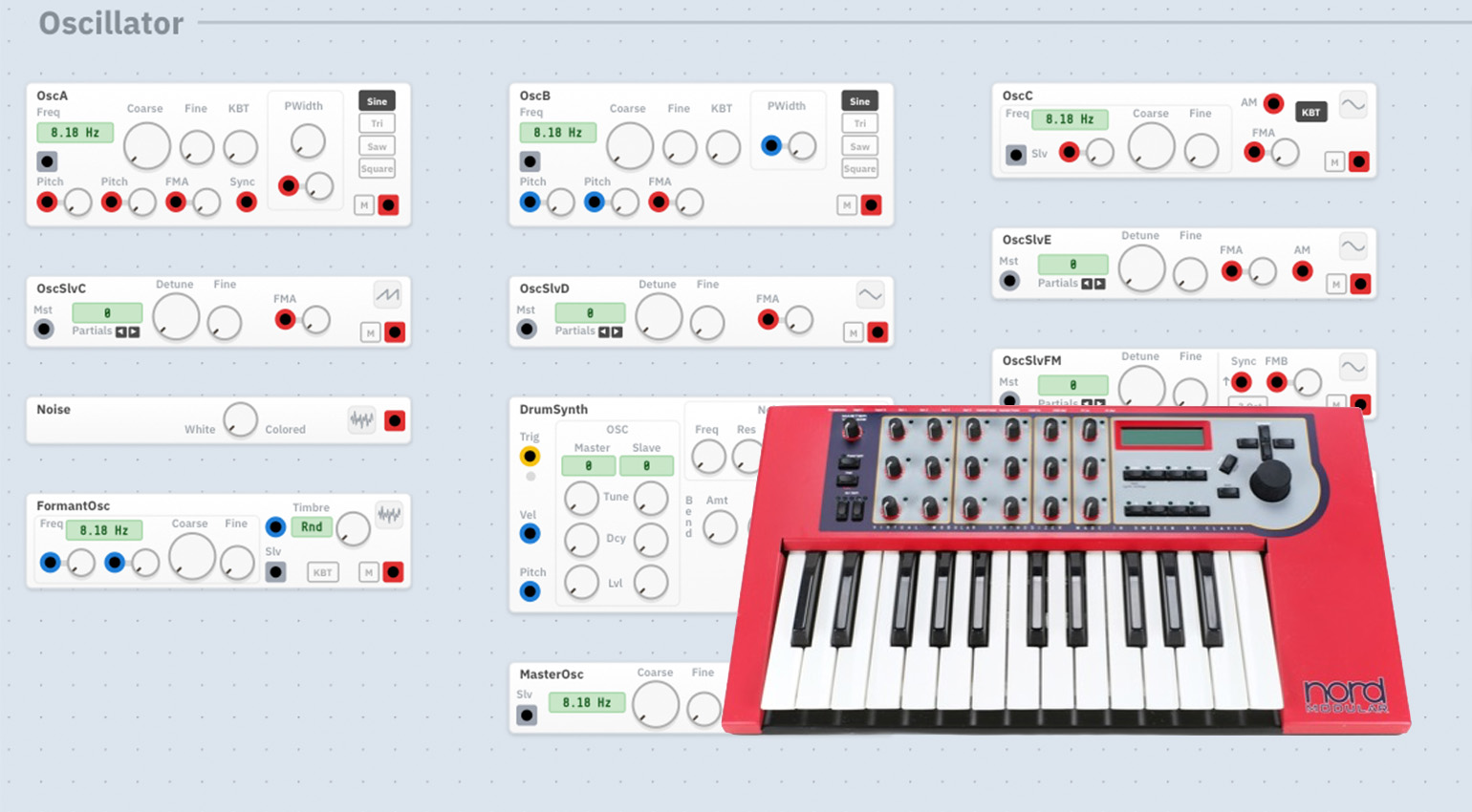
Sensing a demand for deeper control, they brought us the Nord Modular but instead of physical patch cables and modules, it was all done in software with the hardware providing the heavy lifting. Of course, nowadays, we can build modular behemoths entirely in a computer. But 25+ years ago, this is how we did it.
And, as we soon found out, the relentless march of progress meant that the software was soon left languishing behind as hardware and operating systems moved through the gears. Well, now, we can do much of what the original software did in a simple browser window, and that’s exactly what Peter van der Noord has done. (Not sure if that’s his real name or a very fortunate coincidence!)
Albeit in its early stages of development, the Nord Modular Editor allows you to edit patches, browse slots, add modules and cables, adjust parameters and load patches into slots. I wish I owned one of these units to test it, so you’ll have to check this one out for yourself. And if you do, let us know what you think in the comments section down below!
Access the Nord Modular Editor here.
A New PPG Wave 2.3!
As far as curve balls go, this has to be one of the biggest and best of the year so far! Over Easter, the inventor of the PPG Wave, and many other superb synths, Wolfgang Palm, posted a short video of himself unboxing a very special birthday present. (Happy Birthday from all of us at Gearnews, Herr Palm!)
Wearing a splendid PPG t-shirt, the video sees a rather excited Wolfgang opening up a large cardboard carton. Contained therein is a sturdy flight case. The anticipation builds until he delicately removes the contents to reveal a 4U rackmount PPG Wave 2.3!
At this point, I was desperately trying to find out if this “new” PPG Wave was a restomod, where some clever individual called Daniel Saxlid had taken the guts of an original PPG Wave 2.3 and fashioned a new case for it. If so, he’d seemingly done a splendid job!
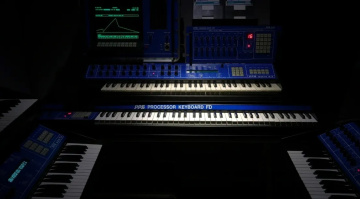
Wolfgang shows the PPG Wave 2.3 off in all its glory, looking remarkably like the PPG EVU, revealing a faithfully recreated front panel, albeit redesigned to fit the form factor. Turning it around reveals a full complement of connections, even including the 5-pin DIN cassette interface, MIDI, CV and a parallel communications bus!
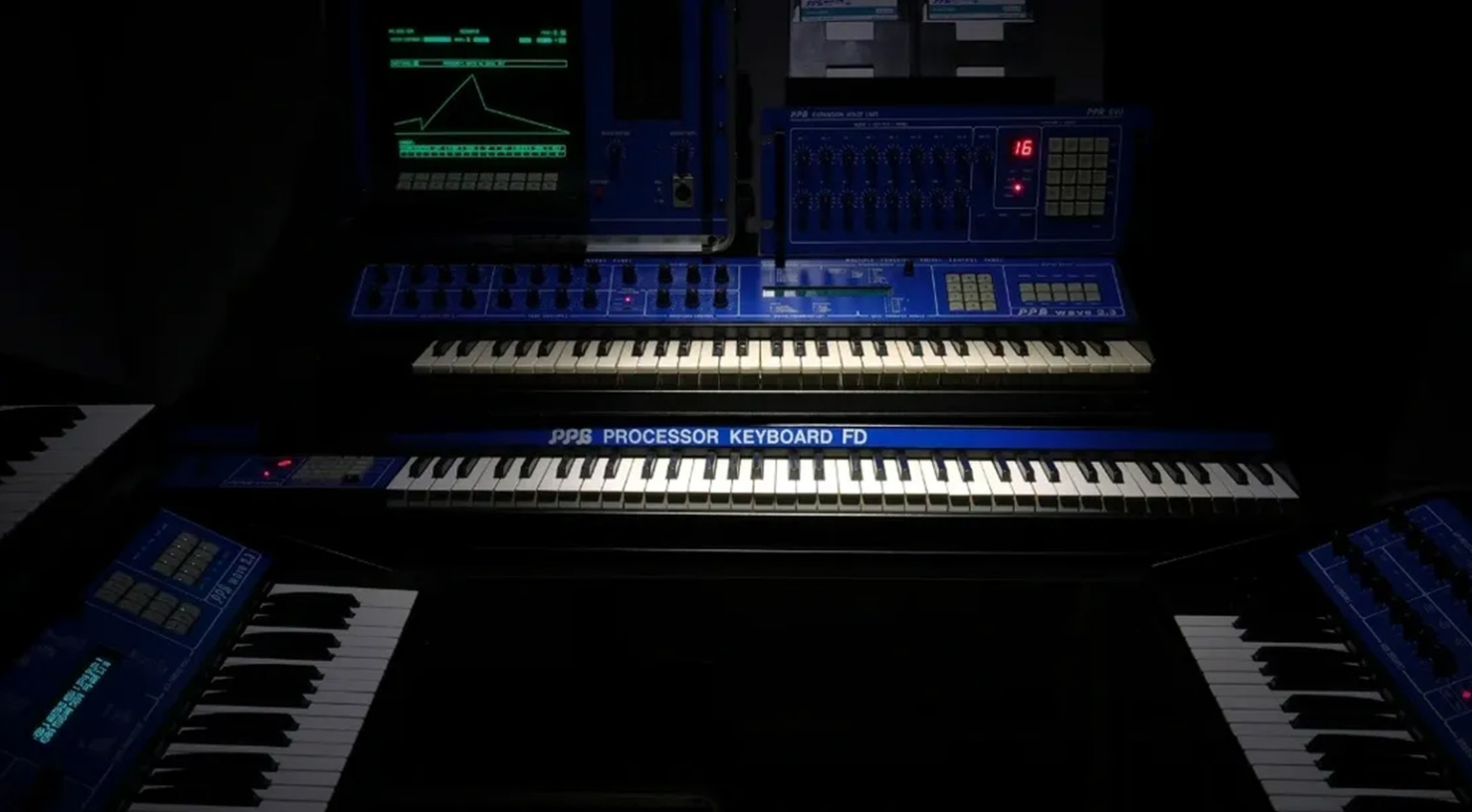
Responding to a glib remark in the comments section, Wolfgang revealed that this new PPG Wave 2.3 is a 1:1 clone of his original and “all boards are 100% interchangeable with the vintage units“. This is both uplifting and disheartening. Uplifting because it means that numerous existing PPG Wave 2.3’s can be kept alive and running, disheartening as it likely means this thing won’t be particularly affordable!
But all credit to Daniel for creating this. I briefly spoke with him earlier, and units for sale are a little way off for now, but you can sign up for the PPG Wave 2.3 newsletter at the website and start saving your pennies now! There’s also an embedded video on the page featuring audio from this new machine!
Moon Passive Analog 4 Channel Rhythmic Instrument
Following on from their Noon, Moon is the little sibling of Landscape’s collaboration with Eli Pechman of Mystic Circuits. It does differ from the Noon somewhat, but it still uses the voltages spat out of external sequencers to trigger its weird and wonderful sounds.
The internal analogue circuits draw their power from the incoming gate and CV voltage signals, causing them to oscillate and move in a natural way. The user can then blend and combine the four channels to create completely unique and utterly variable results.
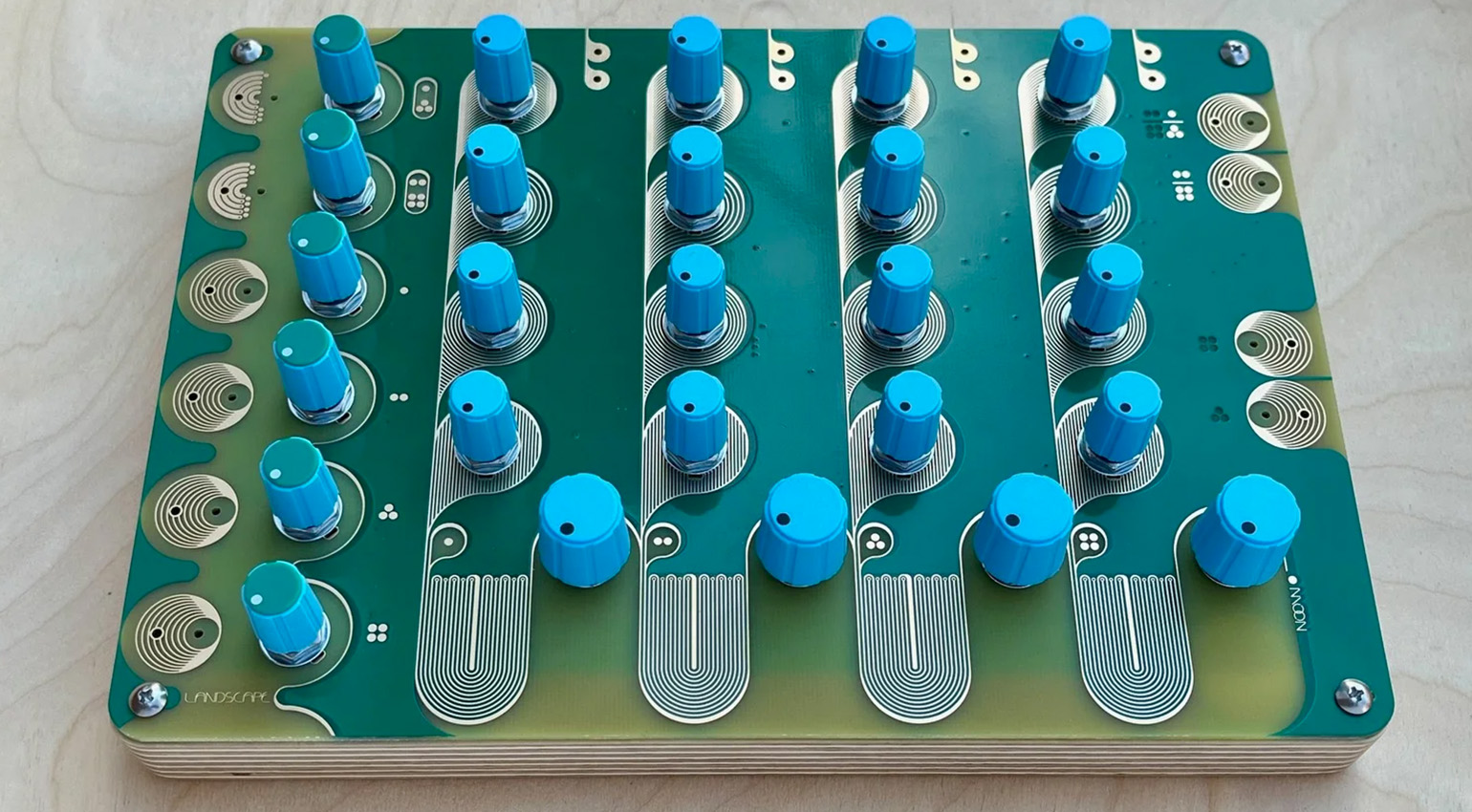
And just like the Noon, Moon is completely passive, drawing its power from the gate and control voltages, so no power supply is required! Costing $420, a preorder campaign is now sold out and closed, but web orders open up on April 17th, 2026!
When Synths and Guitars Collide
Ah, the 80s. My decade! A decade of innovation and technological revolutions. One of the biggest and most important was MIDI, a communications protocol that remains to this very day. But in 1984, it was cutting edge and every Tom, Dick and Harry was itching to get on board.
All of a sudden, we saw companies bringing out entire product ranges centred around their ability to interconnect with one another to allow a single musician to produce complex musical productions all by themselves.
And this revolution brought the worlds of guitarists and synthesists crashing together again, after some languid and rather failed efforts of the past to blend the two paradigms. Of course, the biggest obstacles were latency and expression, but this didn’t deter both manufacturers and musicians alike to dive in.
One of my favourite products of this melding of worlds is the lead line in The Human League’s hit single, ‘Fascination’, played by former Rezillo’s plank-spanker, Jo Callis on a Roland GR-300, it’s not-so-good pitch to voltage tracking causing the slight detune in the part that makes it so unique.
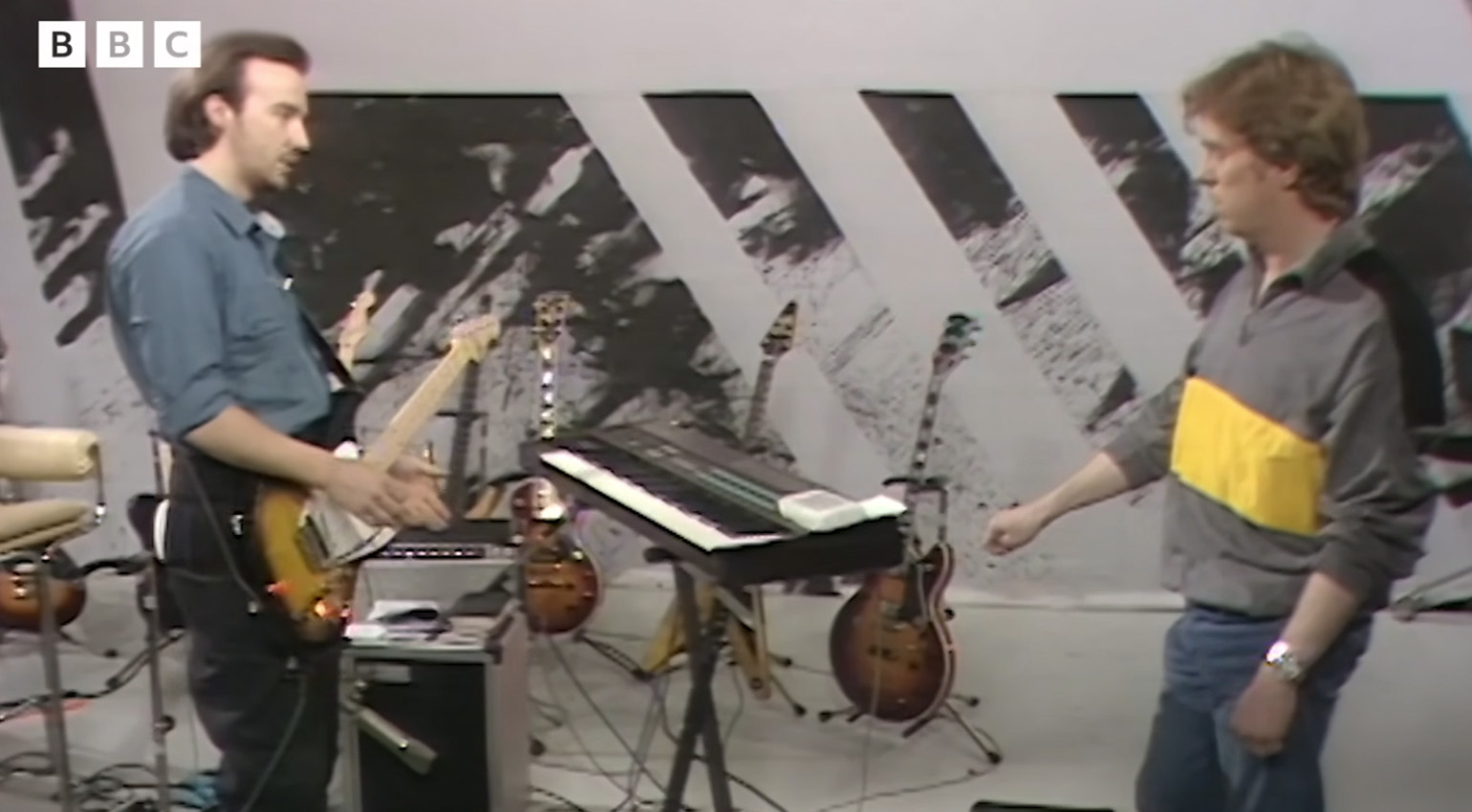
Anyway, back in March of ’84, the much-missed BBC programme, The Old Grey Whistle Test did a feature with Richard Thompson, David Lindley and one Midge Ure of Ultravox. Midge demonstrates his MIDI’d up GR-700 and Yamaha DX7, preferring a pickup mounted to his Fender Strat rather than the very futuristic GR-707 controller.
It’s a wonderful bit of nostalgia and brings back some fantastic memories of a time where, as far as electronic music making was concerned, the sky was the limit and the future was very bright indeed!

This might also interest you

2 responses to “A New PPG Wave 2.3 on the Horizon – Synth Journal”

Noon looks really interesting. I could never see myself using 8 channels of such rhythmic madness, but 4 channels I can see.
Looks fun and glitchy!
Now we’ve got too many PPGs! 3 current hardware versions plus all the Waldorf synths that includes PPG wavetables!