Modeling Synths With Cherry Audio: 5 of Their Biggest Challenges
Getting to grips with the Crumar DS-2, Roland Jupiter-8, KORG PS-3300, and more!

 4,7 / 5,0 |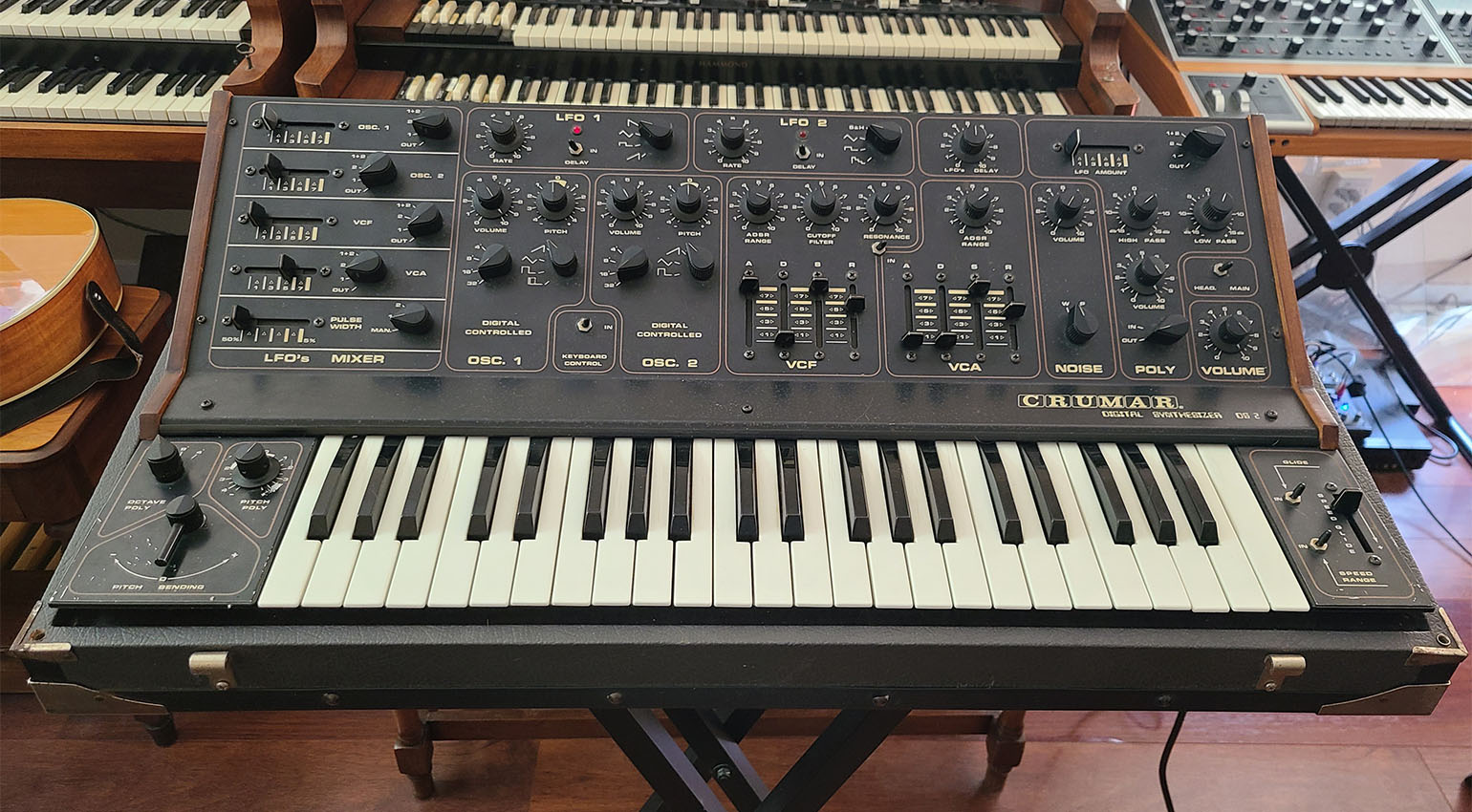

Few know as much as Cherry Audio does about modeling synths. We asked the developer to tell us about the five most challenging emulations they’ve done. Some you may not expect!
Modeling Synths With Cherry Audio
Cherry Audio is a soft synth powerhouse. Although the developer has done its share of original software instruments, its bread and butter is emulations. Having spoken with them at length, though, I’ve come to realize that modeling synths is a serious undertaking. It’s more than just pressing a note and trying to recreate the sound by ear. There are analyses to do, measurements to take of envelope curves, and on and on. And then you may be working with an oddball vintage synth like the Crumar DS-2, which has utterly unique oscillators and other characteristics. Somehow, they still manage to turn out great instrument after great instrument.
We asked Cherry Audio’s CTO, Dan Goldstein, to walk us through five of their most challenging emulations, starting with that crazy DS-2.
Modeling Synths: Crumar DS-2
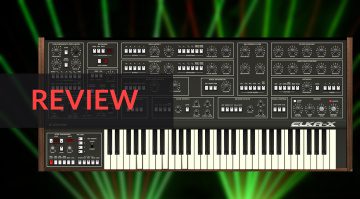
Let’s dive right in at the deep end. Crumar’s 1978 DS-2 was a monophonic synth with a fully polyphonic companion section. It also featured a unique hybrid oscillator that made use of digital technology to keep tuning locked down. Unlike later DCOs, though, the ones on the DS-2 are gritty and stepped, which only adds to its charm, of course. When it comes to modeling synths, this one is a toughy. So, how was it turning it into a plug-in?
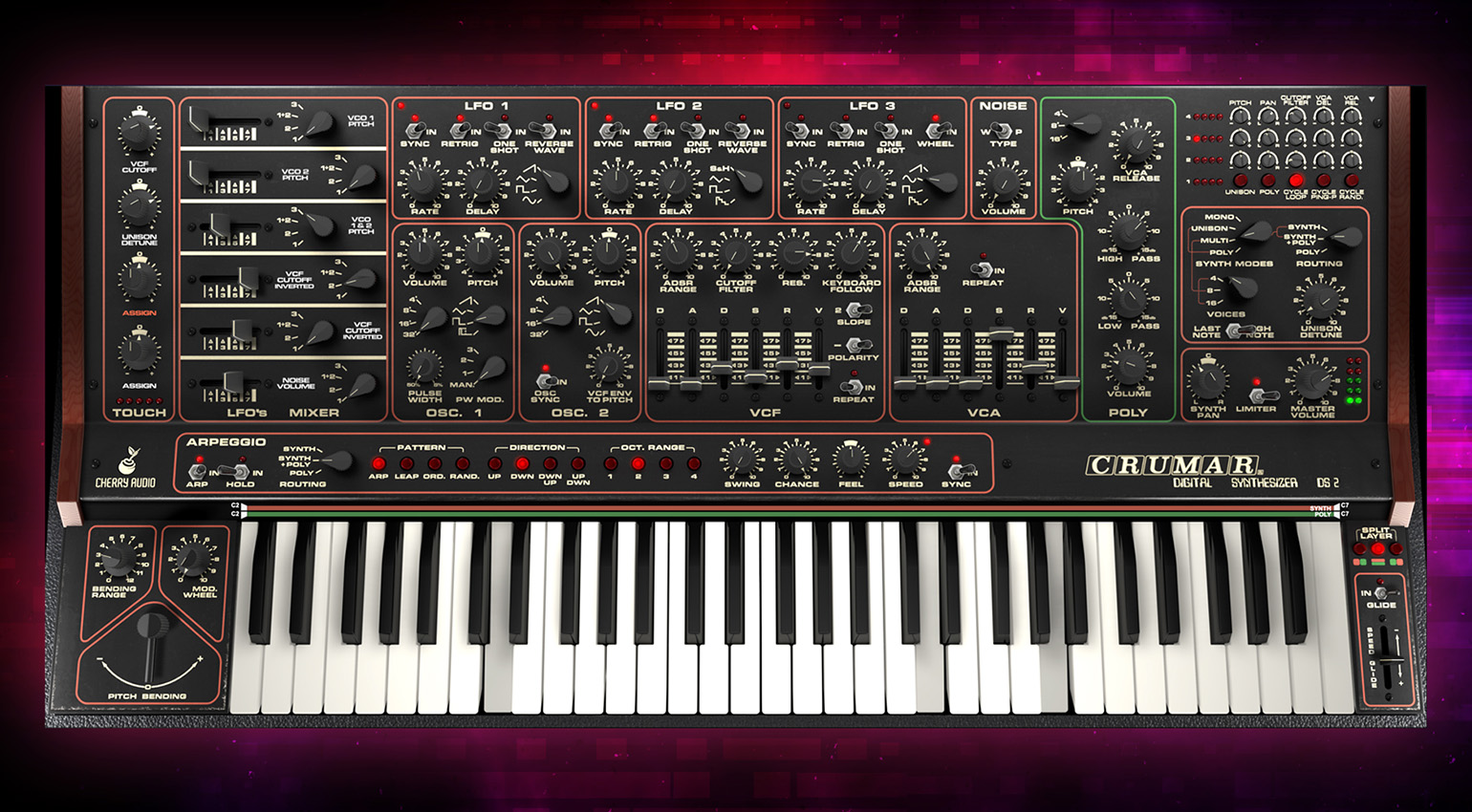
Dan Goldstein: “The DS-2’s unique digital/analog hybrid stair-stepped oscillators are harmonically rich and unique-sounding. Accurately recreating them with all their rich harmonics, while avoiding digital aliasing, was a unique challenge. In addition, the DS-2’s ‘poly’ section creates stair-stepped ‘sawtooth’ waves by combining different octaves generated by divide-down oscillators. As a result, both of these sections have their own unique sound, and we wanted to capture every musical nuance.”


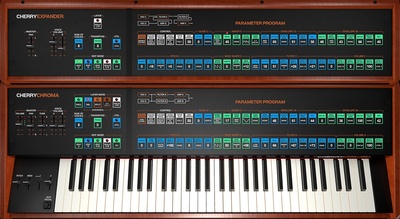
Modeling Synths: Rhodes Chroma
When ARP went belly up, it was deep in development on the Chroma, a complex analog synthesizer with – uniquely for the time – microprocessor modulation control under the hood. The Chroma passed to CBS Musical Instruments, who bought the design, and put into production by its Rhodes Division in 1982. Bringing this beast into the software domain was no easy task.
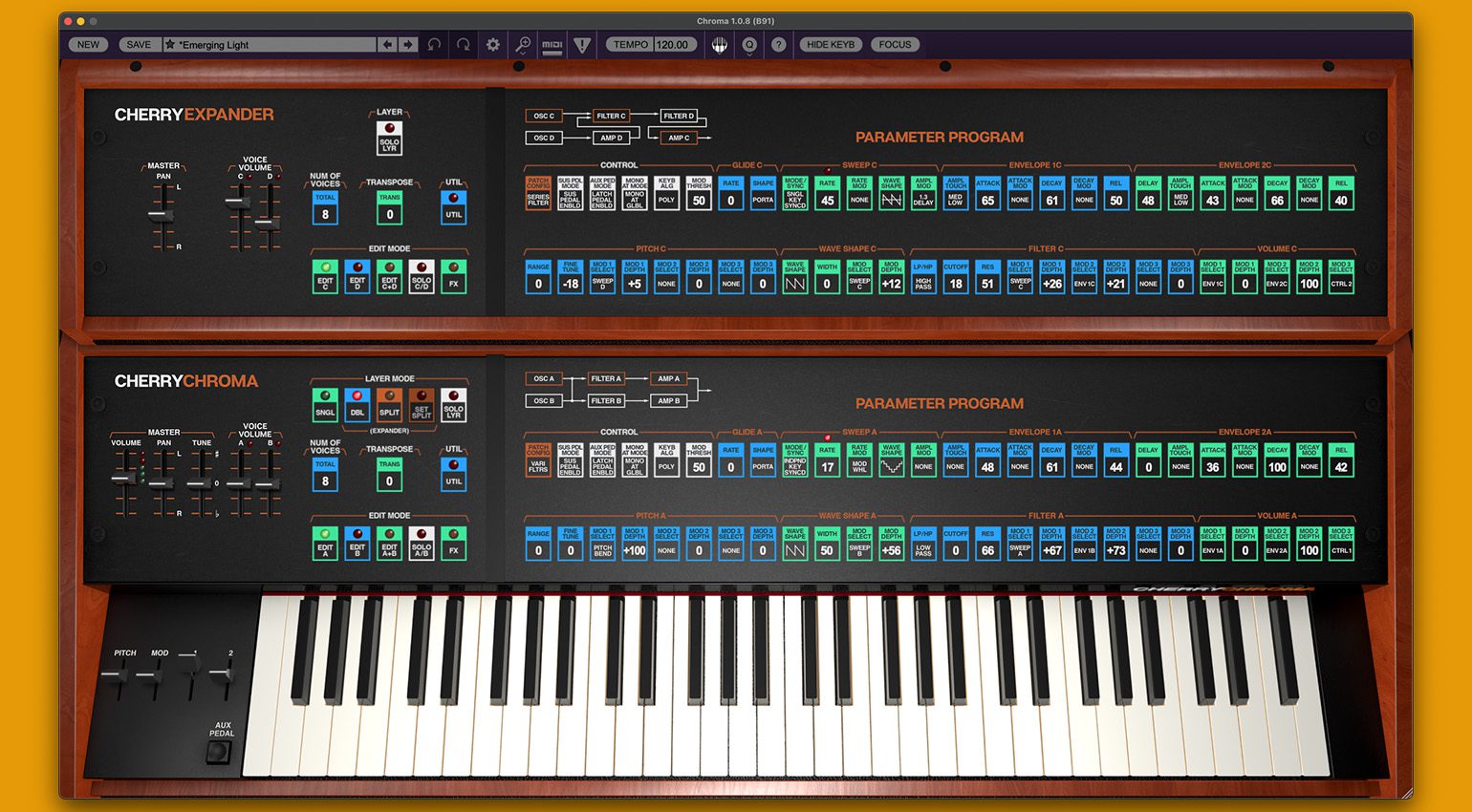
Dan Goldstein: “The Chroma was a wildly challenging project to complete, as the original hardware is easily the most feature-packed vintage synthesizer ever produced. The Chroma’s voice architecture can be completely rearranged into 16 different configurations, which meant that we had to essentially model 16 different synthesizer designs. On top of that, there are multiple velocity modes, with little to no documentation on the differences between the modes. So we had to develop new analysis tools and techniques to recreate the velocity curves accurately. Any patch from the Chroma hardware can be perfectly imported into the Chroma software via SySex, so every parametric detail had to match up perfectly.”
Modeling Synths: Roland SH-5 (SH-MAX)
When we think of Roland, we think of clean and polite, a sound that slips unobtrusively into any mix. But that reputation was established in the 1980s, with first the Jupiter-8 and later Juno and JX instruments. Roland synths of the 1970s were far more muscular machines, with unusual circuit designs and a sound that could rattle windows and scare children. Now imagine combining three or four different models into a single plugin. That’s not just modeling a synth, but truly modeling synths plural.
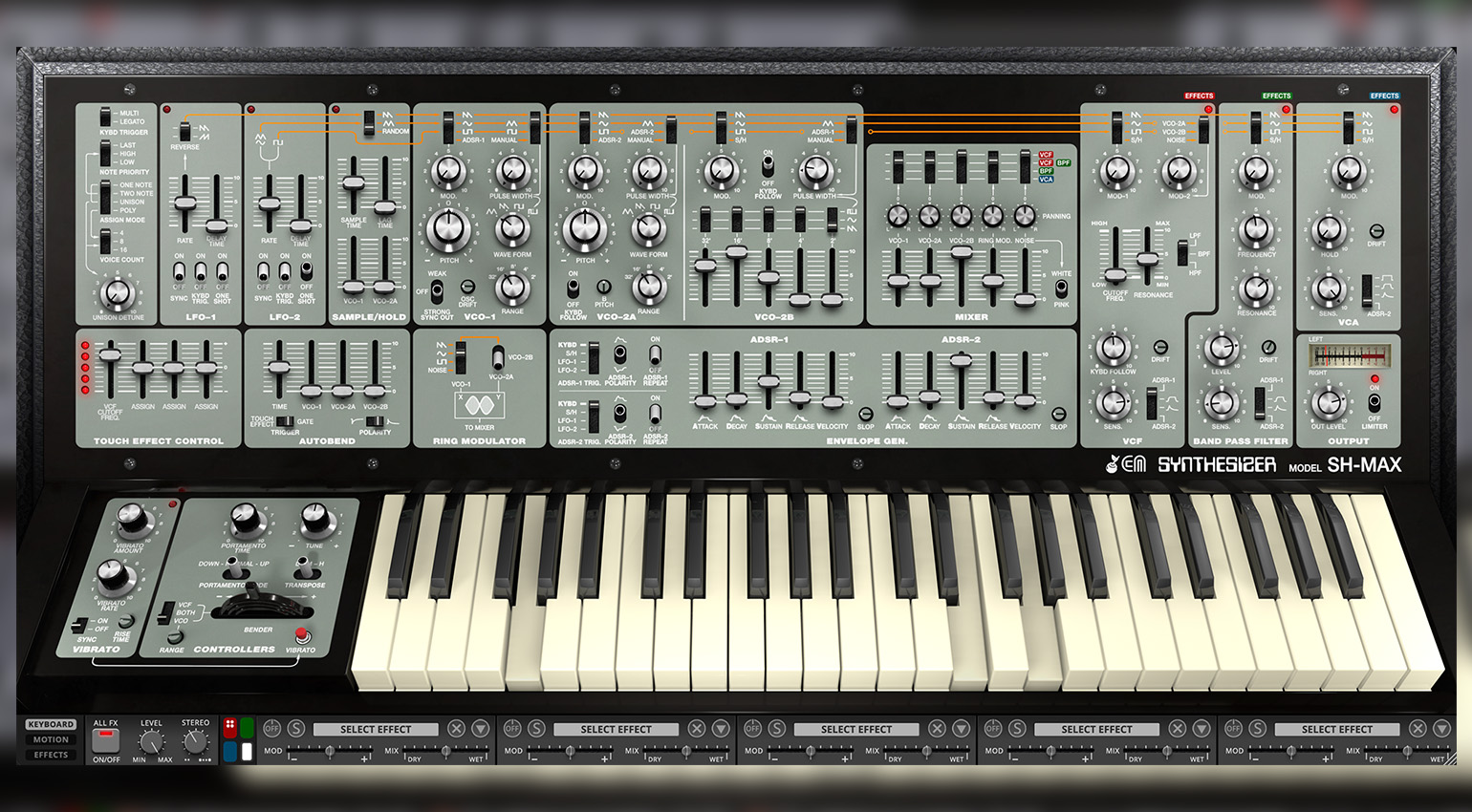
Dan Goldstein: “At its core, the SH-MAX is modeled after the legendary SH-5, a complex synthesizer that exemplifies the Roland synthesizer sound of the 1970s. It’s so very different than 1980s Roland synthesizers, featuring a multi-mode filter with resonance that screams and pleasantly distorts, and a completely separate bandpass filter path with a unique filter circuit. Modeling both of these filters meant essentially modeling two completely different instruments. Then, our designer added features from other instruments in the SH series, which meant studying their circuitry and design as well! Finally, the all-new four-channel analog-style sequencer, with all sorts of different playback modes, could have stood on its own as a separate product!”
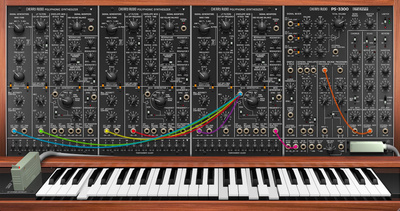
Modeling Synths: KORG PS-3300
Ridiculous. That’s the KORG PS-3300 from 1977. Three synthesizers in one (triple the PS-3100). Fully 48-note polyphonic. A total of 144 synth voices. Semi-modular architecture. The list goes on and on about why this monster of an analog synthesizer presents a wealth of challenges to anyone attempting to model it. Need another reason? It’s fabulously rare, with only 25 to 50 made in the original run. So how did Cherry Audio do it?
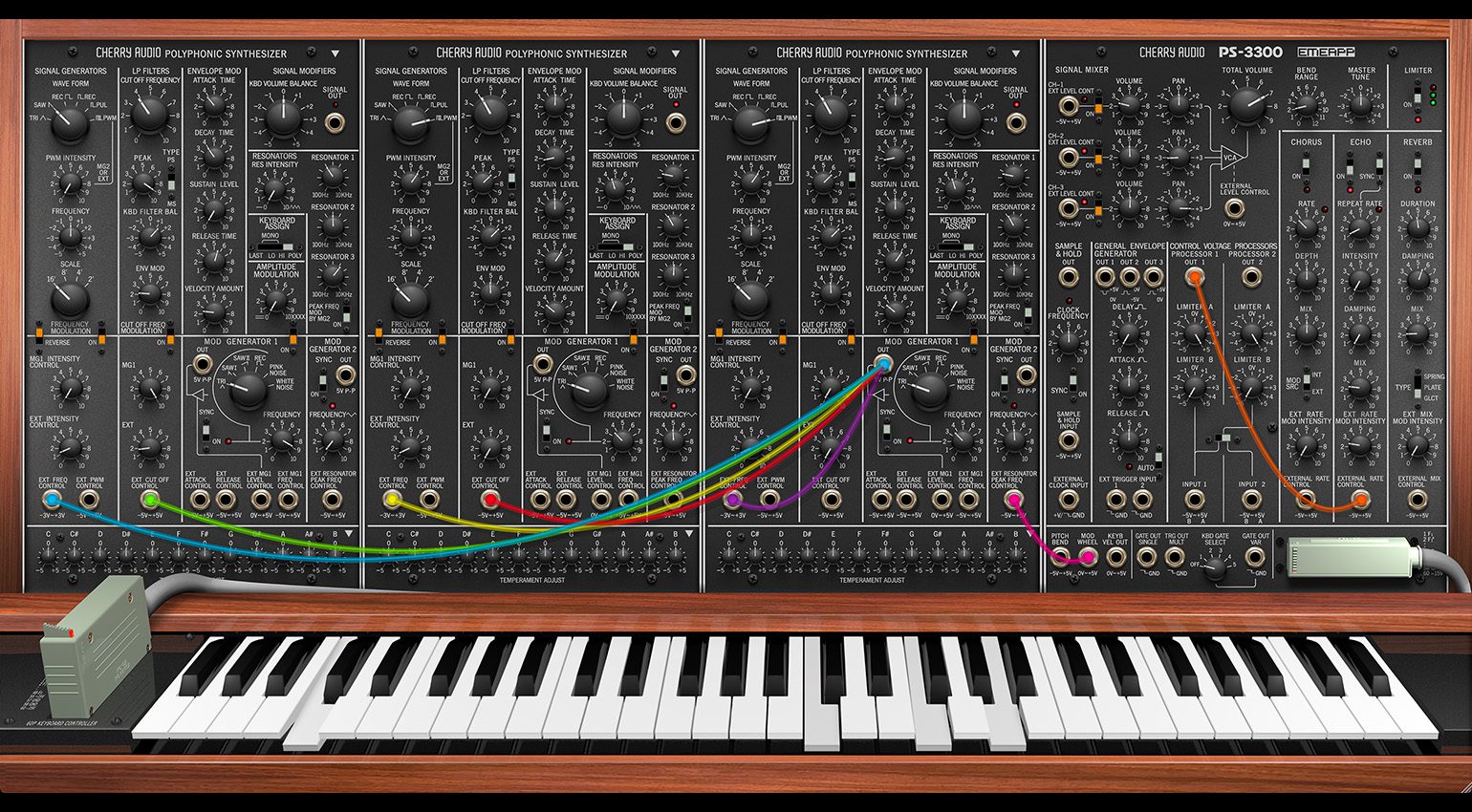
Dan Goldstein: “These days, it is possible to get your hands on a KORG reissue of the fantastic PS-3300 synthesizer. But in 2023, we had to travel to Pennsylvania for the unique opportunity to spend a few days in a room with an ultra-rare vintage KORG PS-3300 at EMEAPP, now known as the Museum of Music Technology. In that short time, we had to take detailed measurements and recordings of every knob, every switch, and every sonic characteristic of the PS-3300. We left the incredible EMEAPP collection with hours of scientific recordings, notes, and videos, which we painstakingly studied, along with the PS-3300’s schematics, to recreate the circuit behavior of this massive behemoth of a musical instrument. With unique envelopes, filters, oscillators, and resonators, and all sorts of unusual behavior from elements like the mysterious Control Voltage Processor and Keyboard Gate Select features, there was a lot to wrap our heads around!”
Modeling Synths: Roland Jupiter-8 (Mercury-8)
In 1981, Roland released the Jupiter-8. The eight-voice analog poly is now the stuff of legend, having appeared on hit record after hit record. With its beautiful sound and intuitive feature set, it’s unsurprisingly high on many musicians’ wishlists. But with vintage prices hitting new car-level highs, software is the closest that many of us will ever get. And, although there are already a number of strong emulations available, Cherry Audio decided to do one as well, thanks to many customer requests.
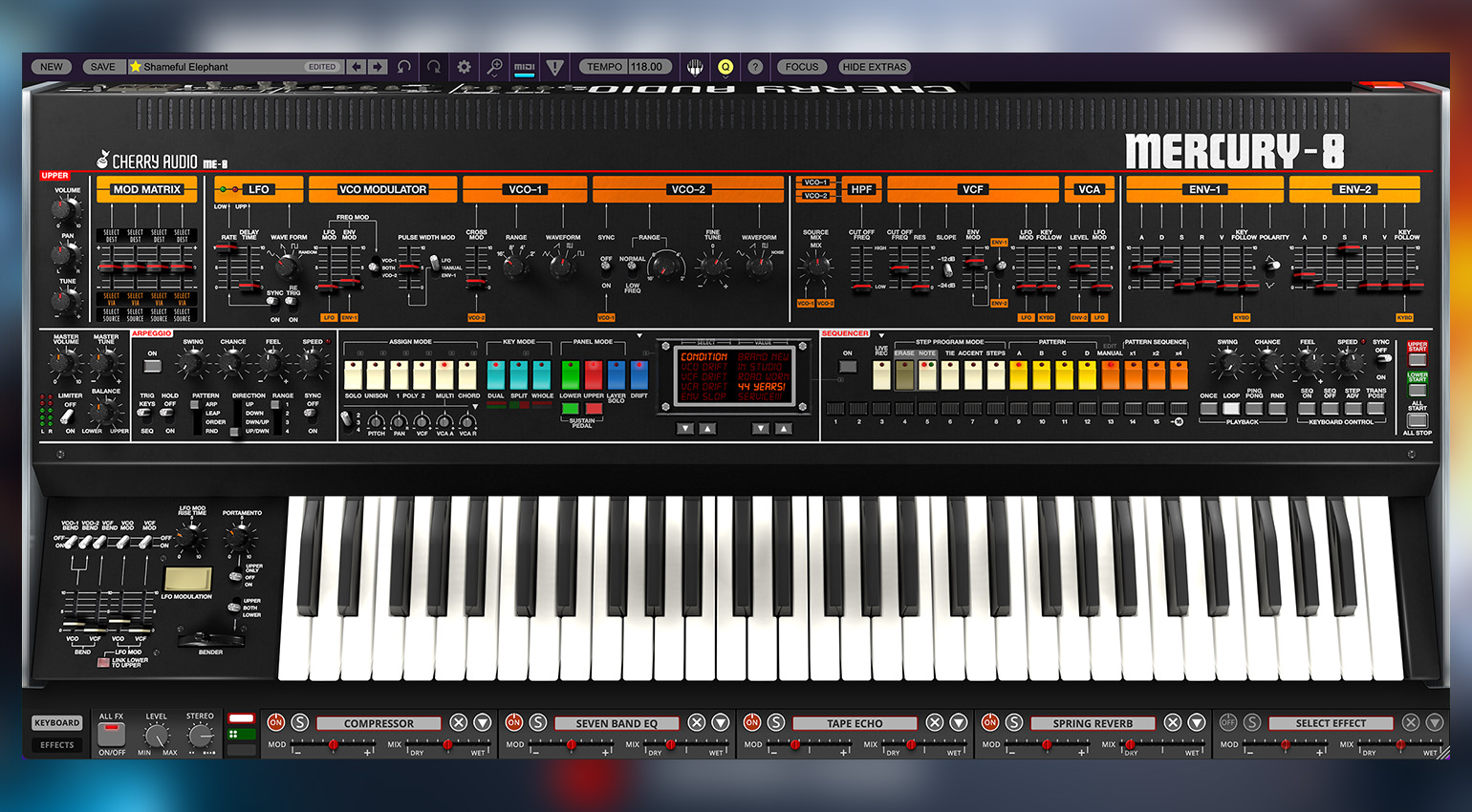
Dan Goldstein: “What synthesizer is more legendary than the Roland Jupiter-8? Other companies had created respectable emulations of the JP-8, but our customers kept asking for a Cherry Audio version. From the start, it was critical that patches could be moved seamlessly between the hardware and the software, and back to the hardware, using MIDI SysEx patch data. Then, every detail of the highpass and lowpass filters, envelope generators, VCAs, oscillators, and LFOs had to be perfectly matched to the hardware, so that identical slider positions would yield identical responses. There were all sorts of technical challenges to pulling this off, but the sheer joy of hearing the flawless factory preset sounds generated by the software made it all worthwhile!”

More Information
- Cherry Audio homepage
- More about Cherry Audio
- More about synthesizers
- Buy Cherry Audio products at Thomann*
*Note: This article contains advertising links that help us pay for this site. Don’t worry: the price for you will always be the same! If you buy something through these links, we will receive a small commission. Thank you for your support!

This might also interest you