Kick and Bass Workshop: Building a Solid Low-End Foundation

 5,0 / 5,0 |

In this Kick and Bass workshop, we take a closer look at the relationship between these two crucial elements, which can make or break a mix.
In this Article:
No matter what genre of music you make, there are few relationships more pivotal than the one between the kick drum and bassline in the mix. When these two elements complement each other, the entire mix suddenly feels punchier and more focused. However, when they aren’t working together, the mix feels muddy and unbalanced.
Let’s discuss the various aspects of shaping, balancing, and gluing the kick and bass to create a stable foundation to build mixes around that translates across a wide range of playback systems.
Kick and Bass Workshop: Knowing The Roles
Before we start applying compression or EQ, we need to define the role that each element is playing in the mix.
With the kick, we are looking for:
- Transient punch
- Rhythmic anchoring
- Low-end power
Meanwhile, the bass gives us:
- Sustained weight
- Harmonics
- Groove and rhythmic movement
Tip: It’s essential that they are not fighting over the same part of the frequency range. Instead, they need to interlock like Tetris blocks.
Kick and Bass Workshop: Sound Selection
An essential hack for consistently achieving great mixes is choosing the right sounds. When your kick and bass clash from the get-go, there is no amount of processing that can properly fix it.
Kick Selection
To discern the characteristics, always ask:
- Is the kick’s energy contained more in the mids or sub range?
- Is the decay long or short?
- Where is the fundamental frequency point?
A house kick, for example, can sit between 50 and 60 Hz with an extended tail, while a rock kick drum contains less sub energy and a sharper attack between 3 and 5 kHz.
Bass Selection
When choosing base sounds, ask:
- Is it more focused in the sub-region or midrange and rich with harmonics?
- Does it sustain or have a rhythmic signature?
A sub bass built with a sine wave behaves differently in the mix compared to a bass guitar or overdriven bass synth.
Tip: When dealing with a particularly sub-heavy kick, try using a bass sound with a more defined midrange edge, and vice versa.
Kick and Bass Workshop: Managing Frequencies
Some of the most critical work happens in this section.
Determining the Fundamental
Using a spectrum analyzer or EQ plugin, identify:
- The primary fundamental of the kick (55 Hz, for example)
- The dominant bass frequency (40 or 80 Hz, for example)
Once we’ve identified this, we need to assign the kick and bass to their own special part of the frequency range.
Creating Space with EQ
A typical approach:
- Accentuate the kick by slightly boosting its fundamental frequency
- Create a gentle cut on the bass at the same frequency
- Give the bass a boost in its own key frequency region
- Cut the kick there if necessary
For example:
- Kick: +3 dB boost at 60 Hz
- Bass: -3 dB cut at 60 Hz with a +3 dB boost at 90 Hz
This can create separation without contributing too much to the low-end energy overall.
Using a High-Pass Filter
Cleaning up can also create more definition:
- If the bass doesn’t require extreme sub energy, a slight high-pass filter can be effective.
- Trim away the unnecessary sub energy from the kick if there is mud.
- Even slight EQ cuts below the 30 to 40 Hz region can significantly tighten the overall feel.
Tip: In genres like Drum & Bass, the kick and bass relationship is so crucial that producers like Sub Focus will even shift the key of the entire song up or down by one or two semitones to get the best results.
Kick and Bass Workshop: Alignment and Phase
Phase issues can weaken the impact of your low-end considerably.
When the kick and bass aren’t properly in phase, it can cause cancellation, which is especially noticeable when dealing with sub frequencies.
Here are some quick checks to do:
- Reverse the polarity of the bass or kick and do A/B comparisons to check for improvement
- In your DAW, zoom in and manually align the transients of the waveforms if necessary
- Also, make use of specialized phase alignment plugins if you have access to them.
Tightening Timing
Even minute timing discrepancies matter:
- Try nudging bass notes slightly forward or back on the grid
- Keep the bass attack points and kick transients aligned, or offset them intentionally for feel and groove.
Tip: In EDM and techno, the precise phase alignment is crucial for maximizing impact on large PA systems. Meanwhile, in hip-hop and funk, a more human, organic looseness adds to the feel with control and intention behind it.

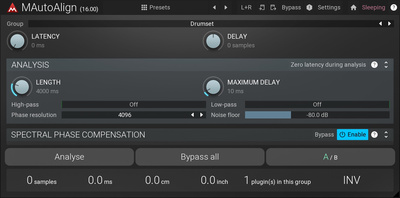

Kick and Bass Workshop: Sidechain Compression
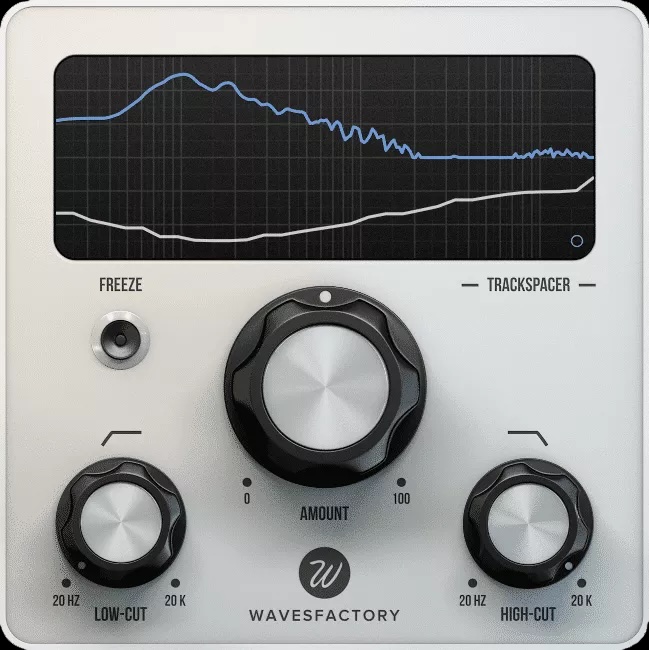
Using sidechain compression is an effective technique for creating space in the mix.
How It Works:
The bass compressor is triggered by the kick, which briefly reduces or ducks its level whenever the kick hits.
Essential Settings:
- Fast attack: 0-5 ms ensures the bass is ducked immediately
- Medium, tempo-synced release: Use 1/4 notes (500 ms for 120 bpm) for a natural feel
- Moderate ratio: Anywhere from 4:1 – 8:1 without pronounced pumping unless intended
Subtle vs Obvious
- Subtle sidechaining produces cleaner separation
- Heavy sidechaining creates the pulsing rhythmic effect found in French House and many other EDM genres
Tip: Don’t immediately dial in the most extreme settings; 1-3 dB of gain reduction is usually enough.

Kick and Bass Workshop: Transient Shaping
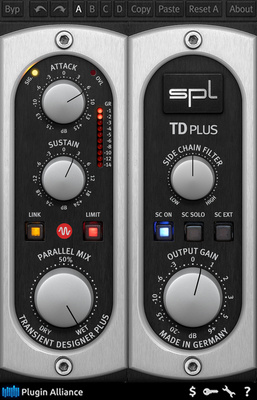
With careful transient shaping, we can clearly define each element.
Kick
- Boosting attack adds more punch
- Shortening sustain can help if it’s overlapping with the bass
Bass
- Reduce attack if it’s fighting with the kick’s transient
- Increase sustain to add weight
Tip: With this approach, we can reduce masking without relying on EQ alone.

Kick and Bass Workshop: Harmonics
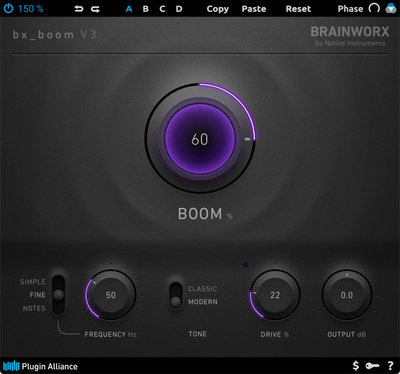
Because sub bass doesn’t translate onto tiny speakers, we can use saturation and layering to add harmonics that cut through.
Adding Bass Harmonics
Start with:
- Saturation
- Distortion
- Exciters
This introduces clear upper harmonics, making the bass more intelligible on smartphone and laptop speakers.
Bass Layering
A useful technique:
- Start with a sub layer with clean sine or low-frequency content exclusively
- Then add a layer in the midrange with harmonic texture and/or distortion.
- Finally, blend the two so you can hear the notes and feel the weight of the bassline.
- Read more about mix translation

Kick and Bass Workshop: Mono Compatibility
Usually, low-frequency content is mixed mono as a safety-first measure.
Why?
When sub frequencies are stereo, it can result in:
- Phase cancellation
- Poor translation on PA systems
For safety:
- All elements below 100 Hz should be kept mono
- Only use stereo image processing on upper bass harmonics
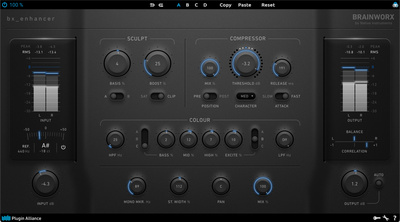
You can find tools for summing low frequencies into mono in most DAWs, and plugins like bx_glue and bx_enhancer from Brainworx* have a mono maker function.
Tip: There are real-world examples of stereo sub bass, like Where Is Everybody? by Nine Inch Nails. However, the song has been skillfully written and engineered so that the stereo bass part has its own space and time within the groove, for maximum impact.

Kick and Bass Workshop: Interaction and Groove
If we look beyond the technical processing aspects, the rhythm signature or groove pattern of the instruments is equally as crucial.
Kick and Bass Patterns
Think from a musical perspective:
- Does the bass part allow enough space for the kick?
- Do they land at once or alternate?
Examples:
- Four-on-the-floor: The bass is usually ducked or lands in between the kick notes
- Hip-hop: The bassline is often led by the kick or accentuated by its rhythm pattern
- Funk: The interlocking rhythms emphasize movement
Note Length
By shortening bass notes, it can:
- Improve definition and clarity
- Reduce overlapping notes between the kick and bass
Tip: Although extended sustained bass notes can sound great, this requires careful control.
Kick and Bass Workshop: Compression and Glue
Once you’ve balanced the kick and bass, you can glue them together with subtle bus processing.
Bus Compression
Route both channels to a bus and use:
- A slow attack time to maintain transient punch
- A fast/medium release time, keeping the music’s tempo in mind
- A low ratio of around 2:1 or lower
Aim for cohesion, rather than smashed compression.
Bus Saturation
With subtle saturation, we can:
- Increase density
- Accentuate harmonics
- Give the low-end a more “complete” overall feel.
Tip: These techniques are effective when used in series or in parallel. Try both ways to see which suits your workflow.
Kick and Bass Workshop: Referencing
When working with the kick and bass, always check your mix when making adjustments.
Use Reference Tracks
Do comparisons between your low-end and professionally mixed tracks in the same genre:
- Is the level of your kick too high?
- Is your bass boomy or muddy?
- Does your low-end feel focused and well-articulated?
Do checks on different systems:
- Studio monitors
- Headphones and AirPods
- Car speakers
- Smartphone/laptop speakers
Tip: When your kick and bass translate well everywhere, most of the battle is won.
Kick and Bass Workshop: Conclusion
Achieving a strong kick and bass relationship is more about informed decision-making rather than using a single magic plugin.
Here’s a basic, summarized workflow:
- Selecting complementary sounds
- Managing overlapping frequencies
- Controlling dynamics
- Timing and phase alignment
- Enhancing harmonics for translation
When it’s executed correctly, the low-end breathes effortlessly with power, clarity, and focus.
More than anything, learn to trust your ears. While meters and analyzers can be useful, how it feels should be the final test. Success is when the track moves people both emotionally and physically.
More Info:
*Note: This article contains affiliate links and product widgets that help us fund our site. Don’t worry: the price for you always stays the same! If you buy something through these links, we will receive a small commission. Thank you for your support!

This might also interest you