Famous Rule-Breaking Recordings: Innovation Behind Timeless Songs
The method in the madness of classic records.

 4,9 / 5,0 |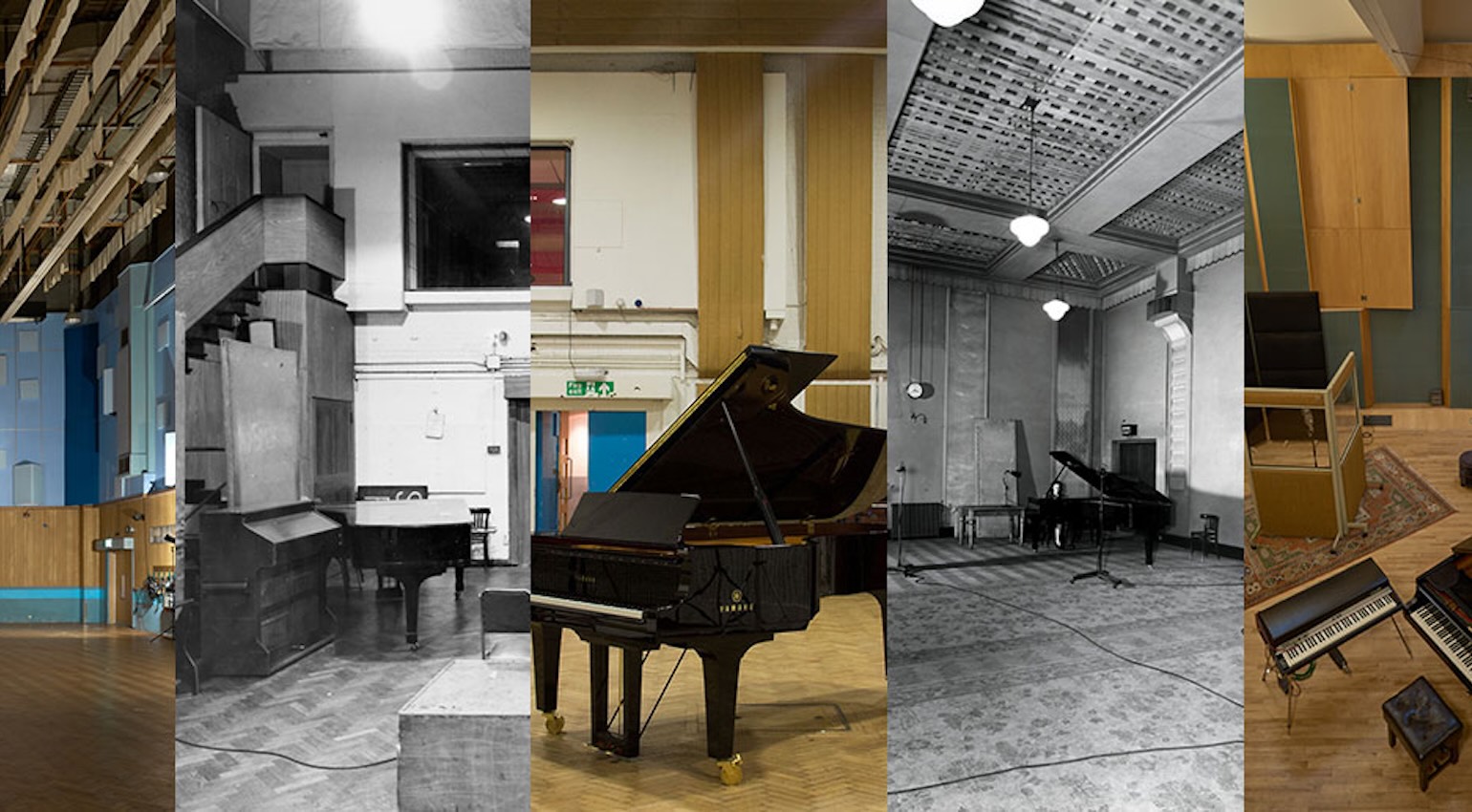
Famous Rule-Breaking Recordings: Innovation Behind Timeless Songs · Source: Abbey Road Studios

We look at Rule-Breaking Recordings that used unconventional approaches and techniques to create some of the most iconic songs of all time.
In this Article:
In the context of the current DAW-based production landscape, with our wealth of corrective and creative plugin processors, it’s hard to imagine making music any other way. However, when we take a trip back in time, we often find that being limited to a certain recording medium and a finite number of tracks made musicians, producers, and engineers think creatively in different ways.
Rule-Breaking Recordings: The Beatles – Strawberry Fields Forever
Is it possible to take two recordings of a song with different tempos and keys and simply join them together? John Lennon certainly thought so during the sessions for The Beatles’ iconic Sgt. Pepper’s Lonely Hearts Club Band album. Luckily for Lennon and for us music fans, he had two geniuses in George Martin and Geoff Emerick to bring his vision for Strawberry Fields Forever to life.
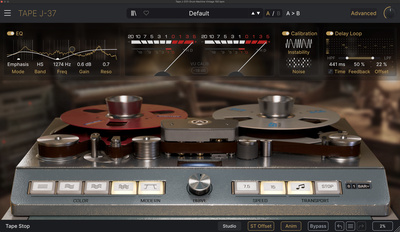
With the help of Ken Townsend and the EMI technical department, Emerick was able to modify the Studer J37 using an external oscillator with a variable-frequency control to adjust the speed of the capstan motor. This allowed Martin and Emerick to use Artificial Double Tracking (ADT) at times when Lennon preferred not to record his vocal doubles manually.
This particular gadget was also used to match the slower “Take 7” in B-flat major with the faster “Take 26” in C major, and then seamlessly splice them together around 60 seconds into the recording. This contributed to the distinctively surreal sound of Strawberry Fields Forever, which remains one of the most unique recordings of all time.
Read more about Tape Emulation


Rule-Breaking Recordings: 10cc – I’m Not In Love
When 10cc were recording their third studio album, The Original Soundtrack, the band agreed to write a love song. However, when they created the simplistic bossa nova demo for what would become I’m Not In Love, it somehow felt lacklustre, and the band was hungry to push boundaries and outdo their previous artistic exploits.
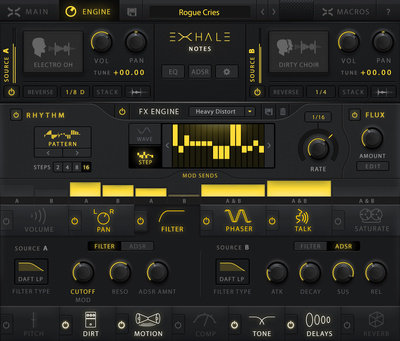
To take the song in a completely new direction, Laurence “Lol” Creme suggested using accapella voices and tape loops. So, for three weeks, Creme, Graham Gouldman, and Kevin Godley created sustained vocal sound beds using the entire chromatic scale until there were an astounding 624 voices to choose from and layer.
The band then summed these tape loops so that each of the three singers had three faders to control on the mixing console, and created a performance that became the dream-like soundscape of I’m Not In Love. The fact that they used the mixer as a musical instrument and created a unique arrangement makes this song stand out, even today.

Rule-Breaking Recordings: David Bowie – Heroes
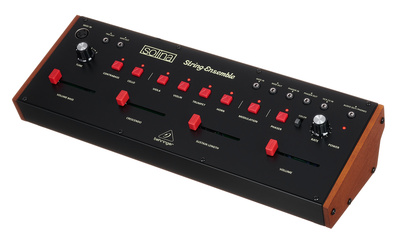
The title track of David Bowie’s 12th studio album, Heroes, is unique in many ways. From its simple Krautrock-influenced two-chord structure to the choice of instruments, and the way it came together organically in studio like a jam. Bowie played a tape-based instrument called the Chamberlin M1, which was similar to the Mellotron, as well as the ARP Solina String Ensemble, which added texture to the mix.
However, possibly the most recognizable instrumental contributions came from Brian Eno with his EMS VCS3 synthesizer and Robert Fripp, who took an atmospheric approach with his guitar parts. Together, the swirling layers of synths and guitar feedback create the soundscape that became the perfect platform for Bowie’s profound lyrics.
The only problem was that producer Tony Visconti had only one track left to record the vocals. To match the song’s story-like arrangement, Visconti used three mics and added gates on the +/- 15 ft and 50 ft ambient mics. This meant that the close U47 captured everything, while the U67 (15 ft away) only engaged at a certain volume, and the furthest mic only kicked in when Bowie really let loose toward the end of the song.

Rule-Breaking Recordings: Prince – When Doves Cry
In studio, Prince was a prolific artist who thrived on his creative fluidity and his ability to record all the instruments for a song himself, both quickly and efficiently. In addition to this, he had a drive for success, and his understanding of the music industry took him in the direction of film in order to reach a wider audience.
Rather than a traditional album release, Prince scaled the concept for his sixth studio album, Purple Rain, into a feature film, playing the role of the leading character, and his latest collection of songs became the soundtrack. While the album was completed beforehand, director Albert Magnoli found he needed one last song for the plot of the main character, so Prince returned to the studio to set to work on what would become When Doves Cry.
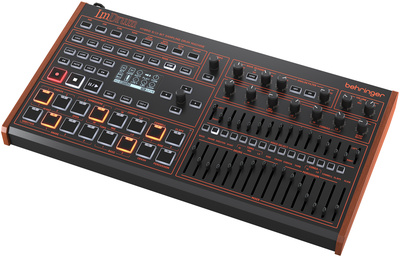
In a one-day session, he completed the recording in the same musically dense style as the rest of the album. However, he wasn’t happy with the overly complex arrangement. This immediately led to experimentation, as Prince stripped back the song completely during mixdown, even removing the bass track. With this new sparse arrangement, the pitched LinnDrum hits had more room to breathe, and When Doves Cry became a timeless track in Prince’s discography.
More about Rule-Breaking Recordings:
*Note: This article contains affiliate links that help us fund our site. Don’t worry: the price for you always stays the same! If you buy something through these links, we will receive a small commission. Thank you for your support!

This might also interest you
One response to “Famous Rule-Breaking Recordings: Innovation Behind Timeless Songs”
New Order’s Blue Monday was only intended to be an interval tune for the live show. It was all sequenced by CV, and they nearly gave up on the tune, due to difficulties in sequencing all the parts. The cover was a mock ‘floppy disk’ outer sleeve, and the whole package cost 5p more per copy to make than Factory Records sold it for. Only released on 12′ single, it is still the biggest selling 12′ single. Could you cheer if you were selling thousands of copies but losing 5p on every one? The stuff of legends….