Techno Legends Use This Gear: Robert Hood and the Discipline of the TR-909
How Rhythm, Space, and Discipline Shape a Timeless Club Sound

 4,0 / 5,0 |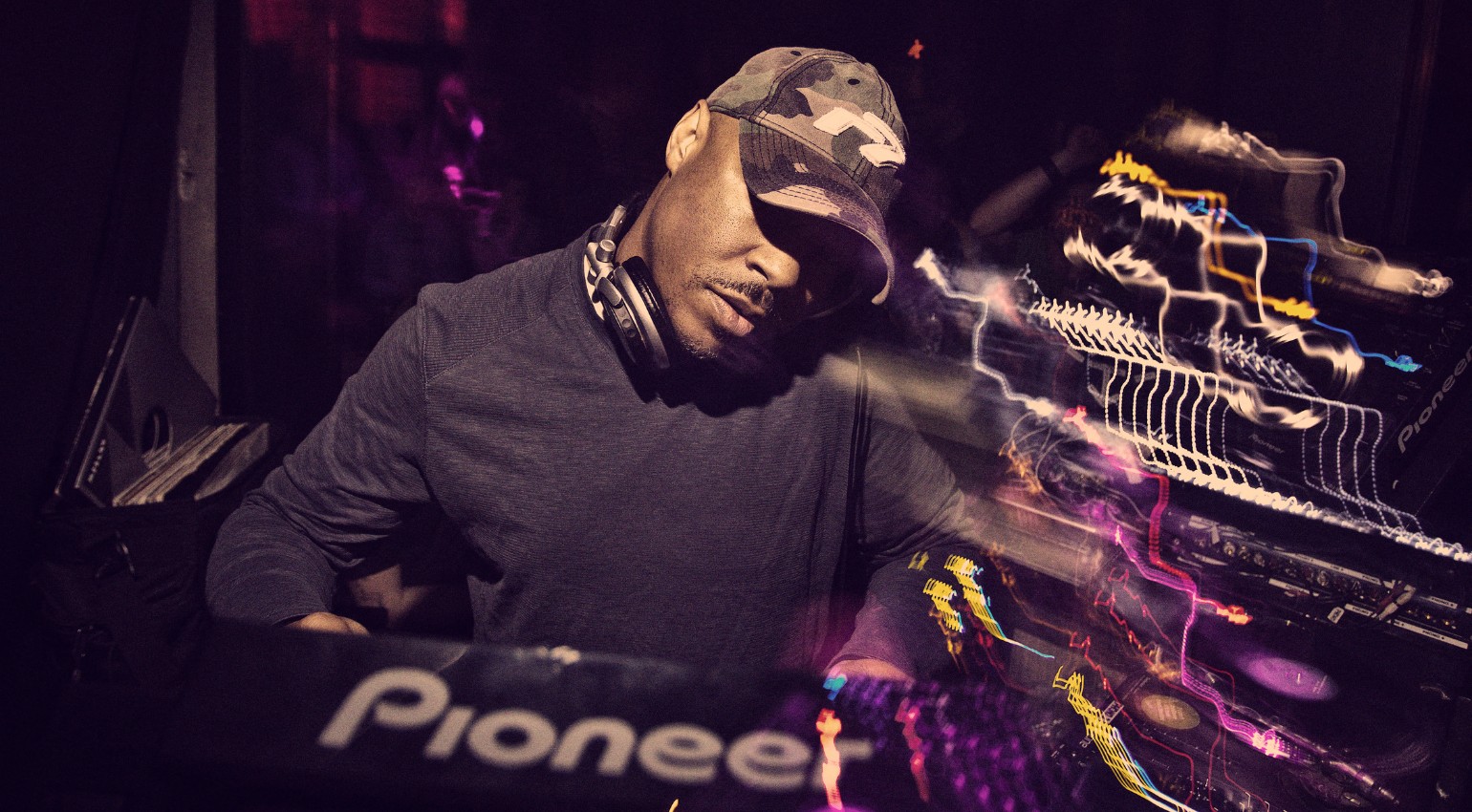
Techno Legends Use This Gear: Robert Hood and the Discipline of the TR-909 · Source: Gonzales Photo / Alamy

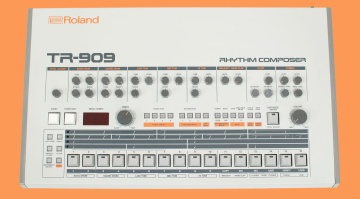
While Jeff Mills stands for futuristic precision and Richie Hawtin sees machines as a flexible system, Robert Hood embodies the most radical form of reduction. His music isn’t a showcase of gear, but a lesson in how much expression can live inside just a few elements. At the center of it all is a typical techno instrument that plays an almost disciplinary role in Hood’s work: the Roland TR-909. Hood doesn’t use it to stack sounds, he uses it to define structure, space, and energy. That’s what turns a drum machine into a compositional instrument.
Key Facts
- Robert Hood is a key figure in Detroit techno (Underground Resistance) and a co-founder of minimal techno
- His sound is characterized by radical reduction, rhythmic focus, and clear structure
- The Roland TR-909 is a central component of his musical language
- Hood’s tracks demonstrate how tension can be created through timing and repetition rather than complexity
- Minimal Nation is considered a manifesto of a stripped-back, machine-driven approach to techno
- Even in live performances, Hood prioritizes discipline, groove, and controlled energy over flashy effects
- His influence continues to shape modern techno productions with fewer tracks and more focus
All About Robert Hood
Robert Hood: From Minimal Techno to Maximum Energy
At first, Hood’s sound seems simple and almost subdued, but that is precisely where its power lies. Every beat, pause and accent has a purpose in the mix. His tracks demonstrate that techno tension stems from conscious control over repetitionrather than constant change. The Roland TR-909 is not only the rhythm generator but also the framework around which everything else aligns. It determines how much space a sound gets and how long a groove is allowed to breathe.
From Detroit to the World: A Biography with Machine DNA
Hood hails from Detroit, the city where techno emerged as a cultural movement and electronic music was first understood as a futuristic expression of urban reality. In the late 1980s, he was part of Underground Resistance, a collective that used electronic machine music as a statement of independence and creative control. In this environment, Hood learned early on that hardware wasn’t decoration, it was attitude. Drum machines and synths were treated like instruments in a band, not interchangeable sound sources.
While many producers expanded their studios throughout the 1990s, Robert Hood took the opposite approach. He deliberately reduced his setup, concentrating on a few devices he understood in detail. This focus led to the TR-909 becoming the central hub of his sound. It was not only a rhythm machine but also a timekeeper, an arrangement aid, and a dynamic means of expression. This limitation gave rise to his unmistakable minimal style.
The TR-909 – Rhythm as Architecture
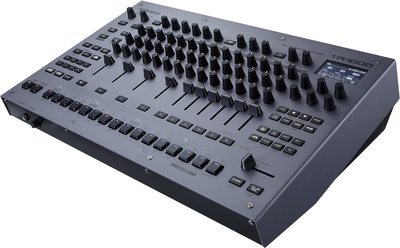
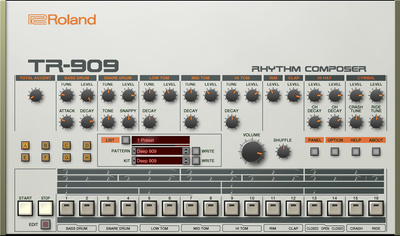
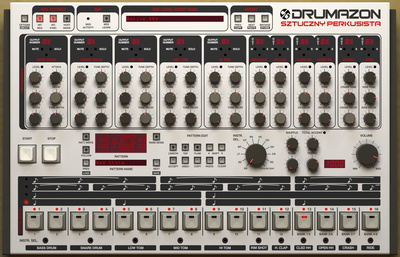
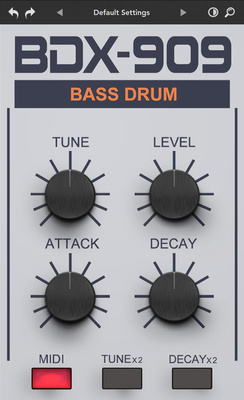
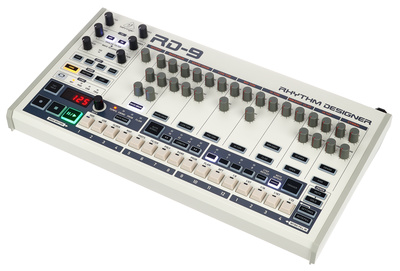
The Roland TR-909 is almost a symbol in techno, but Robert Hood elevates its significance. To him, the kick is not only the foundation but also the pulse that guides the entire track. Hi-hats structure the space while claps or rimshots build tension without overwhelming the groove. Each 909 voice serves a clearly defined role in the overall structure.
Hood works with subtle variations within seemingly static patterns. Adding an offbeat, altering the velocity minimally, or shifting an accent slightly are enough to change the character of a loop. These micro-changes are hardly spectacular in the studio, but they are enormously effective on a large sound system. That’s the philosophy: It’s not the quantity of sounds that’s important, but rather, the precision of their placement.





Minimal Nation – Reduction as a Statement
With the album Minimal Nation, Robert Hood made a clear musical statement in the early 1990s. The tracks are often reduced to a few elements, with the TR-909 forming the rhythmic backbone. Short motifs that develop over time dominate instead of complex harmonies or sprawling arrangements. This creates a hypnotic effect defined not by melody but by groove and dynamics.
Notably, this album is based not on technical excess, but on clear decision-making. Hood allowed ideas to remain as they were when they worked well, rather than developing them further just because it was possible. This approach gives the music an immediacy that still feels modern today. Minimal Nation is therefore less a style than an attitude toward production and machines.
Robert Hood Live: Focus Instead of Effect
Hood remains true to his minimalist philosophy on stage as well. His sets are not characterized by spectacular effects or hectic transitions, but rather, controlled energy development. The tracks are precisely placed, and tension builds through timing and space. You don’t watch a performance – you’re pulled into a flow that slowly builds and steadily carries you along.
The aesthetics of his studio work are directly reflected here. The drums are the foundation on which everything is built, not just a rhythmic framework. By avoiding visual and technical overload, Robert Hood puts the sound itself at the center. His performances demonstrate that reduction can be just as powerful in a live setting as in the studio.
Significance for Today’s Techno Producers
At a time when productions often consist of dozens of tracks, Robert Hood‘s approach seems radical. However, that’s why his approach remains relevant. It reminds us that groove, space, and dynamics are what truly carry a track. Many modern productions adopt this idea by deliberately working with fewer elements. The fascination then arises from small changes rather than constantly new sounds.
Robert Hood represents a school of techno in which machines and humans have a clear relationship with each other. Technology offers possibilities, but the art lies in leaving things out. Those who have internalized this approach understand why a single drum machine can fill a room for hours.

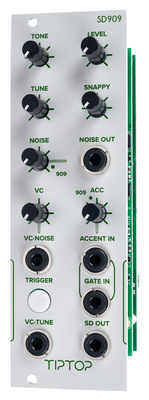
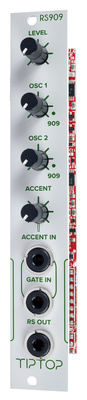
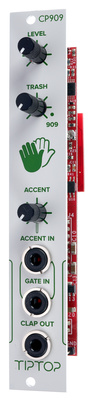
Recreating Robert Hood’s Sound in the Studio: Minimal Groove with Ableton Live
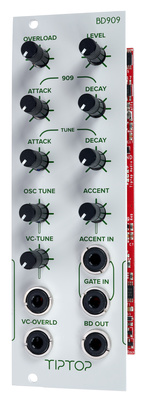
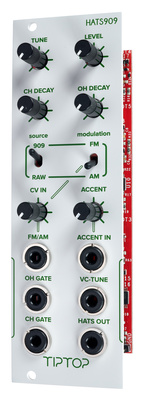
To recreate Robert Hood’s world, you don’t need a huge setup. In Ableton Live, a Drum Rack with quality TR-909 samples is sufficient – and these samples are widely available. Place the kick on every quarter note, put closed hi-hats on the offbeats, and add claps or rims sparingly in select places only. The quantity of sounds doesn’t matter as much as their placement. Leave some gaps so the groove can breathe. Slight velocity differences and minimally shifted notes create more life (tip: groove quantization).

For the bass or stab line, use the Ableton instrument Analog. Choose a simple sawtooth or square wave, close the filter, and control the cutoff frequency with a short envelope. Play only a few notes. Often, a single rhythmically repeated motif is enough. Small variations in filter decay or pitch, which you can set via automation, add movement without destroying the reduction. The sound should support, not dominate. If the line feels too melodic, it’s too much. In Hood style, function, not the hook, is what matters. Idea (1-bar loop): A2 – pause – A2 – G2 – pause – A2 – pause – G2.
The interaction between the drums and the synth is important for the organic character. Sidechain compression from the kick signal to the Analog track provides the typical pumping, while a subtle saturation or drive plugin (tip: Roar) glues the drums together. If you’re working with longer loops, change details such as the hi-hat opening or filter movement. This creates a minimal pattern that builds tension over time without ever breaking the flow. It’s this balance that defines the DIY approach in the spirit of Robert Hood.
Conclusion: The Machine as a Discipline
Robert Hood proves that the TR-909 can be far more than a nostalgia symbol. In his hands, it becomes a discipline – a benchmark for precision, restraint and clarity. Every sound is deliberately placed, and every pause has meaning. This creates an understanding of techno based not on excess but on control.
His tracks demonstrate that creative strength often stems from limitations and minimalism. By simplifying his setup, he honed his expression and developed a style that continues to influence music today. That’s why Robert Hood remains a reference for producers who want to achieve more with fewer sounds.
FAQ: Robert Hood and the TR-909
Who is Robert Hood?
He is a techno producer from Detroit and a central figure in the development of minimal techno. In the late 1980s, he was part of the Underground Resistance collective and shaped the scene with his radically reduced style. Rather than complex arrangements, he relied on a few precisely placed elements. His approach continues to influence producers worldwide.
What is Robert Hood known for?
He is best known for his minimalist techno sound, which focuses on rhythm, space, and repetition. His tracks often dispense with overloaded melodies or effects, concentrating instead on groove and structure. His album Minimal Nation, in particular, is considered style-defining. This approach made him a leading figure in minimalist club techno.
What Role Does the Roland TR-909 Play in Robert Hood’s Music?
For Hood, the Roland TR-909 is more than just a drum machine. It forms the rhythmic foundation of many of his productions, determining tempo, dynamics, and structure. He uses kicks, hi-hats, and claps strategically to build tension without overwhelming the track. Thus, the 909 functions as a musical framework for him.
Why is the TR-909 so Important in Techno?
The TR-909 is one of the most influential drum machines in techno history. Its distinctive sound, particularly the kick, claps, and hi-hats, has influenced countless productions since the 1990s. Its sequencer makes it ideal for creating repetitive, precise grooves. Minimal techno demonstrates how effective its reduced sound palette can be.
Does Robert Hood Only Work with Hardware?
He is known for his hardware-based approach, particularly with regard to drum machines like the TR-909. He prefers direct sound shaping and rhythmic control to complex software editing. Even though modern production environments are often hybrid, his working methods remain strongly influenced by classic hardware aesthetics.
Why is Robert Hood Considered a Minimal Techno Pioneer?
He stripped techno down to its rhythmic core when many productions were becoming increasingly full, dense, and complex. He demonstrated that a few sounds are sufficient if used precisely. This attitude influenced an entire generation of producers. As a result, minimal techno became established not only as a stylistic device but also as a way of thinking.

Through his work, Robert Hood demonstrated that machines like the TR-909 can transcend their technical function. In his tracks, the TR-909 becomes the structural core of the music, not just an effect generator. To him, rhythm is architecture, not just movement. The machine provides the framework, the human determines the balance.
This approach reminds us that creative strength often arises from limitation. Rather than constantly layering new sound sources, Hood focuses on precision, timing, and a sense of space. This creates a vision of techno that remains modern today. The TR-909 symbolizes his attitude: fewer possibilities, but more expression.
More Information
- Techno Legends Use This Gear: Richie Hawtin aka Plastikman
- Techno Legends Use This Gear: Jeff Mills and His Roland TR-909
- Eurorack in Techno 2026: Why Does a Modular System Belong in a Modern Techno Setup?
- The Best Synths for Techno Productions in 2025: Powerful, Flexible and Creative
- Drum Machines for Techno 2026: Punch, Workflow, and Character
- Techno Beats in Ableton Live Made Easy!
- Techno Rumble in Ableton Live – Made Easy!
- Dub Techno: This Gear is a Perfect Match in 2026
- Producing Techno with Minimal Gear: These 3 Products are a Perfect Match
- How Detroit Techno Became an Unstoppable Global Phenomenon
*Note: This article contains affiliate links that help us finance our site. Don’t worry: the price for you remains the same! If you buy something through these links, we receive a small commission. Thank you for your support!

This might also interest you
One response to “Techno Legends Use This Gear: Robert Hood and the Discipline of the TR-909”

great content