Studio Monitors With a Coaxial Design: What Are the Advantages?
What Makes the Palmer ORBIT 11 Stand Out as a Studio Monitor?

 2,6 / 5,0 |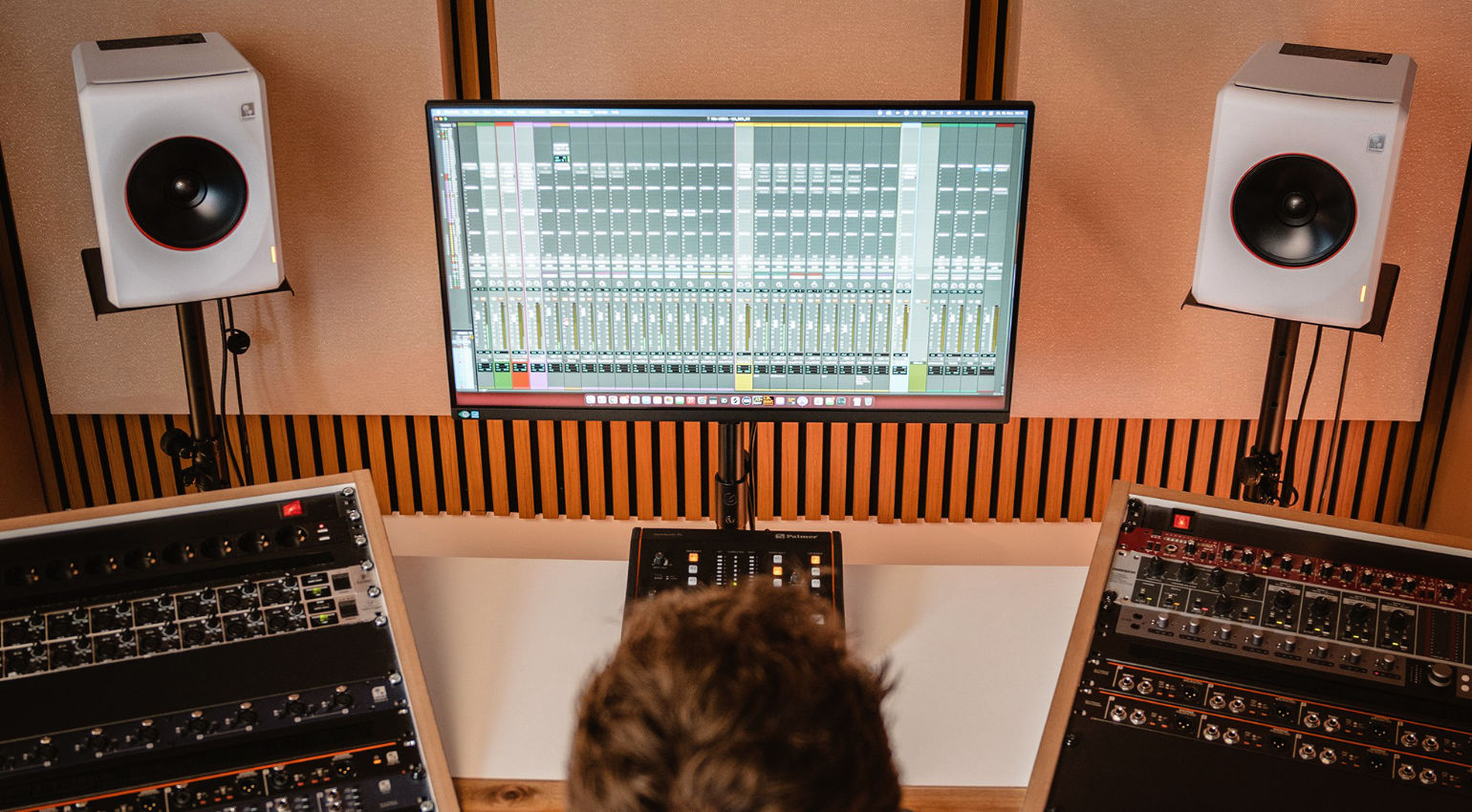

If you’re shopping for studio monitors or speakers, you’ve probably come across the term “coaxial.” If you’re wondering what a coaxial design actually means, we’ll break it down clearly and concisely. Using the Palmer ORBIT 11, we’ll take a look at a brand-new studio monitor that combines a coaxial driver design with several other innovative features.
Key Facts
- Coaxial studio monitors align the tweeter and woofer on the same acoustic axis, creating a true point-source design.
- This configuration improves phase coherence and delivers more precise stereo imaging.
- Sound dispersion remains consistent across the full frequency range, reducing tonal shifts when listening off-axis.
- Coaxial monitors often perform exceptionally well in nearfield monitoring environments.
- The design can help minimize room reflections and improve clarity in untreated or smaller studio spaces.
- Modern implementations combine coaxial drivers with additional innovations such as dual woofers or cardioid front baffles.
- Coaxial monitors are especially valued for accurate mixing, evaluating spatial depth, and ensuring reliable translation across playback systems.
Studio Monitors With a Coaxial Design: Explained
What Does a Coaxial Design Mean for Studio Monitors?
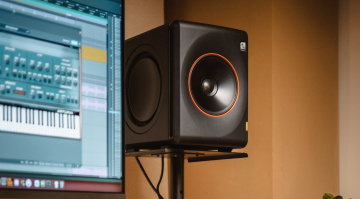
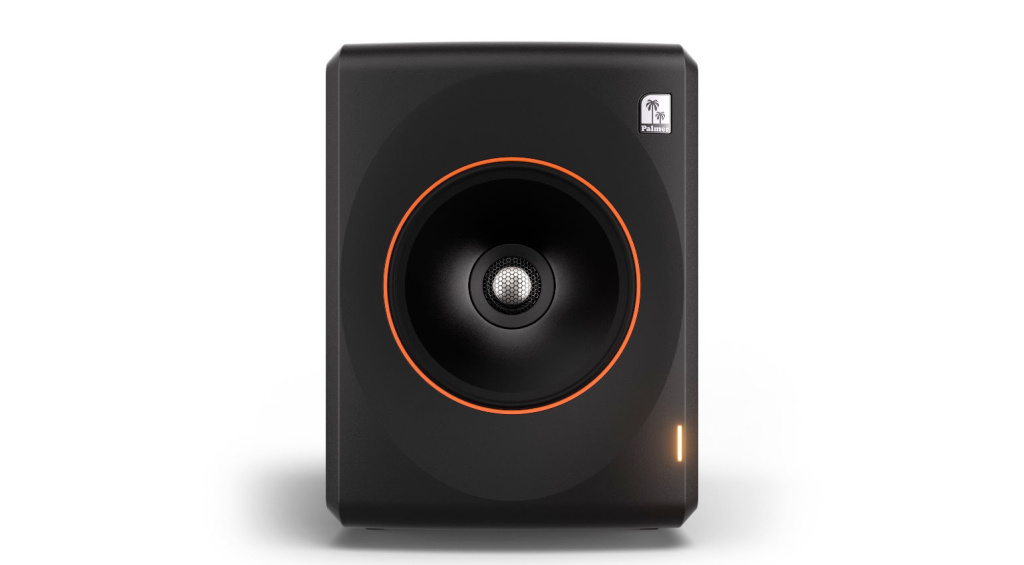
Speakers with a coaxial design feature at least two drivers — typically a tweeter and a midrange or woofer — aligned on the same axis and positioned at the same physical point. The tweeter is usually mounted in the center of the midrange or woofer cone, surrounded by the larger driver.
What Are the Advantages of a Coaxial Design?
Studio monitors with a coaxial design offer several advantages over conventional systems. They stand out in terms of spatial accuracy and time alignment of the audio signal. Because the tweeter and woofer share the same acoustic axis, they effectively act as a point source. This improves phase coherence and time alignment, since all frequency components reach the listening position at nearly the same time. For tasks like mixing, this allows for more precise evaluation of transients, stereo imaging, and depth placement.
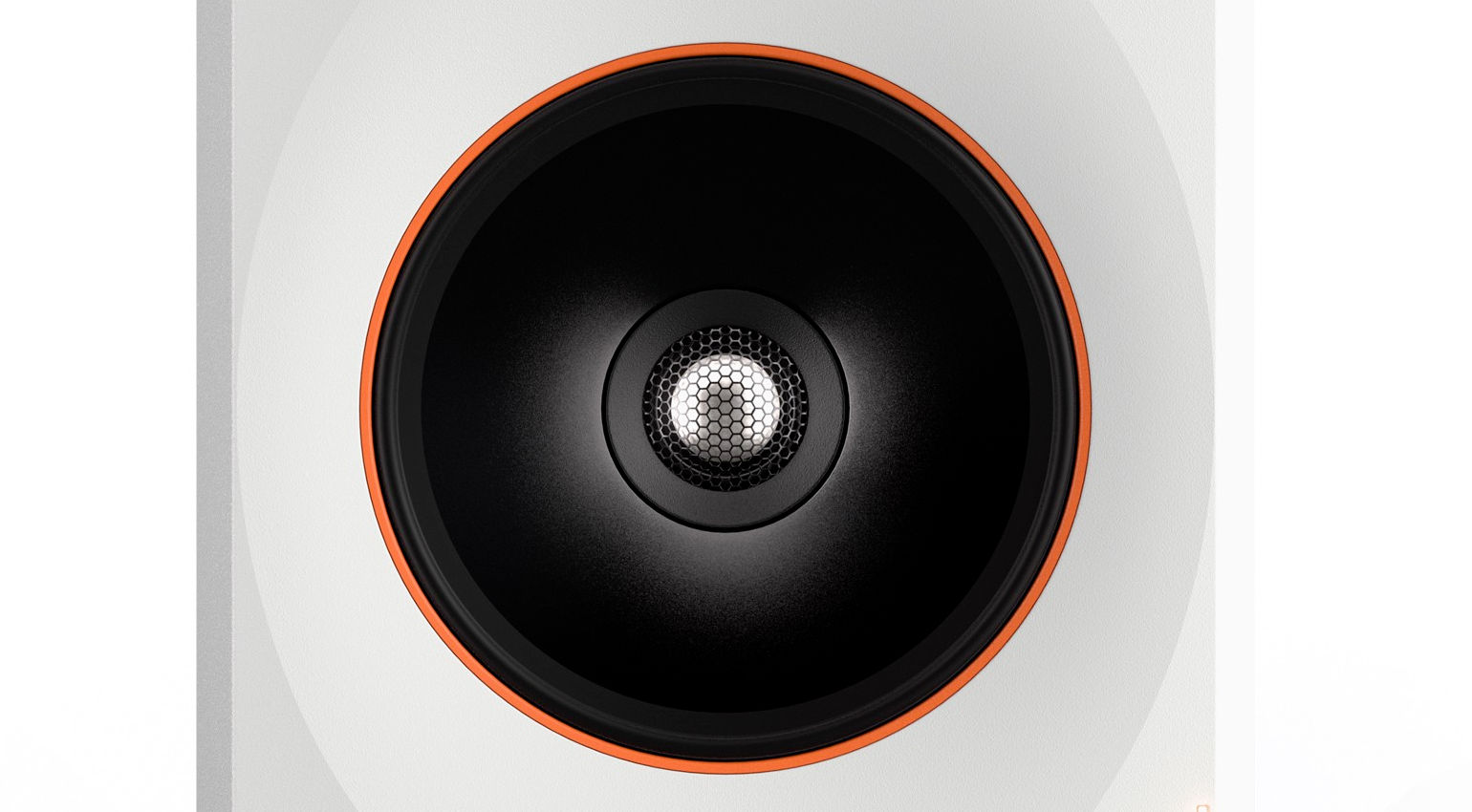
In addition, coaxial systems provide more consistent dispersion characteristics. This reduces interference between drivers and ensures more even sound reproduction, even outside the sweet spot. That can be especially beneficial in studios that are not fully acoustically treated, as it leads to a more stable listening experience and minimizes the impact of room reflections.
Overall, coaxial studio monitors support more analytical work by offering clearer sound localization, reliable spatial imaging, and balanced reproduction across the listening area.
The Palmer ORBIT 11 as an Example of Coaxial Design
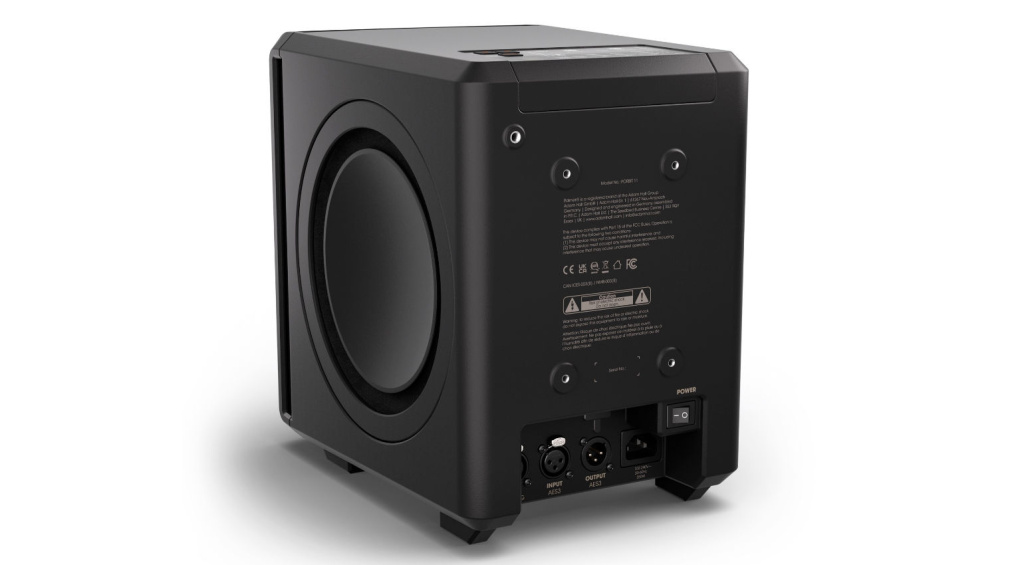
The new ORBIT 11 studio monitor from Palmer is a strong example of this concept. This 3-way monitor features a coaxial point-source design, pairing a 6.5-inch midrange driver with a centrally mounted 1-inch tweeter. It is complemented by dual 8-inch woofers engineered for low-vibration operation.
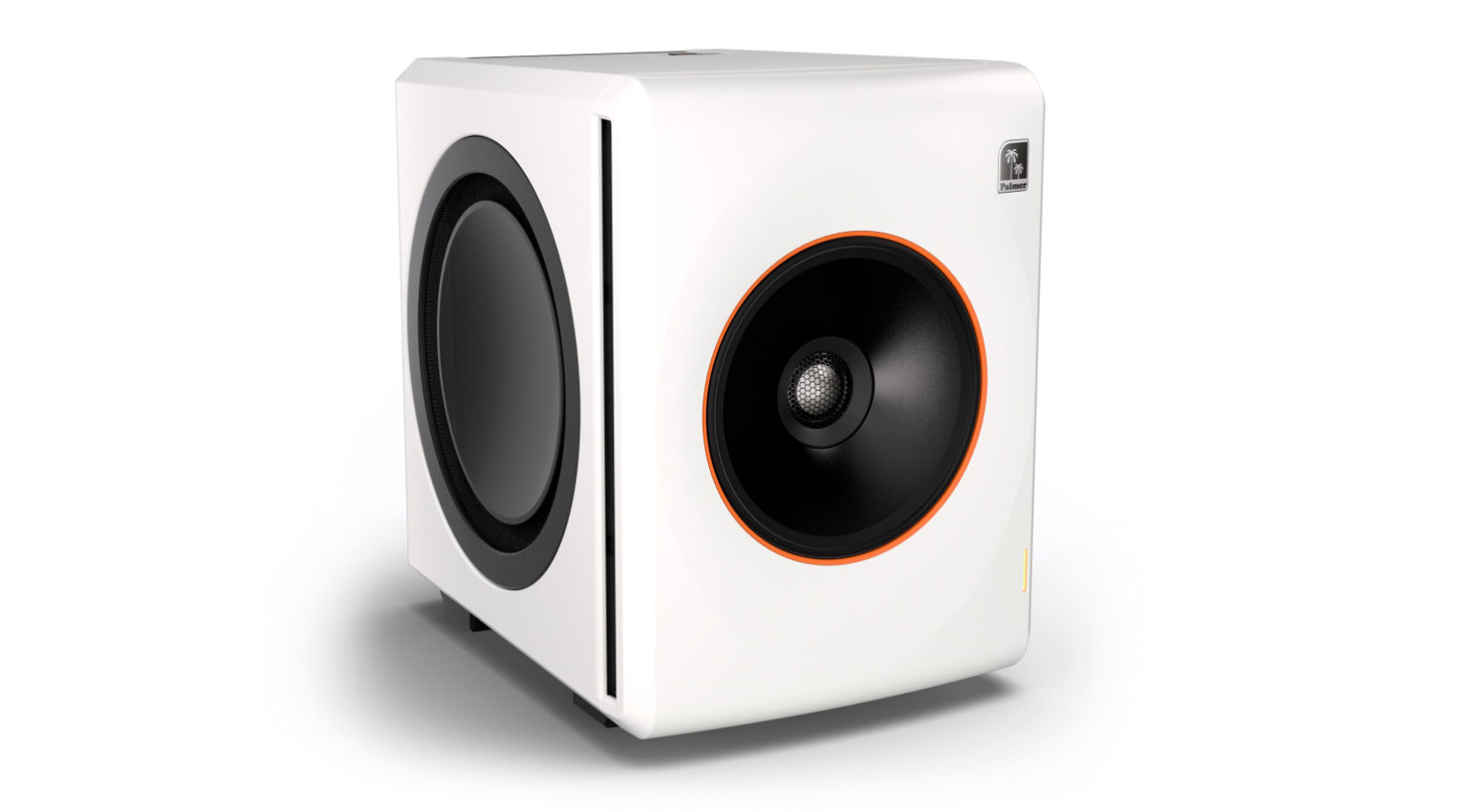
The three-way design promises high accuracy across the entire frequency range. This is especially supported by the coaxial design in the critical midrange and high-frequency spectrum. In addition, the cardioid design provides controlled, forward-focused directivity while reducing unwanted room interaction. The ORBIT 11’s low-frequency architecture improves boundary coupling and helps minimize phase cancellations.
The monitor delivers a consistent 120° × 120° dispersion pattern, ensuring even coverage throughout the listening area. This results in a relatively wide sweet spot for nearfield monitoring, so you don’t have to remain perfectly centered in front of the speakers at all times. Reduced room influence further enhances accuracy. Overall, the Palmer ORBIT 11 creates ideal conditions for objectively evaluating recordings and mixes.
This studio monitor delivers strong performance across a wide frequency range, from 28 Hz to 28 kHz. It reproduces high frequencies well beyond the limits of human hearing, while its extended low-end response reduces the need for a separate subwoofer in many setups.
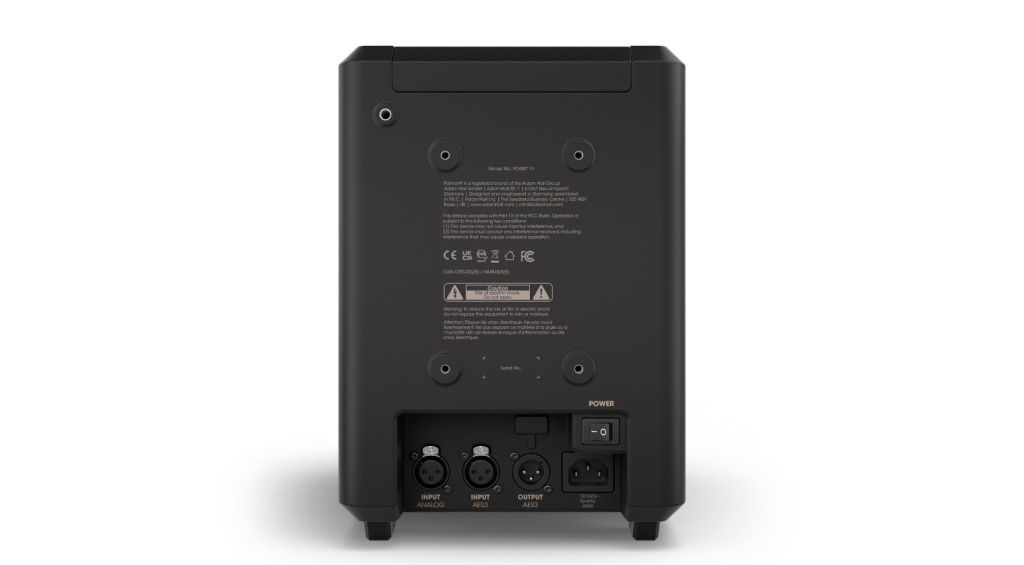
The rear control panel and integrated DSP allow you to tailor the monitor’s response depending on whether it is placed on a desk or near a wall. These adjustment options make it easier to integrate the monitor into a variety of listening environments. With both analog inputs and digital AES3 connectivity, the ORBIT 11 fits seamlessly into modern studio setups.
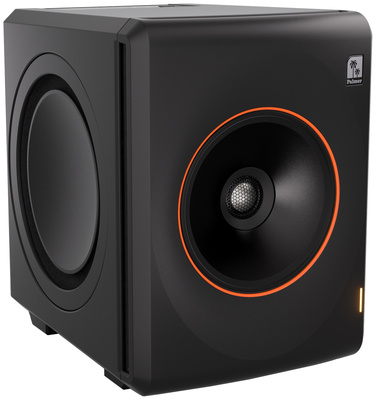
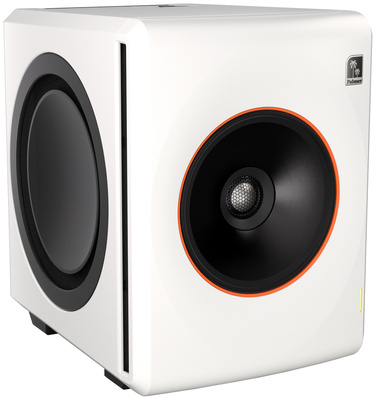
Palmer ORBIT 11 is available in black and white at Thomann*.


Conclusion
Studio monitors with a coaxial design create a true point source by aligning the tweeter and midrange or woofer on the same acoustic axis. This configuration promotes consistent dispersion across the full frequency range and enables precise stereo imaging. A point-source design improves phase coherence and reduces the impact of room reflections, especially in nearfield monitoring. Because of this compact driver arrangement, many coaxial monitors also maintain a relatively small footprint.
The Palmer ORBIT 11 is a new studio monitor that fully leverages this concept by combining a coaxial point-source driver with dual opposing woofers and a front baffle featuring cardioid directivity.
FAQ – Studio Monitors With a Coaxial Design
What Is a Coaxial Studio Monitor?
A coaxial studio monitor places the tweeter within the woofer, allowing both drivers to share the same acoustic center.
Why Is a Point-Source Design Important?
A point-source design ensures that sound originates from a single physical location, improving phase coherence and overall stereo accuracy.
Do Coaxial Monitors Sound Different From Conventional Monitors?
Yes. They often provide more focused imaging and a more stable stereo field, especially when moving around the listening position.
Are Coaxial Studio Monitors Better for Nearfield Monitoring?
They are often preferred in nearfield monitoring setups because of their consistent dispersion and coherent sound reproduction.
Do Coaxial Monitors Reduce Room Issues?
While they do not replace proper acoustic treatment, their controlled directivity can help minimize certain phase and reflection issues.
Are Coaxial Designs Only Used in High-End Monitors?
No. Although commonly found in premium systems, coaxial designs are available across a range of price categories.
What Are the Main Advantages of Coaxial Studio Monitors?
Improved phase alignment, precise stereo imaging, consistent frequency response, and a compact acoustic design.
Are Coaxial Monitors Suitable for Mixing and Mastering?
Yes. Their spatial precision makes them particularly useful for detailed mixing decisions and critical listening.
Studio monitors with a coaxial design align the high-frequency and low-frequency drivers on the same acoustic axis, creating a true point-source system. This configuration improves phase alignment, enhances stereo imaging accuracy, and ensures consistent sound dispersion across the listening area. As a result, coaxial studio monitors provide more coherent spatial imaging and a stable tonal balance, particularly in nearfield monitoring applications.
Their acoustic behavior can also reduce sensitivity to room reflections, making them a practical solution for both professional studios and project studios.
More Information
*Note: This article contains affiliate links that help us finance our site. Don’t worry: the price for you remains the same! If you buy something through these links, we receive a small commission. Thank you for your support!

This might also interest you