Sleeper Vintage Recording Gear to Spice Up Your Studio


We explore the world of sleeper vintage recording gear, including a selection of discontinued and current production pieces with signature sounds.
In this Article:
Some gear is just built differently. From the circuit design to the control layout on the front panel, it rubs off on the user from the moment you interact with it. Amazing audio designs aren’t always about fitting into logical recording workflows. Instead, the ones that truly stand out have their own unique identities, and as a result, they’ve captured the sound of an era.
Sleeper Vintage Recording Gear: Thermionic Culture Vulture
The Culture Vulture is a tube-based dual-channel distortion unit, hand-built in the UK at Thermionic Culture Ltd in Harlow, Essex. With the Vulture, there are many ways to approach the coloration of any sound, from adding subtle warmth to vocals or completely destroying a drum bus with saturation and clipping.
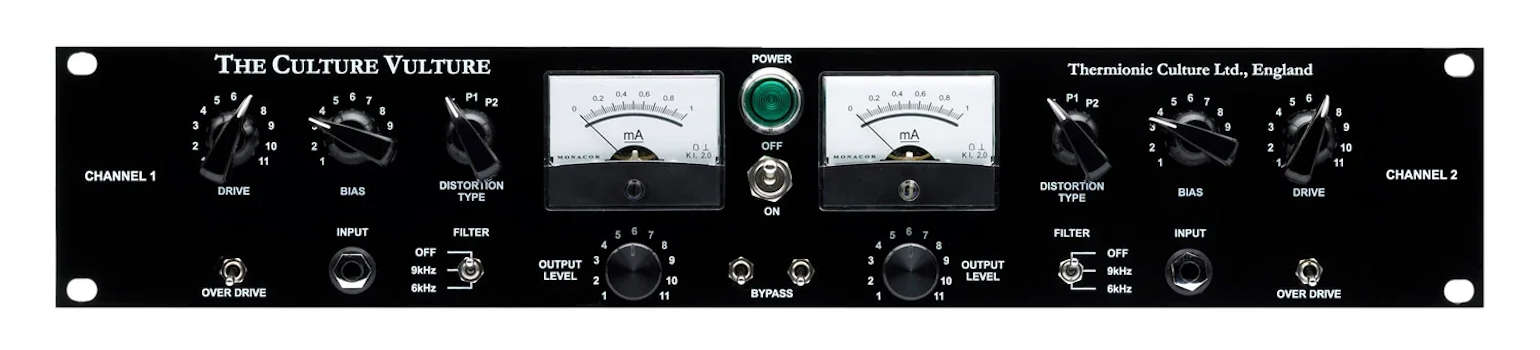
The all-tube circuit uses an EF86 pentode on the input stage, a 6AS6 pentode for distortion control, and a 5963 dual-triode on the output stage of each channel for a total of six tubes. Then, you can introduce smooth, even-order harmonics with the Triode (T) setting, or aggressive odd harmonics with the Pentode (P1) setting, while the extreme P2 setting unleashes chaos.
Besides the range of color you can produce with the Vulture in its standard configuration, you can also chain the two channels together in series for crushing mono signals, and there are +4 dBu and -20 dBV outputs, so you can send signals to your audio interface and to your amp or pedalboard at the same time. In your DAW, the Culture Vulture has been recreated in plugin format for the UAD DSP platform, the Arturia Dist Tube-Culture, and the Soundtoys Decapitator models the Triode and Pentode settings.


Sleeper Vintage Recording Gear: Ensoniq DP/4
The Ensoniq DP/4 is a versatile digital multi-effects unit from the early 1990s with four DSP chips, 24-bit internal processing, and 16-bit AD/DA conversion. The DP/4 provided incredible sonic range with over 40 effects algorithms, and the 4×4 I/O opened up creative possibilities. For example, you could layer the four processing units in a single chain for complex, multilayered processing.
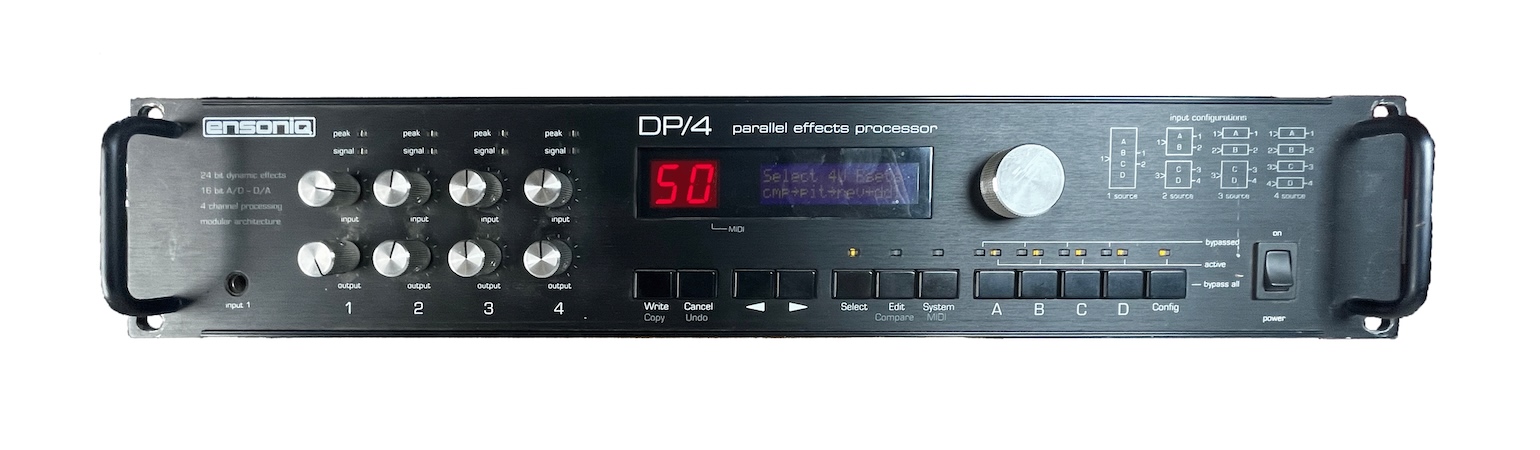
You could also have two separate stereo processing chains with two DSP chips dedicated to each, or four separate mono processors. Of course, the DP/4 did the basics like delay and reverb well, and these algorithms were easily comparable to far more expensive studio effects. However, the effects that gave the DP/4 cult status were the vocoder, distortion, and 8-voice modulation effects.
This included crunchy chorus, flanger, and phaser algorithms, which could widen a sound considerably and add texture and depth, especially when layered with other effects like the distortion. For this reason, the DP/4 became synonymous with the lo-fi sound of French House music and was used by artists like Daft Punk and Alan Braxe. Today, you can find plugins inspired by the DP/4, like the Temecula DSP DEEP/4+ and the Phaser-DDL from Dusty Devices, which recreates the phaser effect.
Sleeper Vintage Recording Gear: Sherman Filterbank
The Sherman Filterbank is an analog filter and distortion unit introduced in 1996 and is still hand-built in Belgium. Besides the MIDI interface, which converts MIDI signals into CV signals, the Filterbank has no digital components, which means no patch memory either. This forces you to treat it like the performance-based instrument that it is rather than a piece of “set-and-forget” outboard gear.

The basic Filterbank model has two independent 12dB multi-mode filters, and you can move through the different filter shapes with a continuously variable control, which can produce some rather unexpected results, to put it lightly. In addition, flexible routing allows you to move between parallel and serial signal paths with a dedicated control.
One of the most exciting features, too, is a six-octave switch that lets you sync filter 2 to filter 1 so it follows at musical intervals. Overall, with preamp overdrive, ring mod input, feedback generation, extensive modulation, and FM/AM capabilities, it’s no wonder the Sherman Filterbank is loved by artists like The Chemical Brothers and Nine Inch Nails.


Sleeper Vintage Recording Gear: Mutronics Mutator
The Mutronics Mutator is a dual analog filter and envelope follower which was introduced back in 1995. Central to its design is Dave Rossum’s SSM 2045 filter chip, which gives the Mutator its characteristically warm sound. However, as this filter chip was later discontinued, only a limited number of Mutators were ever produced, making them extremely rare collectables.

The Mutator can use its two separate VCF stages in stereo or dual-mono, and the envelope follower modulates the filter cutoff frequency based on the input signal, creating its signature organically moving sounds. Meanwhile, the envelope follower can also be switched into gate mode, which triggers the filter at a threshold for rhythmic stutter effects.
Each of the two channels is also equipped with an LFO with various shapes, and there are Link and Link Invert modes which allow the LFOs to work in unison or even to create frequency-dependent panning. While the Behringer clone is in development, you can get a decent plugin recreation in your DAW from Softube.


More about Sleeper Vintage Recording Gear:
*Note: This article about Sleeper Vintage Recording Gear contains affiliate links that help us fund our site. Don’t worry: The price for you always remains the same! If you buy something through these links, we receive a small commission. Thank you for your support!

This might also interest you