
Get lost in Thicket, a Sysex Tool That Just works, and More! – Synth Journal


Thicket is an expressive, polyphonic and modular synthesizer that can be as simple or as complex as you want. We’ve also got a great free Sysex tool and an interesting Kickstarter from Down Under!
Join me on the synth news road less travelled as I pick up the smaller tidbits of interesting news that might otherwise have been swept to the kerb. Right now, our inboxes are full of a myriad new software “developers”, all claiming to have the next big synth/FX/sequencer/groovebox (delete as applicable), and we’re increasingly bogged down in a world of vibe-coding nonsense. In other words, let’s take a look at the smaller yet no less interesting pieces of this week’s news from the world of synths!
In The Thicket Of It
Thicket by ZC Devices
When I hear the word modular in association with synthesizers, I shudder a little! For whatever reason, I have never warmed to the whole idea of modular synths. I totally respect and admire a lot of the music that is made with them, but the Pokémon-esque nature of collecting modules, wading through fistfuls of patch cables and dissonant arpeggios, just does not do it for me. Sacrilege, maybe, but I feel the same way about BMWs. Great engineering, but designs that leave me cold.
Weird motoring analogies aside, there are a few modular synths I do enjoy (just like I enjoy BMW 6 and 8 Series!), such as the Roland System 700 or System 100. Even software modular doesn’t seem to float my boat, but with Thicket, I think I may have found something I do actually like! When you first fire Thicket up, you get a very simple, very pretty and very minimalist interface.
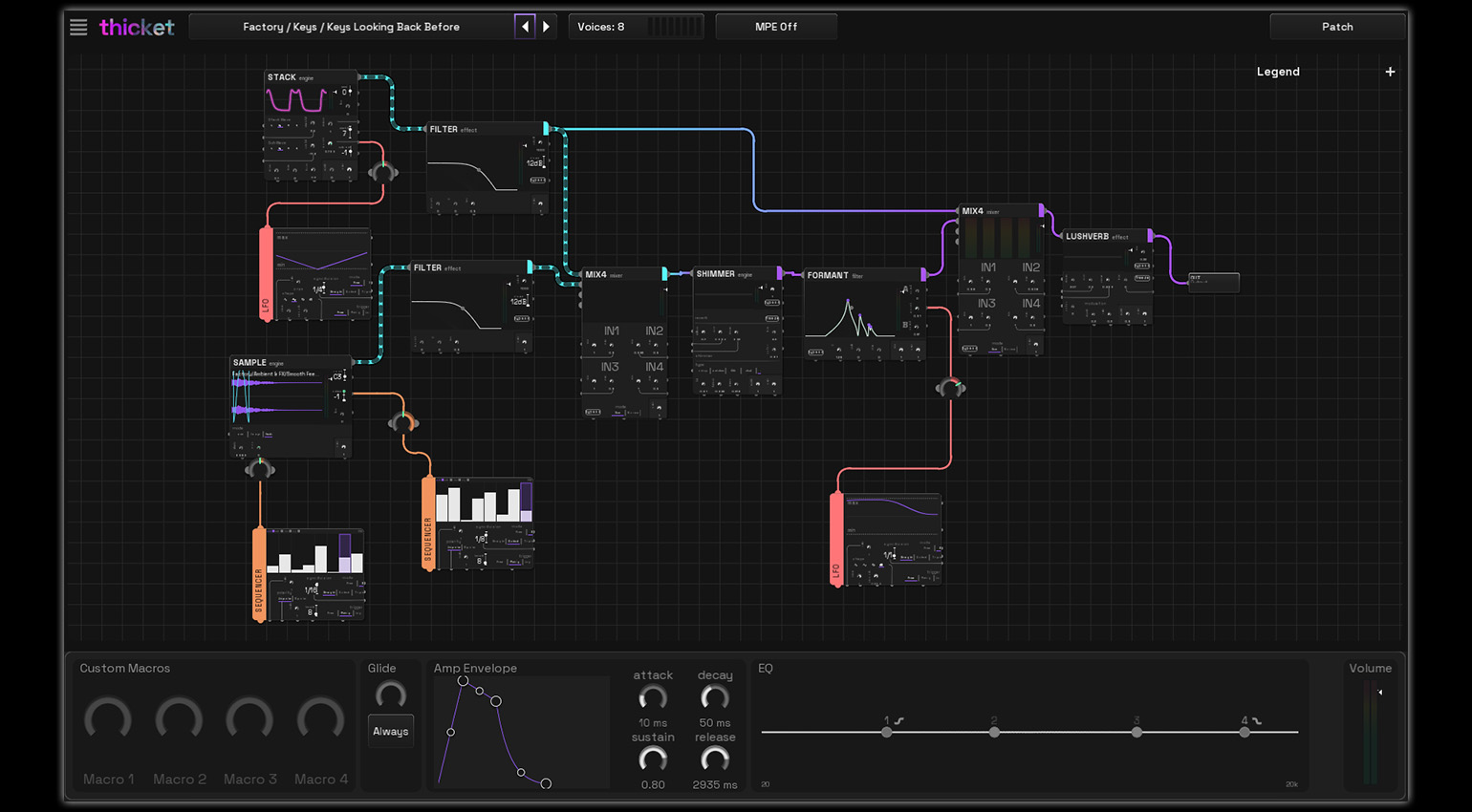
It’s a bit Pigments-esque if I’m telling the truth, and that’s no bad thing. In fact, just like Pigments, this mode is called Play. But click the big button in the top right, and you’re thrown headlong into Patch mode. What is revealed is a very pretty, easily understandable, and clever modular layout, a bit like those old Visio diagrams, but way more detailed.
Here, Thicket presents you with Nodes. A Node in Thicket-speak is a functional module. There are 50 to choose from, comprising nine synth engines, seven space nodes (reverbs), six filters, eight dynamics, five colours, four mix nodes and 11 mod sources. And there’s plenty of scope for personalisation. For example, the wavetable and sample nodes in Thicket allow for the importing of user content.
Connection points are clearly shown on the edges of Thicket’s modules, and hooking them up is as simple as dragging and dropping one point to another. Connections will only complete where they make sense, or you can just click on a connection point and choose a new destination from a drop-down menu. The new node appears, auto-connects where necessary and even pops in level controls where needed.
Thicket is beautifully thought out, but the real treat is how Thicket sounds. It sounds really, very good indeed! It’s hugely versatile, as you can imagine, and it is also MPE-compatible, so that adds a whole new dimension. Thicket comes loaded with a ton of amazing presets that can be used right out of the box or as jumping-off points for your own creations. And trust me, you will soon be doing a lot of that.
Thicket is available now for just $99 USD ex. VAT, rising to $159 on December 1st, 2027, so get in quick. There’s also a full 7-day demo incase you need any further convincing!
SysEx Tool by Patrik Pistol
In a world where we are increasingly being flooded with amazing plugins, outstanding hardware and new developers popping up left, right and centre, it’s easy to overlook the more mundane tools on offer. But sometimes, those mundane tools are the very things that grease the wheels of our creativity and help us achieve out ultimate goals. Like SysEx Tools.
Before downloadable firmware and over-the-air upgrades, we had SysEx, aka System Exclusive messages. As part of the burgeoning MIDI revolution of the 80s, SysEx data was used to send data back and forth between compliant devices. Using strings of hexadecimal data, information could be saved out of and sent into any compatible device. The data strings had a manufacturer ID to help prevent incorrect and incompatible data from being passed, and as the technology developed, even samples could be transferred, albeit at a horribly slow rate.
So if, like me, you own a stack of vintage synths, having a decent SysEx librarian is essential. Typically, I use Snoize’s SysEx Librarian tool on my Mac. It has been flawless and has never let me down. Windows users tend to favour MIDI-OX, something I used to use in the “old days” before I discovered Macs. But I’ve found something new, and I just had to share.
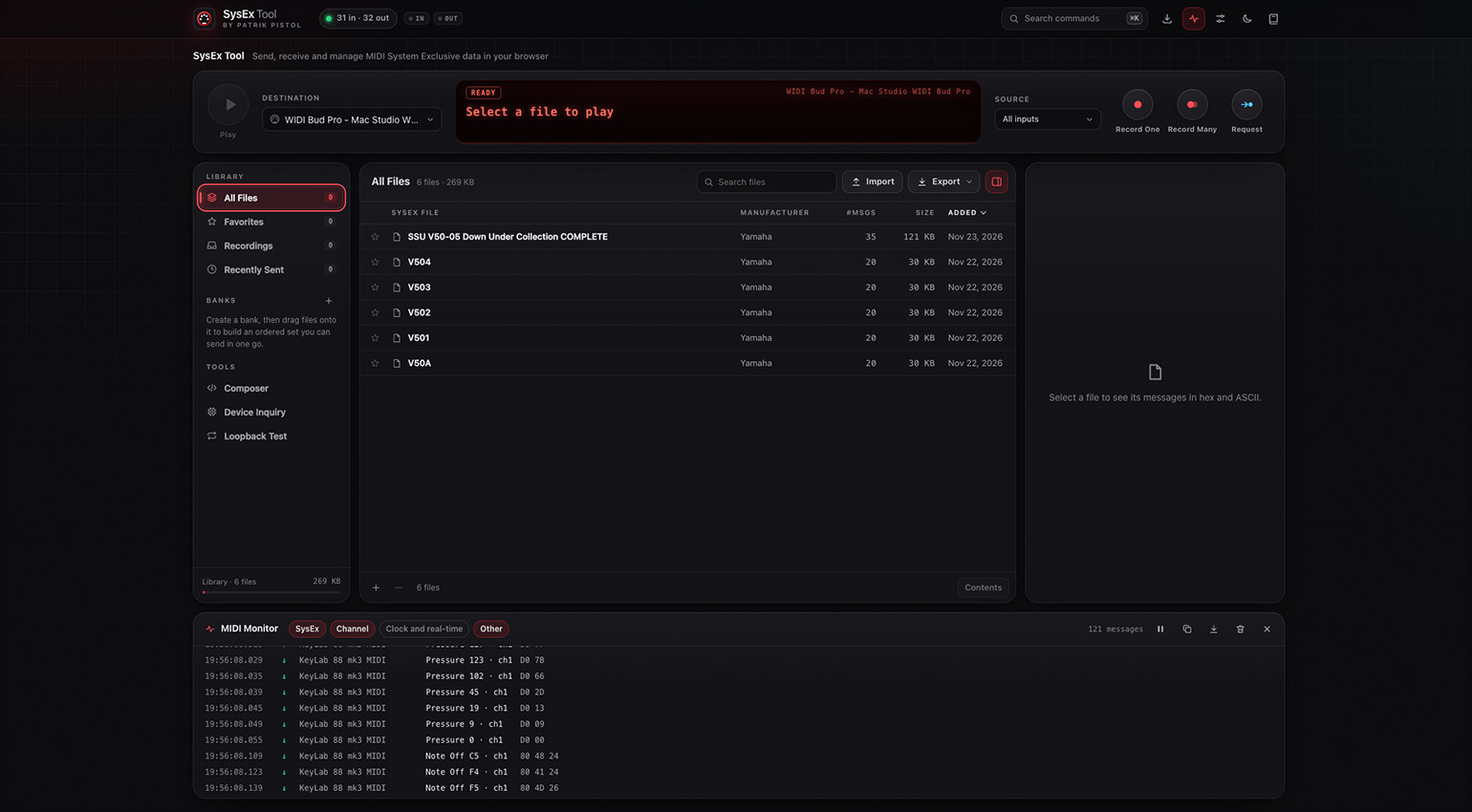
Created by Patrik Pistol of Pistol Instruments, SysEx Tool is clearly a vibe/Claude coded tool that runs in a browser. It’s got a very clear interface, instantly recognises all attached MIDI ports, can do all the things that regular SysEx tools can do but in an objectively prettier way. It has a nicer interface and also comes with a bunch of tools, such as a SysEx composer, a device enquiry function and a Loopback test.
There’s also a MIDI monitor and a full set of configuration settings, which are particularly helpful when dealing with very old pieces of gear. You can even specify a storage area on your system to keep all your important or regular SysEx data in. It’s completely free to use and it may well now be my only SysEx tool of choice. Check it out here!
Frap Tools Magnolia 1.2 Update & Patch Librarian
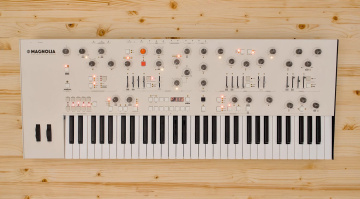
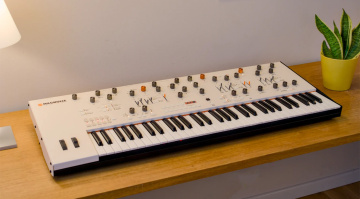
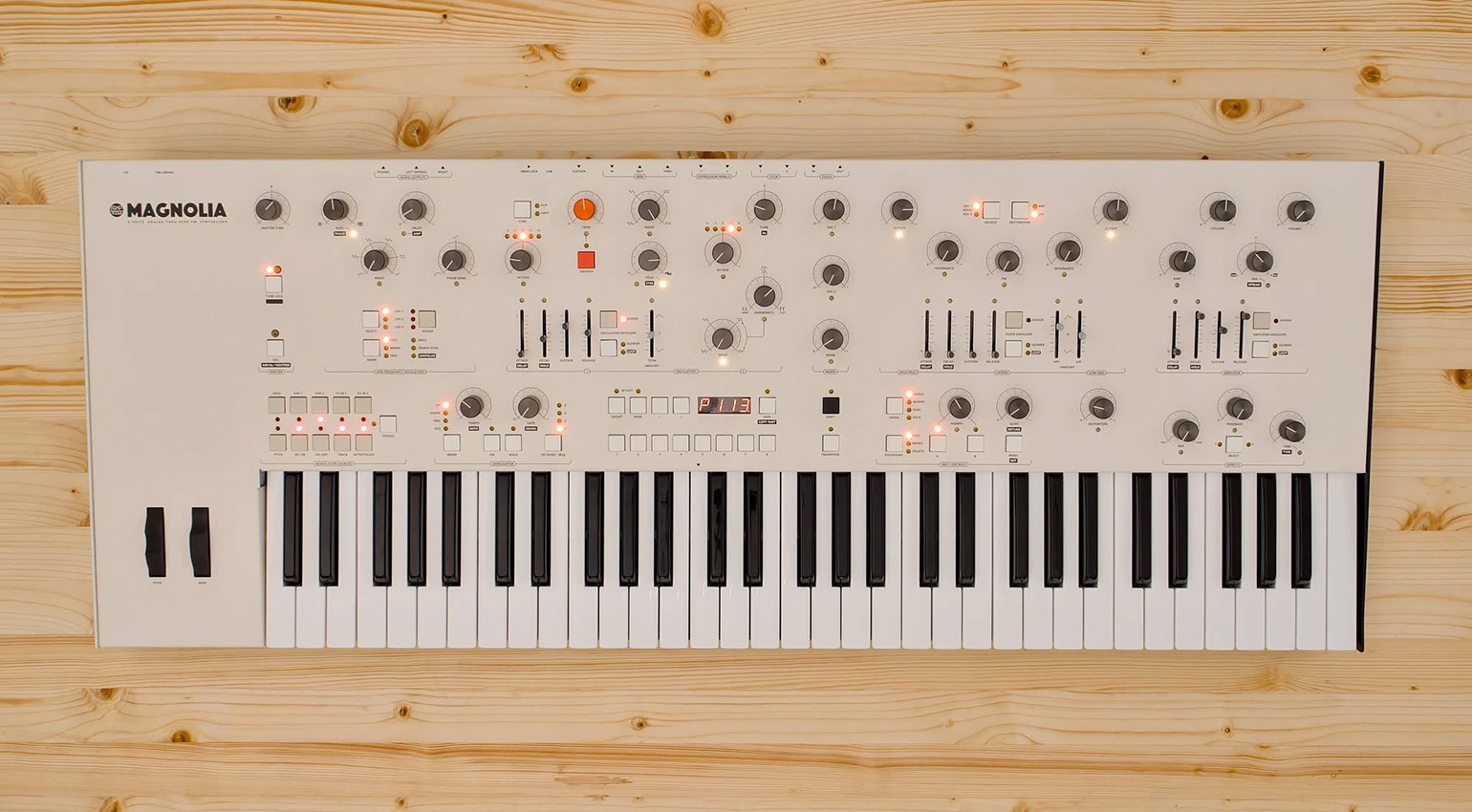
A quick one from my fatherland of Italia! Frap Tools have just announced a new firmware update for their magnificent Magnolia synthesizer. They’ve also announced a brand new software librarian and editor for it that is free to download and will allow owners to manage their Magnolia’s from a Mac or Windows computer. Preset editing isn’t part of it yet, but we keep our fingers crossed.
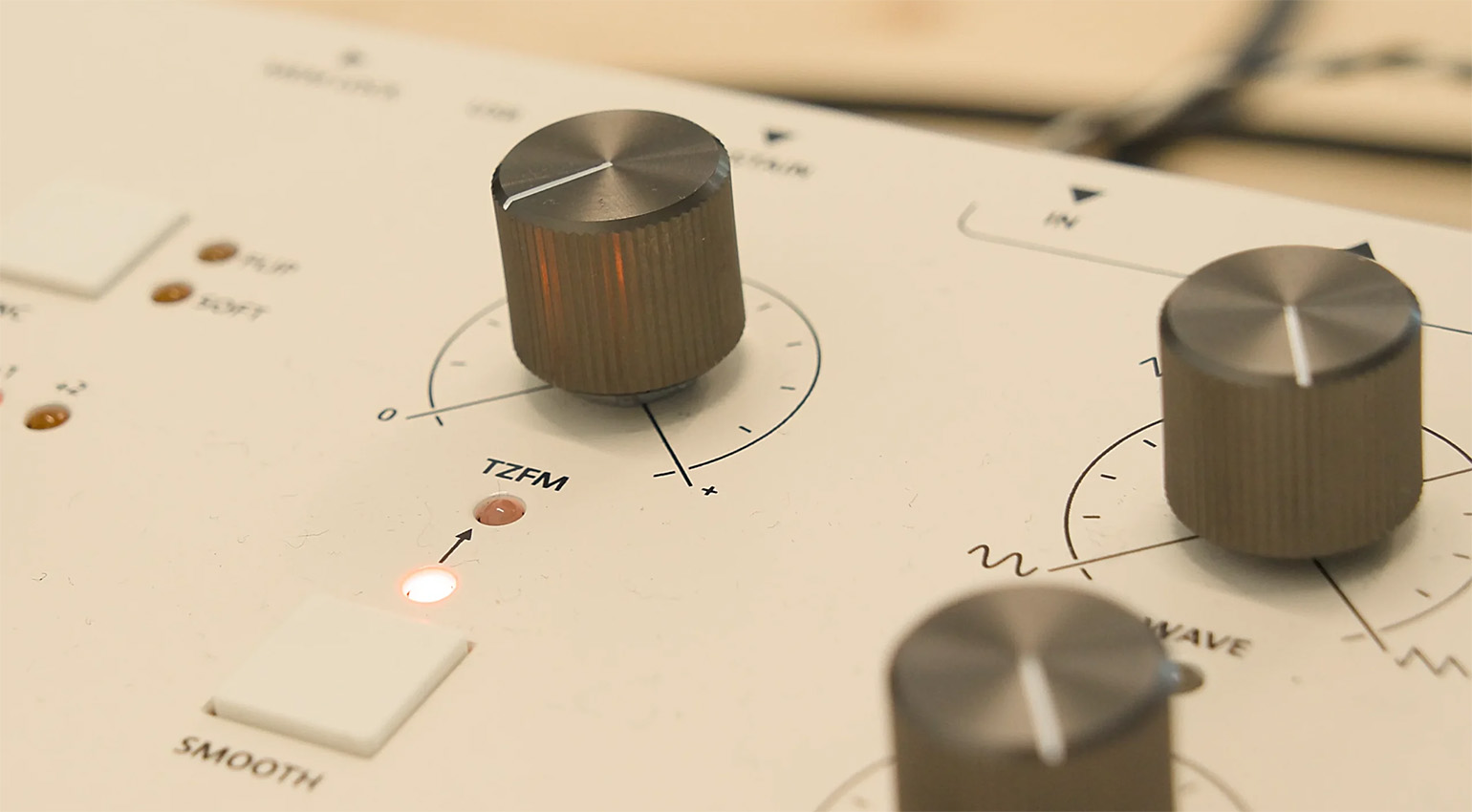
The new 1.2 firmware adds a range of control modes to its numerous knobs, including catch, jump and scaled control modes. The synth also now has the capacity for 499 programs and nine set lists. That’s now more than double the patch capacity of the original when it launched. Other improvements include fine editing, voice allocation shown on the display, new functions for the pitch wheel, and 100 new presets.
Hook up the Magnolia via USB, and the new librarian application will display all 499 patches for you, allowing for renaming, tagging and searching, as well as easy import and export of patches. It also carries out regular backups and is now the recommended way to install future firmware updates. Magnolia owners should visit the Frap Tools website for all the details and the necessary downloads.


AARMTEC ADEPT Multi-Playhead MIDI/CV Ecosystem Kickstarter
We all love a good Kickstarter campaign, don’t we? Well, the AARMTEC ADEPT is one that, on the surface, looks very exciting. But as you read through the blurb, it also promises to be somewhat mind-boggling, at least to this traditionalist! You see, ADEPT is something of a multi-dimensional sequencer that can interpret and receive input from multiple places.
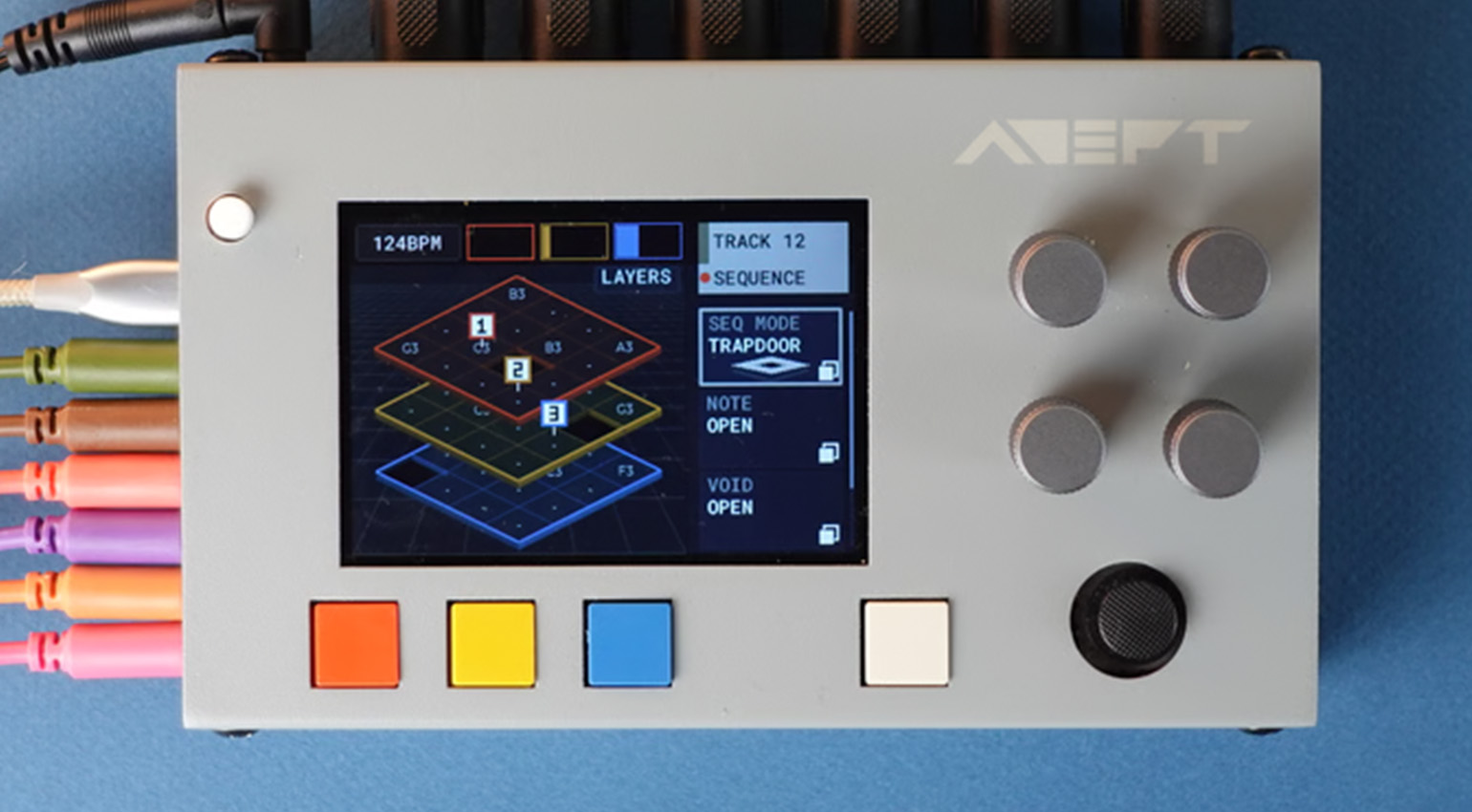
I’m going to say it right here that I may get this wrong because I’ve found myself reading through the detailed description on the Kickstarter page, thinking I’ve got it sussed, only to find myself questioning my understanding almost immediately. And that, in itself, is quite an exhilarating thing; ADEPT allows you to draw stuff in, be it notes, beats or curves. You can play stuff in via MIDI or CV, generate parts like basslines and send trigger and clock data in.
All this data can land on up to three different “playheads”, each with its own behaviour. Some might play forward, some in reverse, some at one speed, whilst others follow another. It can clearly do a whole lot more, but I highly recommend watching the video linked here for a more in-depth analysis. But even if I can’t grasp this, I get the impression that if I were able to get hands-on with one, it would be a ton of fun.
If you back this project, ADEPT will set you back $520 AUD, which is about £262 GBP. Their goal was just over £5,000 GBP and at the time of writing they had achieved over three times that with just two more days to go, so if this floats your boat, and it does mine, jump in quick!
Threshold Receiver by Wouter Jaspers
A few years ago, I was on a Ryanair flight to Berlin for Superbooth. I was with a few friends, and we were suitably hyped to be going to what is now the Mecca for all things synth-related. One of our number had a Soma Ether device and was waving it and various other antennas around the cabin, freaking out other passengers and air crew who clearly thought he might have other, more explosive, intentions.
All he was trying to do was pick up electromagnetic transmissions that he could then record and use elsewhere. Innocent enough, but tell that to my mates and me, as we pictured ourselves being yoinked off the flight and held face down on the tarmac by armed police! Luckily, none of that came to pass. But the fascination with picking up sounds out of the ether has not waned.
Just recently, I’ve been given the opportunity to use The Demon Box by Eternal Research, a more conventional unit that sits on a desk and hooks up to MIDI, CV/Gate or Audio to translate electromagnetic fields into usable sonic data, either aurally or by taking those signals and translating them into MIDI or CV data to manipulate connected equipment.
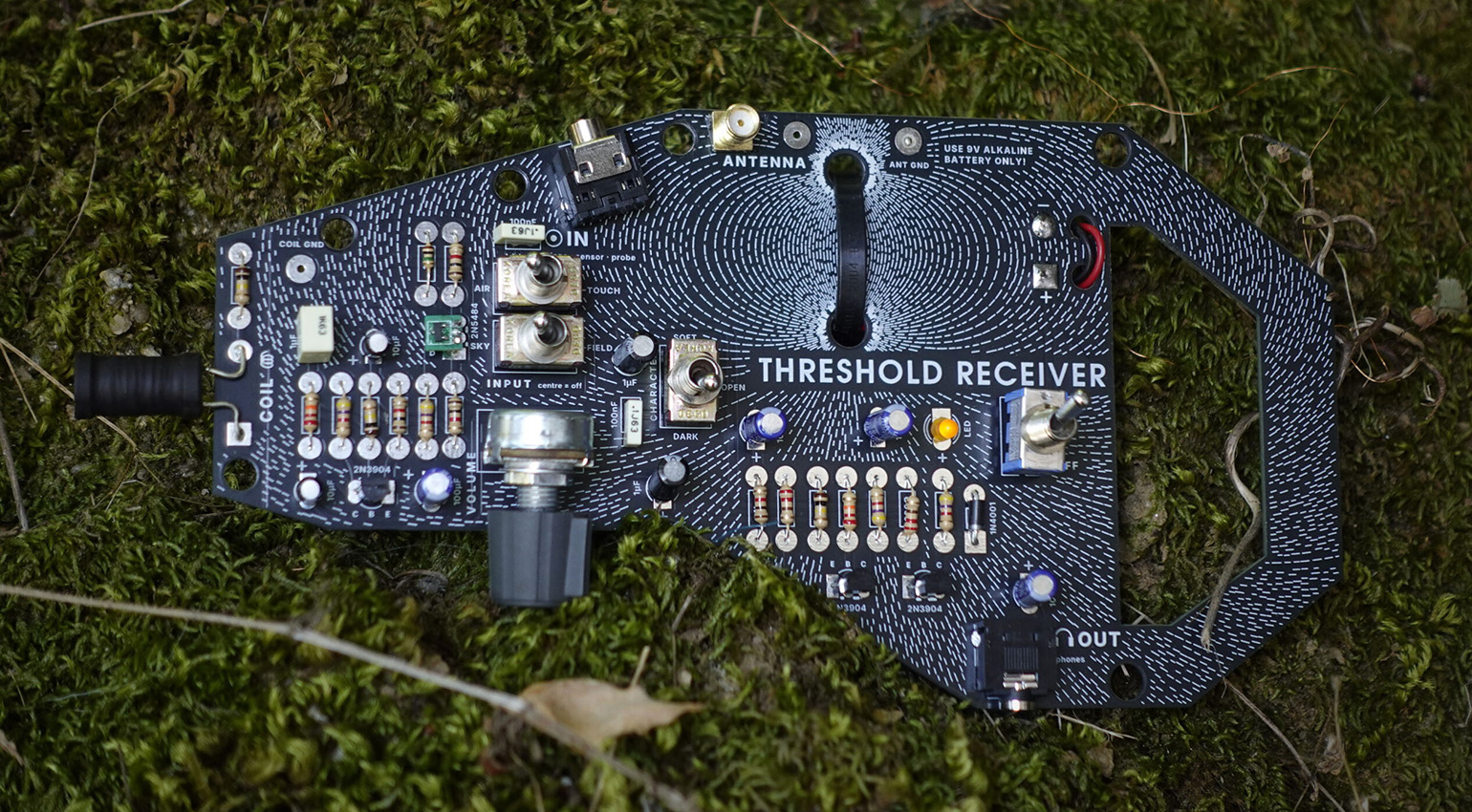
Threshold Receiver, by Wouter Jaspers is a device made in a similar vein. It features an antenna to pick up VLF (Very Low Frequencies), which can be anything from mains hum to other magnetic signals. It also features an induction coil that you can point in the direction of devices and objects that emit electromagnetic waves. These can be things like mobile phone devices or electric motors.
There’s also an external input so that you can attach a microphone or other sensors, or radio equipment. All of this is then sent through what Wouter calls a Character Stage that filters the signal in different ways and sends it to a headphone jack or a line-out so the output can be recorded. The Threshold Receiver is sold in a kit or pre-assembled form, so you have the choice to build this yourself, and you can also do this at one of Wouter’s workshops.
Currently, there are workshops planned in Bratislava tomorrow (27/11/26), Berlin on December 12th and Amsterdam on March 13th, 2027. If you can’t make those, Sonic Artefacts have a limited number of kits and ready-made units for sale now. Kits cost €99, and a finished unit will set you back €149, both plus shipping.
*Note: This article contains advertising links that help us pay for this site. Don’t worry: the price for you will always be the same! If you buy something through these links, we will receive a small commission. Thank you for your support!

This might also interest you