Essential Guitar Tones and How to Get Them
A little more bass?

 4,1 / 5,0 |
Essential Guitar Tones and How to Find Them · Source: YAY Media AS / Alamy Stock Photo

As a beginner, finding guitar tones can feel very overwhelming. Here, we’ll be checking out some core tones that will work for your first couple of riffs.
This beginner guitar workshop focuses on how to achieve some essential guitar tones. From light cleans to crispy drives, here’s how to dial them in.
Key Information about Guitar Tones
- Great guitar tones start with simple amp settings, not lots of pedals. Learning how different frequencies behave together will improve your sound faster than buying your way in.
- Most essential guitar tones fall into various categories. The majority of styles can be achieved with basic gear.
- Small adjustments can make big differences. Going from a Strat to a Les Paul could result in a few tweaks to your tone.
Getting Dialled In
What are Guitar Tones?
We’ve all heard of them, but what are they? Your guitar tone is the overall character and sound of your amplified guitar. This is shaped and defined by how it sounds to the listener.
Your tone is crafted in many ways. It comes from a combination of factors; we have the obvious, like your amp, gain, EQ, pedals, etc. However, did you know that there are more ways to change and influence your guitar tone?
From your picking angle to the wood that your guitar is made out of will all change your overall result. Here, we’ll be checking out how to sculpt and craft some key tones that you can get plenty of miles out of.
Classic Sounds
To kick us off, we’re going to look at some of the main guitar tones that you’ll want and need as a beginner guitarist. These will satisfy a huge range of tracks. We’ll look at what they sound like and how to achieve them.
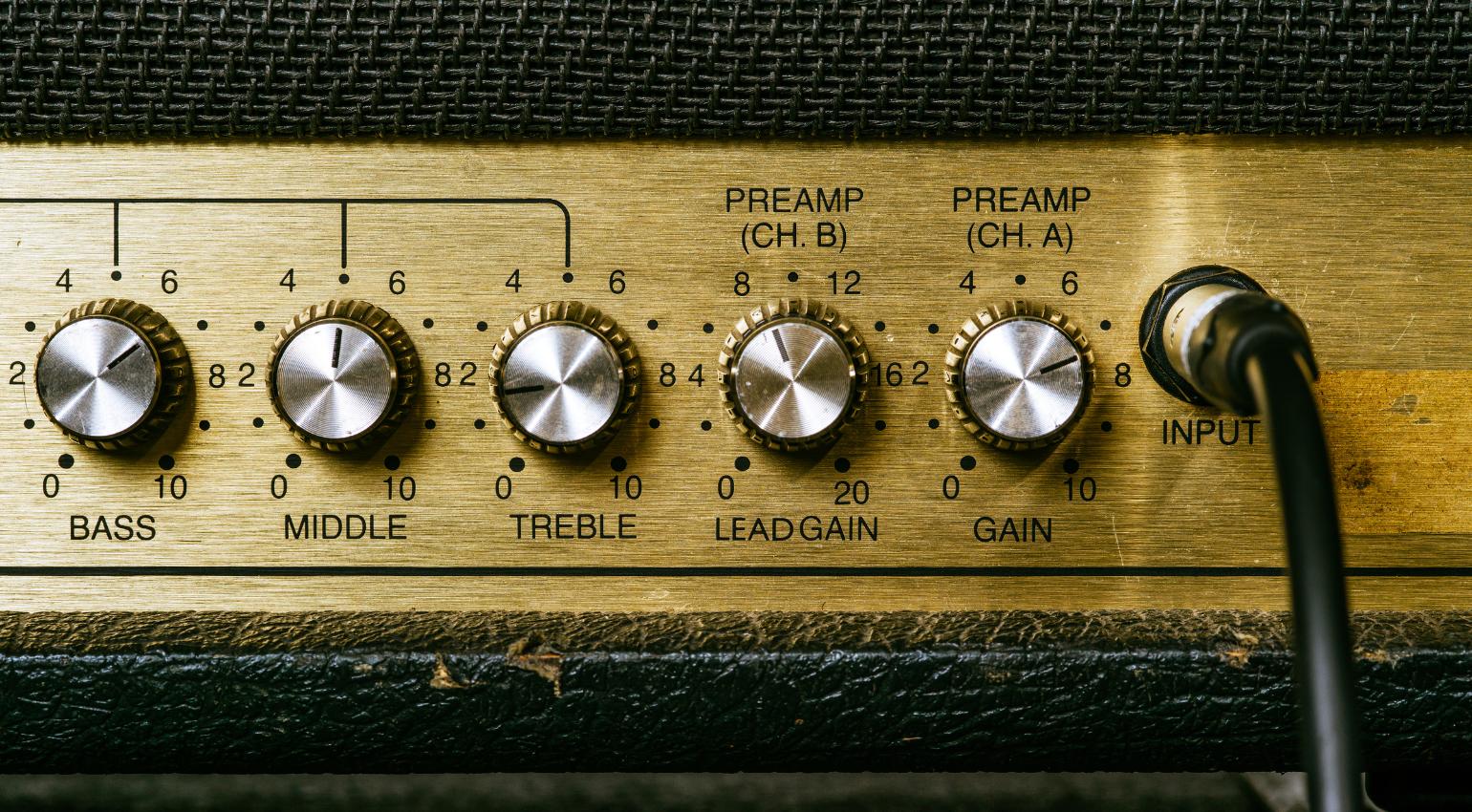
Looking less at effects, and more at old school amp settings.
Clean
First up, it’s the clean tone. This is what every guitarist should start with. It’s your bread and butter. The foundation of any guitar tone starts with a clean tone.
To understand what a clean tone should sound like, listening to Scar Tissue by the Red Hot Chilli Peppers is a great place to start. You’ll notice that it’s just the guitar, and nothing else. Low and virtually no gain. There isn’t even any reverb; it’s just the guitar amplified as Mother Nature intended. Clean tones are great for practising with. They allow you to hear every detail in your playing.
Edge of Breakup
From clean to something a little harsher. A lot of guitarists talk about being on the edge of breakup. But what does that actually mean? You get clean and distorted sounds; the breakup refers to the process of transitioning between the two.
How to get the breakup sound? You could just use a guitar with humbucker pickups through a clean amp, as the extra power could cause the amp to distort and breakup. Another way is to crank up the volume of your clean tone. In time, this allows the amp to reach its sweet spot.
From here, the way you play will determine how distorted the guitar becomes. Dynamic control is key. Play lighter, and you’re still clean. However, if you attack the strings a bit more, you’ll probably hear a more distorted sound.
Stevie Ray Vaughan’s Pride And Joy is in that aforementioned sweet spot. It sounds clean, but as he digs in, you can hear the overall tone getting heavier. This is thanks to a tremendously loud Fender Super Reverb tube amp. The hotter those tubes get, the bigger the sound gets in return.
Rock Crunch
Onto something more exciting now! As far as guitar tones go, you can’t beat a good bit of crunch, distortion, gain, or whatever you want to call it. More is more! It’s 2026, so we can now achieve this kind of tone without blowing our eardrums out.
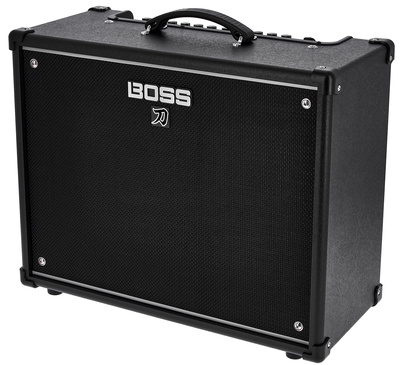
Amps such as the *Boss Katana actually have a crunch preset built in. However, there are other ways to get there. The easiest way to distort your guitar tone is by upping the gain. Luckily, with modern amps, you can have high gains at low volumes. Which saves the relationship with your neighbours.
Moreover, a lot of beginner and practice amps have a drive circuit, where, at the press of a button, you can go from clean to dirty. Personally, I always find these presets too harsh, and prefer to dial in the gain myself until it’s as clean or as harsh as I need.
EQ
Now we’ve seen and heard some different tones. Let’s look at how your equalisation can affect your tone. This can differ from player to player with different tastes, but you can guarantee some safe bets.
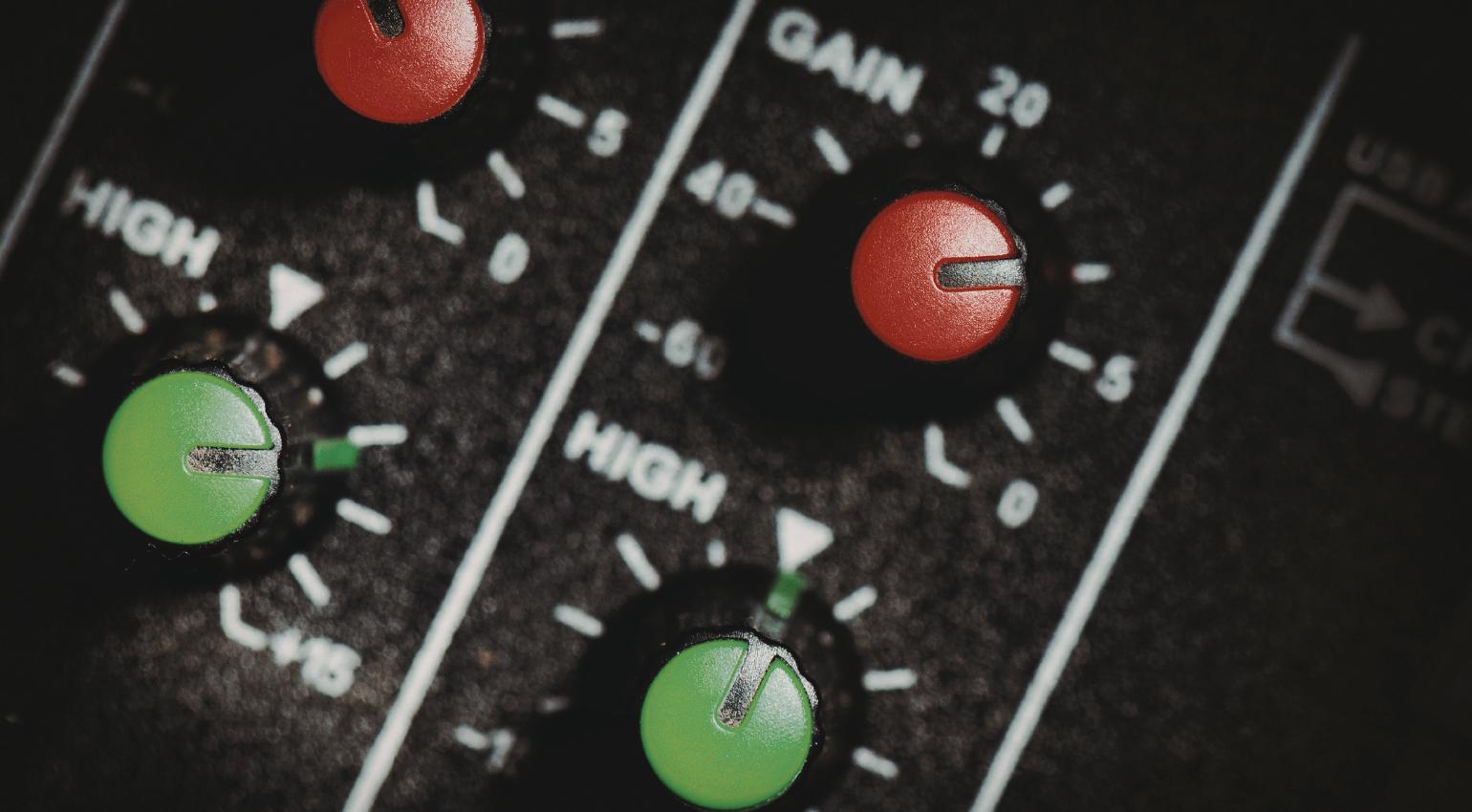
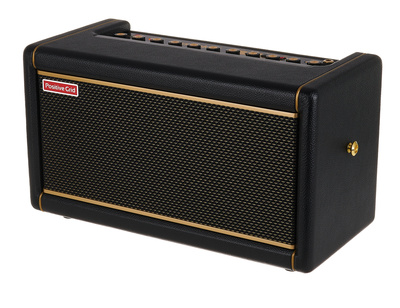
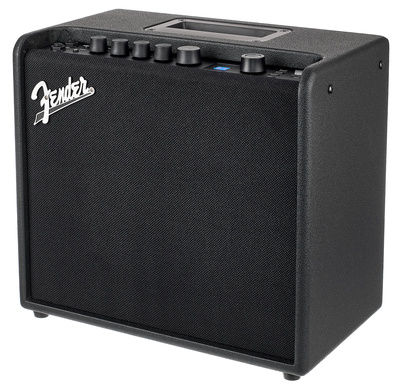
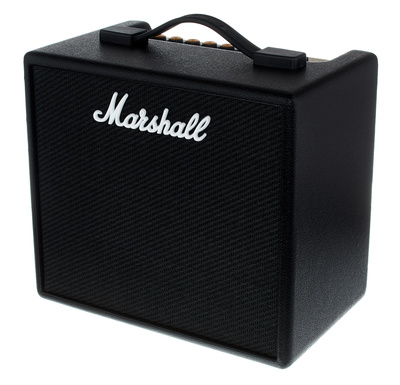
Most guitar amps will have control dials for Bass, Mids, and Treble. Whereas a professional-level mixing desk will have a much more sophisticated set of faders for advanced EQ shaping. The three on our amps are more than enough.
Generally, you want to start with all three of these dials at 12 o’clock, or in the middle. So if the max is 10, start at 5 for each. From here, you can add and subtract each of the three to achieve your desired tone.





Effects
This is where things start to change. So far, we’ve looked at what I’d call dry guitar tones. Whereby, there is nothing other than the guitar in the mix. Effects, be that analogue or digital, change the sound even further.
If you’re jamming out on your practice amp, chances are that your amp has some built-in digital effects. The most common of which are usually reverb, delay, or chorus. But how do they sound?
- Reverb creates the sound of echoes in a large room.
- Delay repeats what you’ve just played over and over again at a desired rate.
- Chorus is a rich, watery-like sound, typical of 1980s lead tones.
Pedals
We can use pedals to achieve various tones, rather than using your amp. Back in the 1960s, the reverb came from a coiled spring in the back of the amp, referred to as a reverb tank. Now, you can get digital reverb pedals that digitally recreate that kind of sound.
Furthermore, pedals are great for creating new and exotic guitar tones. If you’ve ever heard a record sound slightly different to convention, then chances are the guitarist is using a couple of pedals to get that sound.
You can also get a whole host of multi-effects pedals that contain hundreds of standalone pedals within them. But that’s a whole other conversation.
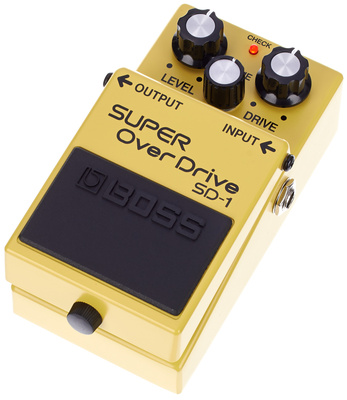
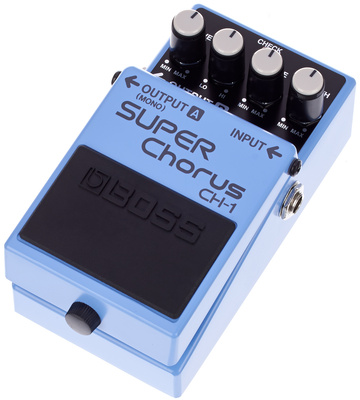
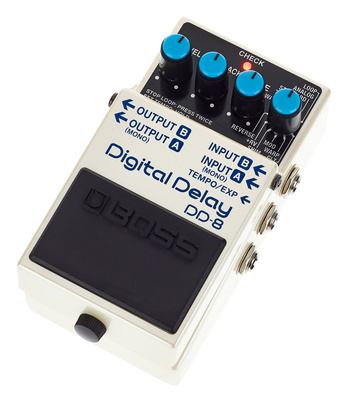
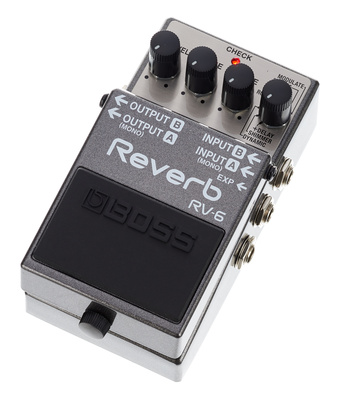
All of the above pedals are great budget ways to experiment with various tones, all from Boss. If you get hold of any more pedals, it’s always good to start looking at a pedal board.
Videos
Further Information
*This post contains affiliate links and/or widgets. When you buy a product via our affiliate partner, we receive a small commission that helps support what we do. Don’t worry, you pay the same price. Thanks for your support!

This might also interest you
One response to “Essential Guitar Tones and How to Get Them”

Probably the last thing any guitarist needs to learn is to be adding more bass . Less bass is what most needs to learn. Yes it might feel so awesome to rattle the walls and that might be “cool” when jamming like a rock star at home. BUT, once you get playing with others it will be disastrous! You need to learn how to leave frequency space for other instruments. ESPECIALLY THE BASS. If you dime the bass knob on the guitar amp. The drums and BASS will not be able to come through as intended. So to all the wannabe rock star guitarists. Please listen to someone, aka me, who has over 40 + years as a bassist, guitarist, violinist, drummer, sound engineer,…. need I keep going? And look at a chart that represents where instruments sit in a recording situation. Shape your sound to fit. And trust me, #1 you will get more work if you leave room for other instruments and #2 DO NOT ever bring a full stack 100 watt amp to play in a 10 foot by 10 foot room , and turn everything on 11. Oh and stop reading “must have” 🐂💩 articles. All you must have is your guitar, a SMALL, can’t stress it enough, SMALL amp and talent. Please for the love of the gods of music, do your homework.