Best MPE Controllers 2026: Unlimited Expressive Freedom

 4,6 / 5,0 |
 MPE controllers open up completely new expressive possibilities for production and performance. But which MPE controllers are really worth buying? Here are our recommendations.
Best MPE Controllers
What are MPE Controllers?
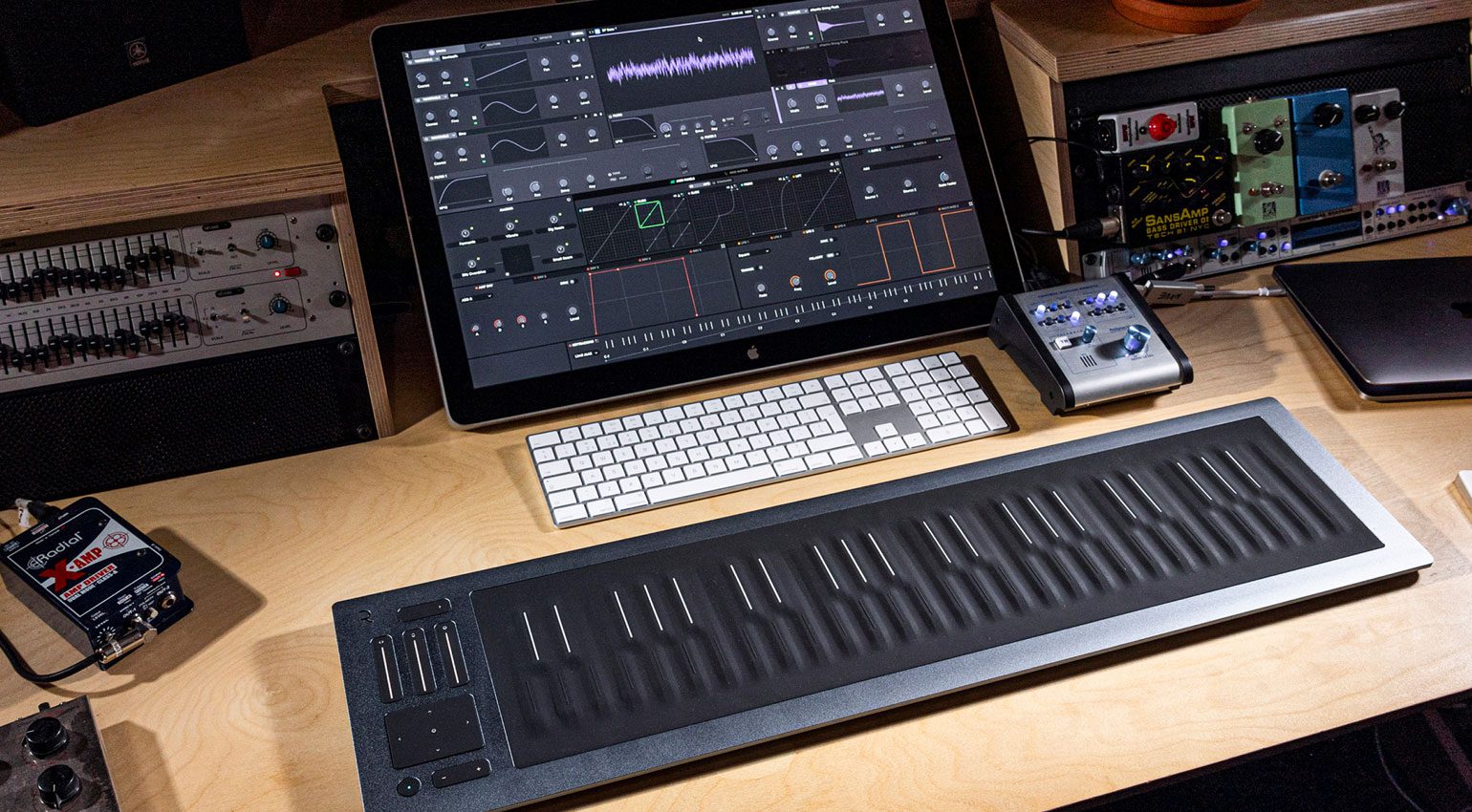
MPE (MIDI Polyphonic Expression) has been a buzzword ever since manufacturers such as Haken Audio and Roli caused a stir with instruments like the Continuum Fingerboard and the Seaboard. The basic idea: Wouldn’t it be great if you could shape every single note on a keyboard as expressively as you can on a guitar, string, or wind instrument?
More and more MPE-compatible hardware and software synths have appeared in recent years. Others received the feature through firmware updates, such as the Sequential Prophet-6 / OB-6, ASM Hydrasynth, UDO Audio Super 6, and Oberheim OB-8X. After the runaway success of the Hydrasynth, more and more manufacturers began adding polyphonic aftertouch to their instruments—another result of the desire for new expressive possibilities.
MPE vs. Polyphonic Aftertouch
However, not all synths with polyphonic aftertouch are also MPE controllers. That’s because MPE and poly pressure aren’t the same thing. Polyphonic aftertouch has been part of the MIDI specification since the 1980s and simply means that aftertouch data is sent separately for each note (as opposed to just once per MIDI channel). MPE, on the other hand, goes much further. Here, the data for the individual notes is distributed across several MIDI channels, which allows for things like per-note pitch bending.
Unfortunately, not all synths can do this, even if their keyboards are equipped with polyphonic aftertouch. An MPE-compatible sound engine doesn’t necessarily mean that the built-in keyboard can generate the corresponding data. This means that you need MPE controllers to take full advantage of the expressive possibilities—even for many hardware synths whose sound engines already support MPE.
Best MPE Controllers in 2026
Embodme Erae II: Customizable MPE Controller with 16,000 Sensors
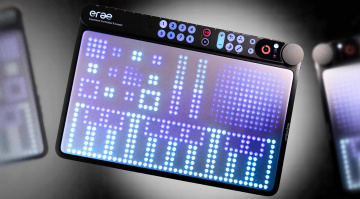
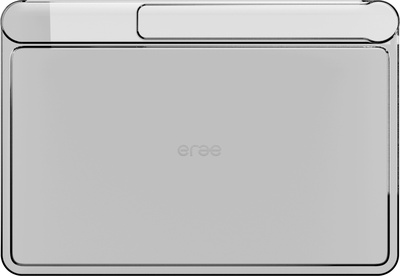
The impressive Embodme Erae II (read our review here) isn’t just one of the best MPE controllers available today, but probably one of the most versatile MIDI and CV devices ever created. Its surface consists of no less than 16,000 sensors and can be fully customized in the Erae Lab software. The modular environment lets you create your own layouts that suit your workflow. Erae II can be anything: a three-dimensional keyboard, a pad controller, a DAW controller, or everything at once.
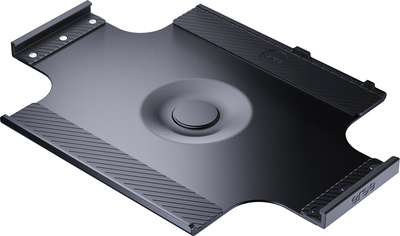
The manufacturer even offers an optional Drum Skin that lets you to play the controller with sticks and use it as a drum pad. You can switch layouts at any time, allowing you to control a software synth in your DAW one moment and your modular system the next.
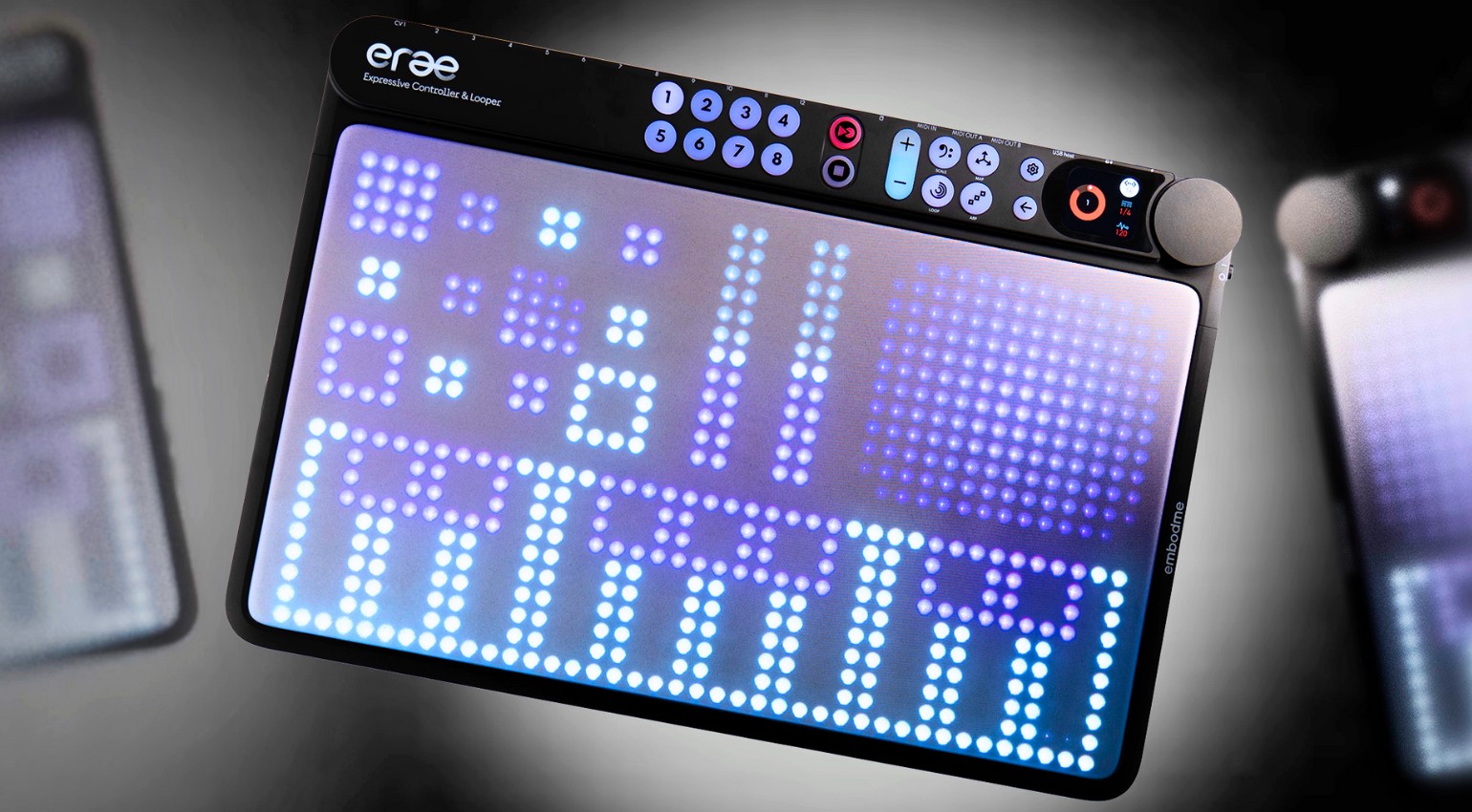
Speaking of modular systems, Erae II is also extremely flexible in terms of connectivity. In addition to two TRS MIDI outputs and two USB-C ports (device/host), the controller offers no less than 24 CV/gate/trigger outputs distributed across 12 TRS jacks. This makes Erae II a perfect match for modular synths or hybrid setups.
In addition to an arpeggiator, Erae II also features an integrated 8-track looper, letting you record and overdub gestures, drum patterns, and melodies in real time. Erae II is more than just an MPE controller – the futuristic pad almost feels like a one-of-a-kind instrument.
Embodme Erae II is available from Thomann*.


Intuitive Instruments Exquis: Intuitive MPE Controller with Hex Keys
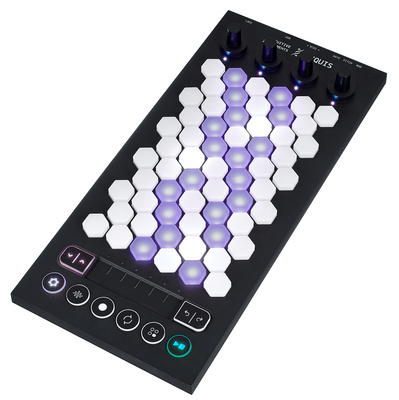
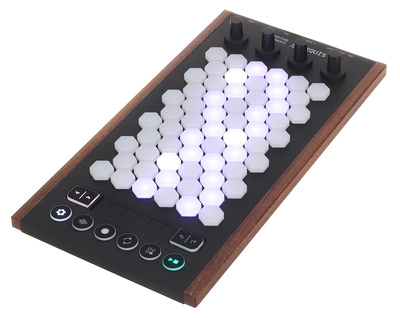
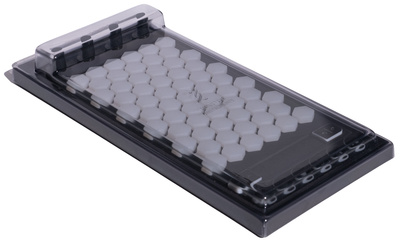
Instead of black and white keys, the Intuitive Instruments Exquis has 61 hexagonal buttons arranged according to harmonic principles, somewhat reminiscent of a traditional button accordion. The idea is that even non-keyboard players and people unfamiliar with music theory and harmony can quickly come up with good-sounding chords and melodies. The keys are illuminated, making it easy to find the notes of a particular scale and build chords. Regardless of the root note, chords of the same type always form the same shape – a concept that Exquis borrowed from the guitar or the aforementioned button accordion. However, you can also customize the layout if desired.
The keys are velocity-sensitive and support polyphonic aftertouch. In addition, each individual key can be tilted in all four directions to send control data. Exquis also offers four push encoders and a touch slider. In addition to USB-C for power and MIDI, the MPE controller offers TRS MIDI in/out and three CV/gate outputs.
Intuitive Instruments Exquis is available from Thomann*.

Roger Linn Design LinnStrument: The OG MPE Controller Is Still Going Strong
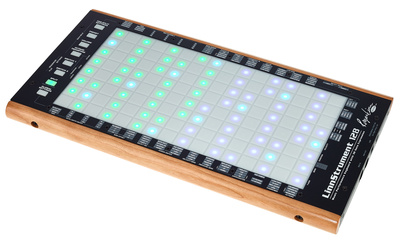
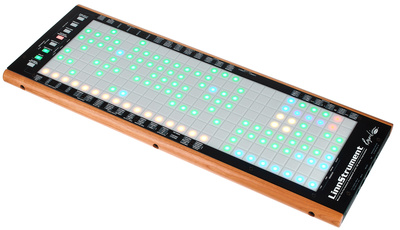
More than a decade after its release, the revolutionary LinnStrument from legendary developer Roger Linn (who also invented the LinnDrum and the AKAI MPC, among many other things) remains one of the most versatile and expressive MPE controllers on the market. Each of the 200 pads (128 on the more compact LinnStrument 128) detects five kinds of movement: velocity, pressure (polyphonic, of course), left/right, up/down, and release velocity. This lets you play smooth, polyphonic note transitions as if it was the most natural thing in the world, and allows for exceptionally expressive control of your MPE-compatible hardware or software synths.
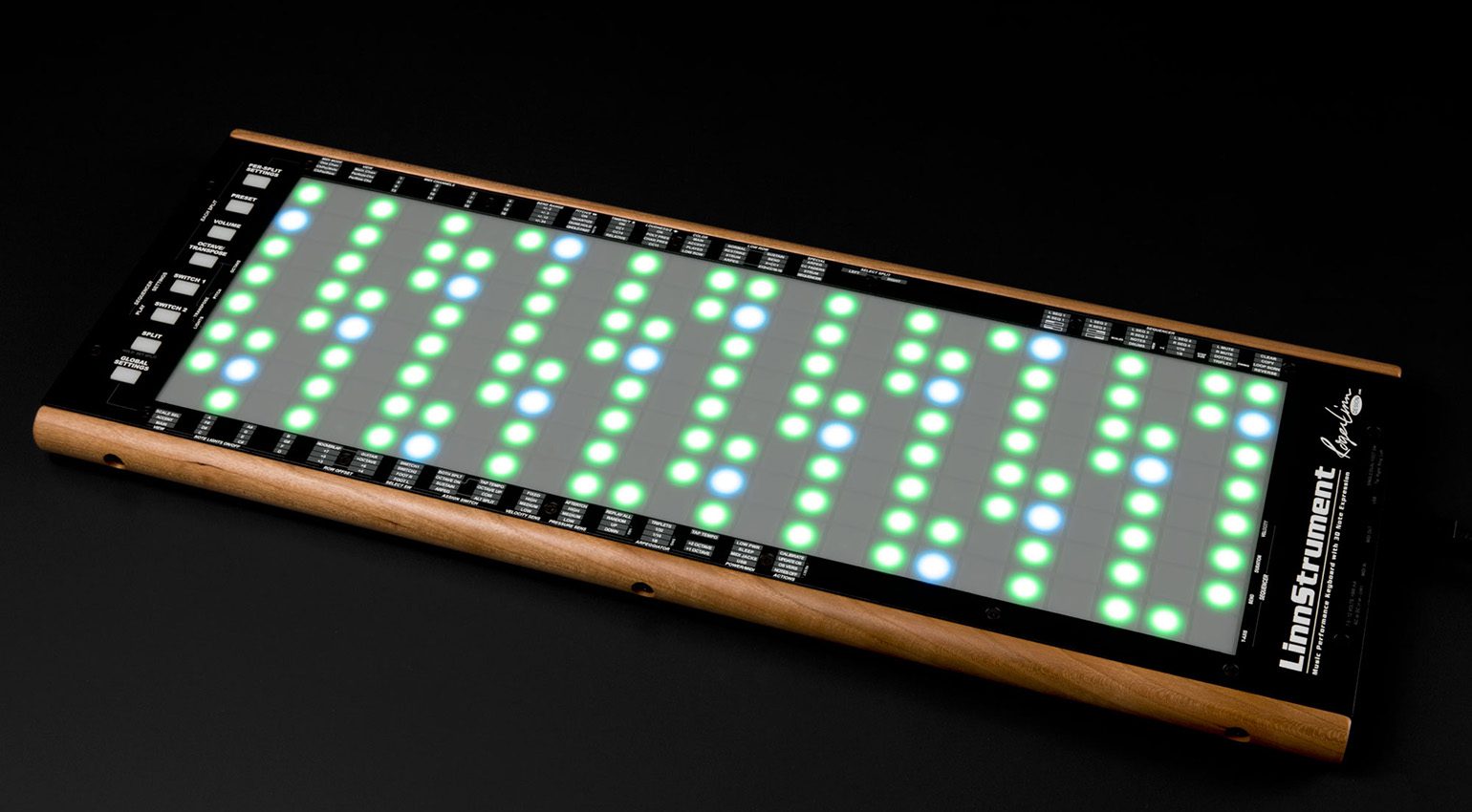
The pads of the LinnStrument are arranged similarly to string instruments, with the rows tuned in intervals of fourths. Compared to a conventional keyboard, this has the advantage that chords and fingerings look the same no matter which key you’re in. In addition, this layout means that the same note can be found multiple times on the controller. The pads light up to help you find the notes of the selected scale. So you don’t have to be able to play the keyboard to produce and perform on the LinnStrument.
The Roger Linn Design LinnStrument is available in two versions (200 or 128 pads) from Thomann*.

Expressive E Osmose: The Future of the Keyboard
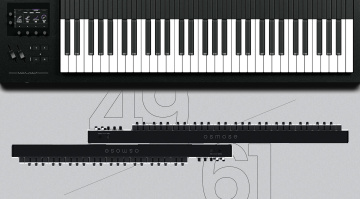
No other MPE controller caused a bigger stir when it was first unveiled than the Expressive E Osmose. After the initial announcement, it took quite some time until all pre-orders were delivered. But the wait was worth it: Osmose offers keyboard players expressive possibilities they could only dream of before.
Since the Osmose has standard black and white keys, keyboard players will immediately feel at home. However, thanks to various sensors, the keys detect much more than just velocity and pressure. You can tap, brush, wiggle, and stroke them, much like you can manipulate the vibrating string of a violin or guitar. This opens up a whole new dimension of expression on a relatively “normal” keyboard. It’s difficult to describe in words – like the equally revolutionary PolyTouch keyboard of Arturia’s PolyBrute 12, you simply have to try it to get an idea of what it can do.
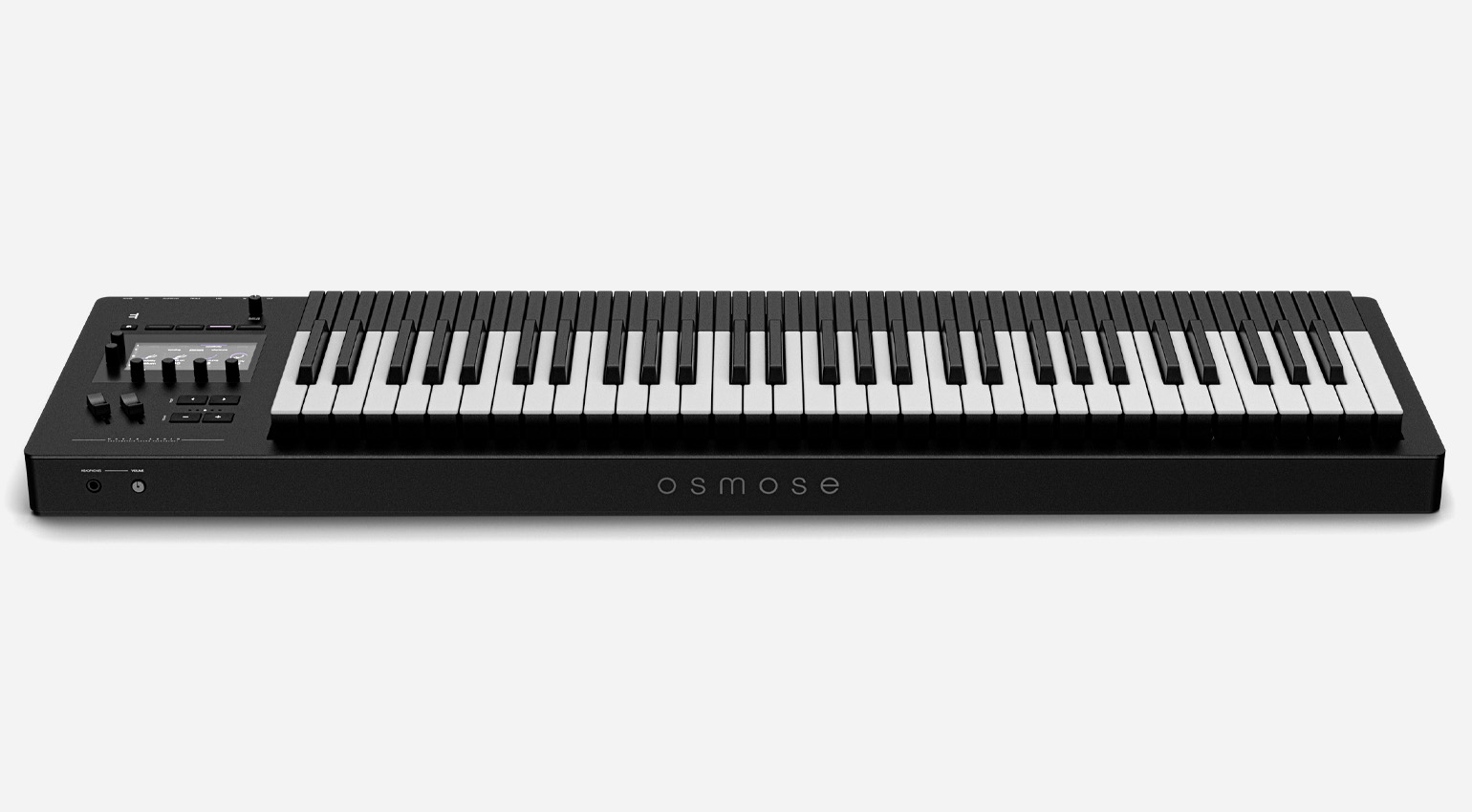
However, Osmose is more than just an MPE controller: it also comes with a custom-designed sound engine by Haken Audio. Offering a combination of FM, virtual analog synthesis, and physical modeling, the EaganMatrix engine delivers a wide range of sounds that instantly respond to every nuance of your playing.
Given the expressive possibilities of the keyboard, many users thought that the original 49-key Osmose simply wasn’t big enough. That’s why Expressive E followed up with the Osmose 61 in 2025, offering five octaves of three-dimensional expression.
Expressive E Osmose is available from Thomann*.

Ableton Push 3: MPE Controller and Standalone Performance Groovebox
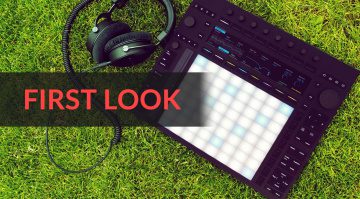
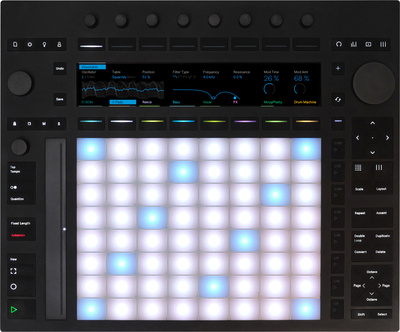
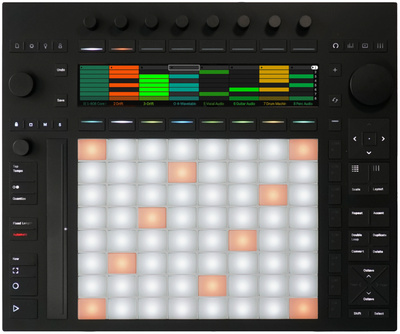
Now in its third generation, Ableton Push is no longer just a hardware interface for Live, but also an expressive MPE controller. The 64 pads contain numerous sensors to detect the exact X/Y positions of your fingers. You can slide your fingers across the pads in any direction, add vibrato, and control effects or other parameters polyphonically across the entire surface.
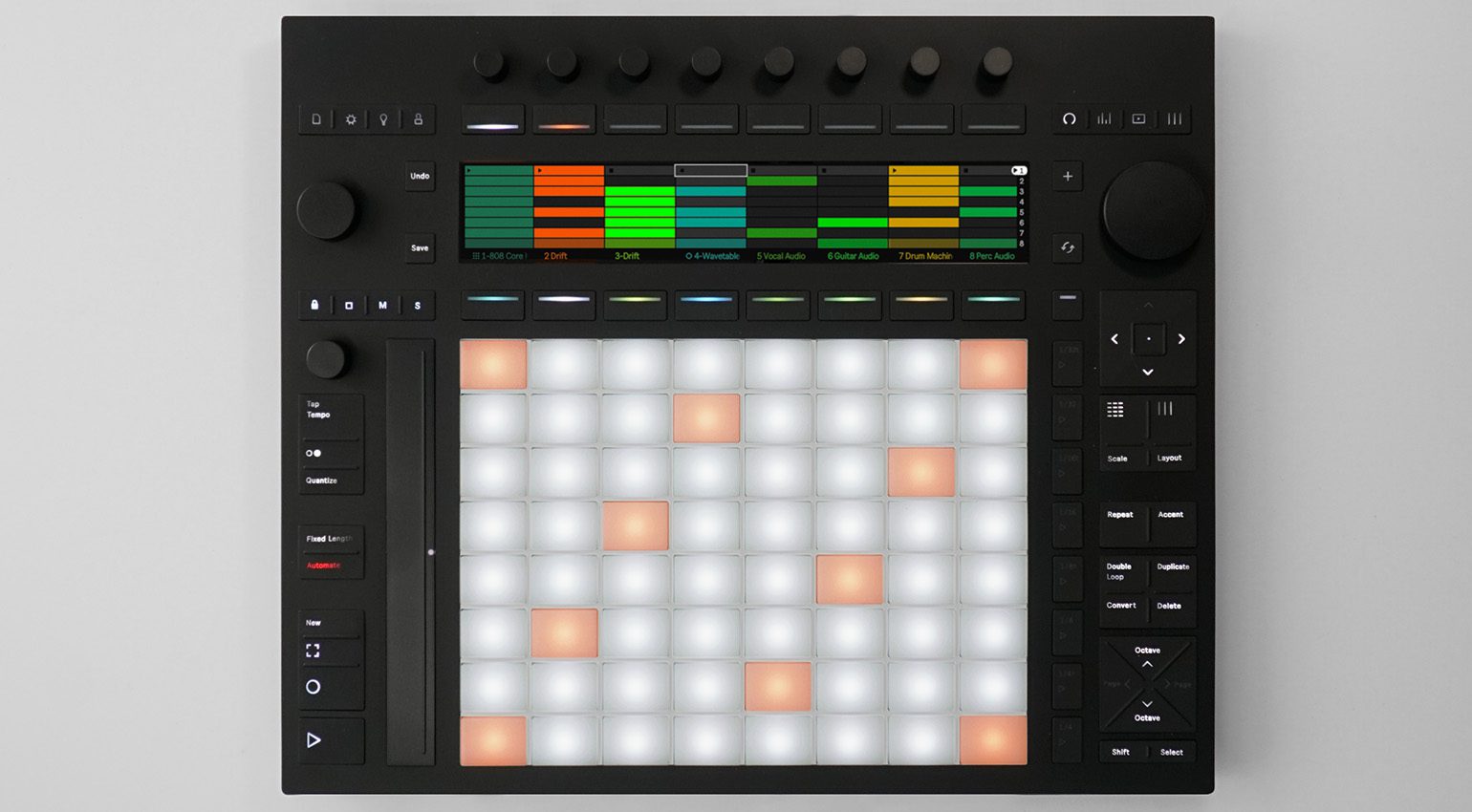
In addition, Push 3 continues to offer everything you need to produce and perform in Ableton Live. In the base version (tethered), the device acts as a controller for the software, so you’ll also need a desktop or laptop computer to run Ableton Live. Push 3 also includes an audio interface (including an ADAT port for expansion), a MIDI interface, and CV, trigger, clock, and gate outputs.
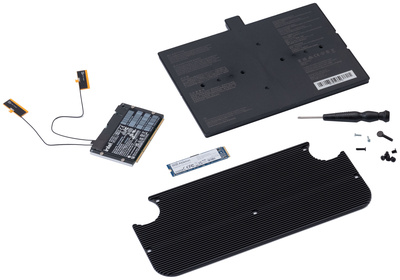
The standalone version adds a CPU, 256 GB of SSD storage, and Wi-Fi connectivity, making Push 3 a completely self-sufficient performance instrument that can be used without a computer. An optional upgrade kit is available to turn the tethered version into Push 3 Standalone.
Ableton Push 3 is available from Thomann*.

More about MPE and MPE Controllers
- 5 of the Best Hardware Synths With MPE
- Best MIDI Controller Apps for iOS: Control your Synths from your iPhone or iPad
- MPE, Polyphonic Aftertouch & MIDI 2.0: Are You Using the Correct Expression?
- My Top 5 Expressive Synths
*This post contains affiliate links and/or widgets. When you buy a product via our affiliate partner, we receive a small commission that helps support what we do. Don’t worry, you pay the same price. Thanks for your support!

This might also interest you