The 7 Best Delay Pedals for any Budget: Endless Depth and Lush Vibes
From Beginner multi-effect to pro-level studio legend!

 3,4 / 5,0 |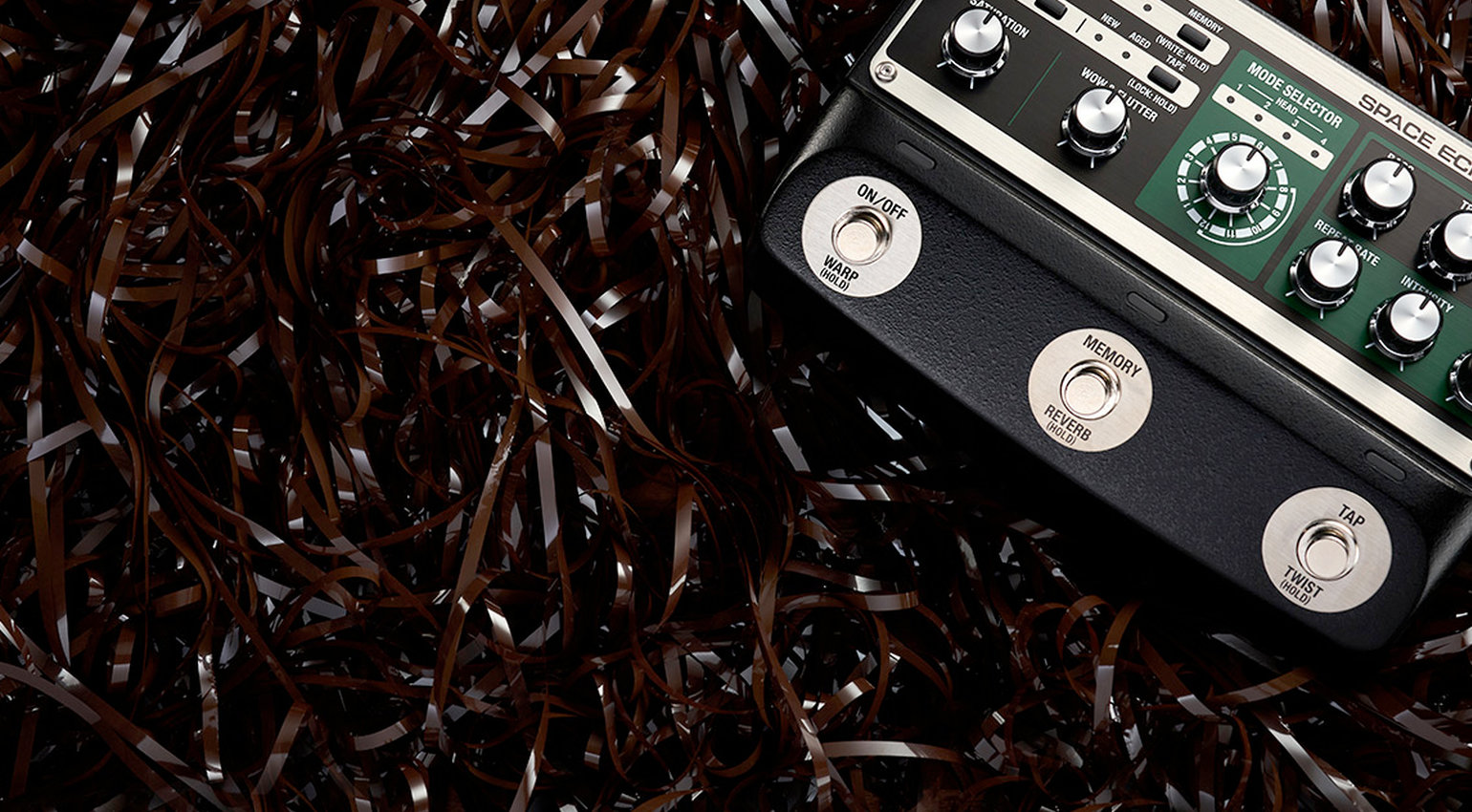

The best delay pedals can turn a simple riff into a landscape. They can add depth, rhythm, and emotion with every repeat. From subtle slapback to huge ambient washes and tempo-locked rhythmic patterns, delay is one of the most creative tools on a pedalboard.
Table of Contents
The Best Delay Pedals: How did we get here?
Delay as an effect dates back to the 1950s and ’60s, with tape echo machines like the Maestro Echoplex and the Roland Space Echo. These used actual magnetic tape to create repeats, giving them warm, slightly unstable echoes that musicians still chase today. These units were big, heavy, and fragile, but they defined the sound of early rock, dub, and psychedelic music.
In the late ’70s and ’80s, analog delay pedals appeared, using bucket-brigade chips instead of tape. Classics like the Electro-Harmonix Deluxe Memory Man brought warm, dark repeats into pedalboard format. Soon after, digital delay changed everything: the Boss DD-2 in 1983 was one of the first compact digital delays, offering clean, precise repeats and much longer delay times.
So when you’re looking for the best delay pedals, it all depends on what you need a delay for and what your budget is. Let’s take a look at these suggestions!
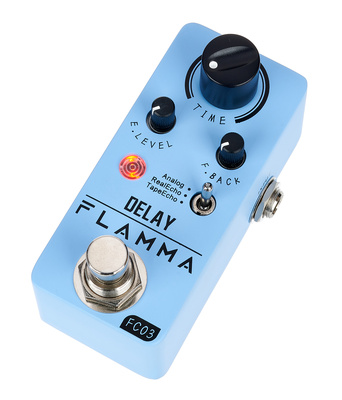
Flamma FC03
The Flamma FC03 Delay is a compact delay pedal that brings three classic delay flavors (Analog, Real Echo, and Tape Echo) into a pedalboard-friendly box. With a delay range up to 600 ms and true bypass switching, it covers the essentials. This might very well be your first delay pedal.
User feedback on platforms like Thomann typically highlights its solid build quality and surprising tonal variety for the price point, with many owners noting that it gives more character than expected from a budget-oriented unit. Overall, it’s seen as a reliable, straightforward delay that punches above its weight. Check it out on Thomann*.


TC Electronic Bucket Brigade
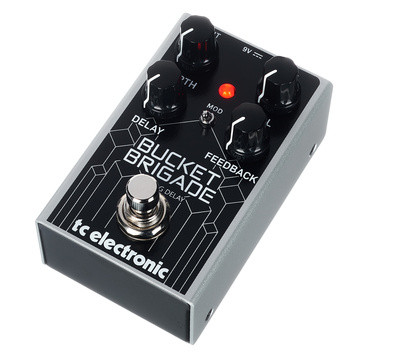
The TC Electronic Bucket Brigade is a classic-style BBD analog delay that wears its heritage on its sleeve. With controls for Delay, Feedback, Depth, and Volume, plus a Mod switch that adds gentle chorus to the repeats, the effect covers a sweet spot between simple echo and modulated ambience.
Its true-bypass switching keeps your tone clean when off, and its overall layout makes it one of the more approachable options. User feedback frequently praises the Bucket Brigade’s musical repeats and the richness that its analog circuitry brings to clean and overdriven tones alike, often comparing its warmth favorably against basic digital delays in the same price class. This delay is regularly recommended as a solid, character-filled choice among the best delay pedals. Check it out at Thomann*.

Mooer D7 X2
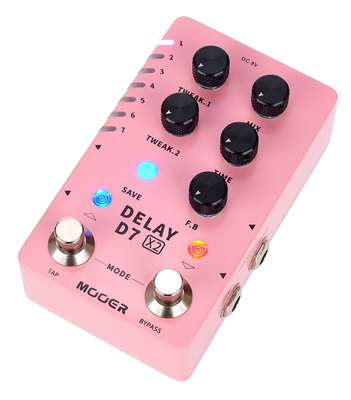
The Mooer D7 X2 Delay brings loads of flexibility into a compact package. With 14 delay modes, tap tempo, and true stereo I/O, it can cover everything from simple slapback and tape-style repeats to more experimental, rhythmic textures. The four main controls (Tweak 1, Tweak 2, Mix, Time, Feedback) give access to each mode’s character, and the ability to save presets for each effect means you can easily recall your favorite sounds mid-gig.
Users often highlight how much tonal variety you get for the price and size. The pedal’s Tap Tempo and Trails-enabled bypass are frequently mentioned as practical live features. A few players note that some of the deeper modes take a little dialing-in to shine. Get it from Thomann*.

Walrus Audio Fundamental Delay
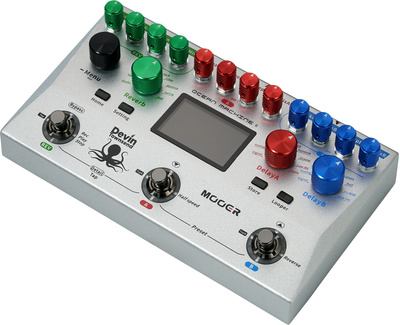
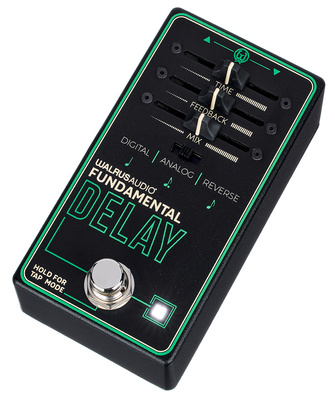
The Walrus Audio Fundamental Delay brings classic delay essentials into a simple, pedal-friendly layout that appeals to players who want great tones without menu diving. With three modes (Digital, Analog, Reverse), it covers all the basic delay styles you might need. Plus, the sliders for Time, Feedback, and Mix make it wonderfully hands-on.
User feedback (both in reviews and community discussions) often highlights how immediate and usable the Fundamental series feels, with many players noting that the straightforward interface actually encourages dialling in tones rather than endlessly tweaking. It’s available from Thomann*.

Boss DD-3T and DD-8
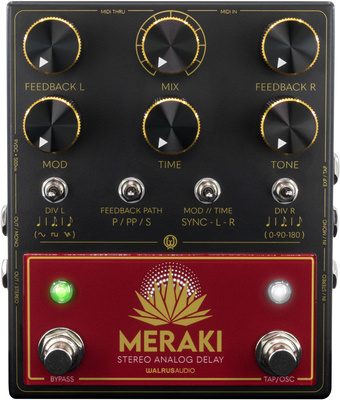
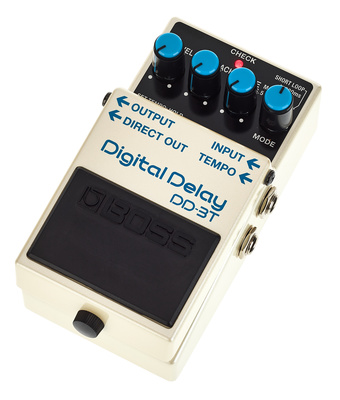
The Boss DD-3T* is a modern iteration of a classic compact digital delay. It gives you the essential controls (Level, Feedback, Time, and Mode) to dial in your desired delay effect. It also adds the convenience of regulating the delay tempo from the onboard switch or an external footswitch. The pedal’s straightforward design and rugged build are typical of BOSS.
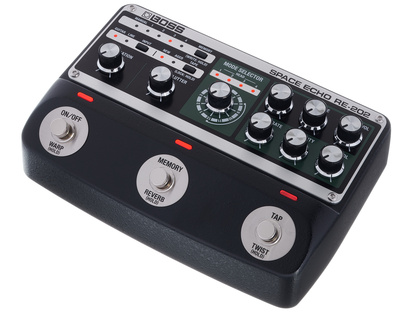
The Boss DD-8*, on the other hand, is the most comprehensive delay in BOSS’s compact line. It expands on the basic digital delay concept with stereo I/O, 11 distinct delay modes, and a built-in looper, offering dramatically more sonic flexibility than the DD-3T while keeping the same familiar interface. Where the DD-3T is about quick access to good-sounding repeats with tempo control, the DD-8 feels more like a miniature multi-effects engine.
By comparison, the DD-3T is ideal for players who want straightforward digital echoes with tempo control, while the DD-8 suits those who want deep delay variety and built-in looping without stepping into larger, more complex units.

MXR M169 Carbon Copy
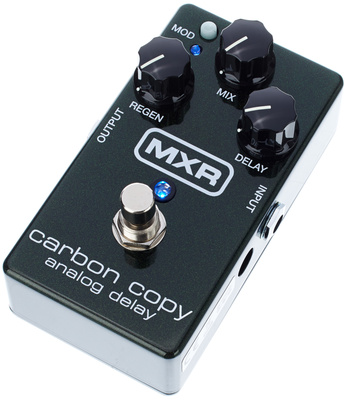
The MXR Carbon Copy is one of those pedals that’s so popular and famous, it barely needs an introduction. It’s a true analog delay with up to 600 ms of delay time and a layout so simple you can dial it in with your eyes closed. With just Delay, Regen, and Mix, it focuses on musicality over features. The pedal is built like a tank, runs on battery or standard 9V, and has become a reference point for what “analog delay” is supposed to sound like.
User feedback consistently praises the Carbon Copy for how naturally it sits in a mix. Many players mention that it works especially well with overdrive and fuzz, where cleaner digital delays can feel too sharp. And it’s not too expensive! Check it out at Thomann*!

Strymon Volante
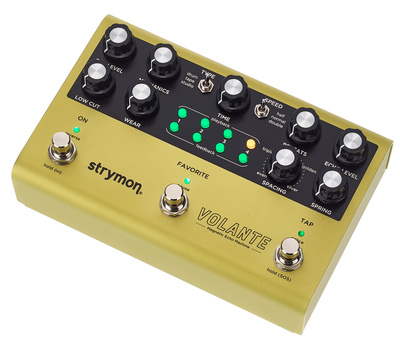
The Strymon Volante is where delay turns into an instrument of its own. It offers three magnetic echo engines (Drum, Tape, Studio), plus built-in spring reverb and a looper. So with that alone, the effect pedal goes far beyond what most players expect when looking for the best delay pedals.
Controls like Wear, Mechanics, Spacing, and Low Cut let you shape how “old,” unstable, or hi-fi your repeats feel, while Tap Tempo and presets keep it usable on stage despite the depth. User feedback is overwhelmingly about one thing: tone. Players constantly praise how alive and three-dimensional the repeats feel, especially in Drum and Tape modes, and many say it replaced several other delays on their board at once. Get it from Thomann*.

Conclusion
The best delay pedals get you to a new level, sonically speaking. They either one specific sound you need for your setup or endless modes and options. Or everything in between.
Of course, with just seven delay pedals, we couldn’t possibly cover everything. Which one is your favorite? What gem did we miss? Let us know in the comments!
FAQ – Best Delay Pedals
What’s the difference between analog, tape, and digital delay?
Analog delays use bucket-brigade chips and sound warm, dark, and slightly blurry while tape delays emulate old tape echo machines with wow, flutter, and saturation. By comparison, digital delays are clean, precise, and great for rhythmic or tempo-locked playing. Many of the best delay pedals combine several of these styles in one box.
Do I really need tap tempo on a delay pedal?
If you play with a band, to backing tracks, or to a click, tap tempo can be extremely useful. It lets you sync your repeats to the song without having to guess knob positions. For bedroom players or ambient styles, it’s not mandatory.
How long should the delay time be?
Short delays (under 300 ms) are perfect for slapback and thickening sounds. Medium delays (300–600 ms) cover most lead and rhythm needs. Long delays (over 1 second) are mainly for ambient, experimental, and looping styles. The best delay pedals usually cover at least up to 600–1000 ms.
Do I need stereo delay?
Stereo is great if you play through two amps, run into a PA, or record in stereo—it makes delays feel wider and more immersive. If you only use one amp live, mono is totally fine and often simpler.
*Disclaimer: This post about the best delay pedals contains affiliate links and/or widgets. When you buy a product via our affiliate partner, we receive a small commission that helps support what we do. Don’t worry, you pay the same price. Thanks for your support!

This might also interest you