Ace Frehley’s Gear: The Greatest Guitarists of All Time
Raw Tone, Iconic Visuals, and a Surprisingly Simple Setup: What Really Defines Ace Frehley’s Sound

 4,2 / 5,0 |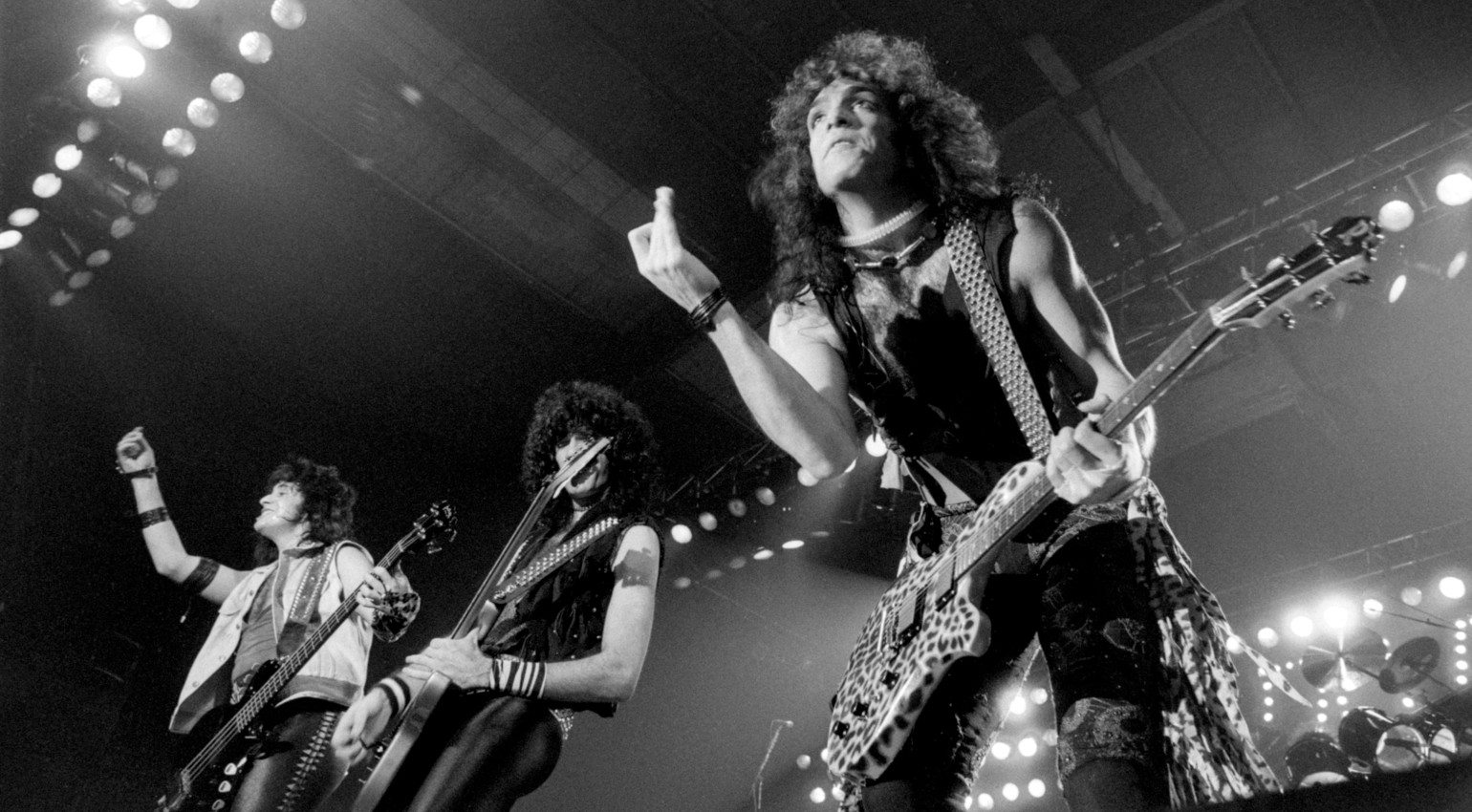
Ace Frehley's Gear: The Greatest Guitarists of All Time · Source: Robert Hoetink / Alamy

There are guitarists you recognize by their sound. And there are guitarists you recognize before you even hear them. Ace Frehley belongs to both. As the “Spaceman” of KISS, he shaped an entire era and redefined the image of the rock guitarist on stage. Smoking guitars, exploding pickups, and a massive show are part of his legacy. But just as important is a sound that still stands out today. This is where Ace Frehley’s Gear comes into focus. Behind the spectacle, the setup is surprisingly direct. While many players chased complex rigs, his approach stayed simple. Less technique, more feeling. That is what makes his tone so immediate and recognizable.
Ace Frehley’s Gear – Contents
Who Was Ace Frehley?
Before diving into Ace Frehley’s Gear, it is worth taking a closer look at the man behind the legendary “Spaceman.” Ace Frehley was born on April 27, 1951, in New York City and developed a fascination with music early on. As a co-founder and lead guitarist of KISS, he played a key role in shaping both the band’s sound and its unmistakable visual identity.
His start with KISS was anything but conventional. Frehley showed up to the audition wearing mismatched shoes, combining confidence with a certain unpredictability—and still got the job. What followed was a career that would leave a lasting mark on rock music.
Frehley’s playing stood out for its restraint. Instead of relying on speed, he focused on bends, vibrato, and memorable phrasing. Tracks like “Shock Me” or “New York Groove” show how effective that approach can be. This mindset also defines Ace Frehley’s Gear, which reflects a preference for directness over complexity.
With his passing on October 16, 2025, at the age of 74 in New Jersey, the rock world lost not only a founding member of KISS, but also a guitarist whose influence reaches far beyond his actual playing style.
Guitars: The Les Paul at the Heart of It All
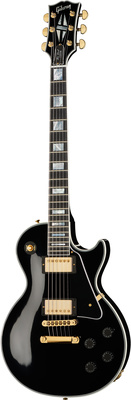
When you think of Ace Frehley’s Gear, one instrument immediately stands out: the Gibson Les Paul Custom. It is not just the foundation of his sound, but also a defining part of his visual identity. Black, heavy, and uncompromising – exactly like the tone he pulled from it.
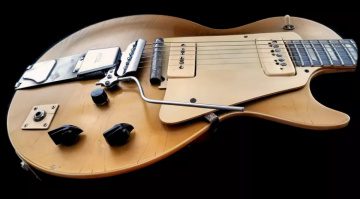
Gibson Les Paul Custom
In the 1970s, Ace Frehley relied mainly on Les Paul Customs* from the late ’60s and early ’70s. These guitars delivered exactly what his playing needed: long sustain, strong midrange presence, and a warm, singing lead tone. And yes, considering the weight of those instruments, it is still hard to imagine how he made it through entire shows without feeling it.
What really defines Ace Frehley’s Gear, however, is the directness of the sound. His tone depends far less on effects and much more on the interaction between guitar, amp, and playing style. That combination creates a sound that feels raw and immediate, yet always musical and controlled.


Ace Frehley’s Gear: Style Meets Function
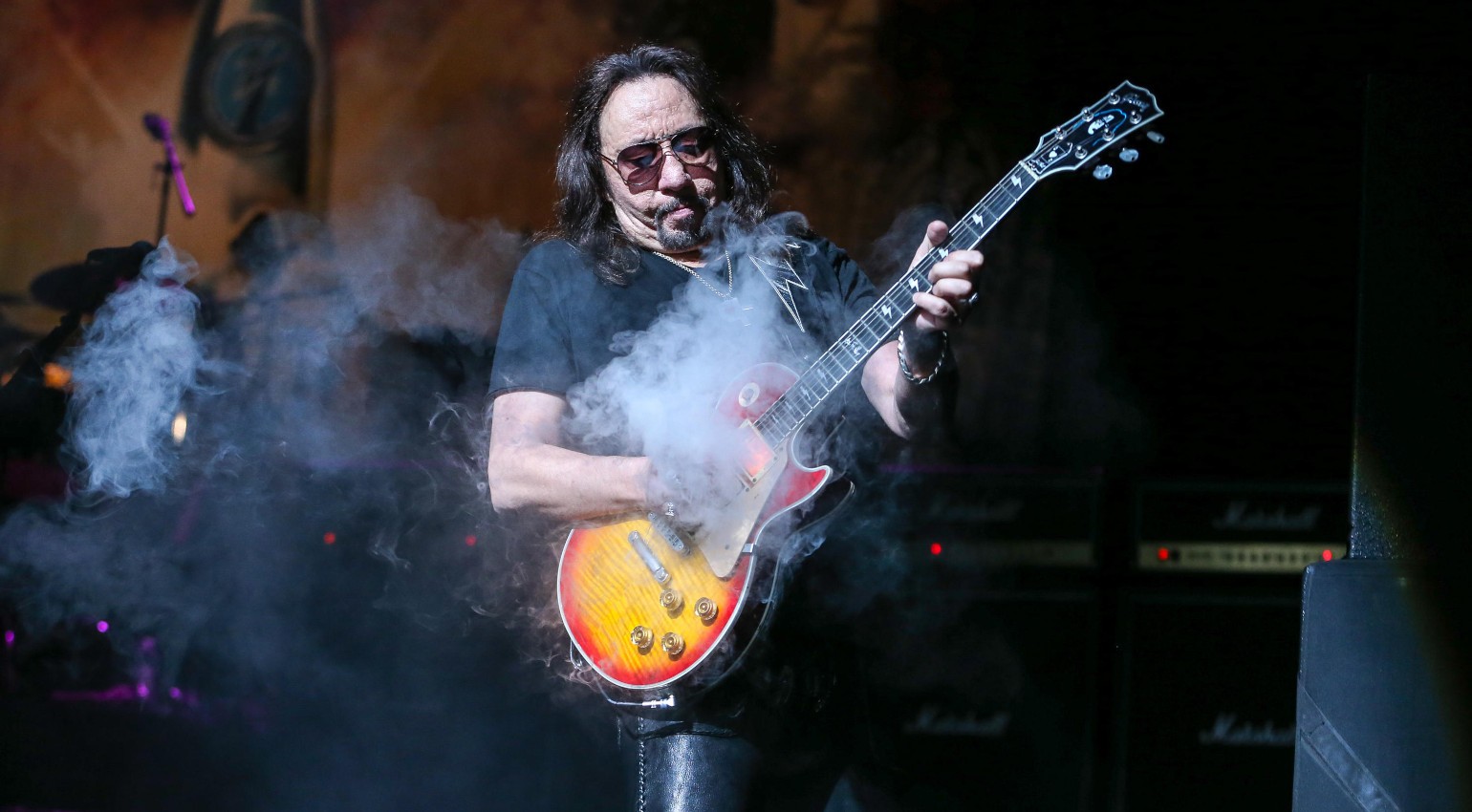
What sets Ace Frehley apart, and KISS as a whole, is how closely sound and performance are connected. Within Ace Frehley’s Gear, the guitar was never just a tool. It was always part of the show. His modified Les Pauls became legendary. Smoke effects, flashing LEDs, and even fire elements turned the instrument into a visual centerpiece on stage.
These modifications were not designed for practical everyday use. But that was never the goal. They defined the Spaceman persona and made him instantly recognizable. At the same time, the core of Ace Frehley’s Gear remained unchanged. Despite all the visual elements, the fundamental tone of the Les Paul stayed intact and continued to shape his sound.
Other Guitars: Tried Many, Kept Few
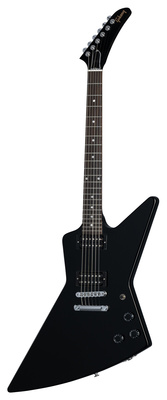
Even though the Les Paul dominates Ace Frehley’s Gear, he experimented with other models throughout his career. These included the Gibson Explorer*, various signature reissues, and custom-built guitars for specific tours.
Still, no matter how many alternatives were used, the path almost always led back to the Les Paul. For Frehley, it was more than just a guitar. It was the most direct connection to his tone. That is exactly why it remains the central element of Ace Frehley’s Gear.
By the way, if you want to get closer to that history, auction houses like Julien’s Auctions occasionally offer original instruments. A 1975 Les Paul once owned by Frehley has recently been listed there.
Ace Frehley’s Gear: Amplifiers
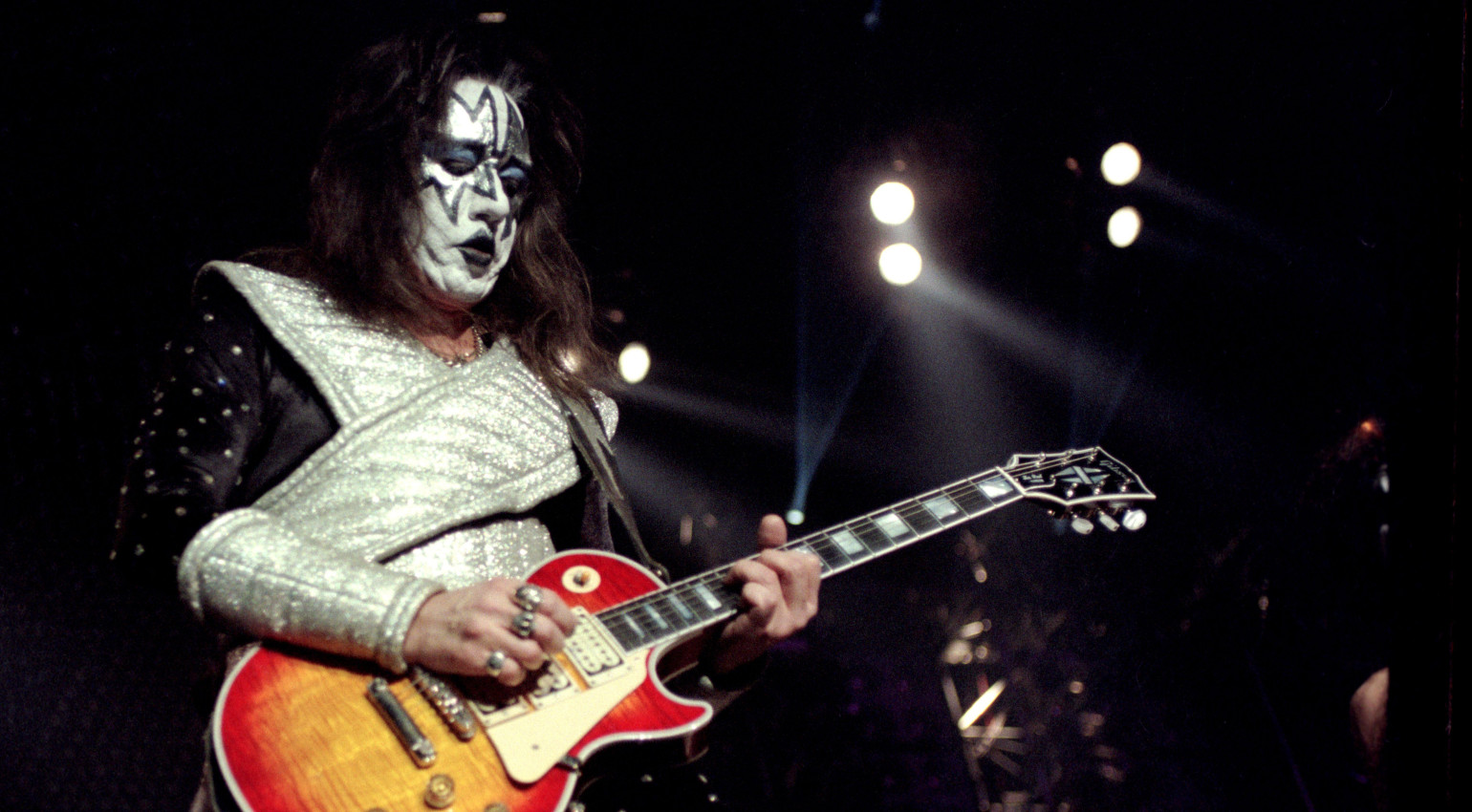
As iconic as his choice of guitar is, the second constant in the setup of Ace Frehley is just as clear. Within Ace Frehley’s Gear, Marshall amplifiers play a central role. Like many players of that era, he relied on British tube amps in the 1970s. These amps delivered volume, direct response, and the kind of presence needed for large stages.
Marshall Plexi and Early Setups
During the early KISS years, Marshall Plexi heads were the core of the rig. These amps do not produce modern high gain tones. Instead, they offer an open and dynamic distortion that reacts directly to playing intensity. Turning them up creates that raw overdrive that defined countless rock records.
This approach fits perfectly with Frehley’s playing. His style depends on bends, vibrato, and a slightly rough edge in the tone. A Plexi translates these details without smoothing them out. The result feels immediate and alive. Les Paul into a cranked Plexi. That combination alone defines a huge part of his sound.
Later Amp Setups
As live productions grew and technical demands changed, the setups evolved as well. Larger stages and more complex tours led to different amp combinations over time. Still, the core idea within Ace Frehley’s Gear remained consistent.
There is no focus on extreme gain or heavy compression. Instead, the sound stays open, direct, and responsive. Even in more modern rigs, this principle is still present. The goal remains the same. Preserve dynamics, keep the tone clear, and let the playing shape the sound.
Effects: Less Tech, More Attitude
Compared to many modern players, effects play a much smaller role in Ace Frehley’s Gear. The focus is not on building complex signal chains. It is about enhancing what is already there.
Simple delay, occasional modulation, and the natural breakup of the amp are often enough. The character comes from the hands, not from the pedalboard. That is exactly why his tone still feels so direct and recognizable today.
Overdrive and Boost
Within Ace Frehley’s Gear, the core tone does not come from pedals. It is driven primarily by the amp itself. Instead of stacking multiple overdrives, Frehley kept things simple and relied on the natural response of his setup.
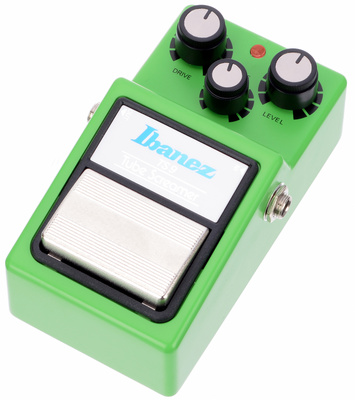
Light boosts, for example from an Ibanez Tube Screamer, were used more as a push than as a full distortion source. Combined with the natural saturation of a cranked amp, this was enough to add presence and punch without changing the character of the tone.
The idea is simple: shape the sound at the source and only enhance what is already there.

Delay and Reverb
Within Ace Frehley’s Gear, delay and reverb are used with restraint. Their role is not to dominate the sound, but to give it space and depth. Especially in live situations, this approach keeps the tone open and lets it sit naturally within the band mix.
The effect is subtle, but effective. A touch of delay can add width, while reverb places the guitar in a believable space without washing it out. Less effect, more clarity. That balance defines a big part of his sound.
Signature Sound Without a Big Board
This also reflects the core idea behind Ace Frehley’s Gear. The foundation is a clearly defined base tone that is not masked by layers of processing. Technology stays in the background, while the instrument and the amp do the heavy lifting.
In an interview with Premier Guitar, Frehley summed it up perfectly. He tries to avoid effects pedals as much as possible. That mindset explains why his tone still feels so direct and immediate.
Playing Style: Between Blues and Rock ’n’ Roll
Ace Frehley’s Gear alone does not explain the sound. A major factor is his playing style. It is rooted in blues phrasing but carries the direct energy of classic rock ’n’ roll.
Instead of technical showmanship, Frehley focuses on pentatonic ideas, bends, and a very distinctive vibrato. His solos often feel spontaneous, almost improvised, yet they always follow a clear musical direction. That combination makes them easy to recognize and hard to forget.
One detail that stands out is his timing. Frehley often plays slightly behind the beat. This creates a laid-back feel that adds character and gives his leads a certain ease.
The Ace Frehley Sound in a Band Context
The real strength of Ace Frehley’s Gear becomes obvious in a band setting. His tone does not try to dominate everything. Instead, it finds its place between vocals, bass, and drums, while still cutting through when needed.
That balance is not achieved through heavy processing, but through dynamics and space. Again, it is a sound that works with the band, not against it.
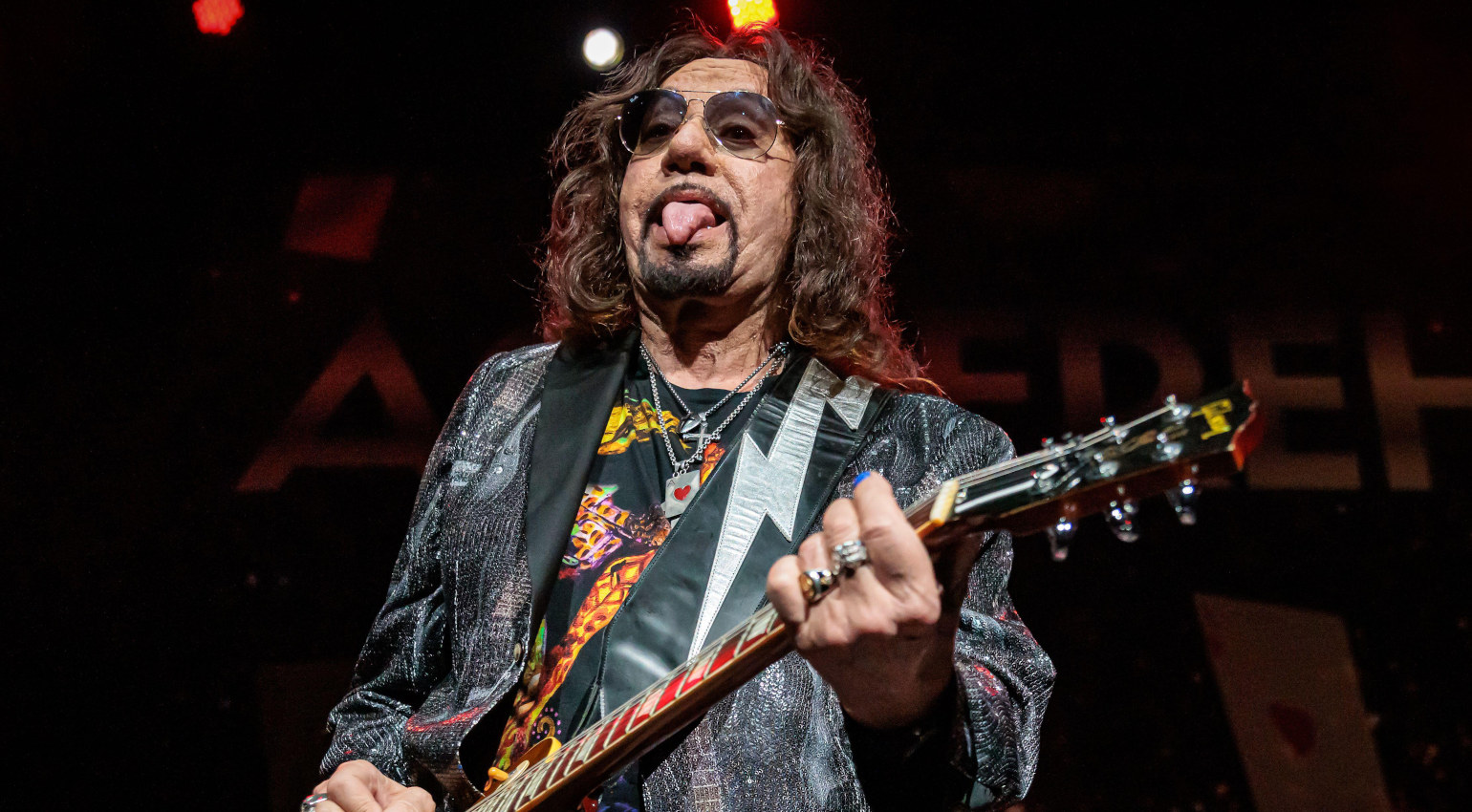
A guitar sound rarely works in isolation. With KISS, this becomes especially clear. Within Ace Frehley’s Gear, the tone is built to cut through the mix without overpowering everything else. At least most of the time.
A key factor is the strong midrange focus. While many players scoop the mids to create a wider sound, Frehley does the opposite. His guitar sits exactly where it needs to be to stay present in a dense band mix.
Gain is also carefully controlled. Too much distortion would blur the sound once bass and drums come in. Frehley keeps it at a moderate level, which preserves clarity and definition. If you strip away the visual spectacle, what remains is a very classic and solid rock tone.
How to Recreate the Ace Frehley Sound
One of the biggest advantages of Ace Frehley’s Gear is how accessible it is. You do not need complex or expensive setups to get close to his sound.
Guitar
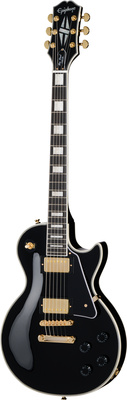
A Gibson Les Paul with humbuckers is the most direct starting point. What matters is not unusual features, but a strong fundamental tone with enough output and sustain. Alternatives can work, but they often miss that specific character.
The foundation is simple: solid guitar, strong mids, and a tone that stays present in the mix.

Amplifier
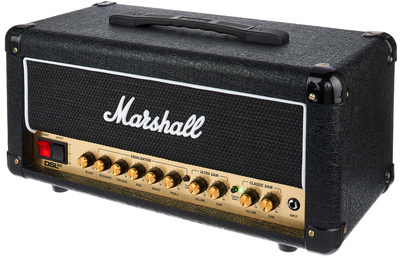
For Ace Frehley’s Gear, a classic Marshall-style tube amp is the most direct way to get close to his tone. What matters is an open sound that reacts clearly to your playing dynamics.
Keep the gain under control. Instead of relying on distortion, work with volume and touch. Turn the amp up until it starts to break up naturally, then shape the rest with your picking and phrasing. The response of the amp is what brings the sound to life.

Effects
Keep it simple. A slight boost, a bit of reverb, or a subtle delay are more than enough. The focus should always be on the basic sound, not on the effects chain.
Ace Frehley’s Gear: Conclusion
Ace Frehley’s Gear shows that a great guitar tone does not need to be complicated. A solid guitar, the right amp, and a clear musical approach are often enough to create something truly distinctive.
Ace Frehley was never the most technical player of his generation. But that may be exactly his greatest strength. His solos stay with you because they focus on feel, phrasing, and character instead of complexity.
If you want to take something away from Ace Frehley’s Gear, it is this. Spend less time thinking about the next piece of gear and more time working on your playing. The sound starts in your hands, not on your pedalboard.
*Note: This article about Ace Frehley’s Gear contains affiliate links that help support our site. The price remains the same for you. If you purchase through these links, we receive a small commission. Thank you for your support.

This might also interest you

7 responses to “Ace Frehley’s Gear: The Greatest Guitarists of All Time”
That’s not a picture of ACE!
But he’s on that pic and we do not have many pics, which are free to license for our mag…
This is a very fine article, but couldn’t you at least lead with a pic that DOESEN’T have Bruce Kulick in it? Just my two cents…
But he’s on that pic and we do not have many pics, which are free to license for our mag…
No he is NOT – in the headline picture are (L-R) Gene Simmons, Bruce Kulick and Paul Stanley.
Bruce Kulick and Paul Stanley.
If you’re reliant on only being able to use free images, maybe work a bit harder on generating ad revenue? Or get that big online retailer who you’re allied to to cough up a bit more dough?
Gene, Bruce, Paul, where’s Ace in that photo???
You are currently viewing a placeholder content from Facebook. To access the actual content, click the button below. Please note that doing so will share data with third-party providers.
More InformationYou are currently viewing a placeholder content from Instagram. To access the actual content, click the button below. Please note that doing so will share data with third-party providers.
More InformationYou are currently viewing a placeholder content from X. To access the actual content, click the button below. Please note that doing so will share data with third-party providers.
More Information