OpenAI Speaker: Sam Altman’s First Hardware Device Turns Out to Be a Portable Speaker Without a Screen
A "Humanlike AI Companion for the Home," Caught in the Middle of a Trade Secrets Lawsuit With Apple

 1,7 / 5,0 |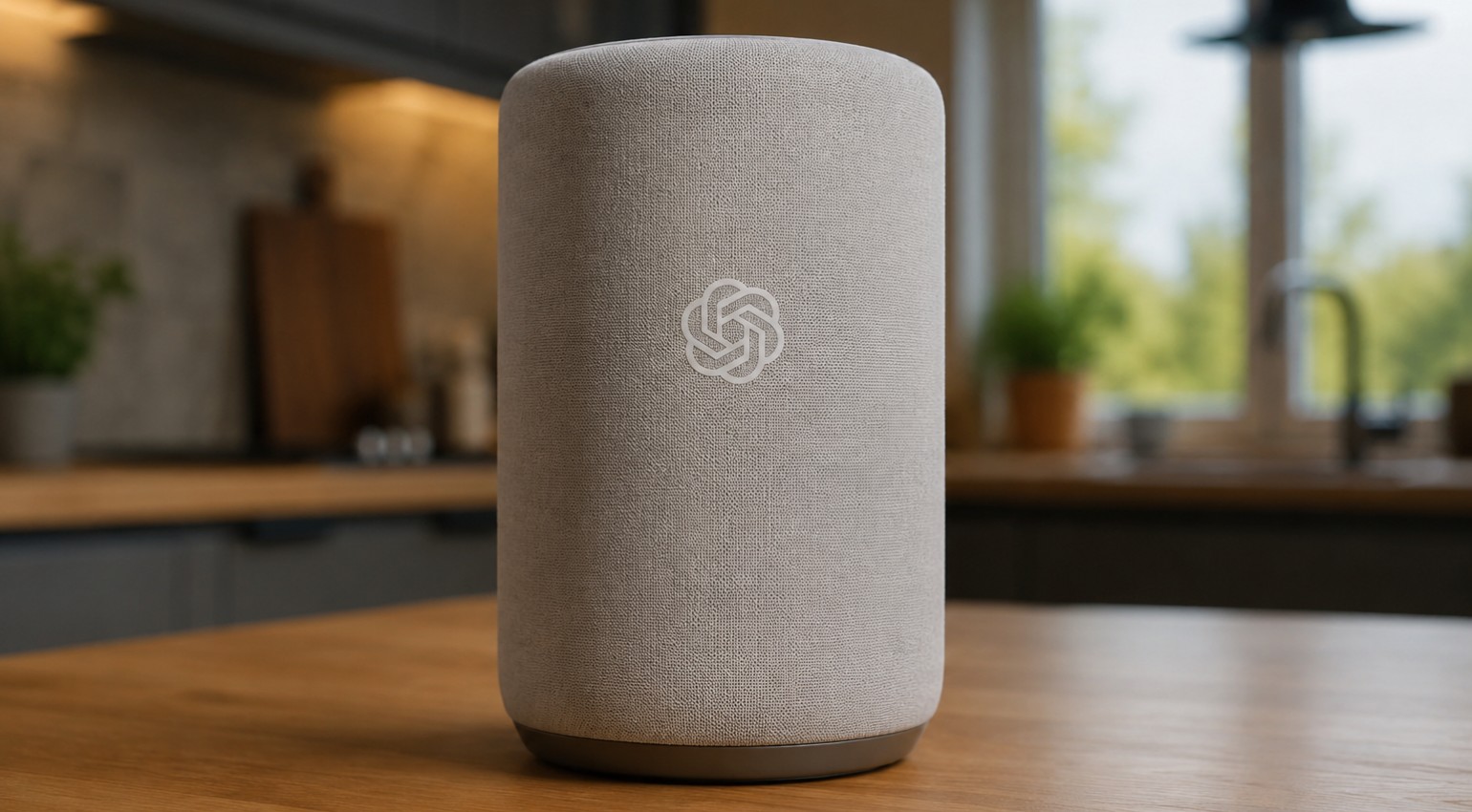
OpenAI Speaker: Sam Altman's First Hardware Device Turns Out to Be a Portable Speaker Without a Screen · Source: AI

OpenAI’s first hardware product turns out to be a mobile smart speaker without a display, according to Bloomberg. On top of that, the device now sits right in the middle of a new legal fight with Apple, which accuses OpenAI of using stolen trade secrets during development. Sounds like a genuinely interesting mix of future vision and legal minefield. And is a speaker like this really where AI use is headed next?
OpenAI Speaker: Everything on OpenAI’s First Hardware Product and the Fight With Apple
OpenAI Speaker: A Speaker With “Personality”
According to Bloomberg, this speaker-like product is meant to serve as a “humanlike AI companion that lives in the home.” It’s supposed to control smart home accessories, answer questions, play media, respond to messages, and more, all powered by ChatGPT, naturally. The device is meant to learn more about its user over time, growing more personalized and proactive, communicating through GPT-Live.
The device is also supposed to have an actual personality and “connect on a humanlike level” with users. Mechanical elements that move on their own are meant to create the sense that the device is alive, and there’s a camera on board too, letting it take in its surroundings. A rechargeable battery makes the whole thing portable, so you can carry it from room to room. Sounds a bit like something we’ve already heard out of Apple before, remember that?
Altman and Ive: Big Announcements, Not Much Substance
OpenAI CEO Sam Altman and former Apple designer Jony Ive have teased the device multiple times now, talking up “incredible contextual awareness” about a user’s life and describing it as a completely new kind of computer, built specifically for AI. Prototypes are apparently “jaw-droppingly good” and “exciting,” according to both of them.
Early rumors pointed to a possible 2026 release, but the launch is now expected sometime in 2027 instead. A reveal sometime this year, ahead of the actual release, is still on the table, though the Apple lawsuit could push that timing back.
Apple Accuses OpenAI of Stealing Trade Secrets
This is where things get legally messy. In a lawsuit filed against OpenAI over trade secret theft, Apple claims OpenAI used confidential information while developing the AI device, including access to a proprietary metal finishing technique. “OpenAI’s nascent hardware business now rests on the shakiest of foundations, rotten to its core by its illegal reliance on misappropriated trade secrets,” reads Apple’s filing.
People familiar with the matter told Bloomberg something different, though, saying the device is genuinely distinct from anything Apple currently sells, and that a violation of Apple’s trade secrets is “unlikely.” Apple does sell its own speakers with the HomePod and HomePod mini, but OpenAI apparently doesn’t see those as comparable to its own hardware product. Here’s the interesting part: Apple itself is also working on a smart home hub that sounds a lot like what OpenAI is building, complete with a 7-inch display, speaker, a camera for video chats and facial recognition, and Siri AI integration.
Apple has asked the court for an injunction. If granted, OpenAI could be blocked from releasing the hardware entirely.
Bottom Line on the Upcoming OpenAI Speaker
A speaker that moves around just to feel more alive, complete with a built-in camera and an explicit goal of learning as much as possible about your life, honestly sounds less like a revolution to me and more like an extremely data-hungry Amazon Echo with a personality disorder. A company whose entire business model runs on gathering as much context about its users as possible is building a device that literally follows you room to room, watching and listening the whole time.
Whether “humanlike connection” is really what most people want from a speaker, I have my doubts. The Apple lawsuit is honestly almost a side note compared to the bigger question here: how much trust people are actually willing to hand over to a device whose entire pitch is that exact kind of closeness. On top of that, there’s the data usage question. Gadgets like the OpenAI speaker (or an AI driven HomePod) are going to demand a serious expansion of server farms to keep up, and that means a serious jump in power consumption too. I’m genuinely curious to see where this all heads.
More Information on the OpenAI Speaker
- MacRumors: OpenAI’s First AI Device Will Be a Portable Smart Speaker
- Bloomberg: OpenAI’s First Device Will Be Moveable, Screenless Speaker Built as AI Companion
- More News on OpenAI

This might also interest you


9 responses to “OpenAI Speaker: Sam Altman’s First Hardware Device Turns Out to Be a Portable Speaker Without a Screen”
“I’m genuinely curious to see where this all heads”
Death by fire, dude. Death by fire.
Stop giving this sh*t advertising.
Why the fuck are you advertising AI slop?
Stop advertising for this highly unethical company
And they’re calling it Sairi ..
🤣🤣🤣
Is this a tech site now or is Sairi a DAW as well?
We also talk about music lifestyle gear if it is audio related on our site. And this gadget is a speaker, which is audio equipment imo.
I’d die laughing if I wasn’t already drowning in tears. Untold billions burned to the ground for…another smart speaker?
EF Sam Altman, and all other AI losers. All of them are just one trick pony’s. Give away all your money to the less fortunate and poor. AI data centres raises electricity, water rates, for citizens, and they also uglily the landscape.
At first I was bothered that this article existed, then I read the whole thing and appreciated the information. It’s not an ad, it’s an explanation and a critique.
I agree – good info. I guess the only call you can make on advertising is that it is giving ‘space’ to OpenAI in terms of just producing an article on it.
OpenAI is the second GenAI/LLM company I trust least (after only XAI with Grok); there is no way I would get this.
You are currently viewing a placeholder content from Facebook. To access the actual content, click the button below. Please note that doing so will share data with third-party providers.
More InformationYou are currently viewing a placeholder content from Instagram. To access the actual content, click the button below. Please note that doing so will share data with third-party providers.
More InformationYou are currently viewing a placeholder content from X. To access the actual content, click the button below. Please note that doing so will share data with third-party providers.
More Information