Live Techno with Hardware: 3 Ideas for a Perfect Match
Ideas for Live Performance with Hardware

 4,2 / 5,0 |
Live Techno with Hardware: 3 Ideas for a Perfect Match · Source: Panther Media Global / Alamy

In our Perfect Match series, we pick a trio of hardware or software every week that we think genuinely belongs together, always tied to a specific use case, a musical idea, or a concept worth exploring. This week: a hardware-only live techno rig. No laptop, no DAW, just gear. We’ve got a concrete starting point for you, plus some ideas on what you can actually do with it.
What You Need to Know
- Elektron Analog Rytm MKII is the foundation: analog drums, synth engines, sample playback, resampling, and a deep sequencer with Trigger Conditions, Probability, and Euclidean generators
- A synth with its own sequencer lets you run independent parts and opens the door to duo performances
- Elektron Analog Four MKII is the obvious companion to the Analog Rytm; Erica Synths Bassline DB-01 is the more approachable option; Roland JU-06A is the classic choice
- A mixer isn’t essential from day one, but it quickly becomes a performance instrument in its own right, with send routing, saturation tricks, and direct recording
- The whole setup is DAWless by design, but there’s nothing stopping you from adding a computer or more hardware down the road
Live Techno with Hardware: Building a DAWless Performance Rig with Drum Machine, Synth, and Mixer
Live Techno with Hardware
Ableton Live is great. Nobody’s arguing that. But plenty of people want to go full hardware and leave the computer at home, which is where the whole DAWless thing comes in. We’ve published a piece on exactly that topic (check it out here), and it pairs really well with what we’re getting into today.
The setup we’re laying out here is built around live techno with hardware, with no DAW in the picture, though you could always bring one in later if you wanted to. Think of these picks as a foundation: enough to actually perform with, and the kind of rig you’ll recognize on stage with artists who’ve been doing this for years.
None of this is cheap starter gear, but once you’ve spent some time with it, you’ll get what makes it special. The idea was to put together something that doesn’t overwhelm you right out of the gate, stuff you can genuinely grow into over a long time.
The third pick, the mixer, isn’t something you absolutely need from day one. But there’s a solid case for adding it, and we’ll get into that.
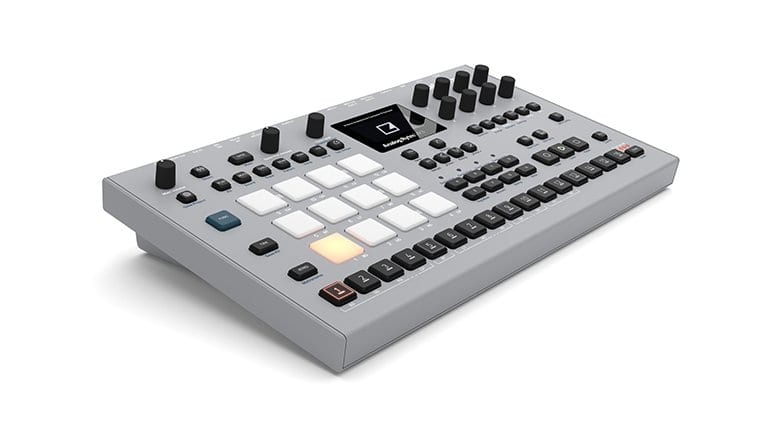
Elektron Analog Rytm MKII: More Than Just a Drum Machine for Live Techno
Techno runs on drums, so it makes sense to build your live hardware setup around a drum machine. And for that role, Elektron Analog Rytm MKII is still hard to beat.
It combines analog drums with sample playback, which gives you a serious foundation for hard-hitting techno rhythms right off the bat. But it goes further than you might expect. Alongside the drum and percussion engines (Elektron calls them “Machines”), there are synth engines for bass lines and leads, so you’re not locked into just rhythm sounds.
The Analog Rytm MKII can also record samples through its audio input, not just play them back. Add a resampling function on top of that, and you’ve got a lot more creative headroom than your typical drum machine.
The sound speaks for itself. This thing hits hard. It’s not a TR-909 or an 808, but it absolutely nails classic techno kicks, snares, and percussion, and arguably gives you more to work with than either of those classics. A lot of that comes down to the onboard effects and Elektron’s sequencer. The effects let you build tension and release across a set, while the sequencer turns simple loops into something that actually breathes, thanks to features like Trigger Conditions and Probability. Since the OS 1.70 update there are also Euclidean generators on board, which are genuinely fun to mess around with live.
The individual outputs are worth mentioning too. Beyond the main stereo out, you can route individual sounds to separate mixer channels and treat them with their own effects, which opens up a lot for a live rig.
Roland TR-1000 is a strong alternative, though it costs quite a bit more and stock is tight right now. Roland TR-8S* is worth a look if you want something more focused on drums. If you’re happy working primarily with samples, groove boxes like Novation Circuit Tracks*, Elektron Digitakt II*, or an AKAI MPC* are all solid options. You can grab the Elektron Analog Rytm MKII at Thomann here*.


Synthesizer with Built-In Sequencer: the Perfect Add-On
The Analog Rytm MKII alone can carry a live techno set. But add a synthesizer with its own sequencer and things get a lot more interesting.
The idea is simple: a synth that runs its own sequences in sync with the drum machine, connected via a MIDI cable*, with the Analog Rytm as clock master.
What makes this combination so useful is that both units can operate independently. You can swap a pattern on the drum machine while the synth keeps running its own part, or flip it around and let the drums roll while you switch things up on the synth. Get comfortable with both and you’ve got the same kind of flow as a DJ set, where everything is about managing transitions between elements. And if you’re not planning to perform solo, two people can each focus on their own piece of gear and shape the sound together in real time. This is live techno par excellence.
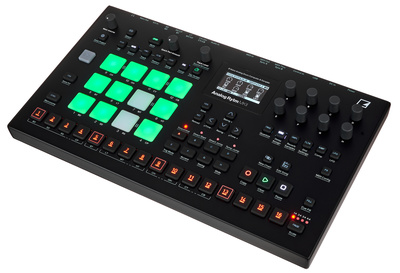
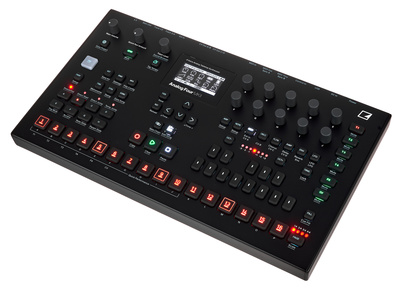
Our top pick to pair with the Analog Rytm MKII is Analog Four MKII*, also from Elektron. It’s a four-voice analog synth where each voice can run as its own independent part, or you can stack them for chords and pads.
The Analog Four MKII covers bass lines, melodies, chords, and pads, but it also handles drum, percussion, and FX sounds surprisingly well. Paired with the Analog Rytm MKII, you’ve genuinely got a powerful live techno rig already.
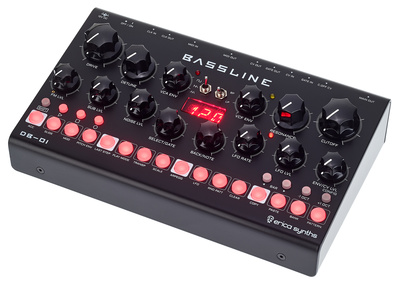
If another complex machine sounds like too much to take on at once, Erica Synths Bassline DB-01* might be the better starting point.
Think of it as a modern, souped-up take on the Roland TB-303 concept. It’s not just for acid sounds though; you can pull a wide range of synth basses out of it, plus drum sounds and drones. The workflow is more straightforward than the Analog Four, which actually makes it more inviting to tweak on the fly.

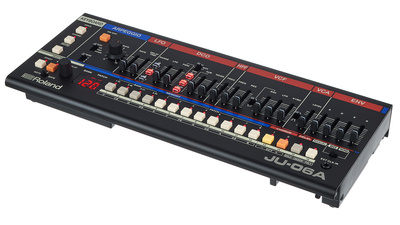
For something with a more classic feel, Roland JU-06A* is a compact digital recreation of the Juno-60 and Juno-106. Four-voice polyphony makes it great for pads and chord work, and there’s even a Chord Memory function built in. The workflow is approachable, the sounds are immediately usable and saveable as presets, and the onboard chorus and delay are genuinely handy in a live techno context. Arpeggiator and sequencer round things out nicely.

A Mixer as the Final Piece of the Rig for Live Techno with Hardware
As we mentioned, the Analog Rytm MKII and a synth already give you a lot to work with. The synth can run through the drum machine’s inputs, so technically you only need one output going to the PA.
Once you start adding more gear though, a mixer becomes necessary. And in a live techno context, it quickly becomes much more than just a signal router.
Faders let you bring individual sounds in and out of the mix on the fly. Send knobs route specific sounds to external effects. A mixer stops being a utility and starts being an instrument. It also gives you the infrastructure to keep expanding your rig; add an effects unit to the loop and your creative options multiply fast.
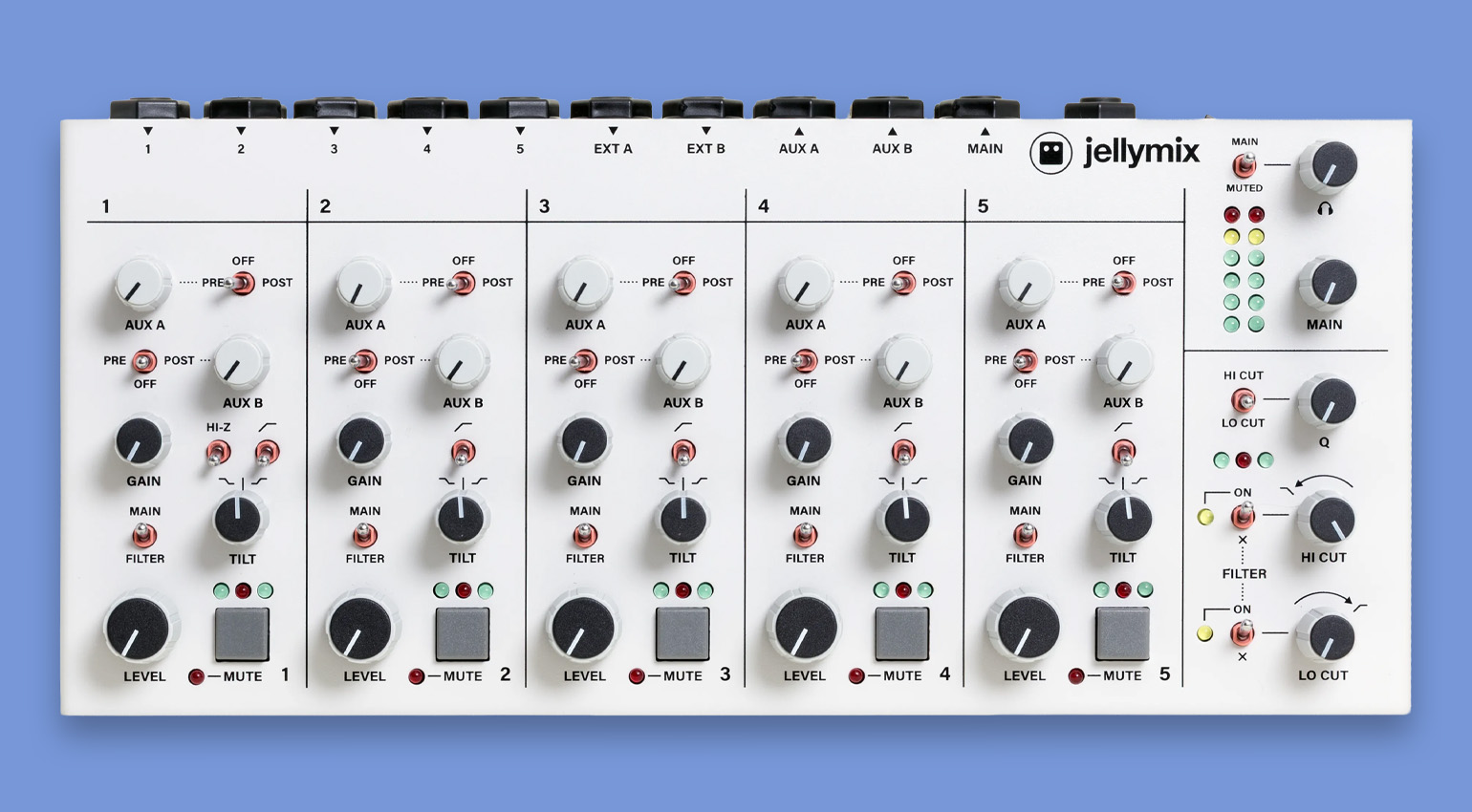
What should you look for? A DJ mixer can work, and it’s actually what Surgeon uses in his current live sets. But a small live mixer gives you at least as many options, if not more.
Some artists run kick drums through mic preamps specifically to push the input into saturation, anywhere from subtle warmth to full-on distortion. Send channels are perfect for fading effects in and out. And some mixers even let you record your set directly.
Stereo channels alongside mono channels are a nice feature too. With a drum machine like the Analog Rytm MKII, you can spread things out so the kick, snare, and hi-hats each get their own mono channel, while effects returns and other sounds come back in stereo with proper panning.
The more external effects you want to run, the more you’ll appreciate having multiple send buses. And some mixers come with built-in effects that are actually worth using for techno.
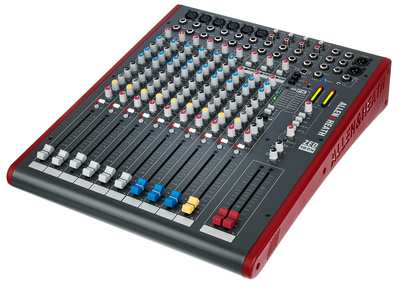
Allen & Heath ZED-12FX* has been around for nearly 20 years, and it’s held up for good reason. You get six mono inputs that handle both mic and line signals, three stereo inputs, four aux sends, a built-in effects unit with 16 presets, tap delay, three-band EQs with parametric mids, and PFL buttons for cueing. There’s also a USB audio interface built in, so you can feed signals from a computer or record your set directly.

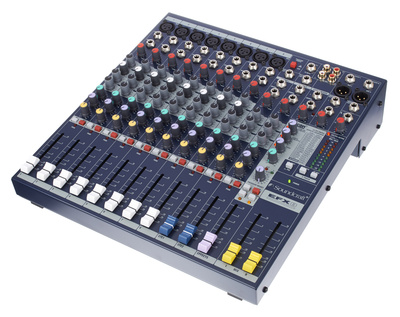
Soundcraft EFX8* is a bit more stripped down and aimed at tighter setups. Eight mono inputs and two stereo inputs, three-band EQs with parametric mids, one aux send per channel, and a Lexicon effects unit with 32 presets. For a lot of live techno rigs, that’s honestly everything you need.

For more mixer options, browse Thomann’s full selection here*. And we recently put together a buying guide for live and small mixers for electronic music that’s worth a read.
Conclusion: A Perfect Match for Live Techno with Hardware
If you want to perform techno live and keep it hardware-only, there’s never been more interesting gear to do it with. The setup we’ve laid out here covers the essentials and leaves plenty of room to grow.
Start with a drum machine like the Elektron Analog Rytm MKII: analog drum and percussion sounds, synth engines for bass and leads, sample playback, sampling, resampling, and a sequencer that’s as deep as you want it to be. It’s a serious piece of kit for live techno.
Add a synth with its own sequencer and you’ve got independent parts you can play against each other. Elektron Analog Four MKII is the natural companion to the Analog Rytm. Erica Synths Bassline DB-01 is the more accessible option. Roland JU-06A is the classic-leaning choice.
That combination already puts you in a great spot for a live set. Bring in a mixer and you add a real performance tool on top of that infrastructure. Allen & Heath ZED-12FX and Soundcraft EFX8 both fit the bill.
That’s a Perfect Match for live techno with hardware.
More on the Topic
- The Perfect Techno Kick in 3 Steps – Perfect Match
- Rave Sound 2026: Hardware for Hard-Hitting Techno Beats in Perfect Match
- Producing Electro: 3 Hardware Tools for a Perfect Match
- Dub Techno: This Gear is a Perfect Match in 2026
- Techno Legends Use This Gear: Charlotte de Witte — Acid Pressure and Peak-Time Precision
- Eurorack in Techno 2026: Why Does a Modular System Belong in a Modern Techno Setup?
- Drum Machines for Techno 2026: Punch, Workflow, and Character
- All about Perfect Match
*Note: This article about Live Techno with Hardware contains affiliate links that help us keep Gearnews running. The price for you always stays the same! If you buy something through these links, we receive a small commission. Thanks for your support!


This might also interest you
One response to “Live Techno with Hardware: 3 Ideas for a Perfect Match”

i have been performing live with the analog rhythm mk2 and a another syth for more than a frew year now, it is challenging but it also can be fun