Fred again.. Gear and Sound: Why Even Daft Punk Legend Thomas Bangalter Celebrates His Live Show
Logic Pro, Controllers, and Live Sampling as a New Form of Electronic Live Performance

 3,2 / 5,0 |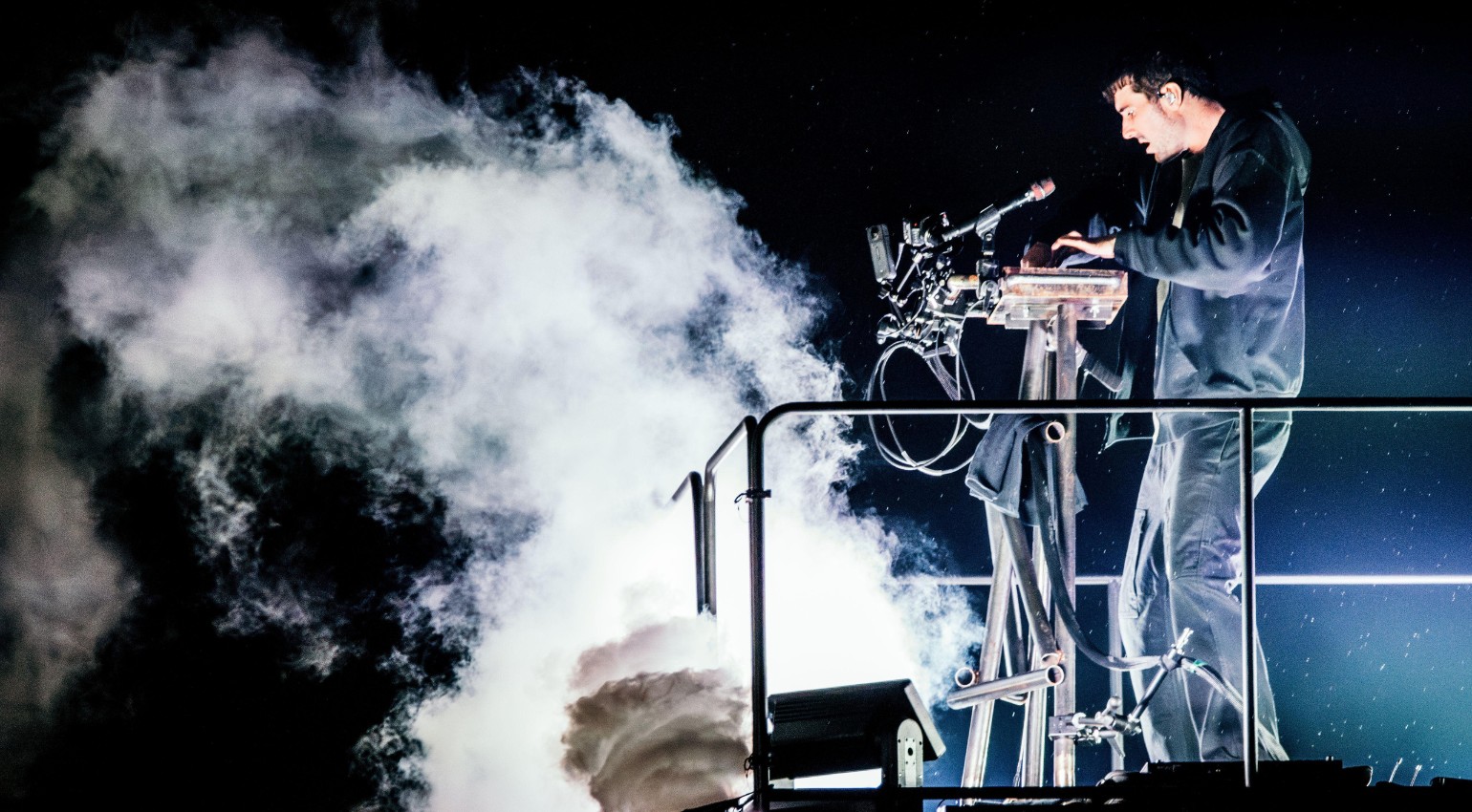
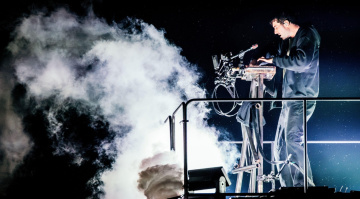
Fred again.. Gear and Sound: Why Even Daft Punk Legend Thomas Bangalter Celebrates His Live Show · Source: Thomas Jackson / Alamy

When Daft Punk legend Thomas Bangalter suddenly appeared on stage with Fred again.., it became clear that something new was happening in electronic live performance. Instead of simply playing finished tracks, Fred again.. rebuilds his songs live using Logic Pro, samples, and controllers, so every show unfolds a little differently. Tracks are broken apart, rearranged, and reshaped in real time. This approach turns his concerts into one of the most exciting live-jam experiences in electronic music today. The performance constantly evolves, reacting to the moment, the crowd, and the energy in the room. It also explains why even figures from the very top of the scene, including members of Daft Punk, are watching his shows with great interest.
Key Facts
- Fred again.. is one of the most influential live acts in contemporary electronic music. His shows combine elements of a club set, a concert, and an improvised performance.
- Apple Logic Pro (or Ableton Live) sits at the center of his setup. The DAW is used not only for production but also as a live performance instrument on stage.
- Tracks are constantly recreated during the show. Samples, loops, and beats are triggered, modified, and recombined in real time.
- Controllers such as Ableton Push and Native Instruments Maschine handle drums, melodies, and vocal slices directly through pad performance.
- Vocal samples often form the emotional core of his tracks. Voice messages, interviews, and everyday recordings are rhythmically reorganized and turned into musical elements.
- Live sampling and clip launching in Ableton replace the traditional DJ set. As a result, every show unfolds differently and feels far more spontaneous.
- Even Daft Punk legend Thomas Bangalter has been closely following this development, highlighting the growing influence of Fred again.. on modern electronic live performance.
Fred again.. – Live Setup, Workflow and Production Techniques
From London to the Biggest Stages
Fred again.. comes from London and originally began his career behind the scenes. Early in his path he worked as a producer and songwriter and developed a strong sense for combining emotional storytelling with electronic music production. This perspective, treating music as a direct reflection of personal moments, later became a defining element of his artistic identity.
His breakthrough as a performing artist came with an approach that clearly differed from the traditional DJ format. Instead of simply playing finished tracks, Fred again.. reconstructs them live on stage. Samples, vocal snippets, and rhythmic elements are manipulated, looped, and rearranged in real time. The result feels less like a classic club set and more like a live concert performance in which tracks evolve dynamically in front of the audience.
The fact that Thomas Bangalter closely followed Fred again..’s shows and eventually even appeared on stage with him feels like a symbolic moment between two generations of electronic music. While Daft Punk once transformed machines into pop culture icons, Fred again.. now demonstrates how digital production tools themselves can function as instruments for live performance. He does this with remarkable energy, both on stage and around the entire live experience.
Collaboration with International Artists – Production as a Creative Interface
What many people do not realize is that long before Fred again.. became globally known as a live performer, he was already deeply involved behind the scenes as a producer and songwriter. This phase had a major influence on his musical approach. During that time he learned how to combine electronic production with songwriting and emotional storytelling. Even today, this balance between club energy and personal atmosphere can be heard in many of his later tracks.
One of the most important artists he has collaborated with is Ed Sheeran. Fred again.. contributed to several productions and gained early experience within the international pop landscape. He also worked with Stormzy, which further sharpened his understanding of rhythmic dynamics and urban sound aesthetics.
Another important creative partner is Brian Eno, with whom Fred again.. released a joint album. This collaboration brought together two very different artistic perspectives. On one side stood Eno’s conceptual sound experiments, while on the other side was Fred again..’s immediate and performance-oriented production style. The meeting of these approaches created a fascinating contrast between ambient experimentation and contemporary electronic songwriting.
In addition, Fred again.. also worked on projects with Skrillex that received considerable attention across the electronic music scene. These collaborations further strengthened his reputation as an artist who connects different worlds within electronic music. Through these partnerships, Fred again.. has increasingly positioned himself as a bridge between genres, production cultures, and generations of electronic artists.
Logic Pro as the Central Instrument in Fred again..’s Setup
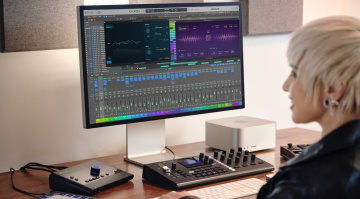
Logic Pro is not just production software in Fred again..’s setup, but the central performance instrument. Unlike in classic studio environments, the DAW is used not only for arranging but also as a real time performance system. This approach closely reflects the original concept behind Logic Pro as a tool designed for both production and stage use.
In practice, clips run in parallel within Logic Pro and can be triggered, stopped, or modified spontaneously during the show. This allows Fred again.. to restructure tracks dynamically while performing and react directly to the energy of the audience.
Controllers play a central role in this process. NI Maschine in particular provides direct access to samples, drum racks, and melodic elements. The pads are played like instruments rather than being used purely for control. This approach creates a direct connection between performance and sound design.
How Fred again.. Shapes Real Voices into Emotional Vocal Samples
One of the most distinctive characteristics of Fred again..’s sound is his use of vocal samples. Voices from interviews, voice messages, or everyday recordings are cut into short fragments and rhythmically reorganized. At times this process may feel spontaneous, yet it remains carefully structured so that the fragments form a groove and emotional narrative within the track.
These samples often form the emotional center of a track. Instead of synthetic hooks, melodic motifs emerge from real voices. In live performances, these fragments can be recombined or modified at any moment, which means each show sounds slightly different.
NI Maschine as a Performance Controller
Alongside Logic Pro and traditional MIDI controllers, Fred again.. also frequently uses Maschine from Native Instruments, as seen in his well known Boiler Room set. Within his setup it functions less as a classic groovebox and more as a performance interface for drums and samples.
The pads are ideal for triggering percussion hits or vocal slices spontaneously. While Logic Pro provides the structural framework, many rhythmic details are created directly through pad performance. This makes NI Maschine another important instrument within his live setup.
Why Fred again..’s Live Setup Works So Well
Fred again..’s shows differ significantly from conventional DJ sets. The tracks are not simply played back but reconstructed live. Loops are expanded, and breaks are extended or modified spontaneously during the performance.
This allows the audience to experience not only the music but also the process behind its creation. Small interventions such as retriggering a vocal slice or changing a drum pattern can completely transform the character of a moment.
In addition, he often takes on the role of an MC on stage, microphone in hand, encouraging the audience and showing how deeply he is immersed in the music.
Practice: Fred again..’s Typical Workflow in Ableton Live – From Sample to Track in 6 Steps
Many producers wonder how Fred again.. actually develops his tracks. The workflow often begins with a real life moment and eventually ends in an improvised live performance. Many of his productions do not start with a synth or a beat but with an emotional fragment from everyday life.
Voices, short pieces of conversation, or spontaneous sounds are recorded and later become the foundation of a track. This approach merges documentation, sampling, and music production into a very direct creative process. In practice, the workflow can be broken down into six typical stages.
1. Capture a Genuine Moment
It often begins with a voice recording or a short excerpt from a conversation. This could be a voice message, an interview, or a spontaneous recording. Technical perfection is not the priority. What matters most is the emotional content.
2. Prepare the Sample in Ableton
The recording is imported into Ableton and divided into smaller fragments. Using the “Slice to MIDI” function, individual syllables or words can be mapped across pads so they can be played rhythmically.
3. Build a Rhythmic Foundation
Only after this step is the groove developed through live clip launching and looping. Kicks, claps, and percussion are usually used very sparingly. The goal is to leave space for the sample. Pads or chords typically function only as atmospheric support.
4. Record Pads and Melodies Live
Controllers such as Ableton Push allow chords or short melodic phrases to be improvised in real time. These elements are intentionally kept simple so they can be adapted and reshaped during the performance.
5. Develop Structure Through Performance
Instead of programming the entire track in advance, the structure often evolves during longer jam sessions. Clips are triggered, stopped, or recombined. As a result, the song develops more like a live performance than a traditional arrangement.
6. Bring Out Emotional Dynamics
In the final stage, effects such as reverb, delay, or filter automation are used to create tension. Breaks are not produced through complex arrangements but through deliberate reduction. At certain moments only the voice and the surrounding atmosphere remain.
This workflow illustrates why Fred again..’s music often feels so immediate. The track is not created solely in the studio. It grows out of a real moment and continues to evolve through performance and interaction.
Contact Microphones in Live Setups – How to Create Unusual Percussion Sounds
Contact microphones are a particularly exciting part of Fred again..’s creative process. These microphones do not primarily capture airborne sound but instead record vibrations directly from surfaces. This makes it possible to generate unusual percussion sounds.
Tabletops, metal objects, and other materials can become sound sources. The recorded vibrations are then edited in the DAW and loaded into drum racks. Slightly shifted triggers and varying velocity values create lively and organic percussion patterns.
It is precisely this mix of real sounds and digital processing that gives many productions their organic character. This production technique can bring life to almost any genre of music.
Why Producers Can Learn from Fred again..
Another interesting aspect of his approach is the way he handles imperfection. Many productions today are created in highly controlled environments where every detail is quantized and optimized. Fred again.. demonstrates that small imperfections, spontaneous decisions, and unexpected sound sources can be exactly the elements that give a track its personality.
His approach also highlights that creative energy often emerges when production is not treated purely as a technical process. Instead, intuition, experimentation, and real moments become part of the musical result.
10 Tools from Fred again..’s Studio and Live Setup
These tools regularly appear in his production and performance environment:
- Apple Logic Pro 12/Ableton Live 12: Central production and performance software
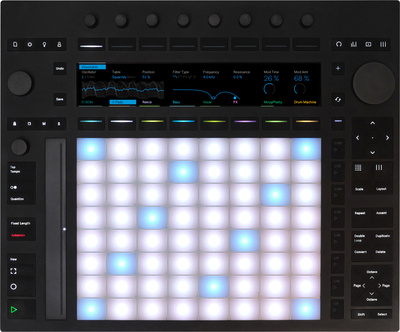
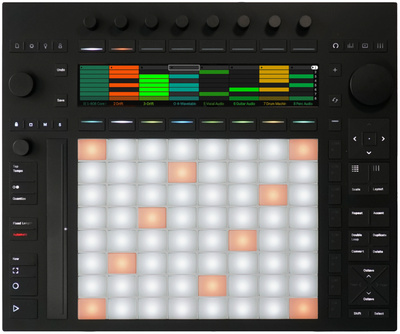
- Ableton Push 3 (with Live): Controller for pads, melodies, and sampling
- Native Instruments Maschine MK3: Drum triggering and sample performance
- MIDI controller for additional parameter control
- Contact microphones for unusual percussion recordings
- Audio interface for recording and monitoring
- Drum Rack device in Ableton Live for flexible percussion structures
- Delay and reverb effects for atmospheric spaces
- Saturation plugins for additional punch and harmonic character
- Field recording tools such as smartphones or portable recorders for spontaneous sample capture
A Setup in the Style of Fred again..
Studio Setup: Developing Ideas, Samples, and Tracks
Goal: Develop emotional tracks and sample material that can later be performed live.
Example setup:
- Ableton Live 12 or Apple Logic Pro 12 as the central production environment
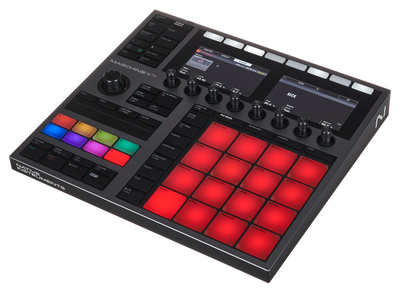
- Ableton Push 3 or the standalone version for melodies, chords, and drum patterns
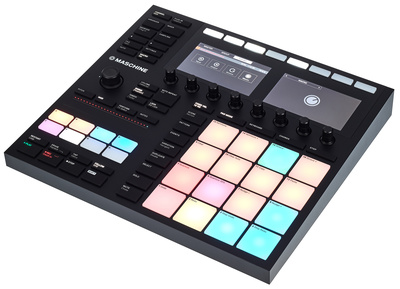
- Native Instruments Maschine MK3 or Maschine+ for drum programming and sample triggering
- Field recorder or smartphone for vocal recordings and environmental samples
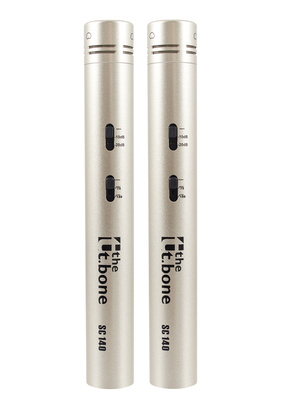
- Condenser microphone for vocal recordings and percussion experiments
- Everyday objects used as sound sources
Why it works: This setup combines traditional production with a strong performance mindset. Samples, vocal fragments, and grooves are created in the studio in a way that allows them to be manipulated later during live performance. Push and Maschine make it possible to work with pads and rhythmic ideas in a very direct and hands on way.




Mobile Setup – Capture Ideas Anywhere
Goal: Capture spontaneous musical moments and turn them into songs.
Example setup:
- Laptop running Apple Logic Pro 12 or Ableton Live 12
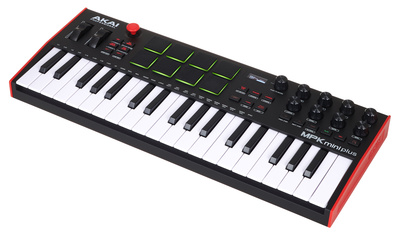
- Compact MIDI controller such as the Akai Professional MPK Mini Plus
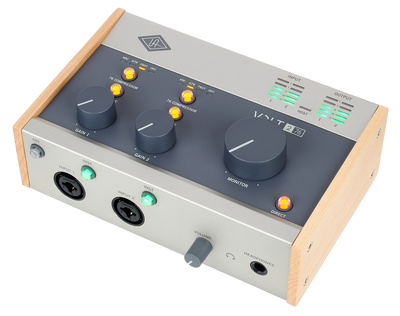
- Portable audio interface such as the Universal Audio Volt 276
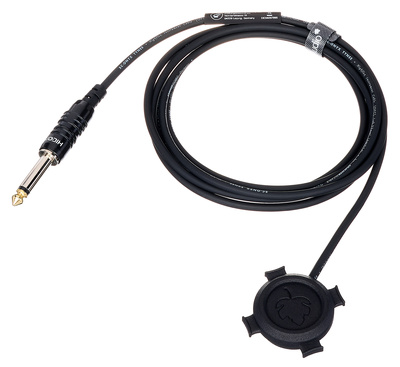
- Contact microphone such as the Leaf Audio Contact Microphone
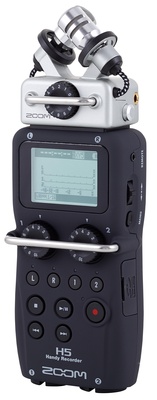
- Field recorder such as the Zoom H5 or a smartphone for voice recordings
Why it works: A large part of Fred again..’s sound grows out of real moments. Short speech fragments, everyday noises, or spontaneous musical ideas can quickly become the starting point of a track. With a mobile setup, these recordings can be captured immediately and processed later in the studio. The boundaries between recording, production, and performance begin to merge.




Stage Setup for Electronic Music – Live Performance Instead of Playback
Goal: Reshape tracks on stage rather than simply playing them back.
Example setup:
- Laptop running Logic Pro 12 or Ableton Live 12
- Ableton Push 3 for melodies, drums, and clip control
- Native Instruments Maschine MK3 for percussion and sample triggering
- Keyboard controller for melodic parts
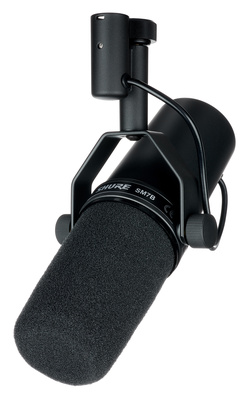
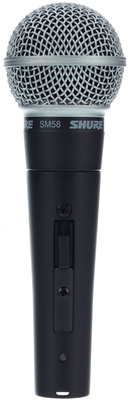
- Microphone for live vocal sampling such as Shure SM7B or SM58
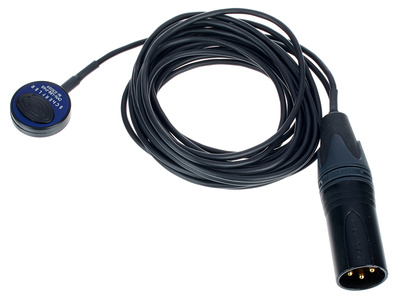
- Contact microphone for experimental percussion sounds
Why it works: This setup provides direct access to all elements of a track. Clips can be stopped, modified, or extended in real time. New samples can also be integrated immediately. As a result, the performance becomes a dynamic reinterpretation of the music rather than a simple playback of finished tracks.


Conclusion: Electronic Music as a Human Live System
Fred again.. shows how electronic music can be created directly on stage today. Logic Pro, controllers, and sampling are used not only as production tools but also as instruments for performance.
His shows demonstrate that live electronic music does not necessarily have to be complex. What matters most is the interaction between human and machine, combined with groove and emotion. This is exactly where the energy comes from that excites his audience. It is also one of the reasons why he has earned the respect of many established figures in the electronic music scene.
FAQ: Fred again.. and His Live Performance
Who is Fred again..?
He is a British producer and live performer known for emotional electronic tracks and highly dynamic stage performances.
Why Are Fred again..’s Live Shows So Special?
Because the music is not simply played back. Tracks are created, rearranged, and transformed directly on stage during the performance.
What Role Does Logic Pro Play?
Apple Logic Pro functions as the central performance platform that controls clips, samples, and instruments throughout the show.
Does He Mainly Use Hardware or Software?
His setup follows a hybrid approach. The software provides the structural framework, while controllers and instruments shape the live performance.
What Can Producers Learn from His Approach?
That electronic music does not have to exist only as a programmed studio product. Live interaction can make tracks feel more dynamic and spontaneous.
Fred again.. demonstrates that digital production tools have long evolved into musical instruments. Logic Pro, controllers, and sampling form a system in which music is not only prepared but also reshaped in real time. This combination of technology and performance defines a new generation of electronic live acts.
More Information
- Techno Legends Use This Gear: Jeff Mills and His Roland TR-909
- Techno Legends Use This Gear: Richie Hawtin aka Plastikman
- Techno Legends Use This Gear: Robert Hood and the Discipline of the TR-909
- Techno Legends Use This Gear: Surgeon – Techno as a Live Patch
- Techno Legends Use This Gear: Charlotte de Witte — Acid Pressure and Peak-Time Precision
- Fred Again’s website
*Note: This article contains affiliate links that help support our site. Don’t worry, the price for you remains exactly the same. If you purchase something through these links, we receive a small commission. Thank you for your support.

This might also interest you
7 responses to “Fred again.. Gear and Sound: Why Even Daft Punk Legend Thomas Bangalter Celebrates His Live Show”
I haven’t seen a single video on YT where he’s actually using Ableton.
I’m sincerely happy that the mainstream is accepting electronic music performances as legitimate. they might be a little late to the party but I’m glad they joined us old timers.
I’m not sure how well-versed in the electronic music scene the person is who wrote this article, but aside from a few peculiarities, this is the general way that live electronic producers have always done a show going back decades all the way to the early years of Autechre in the early 90s, Aphex Twin in the mid-90s, and I’ve even done some live improvising in Ableton and N.I. myself last year
wish I could be a Nepo royal godson of Brian Eno. always loved Thomas live dj sets he done back in the late 90s with studio gear as he’s actually a terrible traditional DJ despite his massive talent ,even till this day. I was always more team guy-man. viva crydamoure
there’s an additional layer of performing live: performative features with a direct visual connection between the artists motion and the sounds you hear (fingerdrumming, playing keys, etc ) illicit a much stronger reaction from the crowd then live performance where the connection is less obvious (programming a sequencer or triggering scenes in Ableton), especially when you see the artist control multiple or ideally all elements that you hear (instead of a bed of music that plays with only a single element visually played by the artist).
Kink is a master at this. Coling Benders and other modular performers also show a very physical connection to the music, but Fred Again takes this to the next level with his unusual techniques.
If Mumford & Sons did acid house….
Its called a live set.. but I guess that if Fred Again does it its something “new” and “magic”. Props to his marketing team.
You are currently viewing a placeholder content from Facebook. To access the actual content, click the button below. Please note that doing so will share data with third-party providers.
More InformationYou are currently viewing a placeholder content from Instagram. To access the actual content, click the button below. Please note that doing so will share data with third-party providers.
More InformationYou are currently viewing a placeholder content from X. To access the actual content, click the button below. Please note that doing so will share data with third-party providers.
More Information