Move Everything for Ableton Move Update: Auto Sampler, LFOs, and More!
Move Everything Makes Ableton Move Even More Exciting for Producers

 4,5 / 5,0 |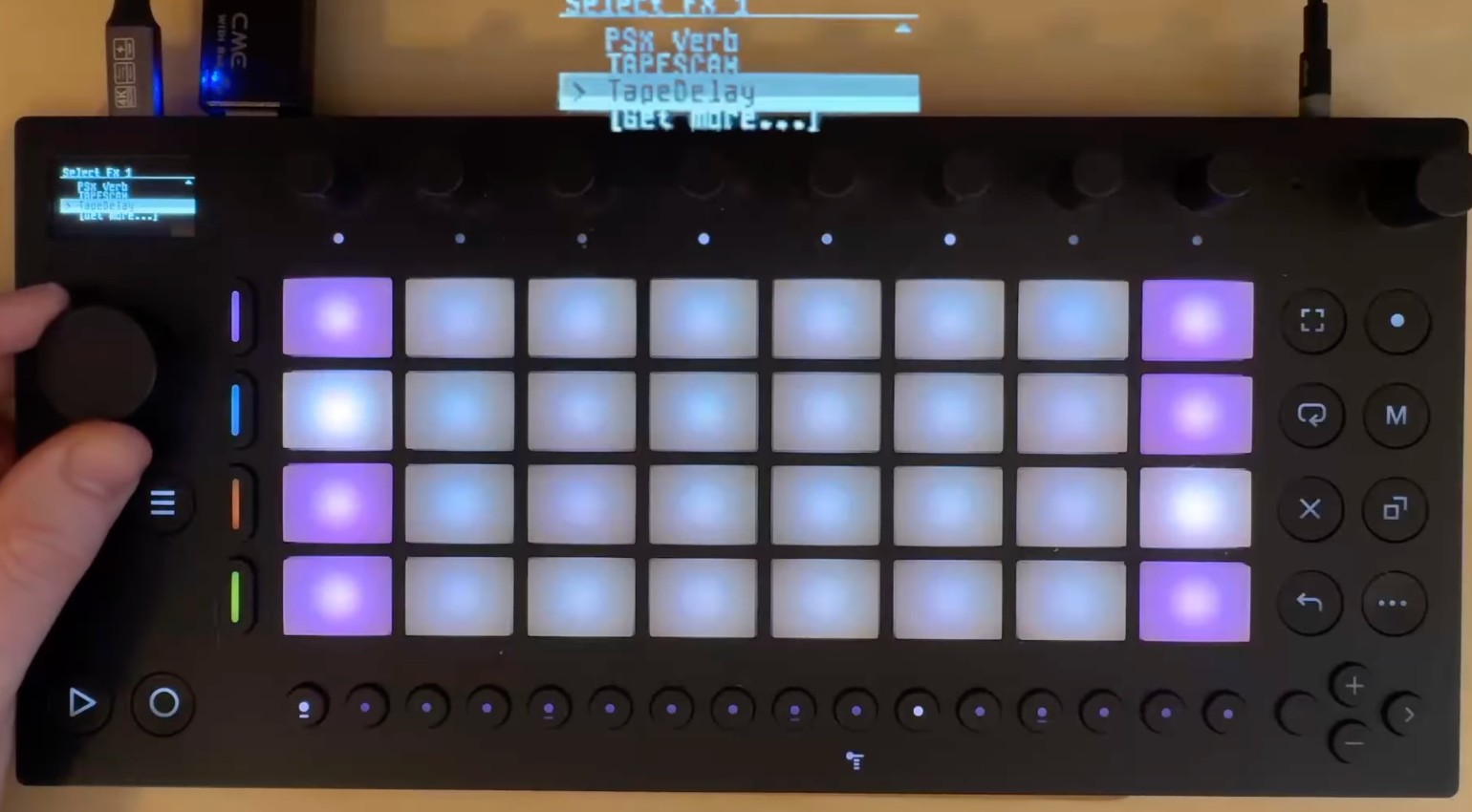
Move Everything Unlocks Synths, Effects, and True Accessibility for Ableton Move · Source: Charles Vestal/YouTube

Move Everything is increasingly evolving into an open extension for Ableton Move and continues to expand the capabilities of this compact mobile hardware. Developer Charles Vestal regularly adds new features to the project that go far beyond its original scope. With the latest updates, Move Everything has grown significantly once again and now integrates additional functions for sampling, modulation, and workflow. The result is a system that feels more like an open production platform and makes Ableton Move more flexible and more powerful for many users.
All About Move Everything for Ableton Move
Ableton Move Becomes an Open Sampling and Synthesizer Platform
A key highlight of the new version is the built in auto sampler. Move Everything allows external MIDI instruments to be automatically sampled directly through the hardware. Users can define a range of notes, velocity levels, and sustain times, while the system automatically generates a multisample instrument. The workflow is reminiscent of Elektron Tonverk. The result is an SFZ instrument that can be used immediately inside the device. Of particular interest is the spectral loop detection based on FFT analysis, which creates clean loop points. At the same time, the system detects silence in the signal and automatically removes unnecessary sample tails at the end of a recording.
Move Everything also significantly expands the modulation capabilities. A new modulation engine integrates multiple LFOs with different waveforms and flexible retrigger options. Each slot receives two LFOs that can modulate almost any parameter within a module. Master effects can now also be controlled through additional LFOs, making rhythmic or evolving sound movements easier to create. With this expansion, Ableton Move moves closer to larger groovebox systems in terms of sound design possibilities, as more complex modulations can now be created directly inside the device.
AI Development 2.0 – The Story Behind the Move Everything Project
The origin of the project is just as interesting as its technical features. In an interview, Charles Vestal explained that he was not originally a traditional software developer. Instead, he increasingly uses AI assistants to generate large parts of the code. This example shows how strongly software development workflows are changing at the moment.
At the same time, Move Everything remains a fascinating example of how dedicated developers can significantly expand hardware platforms through open source projects. The current version is already available on GitHub for free and highlights the potential of such community driven development.



Powerful Song Mode, Stems, and More
[05 March 2026] Move Everything is a major expansion for Ableton’s compact mobile hardware Move and goes far beyond adding just a few extra features. For users, it primarily means much more freedom on a device that was originally designed as a closed system. Instead of relying only on the included software, you can now install and run your own synths, effects, and controllers alongside the original environment within minutes. It even allows you to extract stems directly on the hardware. This is exactly where the real step forward begins.
Move Everything Expands Ableton Move with Deeper Sample Editing and Slicing
Move Everything significantly expands the functionality of Ableton Move and unlocks much more of the potential inside this compact groovebox. Developer Charles Vestal continues to refine the framework and regularly adds new features. For Ableton Move users, Move Everything primarily means greater freedom when working with samples, patterns, and full song ideas. This opens up new possibilities for creative work without the need for an additional computer, especially in mobile workflows.
One important addition is the new audio editor with two working modes. In Trim mode, you can precisely define the start and end points of a sample and refine them further. Zoom functions make detailed editing easier, while additional parameters such as Gain and Normalize help you adjust the sound quickly. In Slice mode, Move Everything can automatically or manually split audio material into up to 128 individual fragments. These slices can then be exported or processed directly as drum presets.
Ableton Move Gets Stem Separation and Song Mode
Move Everything also delivers clear improvements when it comes to timing. The current version integrates time stretching with several adjustable parameters, allowing audio material to be matched cleanly to the desired tempo. You can define how many bars a file should contain and specify the target BPM it should follow. At the same time, the pitch can be adjusted independently of the tempo. Move Everything then saves the processed result directly within the system so the samples are immediately ready to use in the project.
One particularly exciting new feature is integrated stem separation. The system can split audio material into its individual components directly on the hardware without the need for external software. This opens up interesting possibilities for spontaneous remixes or creative reinterpretations of loops.
In addition, Move Everything introduces a new Song Mode that allows multiple patterns to be combined into complete song sequences. Each step can contain clips from different tracks and can be repeated multiple times. This feature adds a workflow to Ableton Move that was previously missing from the official firmware, and even from Push 3.
Nevertheless, you should approach this firmware with a bit of caution. Some users have already reported bugs, which Ableton itself will definitely not fix.
Move Everything in Shadow Mode Offers More Slots and Effects Without Manufacturer Support
[20 February 2026] Move Everything runs in Shadow Mode alongside the existing firmware. It does not replace the original system but expands its capabilities. You can add extra instrument slots, master effects, and even full controller apps while maintaining Move’s familiar workflow. This goes far beyond a simple feature update and fundamentally redefines what the device is capable of.
At the same time, users and testers should create proper backups and understand the available recovery options. Move Everything is an unofficial hack and is not supported by the manufacturer.
With official Firmware 2.0, things become even more compelling. Audio tracks can now be used, and signals can be routed directly through additional effects. In combination with Link Audio, you can create setups that previously required external hardware.
Internal sounds can be expanded, external sources can be integrated, and custom signal chains can be defined. As a result, Move Everything transforms the groovebox into an open platform that feels closer to a modular software environment than a fixed hardware device. Exciting indeed.
Dexed, Surge XT, Braids, Accessibility, and More Come to Move
A number of well-known open-source projects are already available in the module ecosystem. Dexed, Surge XT, and ports of Mutable Braids significantly expand the sonic palette. Additional effects, including tape delays, reverbs, saturation, and even a neural amp modeler, significantly broaden the creative range.
Advanced MIDI tools, such as a sidechain ducker and deeper controller integrations, are also possible. This naturally raises the question of whether commercial VST plugins could eventually run within the Move ecosystem. If that becomes a reality, it would elevate the hardware’s long-term value even further.
A true milestone lies in the area of accessibility. Move Everything can optionally integrate a built-in screen readerdirectly into the device. This makes Move the first fully standalone groovebox to provide genuine support for blind and visually impaired musicians. The system reads out controls using text-to-speech and allows users to adjust speed, pitch, and volume without the need for a smartphone or computer. This clearly distinguishes the Move approach from previous solutions. It is genuinely impressive.
For the community, this represents far more than just a technical feature. Improved accessibility expands the potential user base and changes how the hardware is perceived as a whole. Music production should never depend on visual ability. Move Everything demonstrates how open architecture can create new opportunities. It also sends a clear message to manufacturers that such concepts deserve serious attention and can be implemented without excessive complexity.
From Sidechain to Streaming, Move Everything Reveals the True Power of Ableton Move
Classic performance features benefit as well. A built-in sidechain ducker, skipback recording, and even web radio streaming (including recording) highlight just how flexible the system has become. Move Everything makes it clear that this groovebox can be far more than a fixed product.
So far, Ableton has only tapped a fraction of what this compact device is capable of. It will be exciting to see what the community can achieve with Move — and potentially even with Push 3.
Beyond that, Move Everything could serve as a valuable source of inspiration for future official firmware updates. Interestingly, installing the hack appears to be relatively straightforward.
Let us know in the comments if you have already installed the package and how it is performing in real-world use.
More Information
*Note: This article contains affiliate links that help us finance our site. Don’t worry: the price for you remains the same! If you buy something through these links, we receive a small commission. Thank you for your support!

This might also interest you
3 responses to “Move Everything for Ableton Move Update: Auto Sampler, LFOs, and More!”

Does anybody have an idea why Abletom Move doesn’t communitate via USB-C MIDI with ESI xSynth?
This genius turned th emove intot he Synthstrom Deluge!
Just waiting for the homebrewed unlocking of 4 max tracks and then the Move will be a true beast (and not a voluntarily limited device that says “if you want a decent number of tracks just buy the Push at 2000€”).