Why do we still use Leveling Amplifiers in the Recording Process?
We look into different types of program dependant compressors.

 4,7 / 5,0 |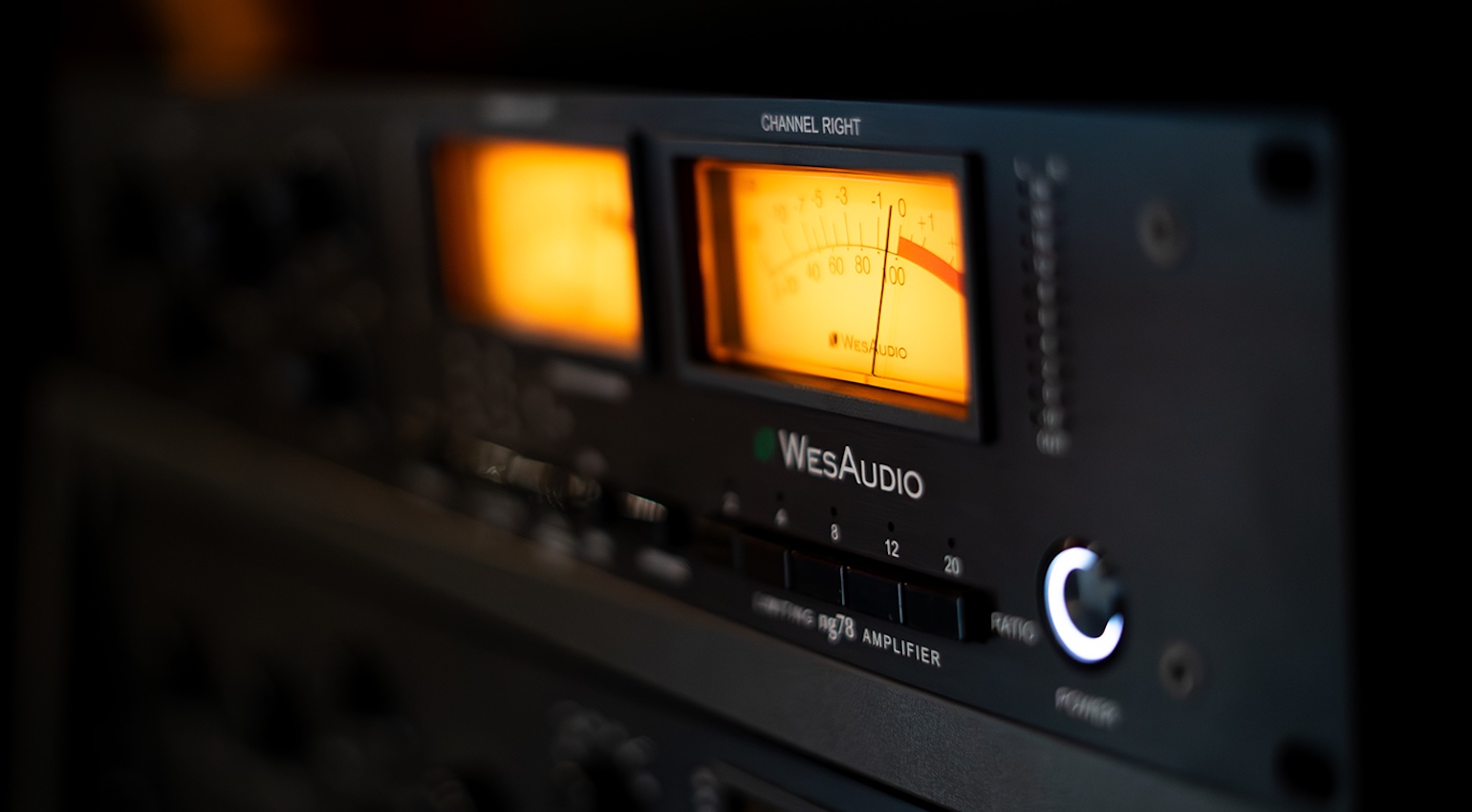

So what exactly are leveling amplifiers? Is it just a fancy word for a compressor? Well, yes, but there is slightly more to it than that.
Leveling Amplifiers:
Levelers are compressors that adjust the gain of a signal automatically according to the input level. They generally have fixed ratios, attack, and release settings, which may sound restrictive.
Why do we still use Leveling Amplifiers?
However, the reason these famous designs are still relevant today is because of the incredibly musical results they produce. Levelers use various topologies such as tube, optical, variable-MU, FET, and sometimes a combination of multiple circuitry types.
You can find many different variants on the market in formats such as rack-mount, 500 series, and software plug-ins. Each has certain benefits and can be extremely useful for tracking and mixdown, particularly when working in the box.
Some designs aim to mimic and exceed the sonic quality of the classic levelers, while others might borrow from the basic blueprint with the aim of creating more versatile tools for today’s recording process.
Leveling Amplifiers: IGS Audio One LA
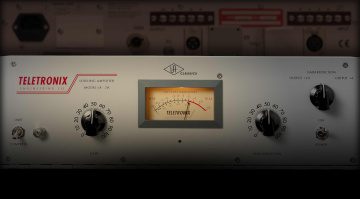
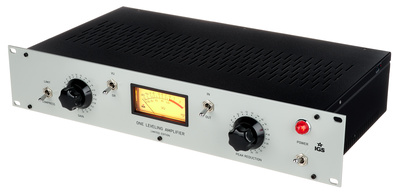
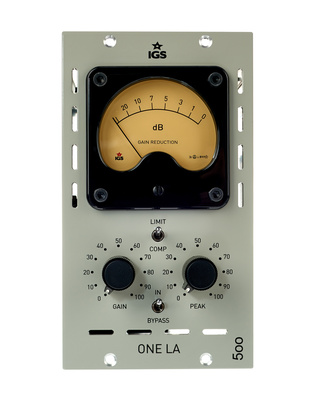
The One LA is an electro-optical tube leveling amplifier based on the famous Teletronix LA-2A. At the core of its design is an optical photocell, which is a modern take on the vintage T4B that makes use of an electroluminescent panel. This photocell is the key to its smooth program-dependent release curve, which makes the One LA ideal for tracking.
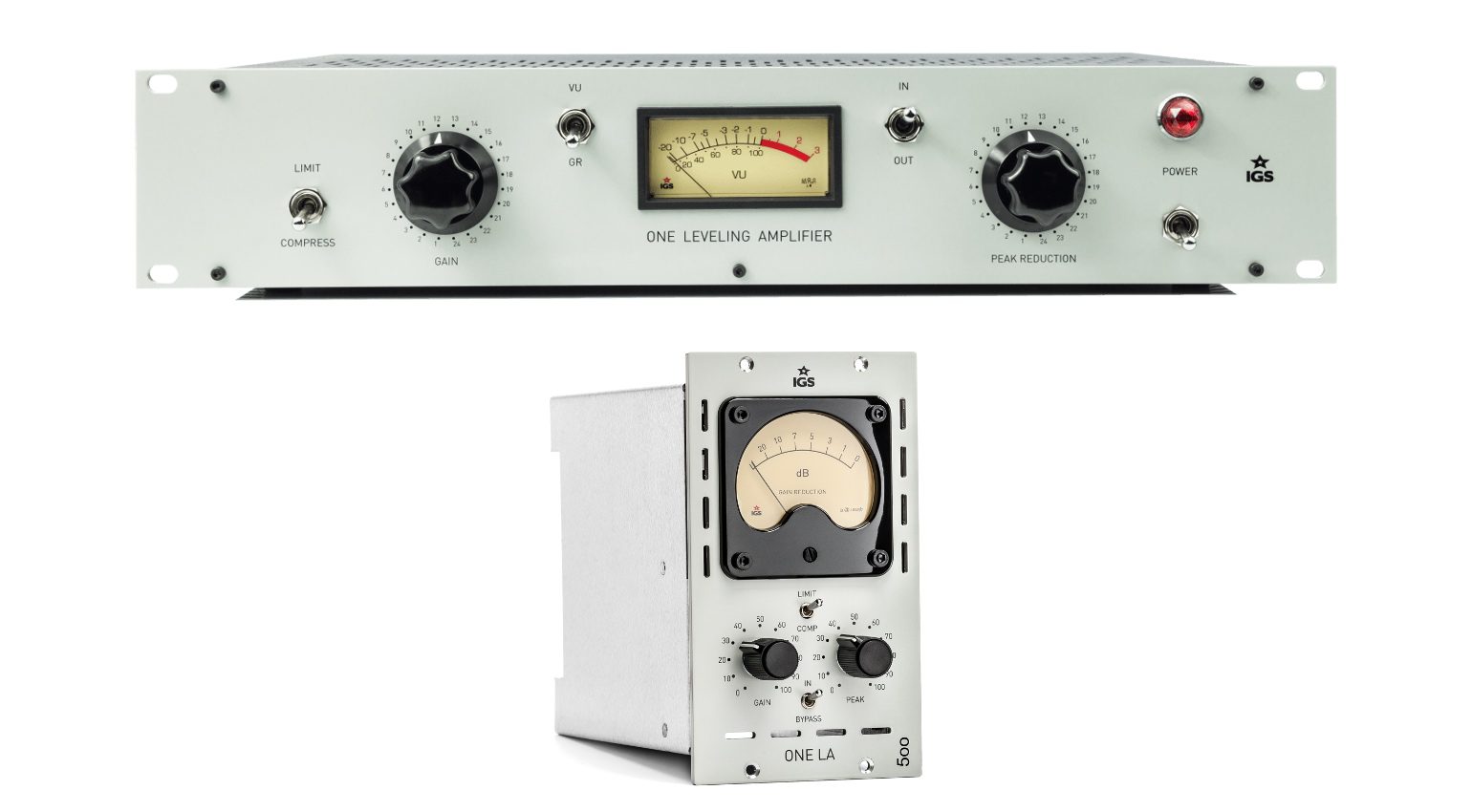
The transformer-balanced tube circuitry uses Sowter and Edcor input and output transformers, or Carnhill and OEP in some versions, which adds to the overall sonic character of the unit. Like the LA-2A, there is a compressor mode with a 4:1 ratio and a limiter mode with an ∞:1 ratio.
However, what makes the 19-inch rackmount version of the One LA special is the use of 24-point Elma switches on the gain and peak reduction controls. This makes the operation more precise, and you are able to recall your most frequently used settings with ease. Meanwhile, the One LA is also available in a 500-series module. Get it at Thomann.*


Leveling Amplifiers: WesAudio
One of the most famous leveling compressors of all time is the UREI 1176, an FET compressor/limiter loved for its fast, responsive transient shaping capabilities and aggressive tone. Although many versions of the 1176 have been created in today’s music production landscape, the Polish manufacturer, WesAudio, has a range of recreations of both the 1176 and, more recently, the 1178.
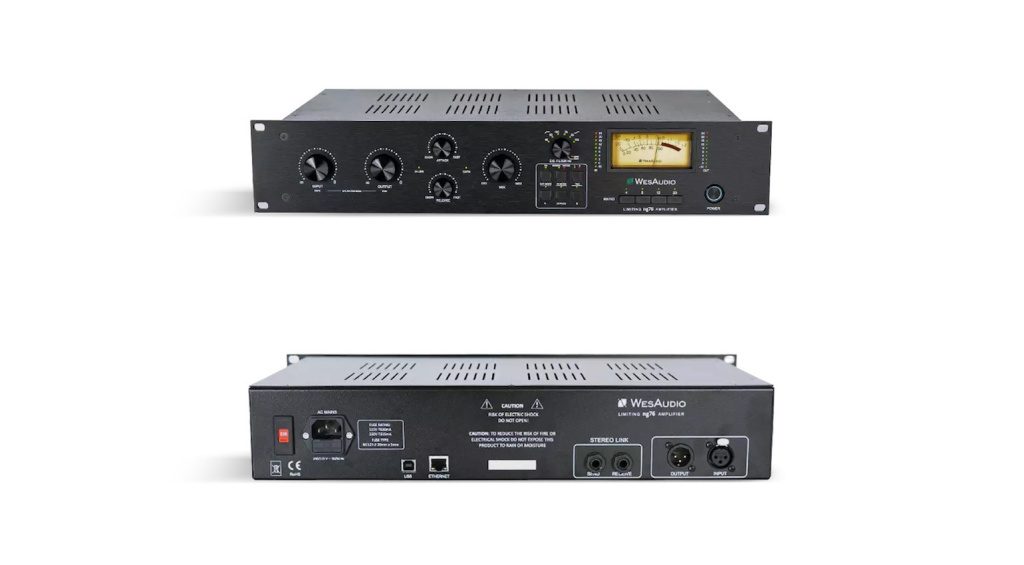
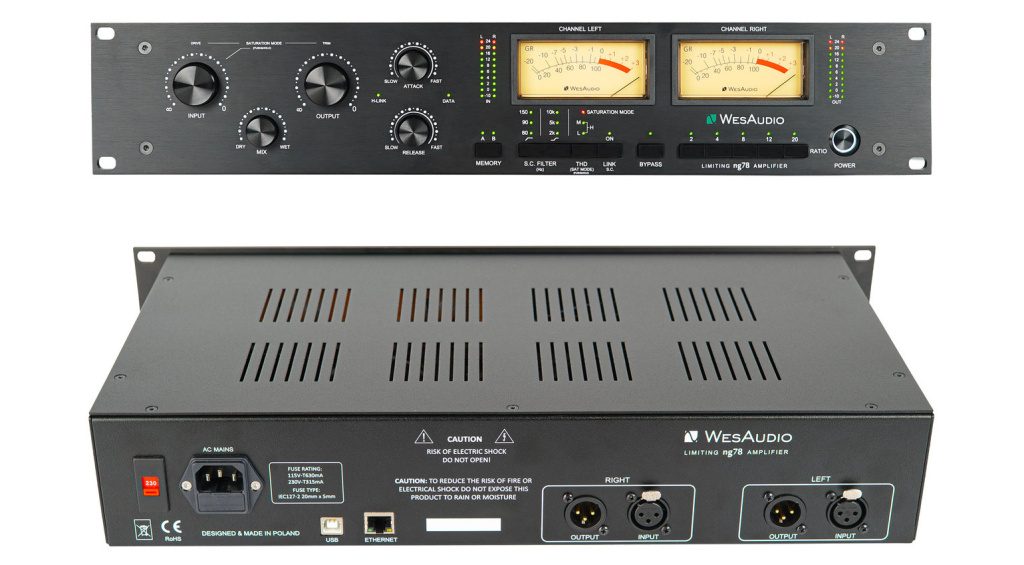
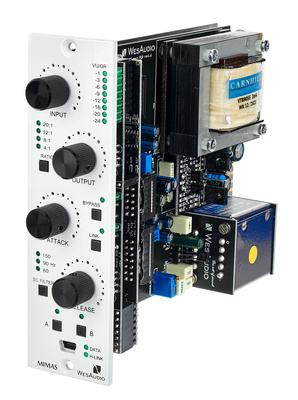
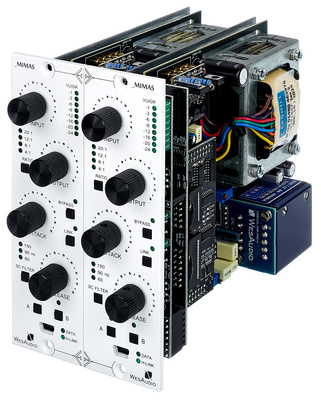
The first aspect of WesAudio designs that sets them apart is the fact that they use 100% analogue Class-A signal path, except with digital recall via a cleverly designed plugin interface in your DAW. Also, the feature set is expanded, with modern and vintage compression character modes, saturation, total harmonic distortion (THD), and sidechain filter options.
In the 500-series format, there are the Mimas (single-channel) and Mimas Gemini (dual-channel) modules, while in 19-inch rack format, you can choose between the ng76 and the ng78. While the WesAudio gear does cost a little more than the competition, the balance of sound quality, precision, and flexibility makes it worthwhile. Get it at Thomann.*

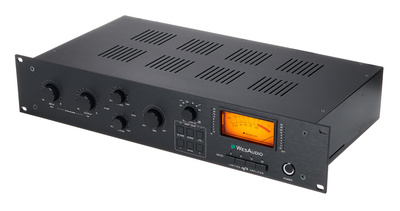
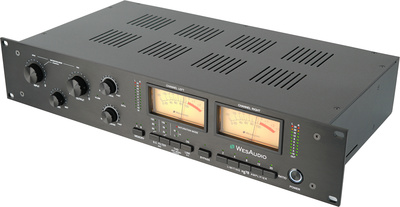
Leveling Amplifiers: Locomotive Audio 14B
The 14B is a vari-mu style tube compressor inspired by compressors like the renowned Universal Audio 175B and Gates STA-Level, from which it borrows different design elements. This gives the 14B a unique sonic character that you can use when tracking vocals, guitars, and other instruments.
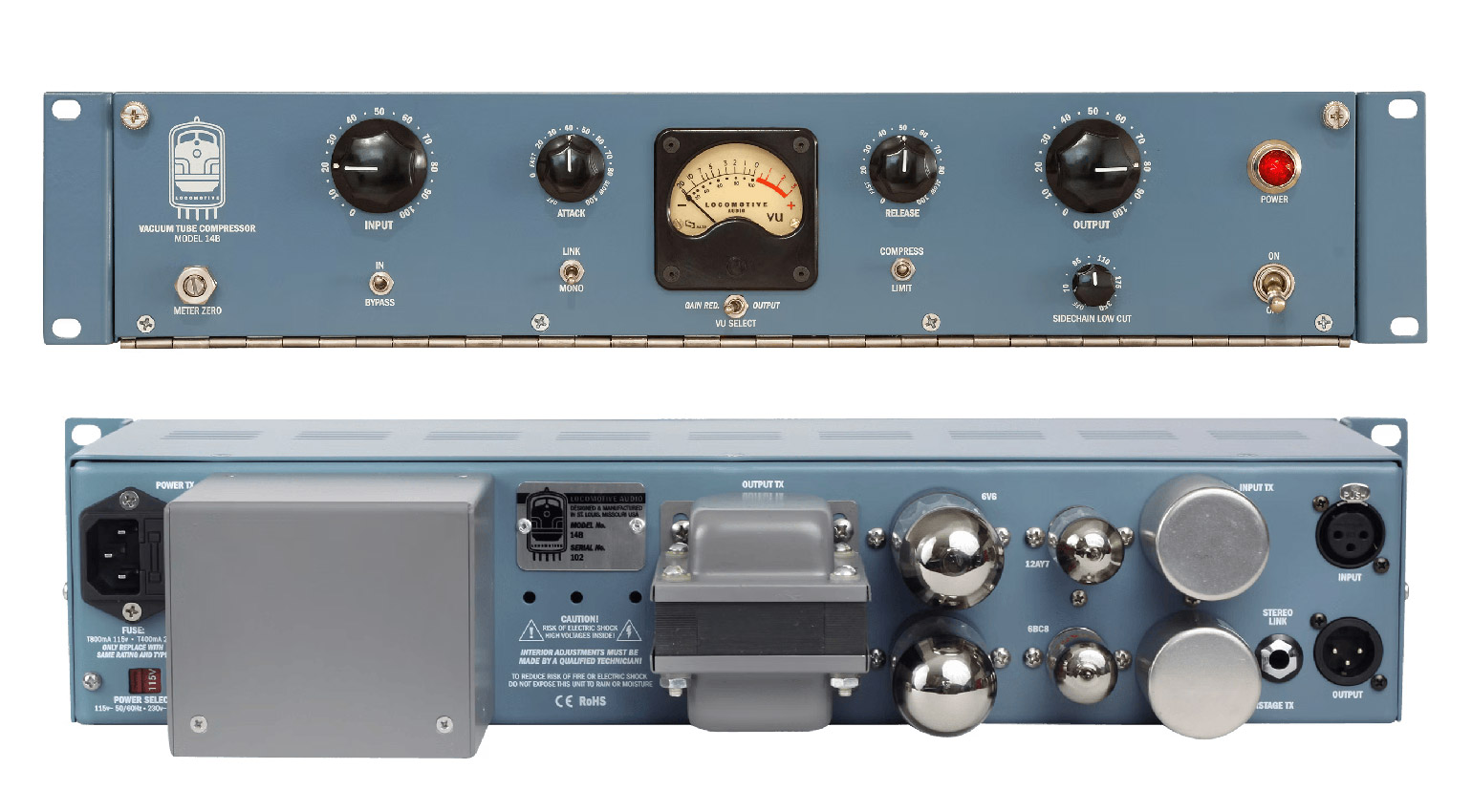
The internal circuitry uses a range of tubes, including a 6BC8, a 12AY7, and two 6V6 tubes, as well as custom input, interstage, and output transformers. Like most leveling amplifiers, there is no threshold control, so you set the gain reduction simply with the input and output gain controls. There are, however, variable attack and release time parameters.
The inclusion of this feature makes the 14B far more versatile than most leveling amplifiers, and there is a sidechain high-pass filter to preserve the low-end, which is ideal for processing bass guitar, or mixbus with a stereo configuration using the link function. Overall, the 14B offers a great combination of vintage tone and modern flexibility. Get it at Thomann.*


Leveling Amplifiers: Chandler Limited
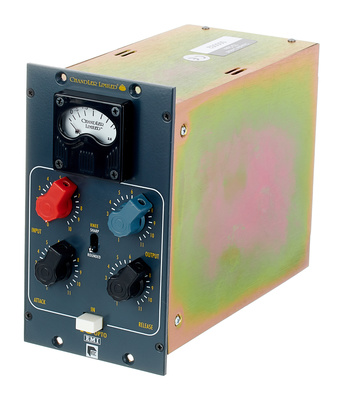
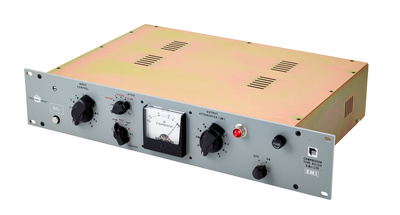
If you’re looking for vintage sounds from the 1960s, Chandler Limited has a range of outstanding leveling compressors, including a line of officially licensed designs from EMI. What makes these processors so special is how easy it is to dial in great sounds, and you can go for a cleaner, more modern sound or colourful vintage tones depending on how hard you drive the inputs and outputs.
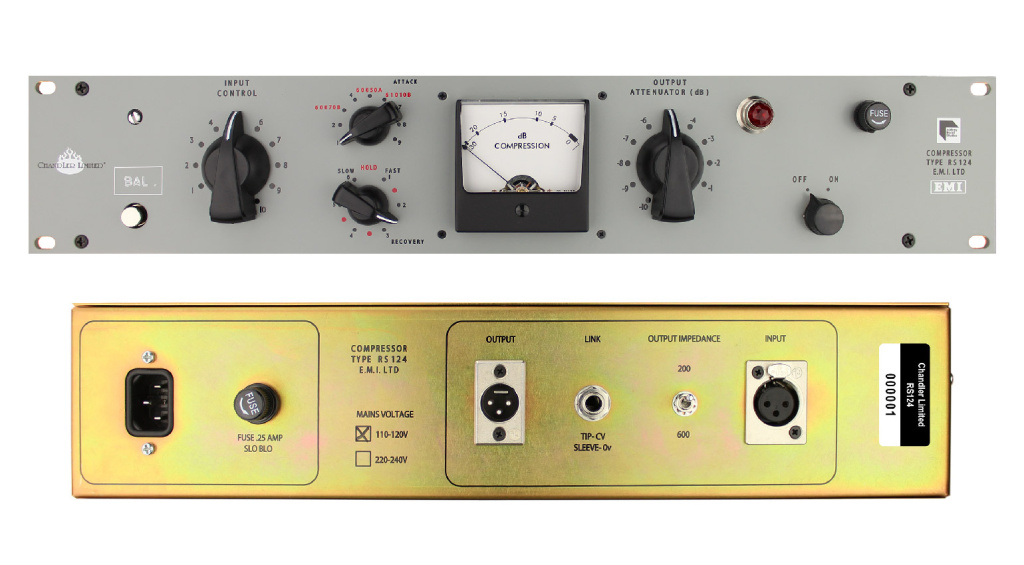
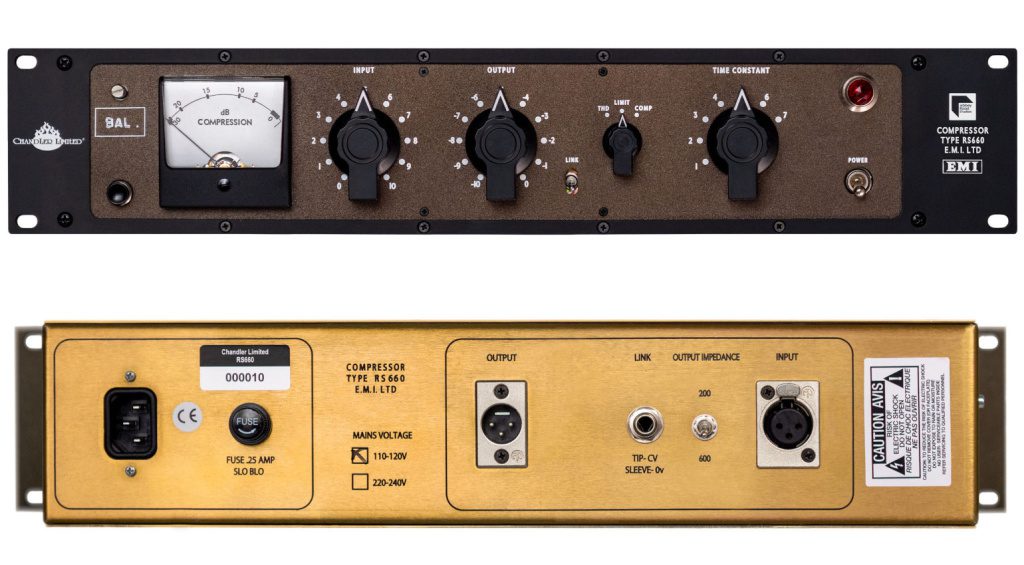
In the 500-series format, the TG Opto uses a transistor-based design based on the famous limiters from the EMI TG12345 mixing consoles. The control set is straightforward, with variable attack and release times, and there are rounded and sharp knee modes for different applications. This means you can use the rounded knee setting for vocals and bass guitar, and the sharp knee setting for drums, chuggy guitar amps, and parallel compression applications.
In 19-inch rack format, there is a range of options, including the RS124, based on the legendary Beatles’ compressor, and the RS660 tube limiter, with its three compression behaviour modes and simple time constraint settings. Overall, Chandler is one of those brands that really captures the magic of recording. Get it at Thomann.*


More about Leveling Amplifiers:
- History of the LA-2A
- SSL bus compressors
- All about compressors
- Thomann’s Guide to Compressors
*This post contains affiliate links and/or widgets. When you buy a product via our affiliate partner, we receive a small commission that helps support what we do. Don’t worry, you pay the same price. Thanks for your support!

This might also interest you