5 Guitar Unboxing Tips: What to Inspect First
Like a kid at Christmas...

 4,8 / 5,0 |
5 Guitar Unboxing Tips: What to Inspect First · Source: David Izquierdo Roger / Alamy Stock Photo

These guitar unboxing tips are essential before you plug in and play. Check these 5 key areas to avoid nasty surprises and potential returns.
In this tips and tricks guide, we’ll be looking at unboxing your new guitar. What should you expect? What should you do first? Is there anything to avoid? Here are our picks.
Key Information About Guitar Unboxing
- Check for shipping damage, imperfections in the instrument and anything that isn’t where it should be.
- Assess the playability before you make any adjustments. You could just need to make a few adjustments, or your new guitar may be beyond repair.
- Document issues straight away! Photograph any problems during your guitar unboxing so you have evidence in the unlikely case that you need to file a return or exchange.
Guitar Unboxing Tips
Your New Guitar Unboxing! Excited?
So, today is the 26th December, which means that it is traditionally Boxing Day. The family have gone home, you’ve eaten yourself silly. Therefore, now is the time to become better acquainted with your shiny new guitar.
Did you get what you wanted? Whether this is your first guitar for yourself or a loved one, or another axe to add to the collection, it’s important to know what to look out for when undertaking your guitar unboxing.
Stick around as we look at 5 potential problem areas to observe. We will also remind ourselves of Thomann’s fantastic customer service and returns policy. You know, just in case.
Sharp Edges
What should you check first when unboxing your new guitar? The best place to start is by carrying out a general visual inspection. Looking and feeling for sharp edges is really important. We don’t want blood on our hands, do we?

Start by running your hands and eyes over the neck of the guitar. Feel for any frets that haven’t been stripped down correctly. You should do this across the top and the bottom of the neck. Are any of the tuners loose? Is the headstock cracked? There are no silly questions or observations.
Moreover, feel around the body of the guitar for any chips or imperfections in the finish. You may encounter some orange peel, but this all depends on the price of the instrument. Value guitars will usually have a thinner lacquer top coat compared to a higher-end product.
Essentially, check for the touch and contact points on the guitar. Anywhere that you rest on or use regularly needs to be smooth and comfortable. Otherwise, there could be discomfort when playing.
Tuning
After a good visual inspection, the next thing to do is check the tuning of your new guitar. Again, the retail price of the product will impact how well it’s been produced and shipped. Some new guitars come in a cardboard box. Whilst others are presented like works of art.
The guitar has travelled a long way since the factory. What should you do first with tuning it? Personally, I let the guitar adjust to room temperature before tuning. This allows the woods and metals to adapt to the climate that they’re in. By tuning a cold guitar in a hot room, you risk shocking the components and causing unnecessary damage.
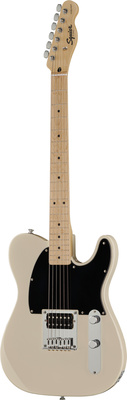
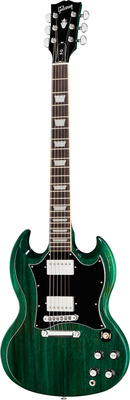
A *Squier Telecaster could be a little out of tune, but this reflects the price. However, you’d hope that a new *Gibson SG would be perfectly in tune out of the box. Whatever the case, tune it once, let it settle, and repeat the process until it remains in tune.




Intonation
So far in our quest for your guitar unboxing, we’ve covered the basics. This time, we’re getting a bit more technical. If you’re not fluent in guitar technicalities, please do not start messing around with your new guitar yourself! You could void your warranty.
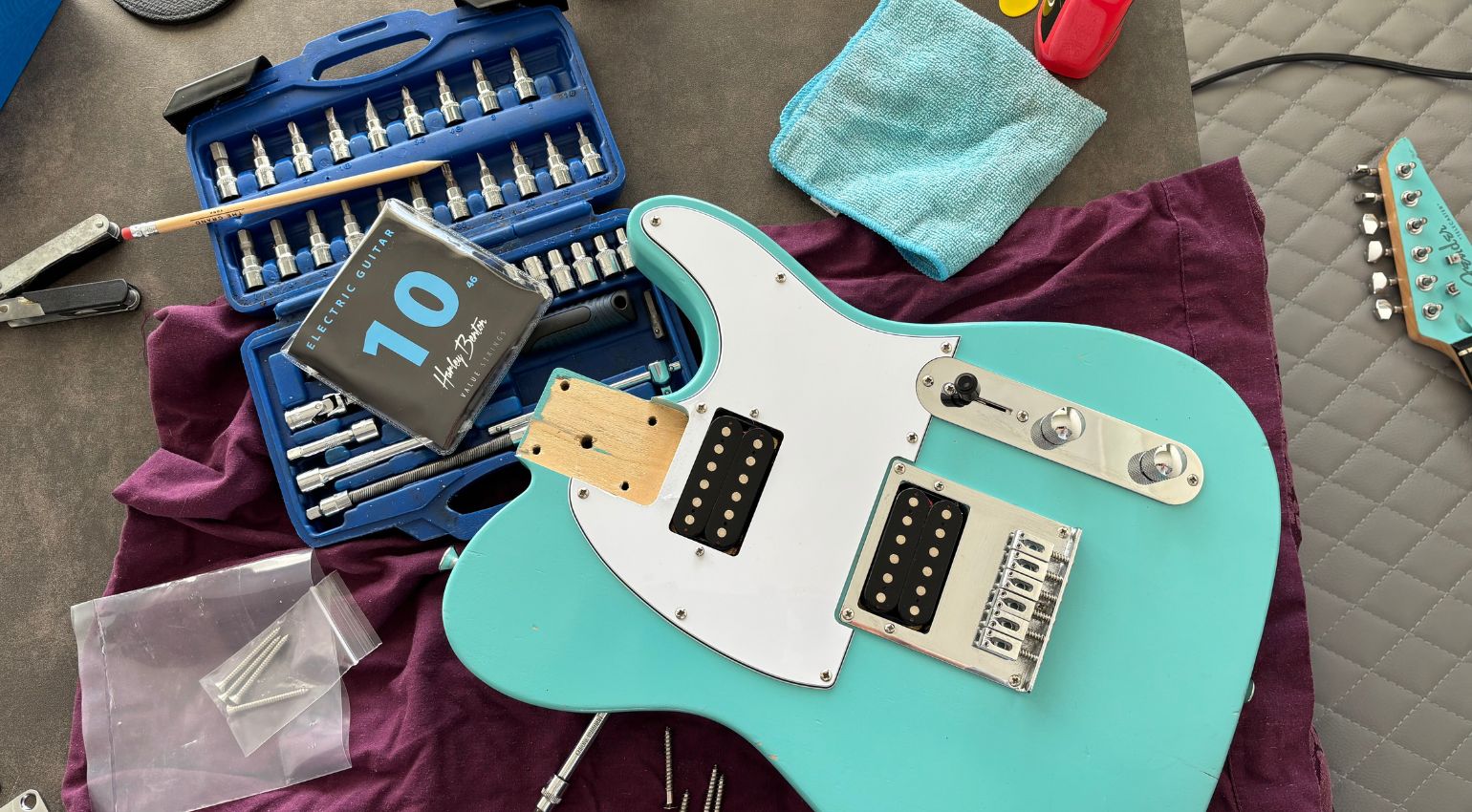
What is intonation on guitar? The intonation refers to the tuning across the neck. Whereby, your open strings could all be in tune, but this may not correspond at other points of the neck.
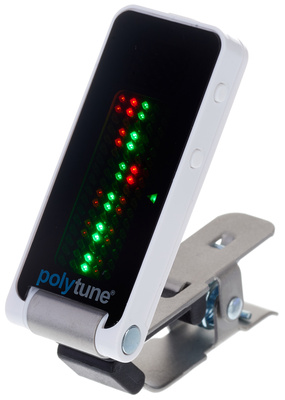
How to check intonation on your guitar? This is the easy bit; remedying it could be the tricky part. You’ll want to ensure that you’re using a reliable guitar tuner. Start by playing an open string, followed by that string on the 12th fret. If the pitch of the note is either sharp or flat, you’ve got a problem.
This can be easily adjusted on Fender-style bridges, less so on a Gibson-style tailpiece. What’s the rule? If the note is flat, move the string saddle forward. If it is sharp, move it backwards. You can do this with a small crosshead screwdriver. Remember, make little adjustments at a time.
Frets
Didn’t we do the frets already? Kind of! We checked for sharp edges, but now we want to check the overall condition of the frets and the string height. Excessive string height could indicate an issue with the truss rod. This is a big red flag.
Even when buying new, you want to check for pitting in the actual frets themselves. This looks like small bite marks in the frets, or where the strings have been in contact with the frets. Although more common on used guitars, excessive pitting could indicate that your new guitar isn’t as new as you thought it was.
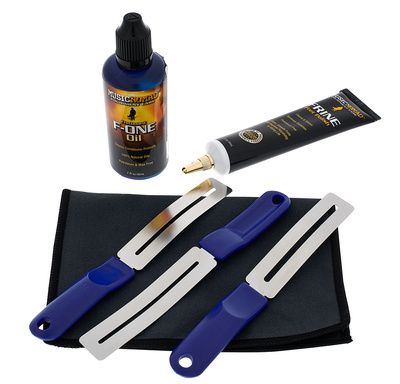
Furthermore, try bending some strings. Is there any resistance? Do the strings sound harsh against the fretboard? If so, this is most likely because the frets need a polish. Once again, the value of the guitar will indicate how well the factory looked after your new axe. Don’t worry, though, *fret polish is easily accessible.





Electrical Connections
The final thing that we want to check during your guitar unboxing is the electrical connections. If you’ve got an electric guitar, this is crucial!
How can you check the electronics on your guitar? Well, before we even plug in, first inspect the input jack. Is the hex nut loose? We all know that the input on a Strat is famous for being dodgy. If yours isn’t tight, just make sure it is.
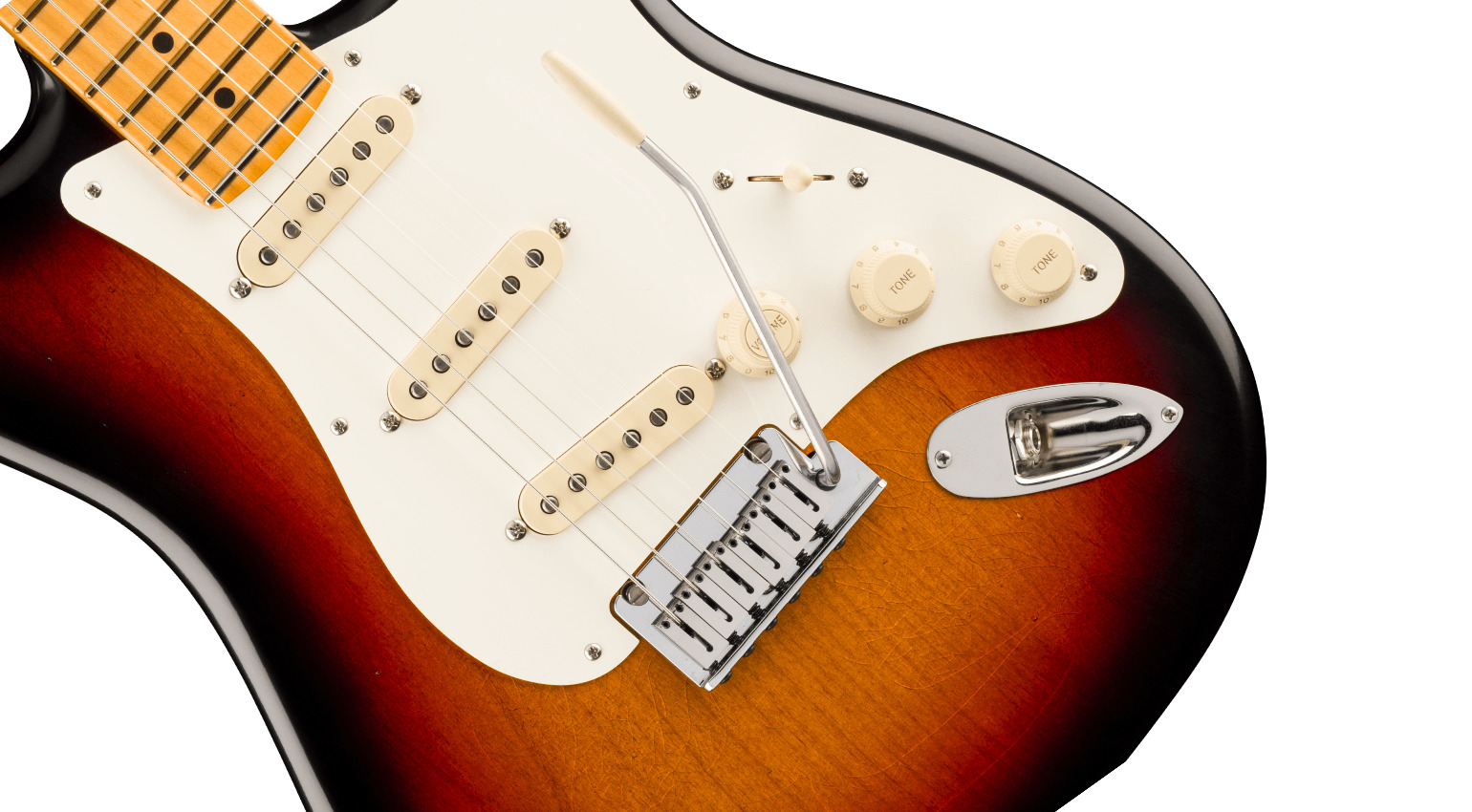
Once you’re plugged in, does every pickup work? Do any of the pots scratch when you turn them up or down? These are all basic checks to ensure that you’ve not bought a lemon. Scratchy pots? A great way to fix this is by turning the offending pot up and down several times repeatedly. This cleans the earth and should fix your issue.
Thomann Returns Policy
What is Thomann’s return policy? The fantastic team over at Thomann grant a 30-day Money-Back Guarantee. If your guitar unboxing has shown that the product is not right for you, you have 30 days to return it.
You also have a 3-year warranty with all Thomann products. They extend the manufacturer’s warranty at their own cost!
Are there exceptions to the return policy? Yes. For example, any licensed software cannot be returned. Furthermore, any custom-made products or items that cannot be returned for hygiene reasons are also an exception. For further information, visit Thomann’s money-back page.
Conclusion
Although exciting, just take a couple of minutes to check over your new guitar. The unboxing process could reveal any hidden truths that you may have missed. But if everything checks out okay, you’ll be ready to start playing.
Videos
Further Information
*This post contains affiliate links and/or widgets. When you buy a product via our affiliate partner, we receive a small commission that helps support what we do. Don’t worry, you pay the same price. Thanks for your support!


This might also interest you




2 responses to “5 Guitar Unboxing Tips: What to Inspect First”

Its unreasonable to expect a guitar to be in tune after it has been shipped to you.
Check to make sure the neck is straight. Sight it from top to bottom and bottom to top and see how the headstock lines up. A guitar with a warped neck is worthless.