Vintage Gear vs Modern Workflows: When Does Old Gear Really Count?
Does vintage gear still have a place in music production?

Vintage Gear vs Modern Workflows: When Does Old Gear Really Count? · Source: Universal Audio / Steinberg

Is the magical secret to great songs really hidden inside the circuitry of old equipment? We discuss vintage gear vs modern workflows to find out.
In this Article:
RCA, Collins, Altec, UREI… Why do these names mean so much more to us than simply being the manufacturers of old recording gear? Whenever we watch a YouTube studio tour, there’s a palpable moment of excitement as the camera pans across those glowing VU meters and the industrial switches and knobs that decorate those brushed metal faceplates.
There’s no denying the allure of vintage equipment and its surrounding nostalgia, but today’s workflows are all about ultra-high channel counts and the immediacy of DAW environments. Finding a plugin that doesn’t sound great is becoming almost impossible, so the question isn’t whether old classic equipment is better – it’s whether it’s relevant in the creative process or not.
Vintage Gear vs Modern Workflows: “That” Sound
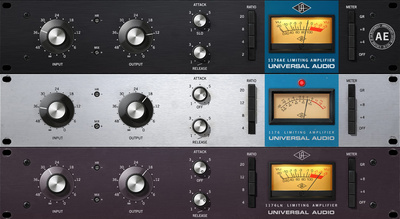
Fabled pieces of studio gear, like the 1176, became legendary due to the way they interact with signals under duress. Transformers introduce saturation, vacuum tubes add non-linear compression, and discrete circuitry can enhance the harmonics in ways that bring performances to life. When a vocal passes through a classic 1073/1176/LA-2A recording chain, it does more to the signal than increase the volume.
Even at moderate settings, the low-end seems thicker, the highs smoother, and the peaks are shaped gently. Despite the access we have to incredible analogue modelling plugins from companies Softube and Universal Audio, the difference is more about how the gear responds dynamically than its frequency response.
For this reason, vintage gear is probably best used as a source enhancer while recording, as this way it becomes an extension of the performer and their instrument. What can’t be recreated are the parts where the singer or instrumentalist puts that extra push into their performance and how a particular tube mic or transformer DI responds.


Vintage Gear vs Modern Workflows: The Reality Of Nostalgia
Naturally, the reality of using vintage gear involves dealing with vintage workflows. This can include tedious manual recall of settings and drifting components that can require constant calibration and maintenance. The idea of using a classic Studer tape machine may be novel and even sound great, but it demands alignment, calibration, and knowledge of tape editing.
When compared to the average DAW, you have complete session recall, unlimited channel counts, and instant non-destructive editing and processing. Over time, the convenience of these features has completely changed the record-making process. Ideas can be captured spontaneously, and later refined in ways that can’t be matched with vintage equipment.
At this point, the modern approach to music production achieves a decisive victory based on the limitless flexibility of software. The ability to audition and configure entire vocal chains in a matter of seconds without actually plugging anything in physically is incredible. Meanwhile, the possibilities of remote collaboration have redefined creativity. Therefore, vintage gear only has a place if it’s playing a role that can’t be easily replicated from a sound or experiential point of view.

Vintage Gear vs Modern Workflows: Old Meets New
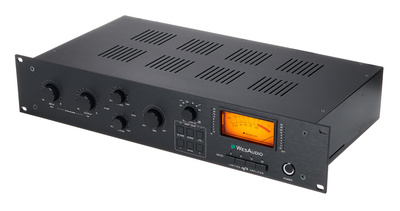
Most of the active pro recording studios today find themselves sitting squarely between the analogue and digital worlds. With this hybrid approach, the front end of a tracking setup might consist of a Neve 1073 clone or API 512c preamp and a leveling compressor before the signal reaches the DAW. Meanwhile, mixing is usually done in-the-box with the help of some hardware inserts that are often digitally recallable, like the ng Series from WesAudio.*
With this approach to recording, there is a clear acknowledgement that hardware is always more useful earlier on in the signal path. With a characterful mic and preamp stage, you can really shape the raw input signal, but after that, there is less value in comparison to the sea of available plug-ins. When you’re knee deep in a mix, the chances of noticing the difference between hardware and software processing become slim to none.
With a hybrid workflow, we can get around one of the main pitfalls that comes with using vintage equipment, which is recall. Your hardware front-end forces you to commit to sounds while tracking, and you’re able to lean on the flexibility of software later. With this rather pragmatic compromise, we can preserve sonic character without reducing workflow efficiency.

Vintage Gear vs Modern Workflows: The Psychological Factor
There is another side to this, that is somewhat intangible in the context of creativity, and that’s the psychological aspect. Humans aren’t robots (yet), so when we record through equipment we believe to be special in one way or another, it affects the performance. In front of a vintage mic from a particular era, the vocalist suddenly takes the session more seriously.
This adjustment to the performer’s mindset could result in better takes, which are potentially more worthwhile than subtle analogue colouration. Engineers also respond differently, as committing to the sound during tracking forces on-the-spot decisive action. Rather than leaning toward the “fix-in-the-mix” mentality, it encourages active objective listening.
At the opposite end, the limitless flexibility of software can result in option paralysis from being overloaded with choices and having no pressure to make decisions. From this perspective, vintage equipment can have a major influence on the recording process, but more through its effect on people than on audio signals.

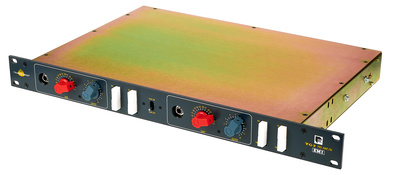
Vintage Gear vs Modern Workflows: When Plugins Suffice
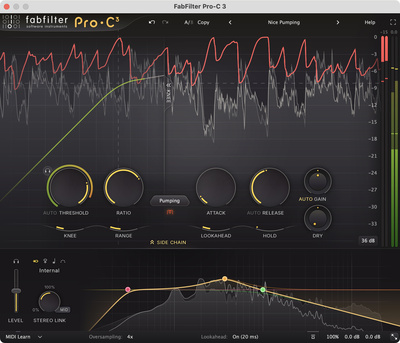
For most modern productions, plugins are perfectly sufficient. Plenty of EDM, Pop, and Hip-hop songs use over 150 DAW channels these days, so the subtle nuances of a few analogue hardware devices can be masked by the accumulation of endless tracks. With a carefully chosen plugin, we can achieve results that are hard to distinguish in this context.
Meanwhile, when we consider the cost, reliability, and accessibility, modern audio solutions win every time. The price of a single vintage compressor can sometimes exceed an entire plugin collection. The maintenance and electricity costs can be a drag. So for the average home studio user, the idea that vintage equipment is essential has become a myth.

Vintage Gear vs Modern Workflows: Situations Where Vintage Matters
Here are some cases where vintage equipment genuinely makes a difference:
- Primary Sources: Vocals, lead instruments, and any other elements that feature prominently in the mix. The nuances are more pronounced, and there is a greater impact on the performance.
- Minimal Arrangements: In sparse productions like jazz trios, almost every element is exposed. This means the character of each instrument plays a bigger role, and makes high-quality recording essential.
- Genre Expectations: In certain styles of music like rock, soul, and jazz, there is an expectation of analogue vibe. By using vintage or vintage-styled equipment, you can match these expectations and get an authentic sound.
- Commitment-Based Workflows: Rather than being caught in a cycle of endless revision, using a hardware front end instills discipline that improves results and productivity.
- Unique Hardware Signatures: Certain pieces of gear don’t have decent plugin equivalents. This could be due to old circuit components or a niche transformer, and these idiosyncrasies can inspire creativity.
The Myth of “Better”
If you’re still comparing analogue and digital to find which is superior, you could be missing the point. There are characteristics on either side that can be beneficial. While software allows flexibility, accuracy, and scalability, vintage equipment adds character and encourages commitment.
The most effective and successful artists and producers recognize this and balance their tool selection between the two worlds accordingly. Instead of collecting vintage gear for the sake of it or dismissing it as obsolete, they look at its unique strengths that simply aren’t available elsewhere.
Vintage Gear vs Modern Workflows: Conclusion
While vintage equipment is still relevant in modern music production, it has a specific role rather than being a universal solution. It has the most impact during tracking and bus processing, especially with critical sources where the distinctive behaviour can meaningfully enhance the performance and tone.
In most other areas, modern plugins have caught up, and the limitations that once existed are gone. The true skill lies in knowing when to use vintage equipment, rather than simply collecting relics.
More Info:
*Note: This article contains affiliate links that help us fund our site. Don’t worry: the price for you always stays the same! If you buy something through these links, we will receive a small commission. Thank you for your support!