Transient Shaping and Management: Get More Impactful Rhythmic Energy
Shape transients to improve your mixes.

 3,8 / 5,0 |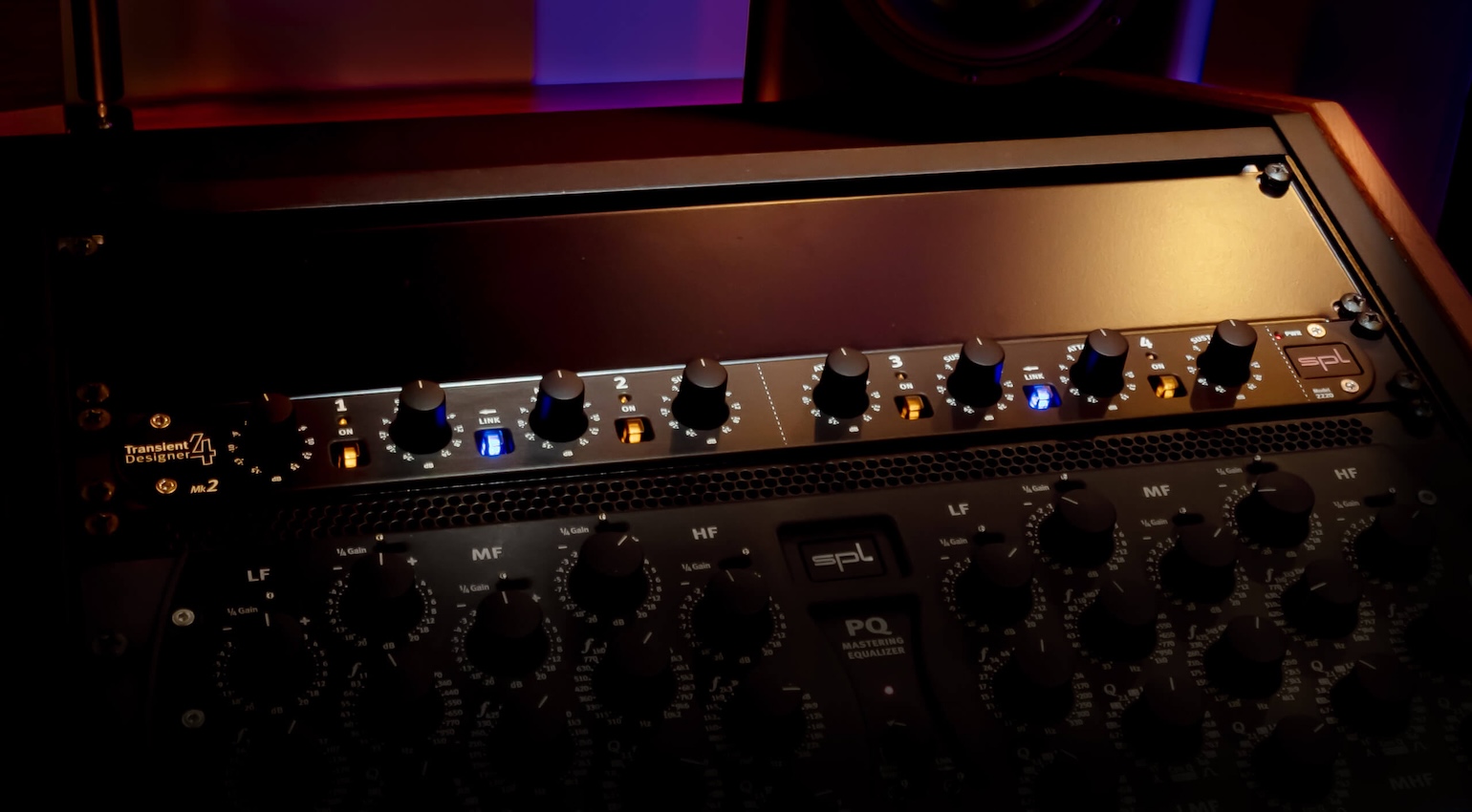

With transient shaping and management, we can improve the clarity of drums, vocals, and guitars for punchier mixes that translate better on any sound system.
In this Article:
When we talk about transients, we’re referring to the initial attack point of the waveform. This means the click of the kick drum, the snap of the snare, the pluck of a bass guitar string, or even vocal consonants. Because music is built on rhythm patterns, the consistency of these areas is crucial for each element in the mix.
Having consistent, well-defined transients can increase the perceived loudness of your mix, with more clarity, punch, and separation. With tools like compressors, limiters, clippers, and envelope shapers, we can enhance transients creatively to suit a particular style of music, or optimize them for record-making or live sound applications.
Transient Shaping and Management: A Question Of Time?
Beyond being the attack point of a sound, a transient is also a short burst of energy that can occupy a wide area of the frequency spectrum. This influences the human ear’s perception of a sound in terms of localization, separation, and impact. From a psychoacoustic point of view, the initial 10-30 ms part of a sound is prioritized to identify its sonic characteristics.
You will often experience this when browsing through kick drums, as two samples with similar frequency response curves can still feel very different in terms of weight and punch. Technically, we can analyze transients as steep changes in amplitude over time. A more abrupt rise results in a sharper transient, while a slower one comes across more gently.
For this reason, every step of the signal chain from the mic, the preamp, outboard processing, to the converter plays a role in how transient energy translates. In electronic music, this is particularly important because it affects the overall punch, weight, and density of a track. To better understand transients, we can see them as a function of both time and perception.

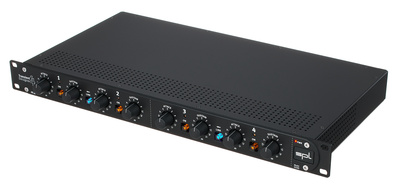

Transient Shaping and Management: Which Tools To Use
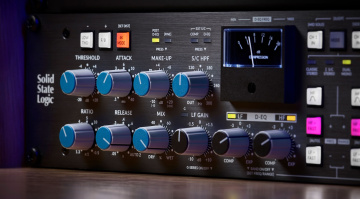
Although compressors and transient shapers both affect the dynamic range of a signal, they work in different ways. Compression acts on a signal as it breaches the predefined threshold level and responds according to the ratio, attack, and release times. With a slow attack time setting, we can allow transients to pass through the compressor, while fast attack times will shape them.
This is why we can use compressors to control dynamics and add sustain, but they aren’t the most precise transient processors. On the other hand, transient shapers determine the rate of change in a signal rather than focusing on the absolute level. This kind of processor uses envelope controls like attack and sustain, which allow independent shaping of the transient or body of a sound.
This means we can use transient shapers for:
- Adding snap to drum samples
- Reducing aggressive transients without affecting sustain
- Preserving clarity after severe compression
We often use transient shapers to create a more clearly defined sound envelope before compressing for cohesion and dynamics control. This process can be applied in music production for mix clarity and live sound for translation on big sound systems.
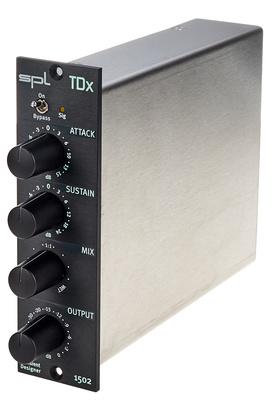
Transient Shaping and Management: Drums, Bass, and Percussion
Drum processing is the most common application for transient shaping, and we can use it on individual tracks or the entire drum bus. When approaching kick drums, we can increase attack for cutting through basslines, which is ideal for dance music. If you overdo it though, the click becomes accentuated, which can come across harsh on different playback systems.
Meanwhile, by decreasing the sustain, we can tighten low frequencies and increase headroom without using EQ. If a snare or clap isn’t punching through, enhancing the attack is a quick solution, and you can also push it back in the mix by reducing it. You can also shape the attack of hi-hats, in case they trigger limiters or cause ear fatigue.
When the sustain is preserved, the high frequencies can come across more smoothly, while the attack is softened. Low-end elements are easily neglected, but transient processing is really effective for improving the definition of the timing and feel of the groove. This is useful in any style of music where the kick and bass rhythms interlock.

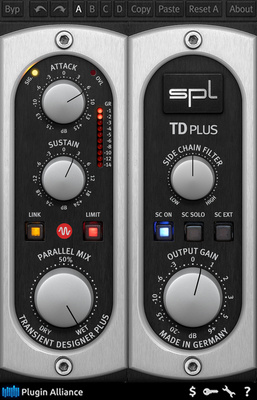
Transient Shaping and Management: Bus Processing, and Loudness
As we mentioned before, transient processing can be done on buses too, not just individual tracks. For a drum bus, placing a transient shaper before the compressor and reducing the transients slightly can improve the overall glue effect. This is because single drum hits aren’t triggering the compressor, so you can smooth gain reduction.
It can also be used on your mix bus to tame aggressive transients, as these become obstacles when you’re looking for loudness. This is because limiters respond mostly to the highest peaks, so the overall level will be decreased with more distortion. If we surgically trim back the transients by 1-2 dB, we can actually achieve more loudness without degrading the signal.
For electronic dance music, tightly controlled transient energy translates better onto club sound systems, so always keep an eye on any new percussive elements you add to your mix. What may sound exciting in your studio could lead to unpredictable playback behaviour when scaled up on a large system.

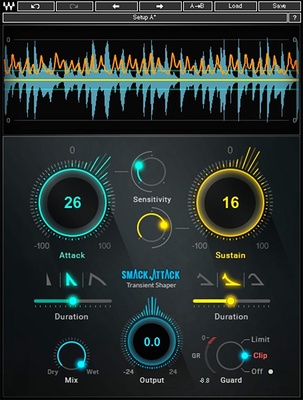
Transient Shaping and Management: Creative Decision-Making and Common Mistakes
A common error when approaching transient processing is to treat it as a corrective process for sounds rather than a creative enhancement tool. Over-processed transient material can become tinny when boosted, or you can lose the intelligibility of the groove by reducing too much.
When thinking more critically, we can ask:
- Are we looking to control transients or enhance impact?
- Is the processing affecting the emotional impact of the track?
- How is the shaping of transients affecting the translation of the mix at different levels?
Another problem you can run into happens when chaining transient processors to fast compressors without precise intention behind the parameters. Usually, you’ll lose punch this way, as the sound envelopes become inconsistent. If something isn’t working, investigate the source, because the problem could be the timing, velocity, or the choice of sample.
Always shape transients within the greater context of your mix. Otherwise, you could end up sculpting the “perfect” kick for hours only to find it masks crucial elements in your song. It’s ok to solo the sound to hear what the process is doing, but always do your final decision-making with the full mix played at a moderate level. What’s more, you can use transient processing in parallel for more flexibility.
More about Transient Shaping and Management:
*Note: This article contains affiliate links that help us fund our site. Don’t worry: the price for you always stays the same! If you buy something through these links, we will receive a small commission. Thank you for your support!

This might also interest you