The Rise of Silent Stages: Are Amps and Wedges Becoming Obsolete?
Do we still need guitar amps and stage monitors in silent stage environments?


The Rise of Silent Stages: Are Amps and Wedges Becoming Obsolete? · Source: Sennheiser

We investigate the rise of silent stages and discuss whether guitar amps and stage monitors are becoming irrelevant in today’s live sound environments.
In this Article:
In decades gone by, the live sound environment balanced elements from the stage with those coming through the PA. This included roaring guitar amps, blasting wedge monitors, and thundering drum kits that increased the overall stage level considerably. As a result, stage environments had the potential to become chaotic and difficult for engineers to manage.
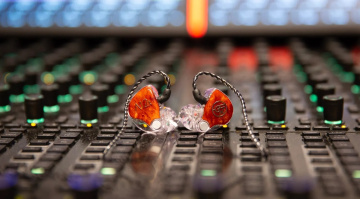
Today, we use a completely different approach that creates a silent stage. By using guitar amp modelling technology with direct inputs, in-ear monitoring systems, and sometimes electronic drum kits, we nullify the majority of the onstage noise. With this in mind, the question that arises is whether or not this change signals the end of amps and wedge monitors in stage environments.
What Is a Silent Stage?
Essentially, a silent stage is created by removing the majority of traditional sound sources from the live performance environment. If guitar amps are used at all, they are isolated offstage or replaced with amp simulation, while IEMs take the place of wedge monitors. For acoustic drums, we can use mutes and triggers, as well as shielding for the cymbals and toms to minimize levels.
With a simple goal of eliminating uncontrolled sound sources so that the front-of-house (FOH) console is controlling everything that the audience is hearing. With this approach, each performer on stage hears a personalized IEM mix rather than relying on floor monitors faced in the general direction of the stage performer.
While this concept is nothing new, it has grown in popularity in recent times due to widespread advances in the technology of amp modelling, wireless systems, and monitor management.
The Benefits of Silent Stages: Complete Control for Engineers
One of the primary benefits of a silent stage environment is the precise control it gives engineers. With traditional stage setups, there is a constant battle to manage the accumulated stage volume from guitar amps, stage monitors, and acoustic reflections from the venue.
By eliminating stage noise, we remove these variables from the equation for the most part. So, without amps and floor monitors raising the SPL levels on stage, FOH engineers can craft mixes with greater precision. This is particularly valuable in sound environments such as festivals, as well as for broadcast and streaming applications where consistent sonic clarity is essential.
The Benefits of Silent Stages: Improved Sound Quality
With in-ear monitoring systems, each performer gets a direct, completely isolated mix, and this avoids the issues we experience with stage monitors, such as excessive sound pressure levels, feedback, and uneven coverage.
As opposed to struggling to hear themselves on stage, musicians are able to dial in and customize their own monitor mixes. As a result, the performances become tighter because the stereo mixes, backing tracks, and click tracks are all far easier to manage.
The Benefits of Silent Stages: Hearing Protection and Longevity
With the traditional approach to stage monitoring, musicians were exposed to high SPL environments that sometimes exceeded 110 dB. Over the course of an entire music career, this can lead to hearing damage for the performers and stage crew, as artists like Pete Townshend from The Who will happily tell you.
By using IEMs, you drastically reduce your exposure to dangerously high SPLs through external noise isolation and letting performers use safer monitoring levels. If you’re a touring artist, this isn’t just more convenient; it’s career preservation.


The Benefits of Silent Stages: Streamlined Setups
To meet the demands of today’s tour schedules, efficiency is crucial in modern stage productions. Taking the silent approach also reduces the amount of gear being used on stage, as without amps and stage monitoring, there is less cabling.
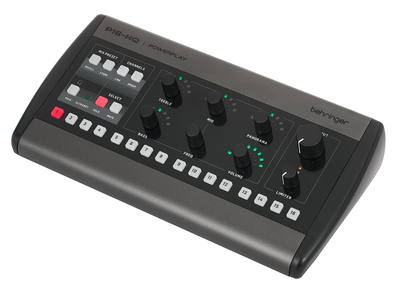
As a result, the time taken to load, set up, and soundcheck equipment is reduced, so the overall tour logistics are improved. An IEM monitoring rig can fit into a single compact rack, instead of needing loads of amps and stage monitors. This is also revolutionary for festival stages with quick changovers between acts.
The Benefits of Silent Stages: Modern Workflow Integration
The move toward silent stage environments has also aligned perfectly with modern stage performance and mixing workflows. The use of MIDI automation, click tracks, or backing tracks, as well as synchronized video on stage, all benefit from the precision of IEM systems.
Musicians are consistently able to access a clear and cohesive mix for each performance, even when the venue acoustics and stage layout change. This is something that simply wasn’t possible in the era of floor wedge monitors.

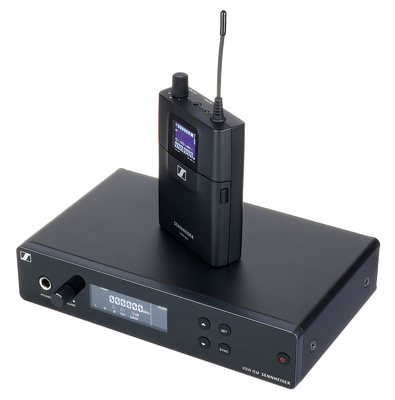
The Benefits of Silent Stages: Are Amps and Wedges Obsolete?
Although stages are now predominantly silent, it would be premature to call amps and floor wedges obsolete.
The Feel Factor
Despite the shift in industry standards, there is still an active group of performers who prefer using guitar amps to modelling or would rather use floor wedge monitors instead of IEMs. When it comes to amps, the interactivity between guitars and amps is difficult to replicate in its entirety because the behaviour, compression characteristics, and overall response are unique to each player’s rig.
In the same way, wedge monitors help musicians connect with the stage environment, and certain performers feel that the isolated and clinical experience of using IEMs can actually hinder this connection with the audience and the rest of the band.
Of course, the “feel” angle is completely subjective, but it’s still a factor that makes traditional setups popular, especially in smaller venues and with Blues guitarists who value the purist approach.
Simplicity and Cost
Using stage wedges is a relatively simple process, where you connect them up, and you’re good to go. On the other hand, IEM systems can be far more complex with region-based wireless frequency standards, managing batteries, and more complicated routing.
One thing about wireless IEM systems is that they are a more expensive solution. While some venues may even provide stage wedges, a separate IEM system is required for each individual band member.
Reliability and Redundancy
Another side of wireless IEM systems is that they are not completely fail-proof. Depending on the configuration and particular model you’re using, and its condition, you can experience transmission dropouts, interference, and, of course, the batteries can run out during a show if you haven’t checked them.
This is why many touring stage productions take a hybrid approach with monitoring or use wedge monitors and side-fills as a backup measure.
Genre and Aesthetic
The clinical, silent approach to stage production does not suit every genre. In particular, styles of rock, metal, and shoegaze music that make use of amp feedback as a part of the guitar performance make it difficult to ditch amps on stage completely.
It’s here where a stack of amps is more than just gear, because it becomes part of the spectacle, adding to both the overall visual and sonic impact of the performance.

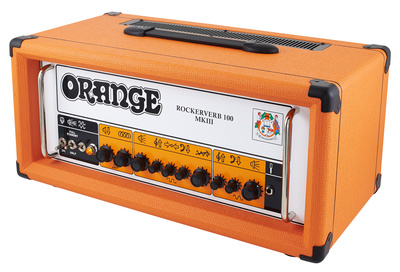
The Benefits of Silent Stages: The Future Is Hybrid
Instead of seeing a complete replacement throughout the industry, there is a clear shift toward hybrid solutions.
This means you will often see stage setups with:
- Vocals and keyboards exclusively using IEMs
- Guitar amps isolated offstage or used at low volumes
- Several wedge monitors or side-fills for ambience
With this approach, you can leverage the clarity and precision of the silent stage and maintain the feel and reliability of a traditional setup.
Even with large-scale stage productions, we often see a semi-silent approach that keeps stage sound levels to a minimum, but does not completely eliminate them.
If we look at sales data, there is a clear reflection of this shift. Of course, there is a clear IEM trend, but the sales of stage monitors have not died completely, so the market has evolved with smaller venues and major tours still finding applications for wedges.
The Benefits of Silent Stages: Conclusion
Using a silent approach to stage production is not some passing trend; it represents a shift in how we think about live sound. There are undeniable benefits, including more precise control, improved mix clarity, better hearing protection, and integration with modern workflows.
However, this doesn’t immediately render guitar amps and wedge monitors obsolete.
Rather, they have evolved from being a default choice to becoming more specialized tools. For more complex production applications, including large-scale tours, houses of worship, broadcast, and corporate events, the silent approach has become the standard.
Meanwhile, for smaller venues, traditional styles of music and musicians who value the feel, guitar amps, and stage wedges remain a rocksteady choice.
To sum up, this rise of silent stages means that traditional live sound production has been diversified rather than completely eclipsed. As a result, today’s landscape becomes a more exciting platform for live music performance than ever, as musicians and engineers get to pick and choose the approach that suits the situation best.

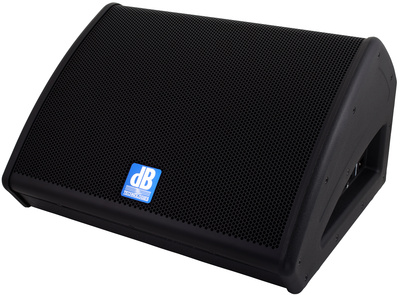
More Info:
*Note: This article contains affiliate links that help us fund our site. Don’t worry: the price for you always stays the same! If you buy something through these links, we will receive a small commission. Thank you for your support!


This might also interest you