Professional Producers vs Hobbyists: What Separates Them?
Is expensive equipment the main factor in getting professional results?

 4,0 / 5,0 |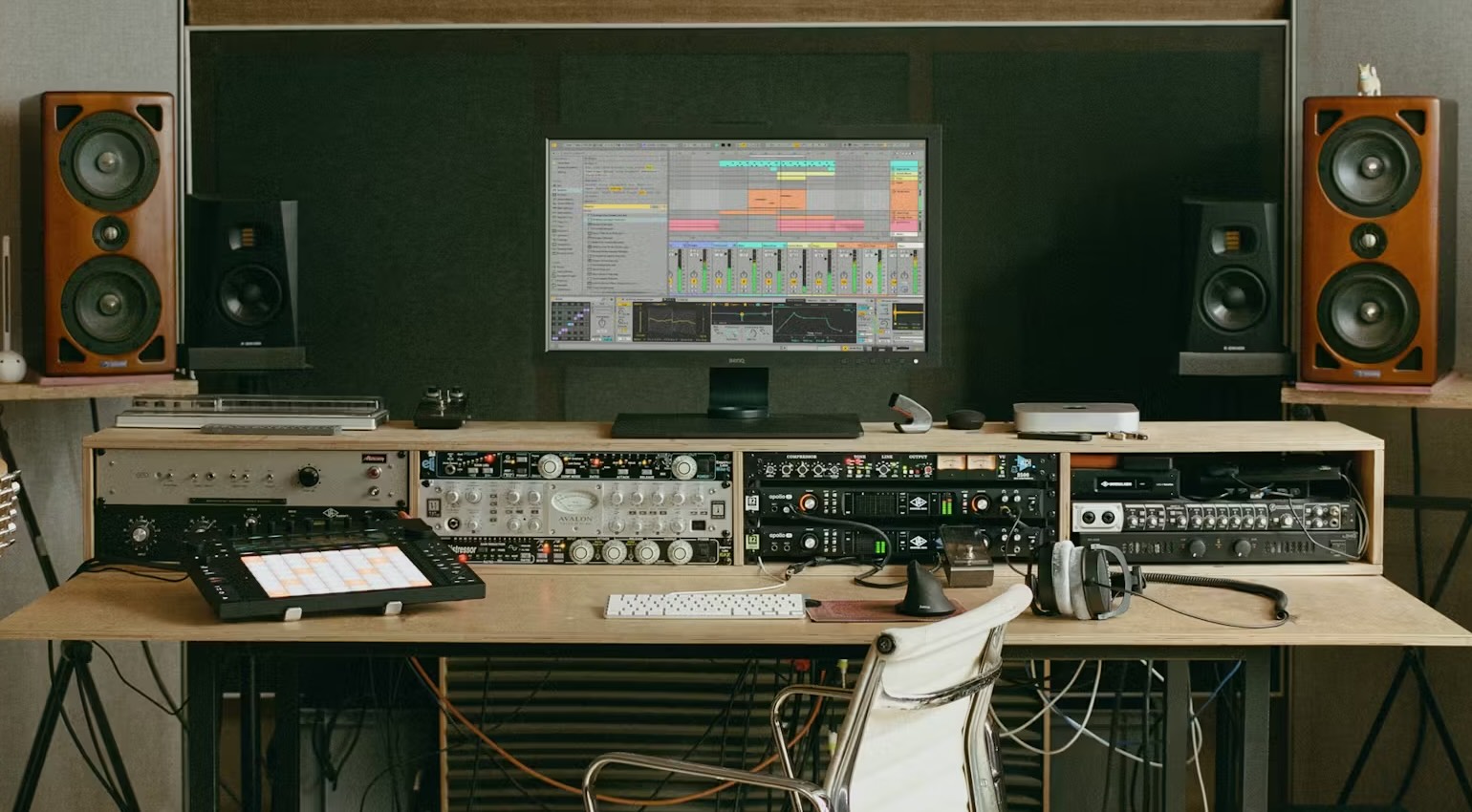

We investigate Professional Producers vs Hobbyists to find out what sets them apart. Is it stacks of expensive gear, or simply a relentless work ethic?
In this Article:
Now that we are firmly in the social media age, accessing interviews with top producers and engineers on YouTube is only a click away. However, there is also an excess of information and advice about what you need to become a professional producer. Some sources claim you need a naturally gifted ear, access to an expensive studio, or some rare and inaccessible piece of vintage gear.
In truth, there isn’t some magical velvet rope separating a hobbyist and a professional producer. Instead, it comes down to workflow, consistency, and discipline, which can be applied to any studio setup from a laptop to an SSL console. Getting to this level relies on developing habits builds a conveyor belt for turning ideas into completed tracks under any circumstances.
Professional Producers vs Hobbyists: Completion Over Perfection
One of the major pitfalls a hobbyist producer can encounter is getting caught in the endless quest for perfection. A track’s arrangement can be restructured countless times, or a mix could be repeatedly revised into oblivion, but months down the project’s finish line remains elusively out of reach.
To a professional, the skill of finishing tracks comes with the territory, and the fact that some are going to be better than others is part of the natural ebb and flow of human creativity. With each completed song, your skills in songwriting, arrangement, mixing, and mastering slowly develop, not to mention the lessons learned from the response of the audience.
An unfinished track, no matter its potential, doesn’t provide the same opportunity to grow. Make no mistake, this doesn’t mean professionals value quantity over quality. Instead, they know how to avoid production rabbit holes, when a song is ready to proceed to the next phase, and when it’s time to start fresh. As a result, your catalogue and process keep growing and evolving.
Professional Producers vs Hobbyists: Fundamentals Before Elaborate Techniques
As soon as you’ve watched a few music production tutorials on YouTube, the algorithm clicks, and before long, you’re inundated with production hacks, workflow shortcuts, and plugin recommendations. Sure, these can be useful if you’re looking for specific information, but they aren’t going to turn you into a pro overnight.
Rather than gimmicks, professionals tend to focus on the timeless basics like selecting great sounds, writing compelling melodies and basslines, and building enthralling arrangements. When a song is well-written, it often requires a less-is-more production approach to make it stand out. The same goes for a great vocal performance or a carefully chosen set of drum samples.
The hobbyist approach often leads to buying expensive plugins and gear in an attempt to compensate for weak source material. A pro, on the other hand, will often hit the studio with a fully formed idea made with stock plugins before refining the track with more specialized tools. The fact is, when you get the basic fundamentals right, the mixing process is so much easier.
Professional Producers vs Hobbyists: Faster, More Confident Decision-Making
Problem-solving, pattern recognition, and above all, decision-making are essential aspects of the music production process. Every time you sit down at your DAW, there are loads of choices presented to you at every turn, like which sounds to select, what effects to use, and what approach to use for arrangement, editing, and overall mix balance.
Experience counts in these situations, otherwise you can end up second-guessing at every step. A beginner will trawl through countless kick samples, compare hundreds of plugin presets, and often rehash decisions made earlier in the creative process. This invites bottlenecks into your workflow that stifle the creative flow and halt your progress.
Professional producers, on the other hand, trust their own judgement. The process relies on making quickfire decisions from an informed perspective to keep the momentum going forward. Furthermore, an experienced pro knows that many of the problems being solved don’t have one solution. Instead, there are various options that can each do the trick.
Professional Producers vs Hobbyists: Workflow Matters
Even experienced producers fall prey to gear acquisition syndrome, but only rookies carry the belief that the next purchase will magically level up their production quality. Using high-quality gear can make your process more efficient, but workflow is usually the factor that contributes more to productivity.
A pro producer configures a system surrounding their creative process with DAW templates, automated backups, and quick access to their most frequently used tools. This maximizes the time to get more work done, with fewer technical glitches. Hobbyists, in contrast, can spend hours searching through old project files and rebuilding the session configurations.
As a result, these sidequests interfere with the creative flow and decrease the amount of work getting done. For this reason, consistent professional results are usually produced within a workflow that is like a well-oiled machine. This often makes individual gear choices purely incidental, as the structure of the system is what matters.
Professional Producers vs Hobbyists: Thinking Beyond the Studio
The creative vision of a professional producer extends far beyond playing a song back in their own living room. Instead, they see a track as a functional piece of art that lives its life in the outside world, on stages, dancefloors, and on streaming platforms. Looking at music you’re creating from this perspective involves questioning the arrangement’s ability to hold the listener’s attention, comparing playback systems to ensure translation.
Aspects like the lead vocal are key instruments for conveying emotion, and we have to ensure that the melodic hooks are memorable enough to stick in your head. A professional producer understands the value of referencing other commercial tracks to maintain a grounded perspective. Rather than making creative decisions in a vacuum, a pro producer can place themself in the audience’s position.
Another powerful aspect that professionals embrace is collaboration, which encourages you to be adaptable, reliable, and have decent communication skills. When working with clients or other artists, these skills are just as crucial as technical know-how. This is why legendary records are created through an understanding of the human connection to the material, rather than techniques alone.
Professional Producers vs Hobbyists: Conclusion
Talent is certainly not a defining characteristic that separates hobbyists from professionals, and neither is gear or elaborate techniques. Instead, what truly sets professional producers apart above all else is consistency. This is a chain, where every link is equally important, from getting the basic fundamentals right and finishing tracks to having an efficient decision-making process and workflow.
A professional sees the value of inspiration, but the creative system they have built will be able to produce results under any conditions. The pro approach sees production as a craft that is refined through repetition, rather than seeking perfection. It’s about combining skills with productive habits that allow you to regularly create music of high quality.
More Info:
*Note: This article contains affiliate links that help us pay for this site. Don’t worry: the price for you will always be the same! If you buy something through these links, we will receive a small commission. Thank you for your support!

This might also interest you