Producing Electro: 3 Hardware Tools for a Perfect Match
Gear for Futuristic Sounds

 3,3 / 5,0 |
Producing Electro: 3 Hardware Tools for a Perfect Match · Source: Dennis Hallinan / Alamy

Producing Electro is the focus of today’s Perfect Match, our series built around three products that simply belong together. This time, however, the goal is not pure 1980s nostalgia. Instead, we are looking at a sound aesthetic that still feels forward thinking and fresh when producing Electro today.
Producing Electro – Perfect Match
Electro Sound in 2026
If you asked ten people today what they understood by Electro, you would probably get ten different answers. For a long time, the term functioned as an almost universal synonym for electronic music. Genres like Electro House have only intensified that confusion. More than a few still use the word to describe styles such as Techno.
Today, however, we are focusing on a sound that emerged in the 1980s and continues to evolve through forward-thinking producers. Its roots lie in electro-funk and early hip-hop, shaped by pioneers like Afrika Bambaataa.
Over the years, artists such as Juan Atkins with Cybotron, Drexciya, Aux 88, The Exaltics, and Anthony Rother have carried this aesthetic forward and refined it for new generations. Even selected tracks by Kraftwerk belong in this conversation, as they laid important groundwork for the genre’s machine-driven precision.
In this Perfect Match, we highlight three production tools that move right to the center of Producing Electro today.
We take a closer look at which gear is best suited for Producing Electro today. The goal is to create beats that capture the spirit of the classics while remaining fully equipped for a forward-looking sonic perspective.
Drum Machine with Roland TR-808 Sounds
One of the defining characteristics of Electro is its syncopated groove. The strict dominance of a straight 4/4 feel gives way to a stronger emphasis on offbeats and rhythmic interplay. This shift in weight is what gives classic Electro its robotic yet funky tension.
Sonically, the aesthetic remains deeply shaped by the Roland TR-808. The 808 sound still defines large parts of Producing Electro, and that will not change in 2026. The punchy kick, crisp clap, and unmistakable cowbell continue to form the backbone of the genre.
The good news is that you no longer need an original TR-808, which is now rare and expensive on the secondhand market. There are excellent modern recreations and countless sample packs, including high-quality free options. If you prefer hardware with authentic workflow, the Behringer RD-8 MKII delivers convincing 808 character at a highly accessible price point.
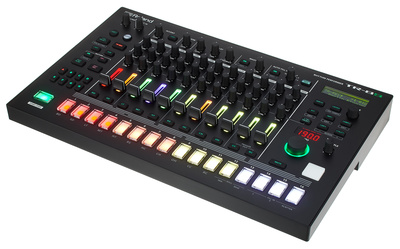
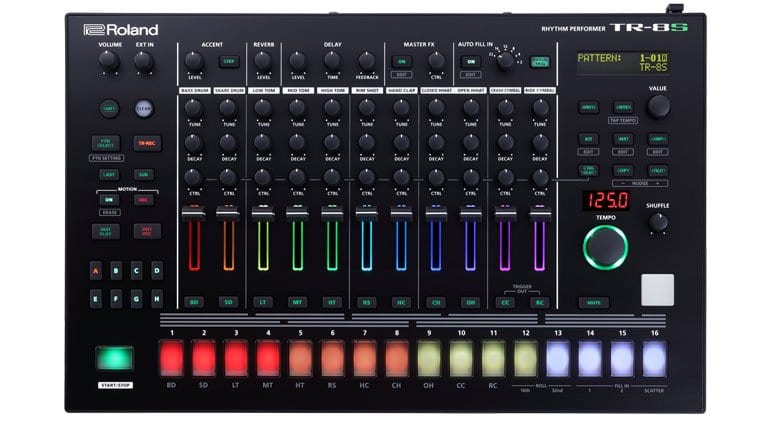
However, our recommendation clearly goes to the Roland TR-8S. Why? A pure replica such as the Behringer RD-8 MKII, or even an original Roland TR-808, is sonically iconic but limited by today’s production standards. The core sound remains powerful, yet modern productions often demand more flexibility when Producing Electro in 2026.
With the TR-8S, you retain immediate access to classic 808 tones while gaining far greater sonic range. Thanks to Roland’s ACB technology, a form of detailed virtual analog modeling, the machine captures vintage character while supporting sample playback and easy sound layering. The sequencer feels contemporary, built-in effects expand creative options, and the hands-on workflow encourages spontaneous jamming.
If you prefer something more compact, the Roland TR-6S Rhythm Performer* offers a streamlined alternative with the same sound engine as the TR-8S*. And for those who want Roland’s current flagship with expanded production capabilities, the Roland TR-1000* represents the high-end option for drum programming and full track creation.


Fat Synth Basses with Behringer Pro-1
Producing Electro lives and breathes through synthetic sound design. After locking in tight drum patterns on the Roland TR-8S, the next logical step is a strong analog bass foundation. A characterful mono synth complements the punchy rhythm section perfectly and adds the necessary weight in the low end.
The current market offers a huge selection of instruments, so it is difficult to make a wrong choice. For bass duties, polyphony is not essential unless you plan to integrate chord work directly on the same machine. In most cases, a dedicated monophonic synth will serve you better. It keeps the focus on pressure, articulation, and modulation rather than harmonic complexity.
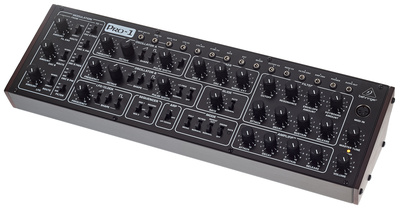
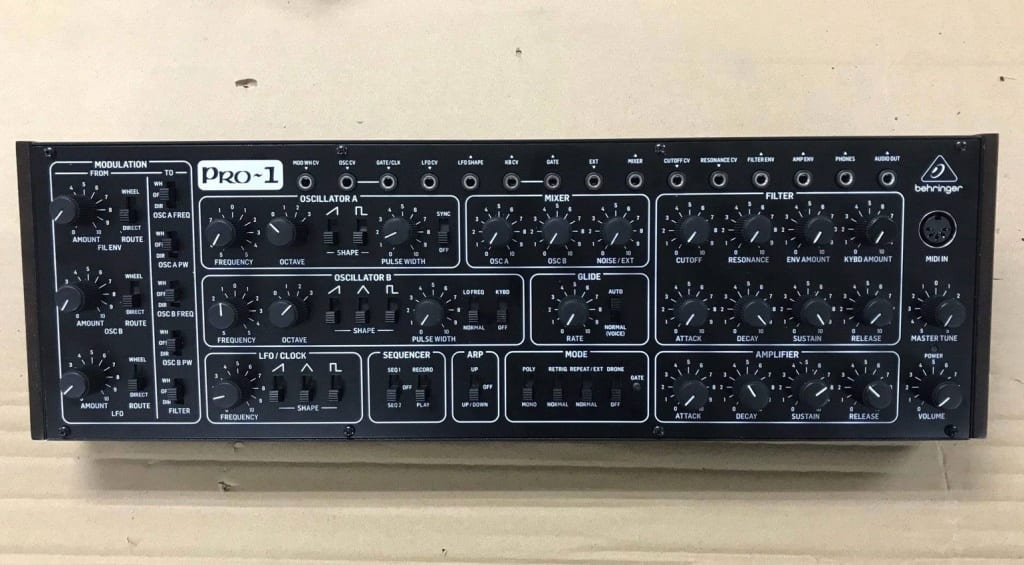
This is where the Behringer Pro-1 becomes especially interesting. Its aggressive filter, snappy envelopes, and direct hands-on control make it ideal for tight Electro bass lines and sequenced patterns. When paired with syncopated drum grooves, it delivers exactly the kind of tension and drive that defines modern Electro aesthetics.
This is why our recommendation is the Behringer Pro-1. It remains affordable, delivers a punchy analog tone, and is modeled after the legendary Sequential Pro-One. That original instrument shaped key moments in Electro history. Newcleus used it on Jam On It, and its unmistakable character can also be heard in the bass and lead of Tainted Love by Soft Cell, in the driving low end of Charly by The Prodigy, and in parts of the soundtrack to Escape from New York composed by John Carpenter.
For Producing Electro, this lineage matters. The sharp envelopes, tight filter response, and focused mono architecture create basslines that cut through syncopated drum patterns with authority while still allowing expressive modulation.
The Behringer Pro-1 delivers everything required for fat Electro basslines and cutting leads. Its two CEM3340-based oscillators, integrated noise generator, resonant low-pass filter, dual envelopes, LFO, and two modulation buses provide a flexible yet focused architecture. Add the built-in arpeggiator and sequencer, and you have a compact machine that thrives in rhythmic contexts. An external audio input even allows you to process additional sound sources, and the unit can be mounted directly into a Eurorack system.
Many producers still associate Electro with the unmistakable tone of the Moog Minimoog Model D. For punchy basses, assertive leads, and percussive synth stabs, it remains a benchmark instrument. If you are looking for a more accessible option, the Behringer Model D* captures much of that classic character. And if budget is not a limiting factor, the modern reissue of the Moog Minimoog Model D 2022* delivers the full flagship experience.
For Producing Electro, both architectures offer different flavors of analog authority. The Pro-1* leans toward tight, sequenced precision, while the Minimoog design emphasizes roundness and weight.

The Arturia MiniFreak Vocoder: A Synthesizer for Chords, Effects, and Robotic Voices
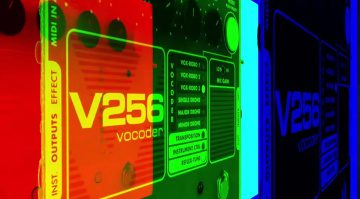
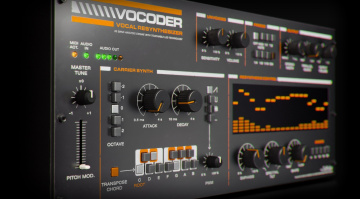
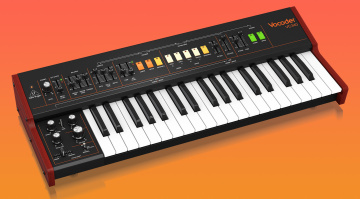
Many Electro tracks rely on robotic vocals created with a vocoder. Even in 2026, there is still dedicated hardware available that delivers both classic and modern vocoder sounds. You can find several recommendations in this buying guide. Of course, software solutions are also a strong option, with more details available here.
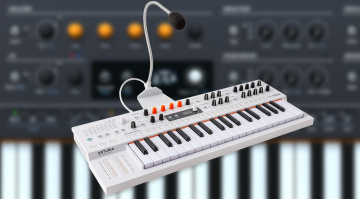
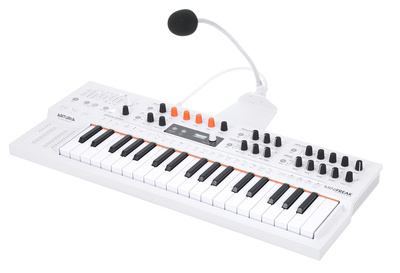
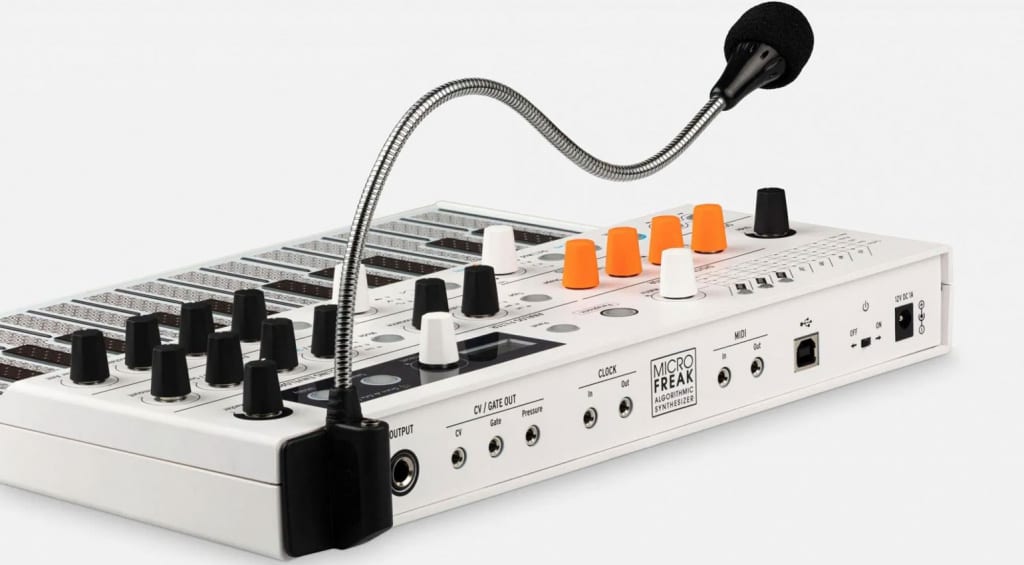
In this Perfect Match, the focus stays on hardware, which is why we highlight the Arturia MiniFreak Vocoder. This limited edition offers far more than just vocoder functionality. In fact, the vocoder feels like an added bonus rather than the main feature.
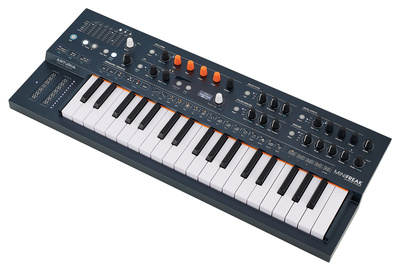
At its core is a highly flexible sound engine with 31 oscillator modes, with further expansion planned through future updates. With six voices of polyphony, the MiniFreak handles chords, pads, and layered textures with ease, making it a versatile tool when Producing Electro.
Modulation options are extensive, supported by three effect slots and 13 effect types. The multimode filter is analog, adding warmth and character to the otherwise digital architecture. As part of the package, you also receive the MiniFreak V plugin, a complete software version of the instrument for seamless DAW integration.
The 16 band vocoder engine is not limited to the vocoder edition. It is available for all Arturia MiniFreak models via firmware update. That means the vocoder functionality is part of the broader ecosystem rather than tied to a single version.
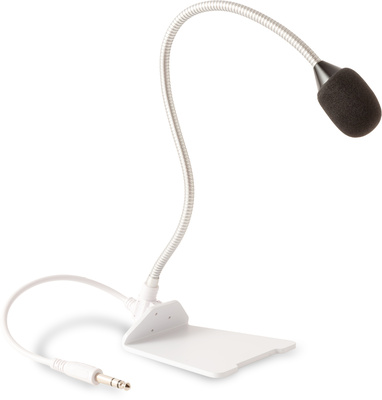
In short, the Arturia MiniFreak Vocoder is exceptionally well equipped for Producing Electro and many other styles. The white edition* and the standard version* are both available, and a compatible microphone* is required to use the vocoder effectively.

Conclusion: Why This Trio Is a Perfect Match for Producing Electro
What equipment makes sense for Producing Electro in 2026? We have three clear suggestions.
First, a flexible drum machine such as the Roland TR-8S. It allows you to program beats inspired by the legendary Roland TR-808, while also giving you access to many other classic drum sounds. Since it supports sample playback, the TR-8S offers far more than pure nostalgia and remains open to modern production approaches.
As companions, we recommend two synthesizers. The Behringer Pro-1 is an affordable analog instrument with a focused, punchy character. It excels at bass duties but also delivers sharp leads and percussive textures that can easily be sampled back into the TR-8S. For chords, pads, evolving textures, and robotic voices, the Arturia MiniFreak Vocoder is a strong choice. Even the standard Arturia MiniFreak can function as a vocoder through firmware update and an optional microphone.
In our view, these three devices create a solid foundation for Producing Electro that can lean fully old school or completely futuristic. A true Perfect Match.
Further Information on Producing Electro
- Own Kraftwerk’s Vocoder and Other Amazing Kling Klang Studio Gear
- Kraftwerk – Their Legendary Synths, Sequencers and Sounds
- Drum Machines for Techno 2026: Punch, Workflow, and Character
- Roland TR-1000: All Hail the Rhythm Terminator – Review
- Best Software Synths of 2024: Five Synth Plugins That Floated Our Boat This Year
- Acid Sound 2025: This Gear is a Perfect Match
- More from Perfect Match
*Note: This article contains affiliate links that help us finance our site. Don’t worry – the price for you always remains the same! If you buy something via these links, we receive a small commission. Thank you for your support!


This might also interest you