Techno Legends Use This Gear: Richie Hawtin aka Plastikman
This Minimal Techno Visionary and His Machines

 3,6 / 5,0 |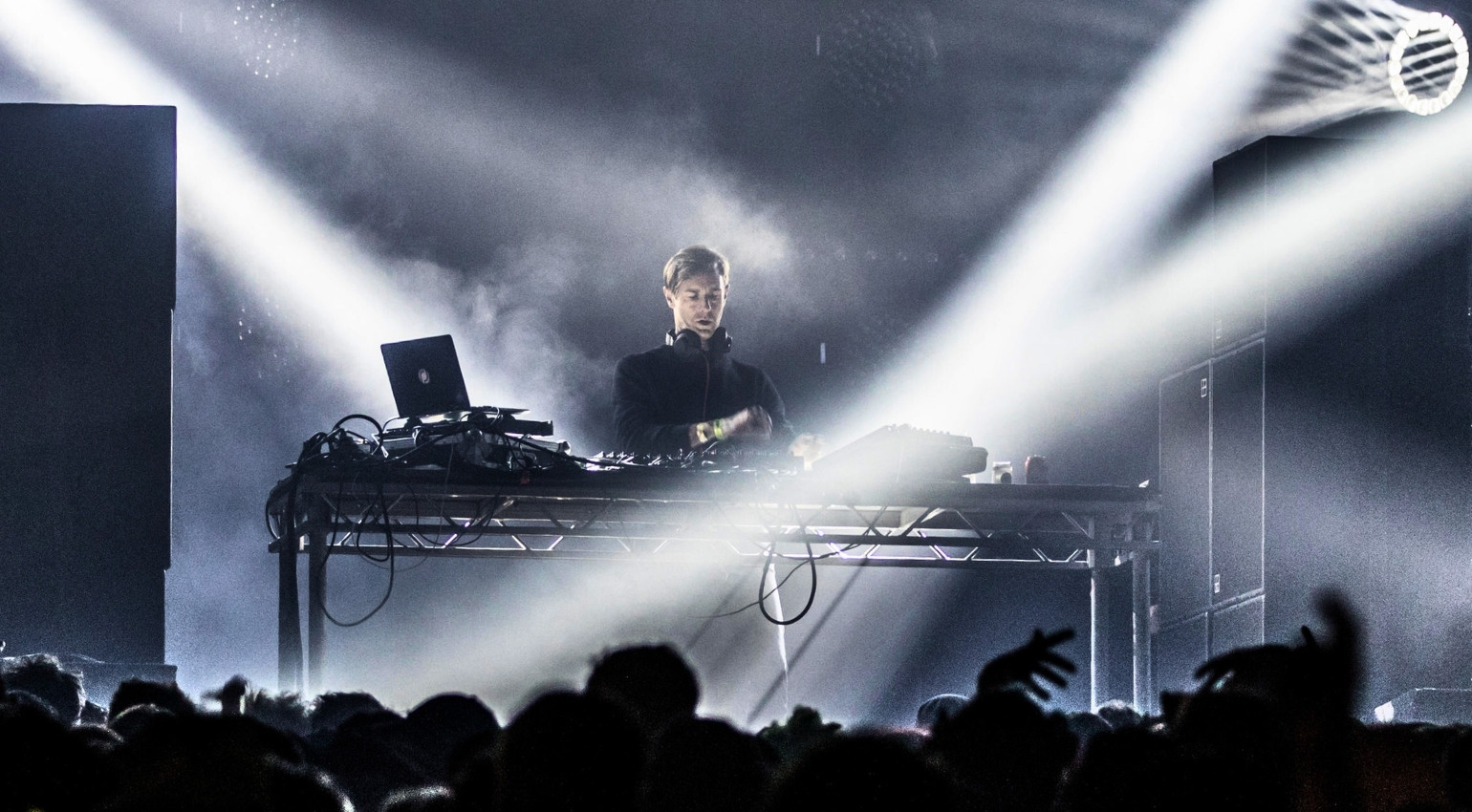
Techno Legends Use This Gear: Richie Hawtin aka Plastikman · Source: WENN Rights Ltd / Alamy

While Jeff Mills is inseparably linked to the Roland TR-909, Richie Hawtin catapulted another iconic sound into the techno cosmos: the acid-laden, organically flowing sound of the Roland TB-303. He reduced electronic music to rhythm, space, and texture. Under his alter ego, Plastikman, Hawtin became one of the most influential figures in minimal techno. His productions have had a lasting impact on the sound of clubs, studio setups, and electronic music in general.
The Most Important Facts in Brief
- Richie Hawtin represents a radically minimalist, machine-centric approach to techno
- His sound is closely associated with the TB-303, TR-808, and TR-909
- As Plastikman, he influenced minimal and acid techno
- He was an early pioneer of Traktor, hybrid DJing, and digital performances
- In his live performances, he relies on modular systems, drum machines, and software integration
- With the PLAYdifferently Model 1, Hawtin developed a DJ mixer that prioritizes sound shaping over showmanship
- Hawtin believes that producers and ideas should take center stage rather than DJ hype
- His approach combines the studio, live performance, and technology into a closed system
All About Richie Hawtin
From Windsor to the World Stage: Richie Hawtin Learns Techno
Born in 1970 in Windsor, Ontario, Canada, Hawtin hails from a small town directly across from Detroit, the birthplace of techno. This geographical proximity connected him to the early electronic dance music scene and the spirit of Detroit pioneers such as Juan Atkins, Derrick May, and Kevin Saunderson. Hawtin discovered the potential of analog synthesizers and drum machines at an early age, long before digital workstations and DAWs became dominant.
As early as the late 1980s, he was deeply involved with Roland machines, particularly the TB-303 bass synthesizer, the TR-808 and TR-909 drum machines, as well as the SH-101 and MC-202 Micro Composer synthesizers. These classic devices formed the foundation of his signature sound: minimalistic, hypnotic, and technically precise.
In the early 1990s, his alter ego Plastikman debuted and quickly became synonymous with fluid, acid-heavy techno that plays with reduced elements and excessive filter movements. Hawtin brought the TB-303 sound from the acid house scene into the minimalist techno aesthetic, transforming it into an organic texture that is less garish and more introspective and hypnotic than hype.



Machines That Defined His Sound – Roland and More!
Roland TB-303 – the Acid Heart
The Roland TB-303 was originally intended as a synth to accompany bass, but it was a commercial failure until artists like Richie Hawtin discovered how to “bend” its filter and sequencer functions to create incredibly expressive “acid” basslines.
In Richie Hawtin’s Plastikman tracks, the TB-303 became a means of expression. It generated not only basslines but also emotional lines that alternated between melancholy, hypnosis, and futurism. Classics such as “Sheet One,” Plastikman’s early minimal techno masterpiece, demonstrate that the TB-303 is more than just an instrument – it’s a sound characterizer.
Roland TR-909 & TR-808 – Rhythms with Character
While the TB-303 provided bass textures, Roland drum machines like the TR-909 and TR-808 gave Richie Hawtin his rhythmic foundation. The TR-909 was particularly popular because of its integrated sequencer, which enabled early hardware synchronization with MIDI functionality – a feature that Hawtin used to connect his machines to each other and to external sequencers early on.
The TR-808, on the other hand, delivers the deep kicks and percussive sounds that appear repeatedly in Plastikman productions, such as in the legendary nine-minute track “Spastik,” which showcases Richie Hawtin’s virtuosity in pattern sequencing and is based solely on 808 percussion.
Other Hardware Companions
In addition to the legendary Roland machines mentioned above, Richie Hawtin used other synthesizers, sequencers, modular systems, and external controllers. He combined these in early live sets and studio sessions to create gigantic yet structured soundscapes.
Interestingly, Richie Hawtin has also blurred the line between hardware and software over the years. In later productions and performances, he integrated controllers such as the JazzMutant Lemur, modern DAWs, and even network-based setups. In doing so, he has always retained the spirit of the physical machine, using it as a creative starting point.
The Most Influential Tracks, Machines, and Anecdotes
“Spastik” – an 808 Monolith
“Spastik” (1993) is more than a classic: it’s a nearly nine-minute demonstration of what’s possible when a machine like the TR-808 is used almost exclusively for complex, interwoven percussion. Hawtin used the machine not only as a loop generator but also as a performative voice built up, modulated, and controlled over minutes – a prime example of minimalist techno with a lot of drive.
Sheet One – The TB-303 Reimagined
The Plastikman album Sheet One is considered the blueprint of acid techno. Richie Hawtin used the 303’s signature filter sweeps, layering them over unusual tempos and applying subtle modulations. In doing so, he transformed the classic acid sound into something much more emotional and introspective – a technique that continues to influence later generations of techno producers to this day.
Live Performances: The Machine as an Instrument
Unlike many contemporary DJs and producers, Richie Hawtin relied on live elements early on. Rather than mixing finished tracks, he mixed machines directly. He reacted to the dance floor and used sequencers, drum machines, and effects as instruments. His DE9 series, in particular, shows how a DJ/producer can create complex, organic sets with minimal hardware – gear instead of a button routine and a machine instead of a mouse.
What Equipment does Richie Hawtin Use for Live Performances Today?
As Plastikman, Richie Hawtin has always taken a different approach than in his role as a DJ. His current live performances are based on hybrid setups that fuse modular systems, drum machines, software, and specially configured controllers. The focus is less on classic tracks and more on the development of sound over time.
Modular synths play a central role in this setup. Hawtin uses these systems not as toys for sounds, but as structural elements for rhythm, modulation, and texture. Sequences are created live, parameters are continuously adjusted, and transitions flow organically into one another. The setup is complemented by software environments, such as Ableton Live, which serve as hosts, recorders, and effect centers but never as the sole sound source.
Remarkably, Richie Hawtin deliberately focuses on reduction despite using state-of-the-art technology. There are no overloaded racks or endless effect chains. Each module and machine has a clearly defined task. As a result, his live shows rely less on spectacular drops and more on tension, space, and physical presence – entirely in the spirit of the original Plastikman concept.
How does Richie Hawtin DJ Today?
His approach to DJing has changed radically over the years without losing sight of his basic idea. While many techno DJs still rely on classic vinyl or USB sticks, Richie Hawtin became synonymous with digital DJ performance early on. In the 2000s, he experimented with laptop-based sets and played a key role in popularizing Traktor as a live instrument. For Hawtin, DJing is a real-time remix process, not just playing tracks.
Today, he typically works with Traktor Pro, individually mapped controllers, and a highly modularized setup. Tracks often serve as raw material that he breaks down into loops, stems, and fragments. He controls EQs, filters, effects, and layers live, making his sets feel more like hybrid live performances than classic DJ mixes. The focus is clearly on control, dynamics, and reshaping the musical flow constantly.
His minimalist, functional approach is characteristic of him: no show controllers and no excessive visual setup. Instead, he relies on a deliberately technical look that puts the machine at the center. Richie Hawtin sees DJing as system control rather than playlist creation, an approach that makes his sets unmistakable to this day.
The Development of His Own DJ Mixer Series – From Concept to Benchmark
A particularly consistent step in Richie Hawtin’s machine philosophy was developing his own DJ mixer series: PLAYdifferently Model 1 and later Model 1.4. The mixer was born out of dissatisfaction with existing club mixers. In Hawtin’s view, they were too focused on showcasing effects and not enough on sound control. Together with British developer Andy Rigby-Jones, Hawtin created a completely new approach.
Technically, the Model 1 differs fundamentally from classic DJ mixers. Rather than a crossfader, it has dual filters per channel, drive stages, an extremely high-quality analog signal path, and a structure more akin to a studio mixer than a club mixer. The goal was not just to mix tracks but also to shape their sound, similar to what Hawtin does in his live setups.
The mixer series quickly became the benchmark for techno DJs who value transparency, headroom, and precise control. The Model 1 is not an entry-level mixer but rather a tool for artists who want to actively shape their sound. This closes the circle: Richie Hawtin’s DJ mixer is not a marketing idea but rather the logical consequence of his decades of work with machines – reduction, control, and expression.
Why Hawtin’s Machine Philosophy Was So Important
With Plastikman, Richie Hawtin released tracks and rethought machines. He didn’t view them as mere devices that generate sounds – rather, he saw them as partners in the creative process. His approach demonstrated that electronic music originates from the interplay of hands-on control, live sequencing, and a clear artistic vision rather than from the computer itself.
For many techno producers who combine hardware, software, and performance setups today, Hawtin’s approach remains groundbreaking. The machine is an expression, not a means.
Richie Hawtin’s Fight for Producers in the Spotlight
Over the years, Richie Hawtin has repeatedly taken a clear stance on the role of producers in electronic music. To him, techno has always been a producer-driven culture, not a DJ genre, in which ideas, sound design, and machine work should take center stage. In interviews and projects, he was quick to criticize the increasing personalization and eventization of DJing, where names, slots, and hype often became more important than the musical work itself.
Through projects such as Plastikman, his experimental live shows, and his attitude toward technology, Hawtin aimed to demonstrate that the creative process behind music must become more visible. He believes that DJs should be translators of production work, machines, and concepts, not mere players. Many younger artists have been influenced by his approach. Today, they distinguish between DJ sets and live performances, defining their identity through sound, tools, and attitude rather than self-expression. Other DJs should follow their example.
DIY: Your Richie Hawtin Setup – Starter, Advanced, and Live
Starter setup: Minimal Techno & Acid Basics
For whom:
- Producers and DJs who want to understand Hawtin’s sound aesthetic without delving into modular technology.
Recommended combination:
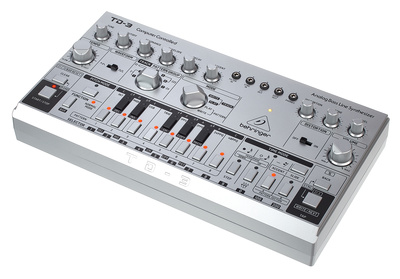
- Behringer TD-3
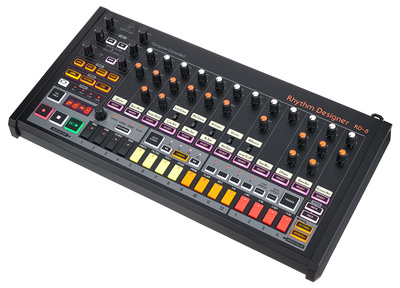
- Behringer RD-8 MKII
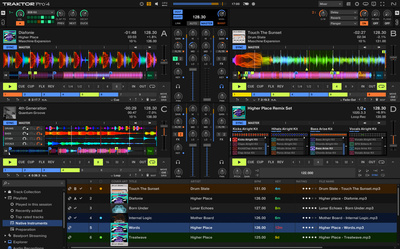
- NI Traktor Pro 4

Why this setup works:
- Acid bass + minimalist drums + loop-based DJing. It’s perfect for learning Plastikman’s style and quickly building effective grooves.
Advanced Setup: Hybrid DJ & Studio
For whom:
- Techno producers who want to use hardware and software equally.
Recommended combination:
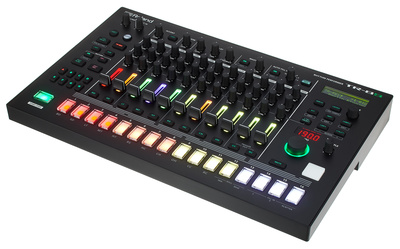
- Roland TR-8S
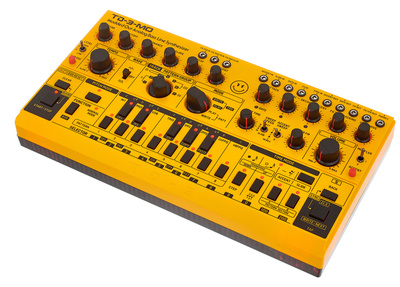
- Behringer TD-3-MO
- Ableton Live 12 Suite

- NI Traktor Pro 4
Why this setup works:
- The hardware provides groove and character, Ableton takes care of structure and effects, and Traktor enables performative DJing. This setup closely resembles Hawtin’s hybrid approach.
Live setup: Plastikman Philosophy
For whom:
- Live performers who want to play techno as a process.
Recommended combination:
- Eurorack system (Plaits, Marbles, and Maths)
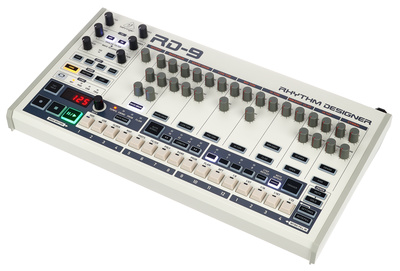
- Behringer RD-9
- Ableton Live + Max for Live
Why this setup works:
- Modular creates movement and texture; the drum machine provides the rhythmic foundation; and Ableton ties everything together. It’s not about tracks: it’s about systems.
Conclusion: Machine, Man, and Attitude
Richie Hawtin is unique among techno artists for his consistent connection between music, technology, and attitude. Whether performing as Plastikman with a TB-303, DJing with digital systems, or developing his own hardware, he has always prioritized control, reduction, and expression over effects or status. His work demonstrates that machines in techno are not an end in themselves but rather tools that make ideas audible and tangible.
At a time when DJ hype often overshadows the music itself, Richie Hawtin’s approach seems more relevant than ever. He reminds us that techno comes from the studio and the exploration of sound, rhythm, and systems.
The DJ does not take center stage: the idea behind the music does. That’s what makes Richie Hawtin so important to the techno scene.
More Information
- Techno Legends Use This Gear: Jeff Mills and His Roland TR-909
- Drum Machines for Techno 2026: Punch, Workflow, and Character
- Techno Beats in Ableton Live Made Easy!
- The Best Synths for Techno Productions in 2025: Powerful, Flexible and Creative
- Producing Techno with Minimal Gear: These 3 Products are a Perfect Match
- Techno Rumble in Ableton Live – Made Easy!
*Note: This article about Richie Hawtin contains affiliate links that help us finance our site. Don’t worry – the price for you always stays the same! If you buy something through these links, we receive a small commission. Thank you for your support!

This might also interest you