The 8 Best Compressor Pedals for Any Budget: Shape your Dynamics Like a Pro!
More sustain, more punch, more control.

 3,9 / 5,0 |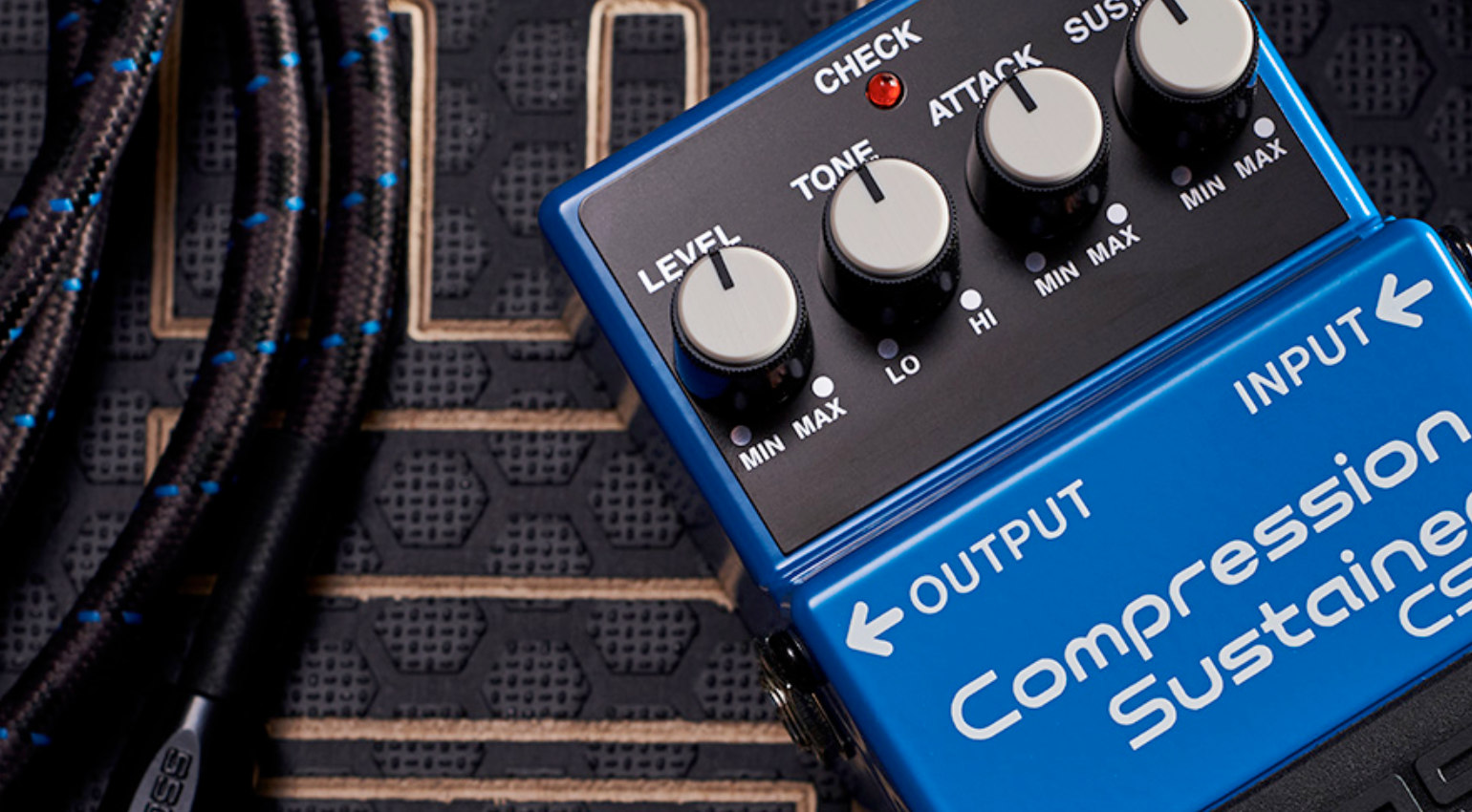
The 7 Best Compressor Pedals for Any Budget: Shape your Dynamics Like a Pro! · Source: Boss

Ah, compressors. The bane of any guitarist’s, bassist’s, or mixing engineer’s existence. Gently tuck in those peaks or squash the dynamics for ultimate sustain? Shape a sound to fit the mix or let it breathe? The best compressor pedals can do it all. Let’s take a look at seven compressor pedals that will get you closer to the sound in your head!
Highlights
- Compression evens out your dynamics, bringing quiet notes up and taming louder peaks for a more polished sound.
- The best compressor pedals come in many flavors: Clean, VCA, optical, FET, or multi-band.
- Compressor pedals are used across most genres, from country and funk to metal and modern pop.
- There are options at every price, from budget-friendly tone shapers to boutique compressors with tone sculpting, blend control, and parallel paths.
Our Picks:
A Brief History of Compression in Guitar
Compression as an audio effect to level dynamics originally began with studio hardware. Most of you will either have seen pictures, an actual rack, or (most likely) a plugin version of the likes of a Fairfield, a 1176, or a DBX 160. In the 1970s, companies like MXR and Dan Armstrong shrank those concepts into stompboxes.
And over the last few decades, compressor pedals evolved from simple “squash boxes” into sophisticated tools that can attack, sustain, and even EQ response of a guitar’s or bass’ signal. Today’s compressors offer additional features like blend knobs for parallel compression, tone control, multiband options, and quiet, clean circuits designed to enhance your natural playing.
Compression 101
While the topic of compression isn’t exactly a new one, a little refresher might help you decide on which pedal is the right one. Generally speaking, compressors and compressor pedals lower those parts of a signal that cross a set threshold (usually determined through a dial, sometimes internally). Attack determines how fast the compressor starts lowering the signal, release determines how fast the compressor let’s go, once the signal is below the threshold, and the ratio sets the amount of compression.
But doesn’t that mean that compression does not make a signal louder, but quieter? Almost, if it weren’t for make-up gain. With that manual control, you compensate for the gain, that is lost through the compression. As you will see, there are a few different types of compression pedals. Circuit-types like FET (from the 1176), Opto (from the LA-2A), VCA, or OTA each have through own flavour.
For each type, how a signal’s level, the set threshold, attack and release, and ratio interact is different. And, in comparison to a mostly clean compressor, these all add their own type of harmonic distortion and warmth.
Why do we need compression pedals?
Especially among guitarists, this is an often-heated debate. There are those who bemoan the loss of dynamics and the sonic influence a compression pedal can have on your playing and sound. And then there are those who often use it as the first (well, second after the tuner) pedal on the board, so all the overdrive, distortion, and modulation pedals get a more balanced signal. And who cannot live without one.
This is especially true for bass players. Here, a more stable signal in terms of dynamics is often crucial, because it can happen more often than not that a plucked note fades out too quickly. This is much more noticeable in louder genres, where a rock-solid bass signal is a must.
What to Consider When You’re Looking for the Best Compression Pedals
When looking for the best compressor pedals, start by deciding what type of compression you want. Optical compressors offer smooth, natural leveling, VCA designs provide a classic “squish,” FET circuits deliver a fast, punchy sound, and studio-style compressors give you full control over attack, release, ratio, and parallel blend.
Next, consider the features you want. A simple two-knob compressor can produce great sound for clean rhythm or country picking. However, if you want a more subtle, transparent polish, look for a blend knob or other tone controls. Also, consider noise floor, headroom, and power requirements because good compressors should be quiet, clean, and consistent.
As always, we’ve ranked these compressor pedals by price alone.
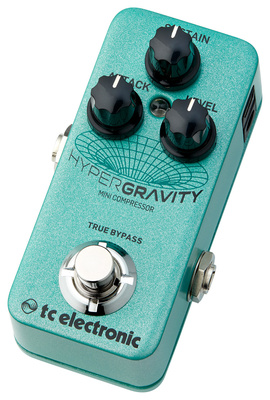
TC Electronic Hypergravity Mini
The HyperGravity Mini delivers serious compression power in a very pedalboard-friendly package. Mainly, the MD3 multiband algorithm divides bass, mid, and treble into separate bands, which results in a very transparent, smooth compression that keeps your lows intact while taming harsh highs.
What sets this mini pedal apart even more is its flexibility: between its multiband mode, a warmer “Vintage” compressor mode, and support for custom TonePrint presets, it a wide range of tonal options when it comes to compression. Much wider than you’d expect at this price point. Check it out at Thomann*.


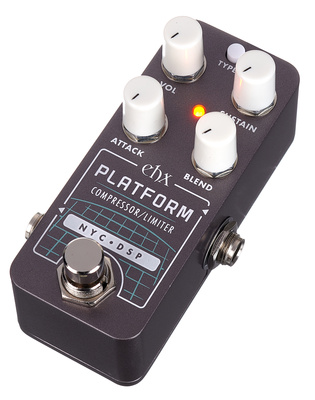
Electro Harmonix Pico Platform
The Pico Platform packs studio-style compression and limiting into an equally pedalboard-friendly package. It offers two modes (Compressor and Limiter), selectable Soft or Hard-Knee curves, and a simple set of controls (Sustain, Attack, Blend, Volume). You get all the controls you need to dial in anything from subtle peak taming to brutal parallel squash.
Because what really sets it apart is the Blend knob, which allows wet/dry mixing. The Pico Platform proves that some of the best compressor pedals don’t need space or complexity. Get it from Thomann*.

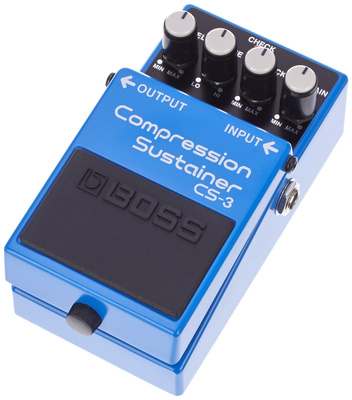
Boss CS-3
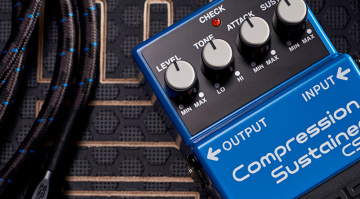
The Boss CS-3 is legendary for a reason: this analog-style compressor delivers smooth, transparent compression that evens out dynamics and adds sustain. With controls for Level, Tone, Attack, and Sustain, you can dial in subtle dynamic smoothing or full-on sustained leads.
What makes the CS-3 really stand out among the many contenders for the best compressor pedals is just how reliably it works across just about any genre. Its VCA circuit provides stable and balanced compression, and the Tone control helps restore clarity or warmth. It’s available here from Thomann*.

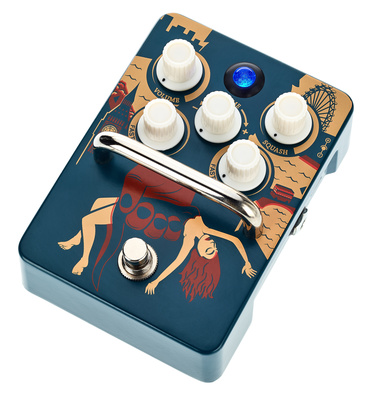
Orange Kongpressor
The Orange Kongpressor brings a studio-inspired, analog Class-A compression circuit to the table, based on a classic VTL5C3 optocoupler. It offers the usual compression controls like Attack, Release, and Squash. There is even a “Chime” knob to shape the high-end sparkle.
In addition, the Kongpressor includes a 12 dB clean boost to help solos cut through the mix. Whether you want subtle polish or lush sustain, this pedal proves that complexity isn’t required to earn the label “one of the best compressor pedals.” Get all the details from Thomann*.

Universal Audio UAFX 1176 Studio Compressor
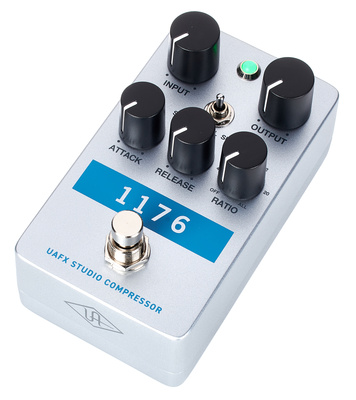
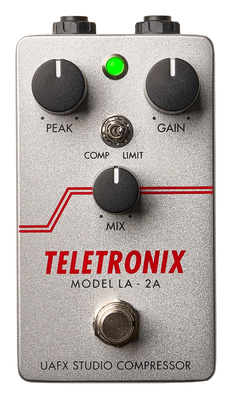
If you’re responsible for not one, but two of the most legendary compressors in studio history, you’ll likely know what you’re doing when it comes to the best compressor pedals. Universal Audio’s UAFX series includes three: the 1176*, the LA-2A*, and the mighty Max Preamp & Dual Compressor*. So, if you want both compression flavors plus emulations of a Dyna Comp and a UA 610 Tube Preamp, the big boy is for you.
If you’re torn between the two smaller ones, it very much depends on your playing style and the sound you’re after. If it’s lightning-fast peak reduction that can sound super in-your-face when squashed, the 1176 is your friend. If you need buttery smoothing out, the LA-2A might be more for you.

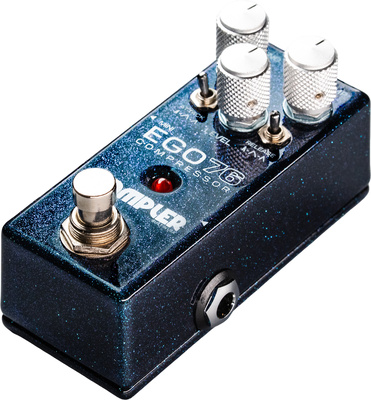
Wampler Ego and Mini Ego
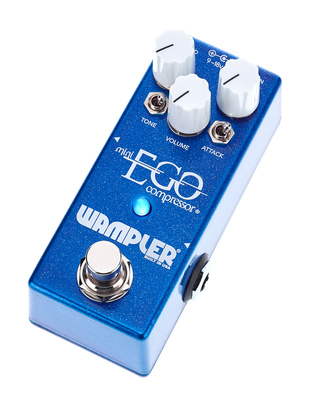
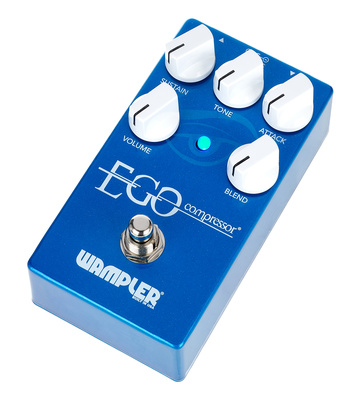
The Wampler Ego Compressor* is widely regarded as one of the benchmarks for pedalboard compressors: analog circuitry, controls for Attack, Release, Tone, Blend, Sustain, and Volume, plus true-bypass switching. Its extremely clean-blend circuit keeps pick attack and natural feel intact while letting you dial in consistent sustain. As such, it belongs high on any list of the best compressor pedals for guitarists who want full tonal control without sacrificing nuance.
The Mini Ego*, by contrast, squeezes most of that power into a much tinier format, while still giving you controls for Sustain, Volume, Blend, plus toggles for Attack and Tone. It also keeps that same clean-blend core. The trade-off: you sacrifice granular control over attack and tone compared to the full-size Ego. There is also a dedicated Mini Ego 76* that gets you that beloved 1176 sound.

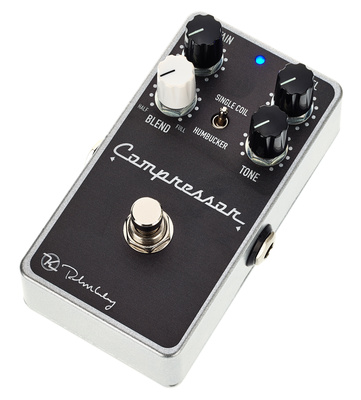
Keeley Compressor Plus
The Keely Compressor Plus* is to compressor pedals what the Big Muff is to fuzz. If you ask around, no other pedal is talked about and mentioned as much as this one. While this true-bypass pedal is as standard as it gets, when it comes to controls (Sustain, Level, Blend and Tone), it offers one unique feature that has made it extremely popular.
There is a dedicated switch lets you change and adapt its attack and release behavior depending on if you’re playing single coils or humbucker. And the Compressor Plus seems to be doing its job so well, sonically, that it’s a must among our list of the best compressor pedals.

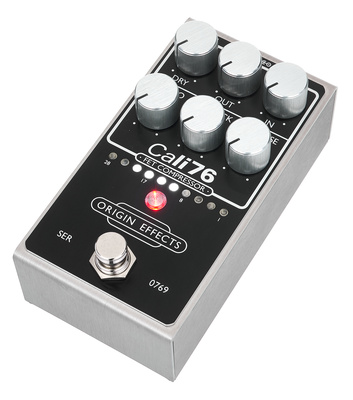
Origin Effects Cali76 V2 FET Compressor
Last, but not least, one of the best-sounding and versatile compressor-pedals, the rolls-royce among dynamic pedals, the Cali76 V2 FET*. While its name strongly hints at the type of compression it’s best at, the Cal76 is, like many other pedals from Origin Effects not just a dynamics processor. It’s also a sound-goodizer, so to speak.
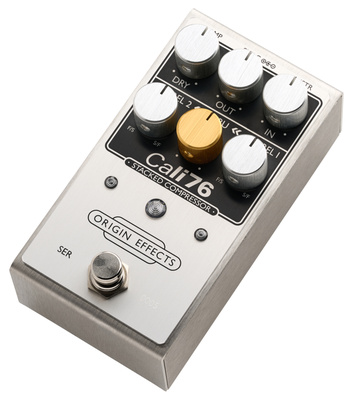
It levels your sound however you need it to, but it also makes everything sound better. There is also the Cali76 V2 Stacked Compressor* that puts two 1176 circuits in series. That way you get the ultimate smoothe compression even with the fastest arpeggios.

*Disclaimer: This post contains affiliate links and/or widgets. When you buy a product via our affiliate partner, we receive a small commission that helps support what we do. Don’t worry, you pay the same price. Thanks for your support!

This might also interest you