Writing a Chord Progression: Songwriting for Guitar
Feeling Creative?

 4,6 / 5,0 |
Writing a Chord Progression: Songwriting for Guitar · Source: Roman Lacheev / Alamy Stock Photo

Writing a chord progression is about learning how to build strong guitar progressions using harmony, tension and movement to craft memorable songs.
Writing a Chord Progression
Key Information about Writing a Chord Progression
- Most great songs build from proven harmonic foundations (I–IV–V, ii–V–I, vi–IV–I–V), but creative voicings, rhythmic variation, and harmonic substitutions are what make them memorable.
- Writing a chord progression is about understanding tonic, subdominant, and dominant roles, which helps you control tension and release.
- Varying textures and structures can elevate your composition from something medium to megga.
Keys
What do we need to know first when writing a chord progression? There are 12 keys that we can choose from. But what is a key? They are a group of pitches that form a musical composition. It may seem elementary, but it is useful to know what keys there are to work with.
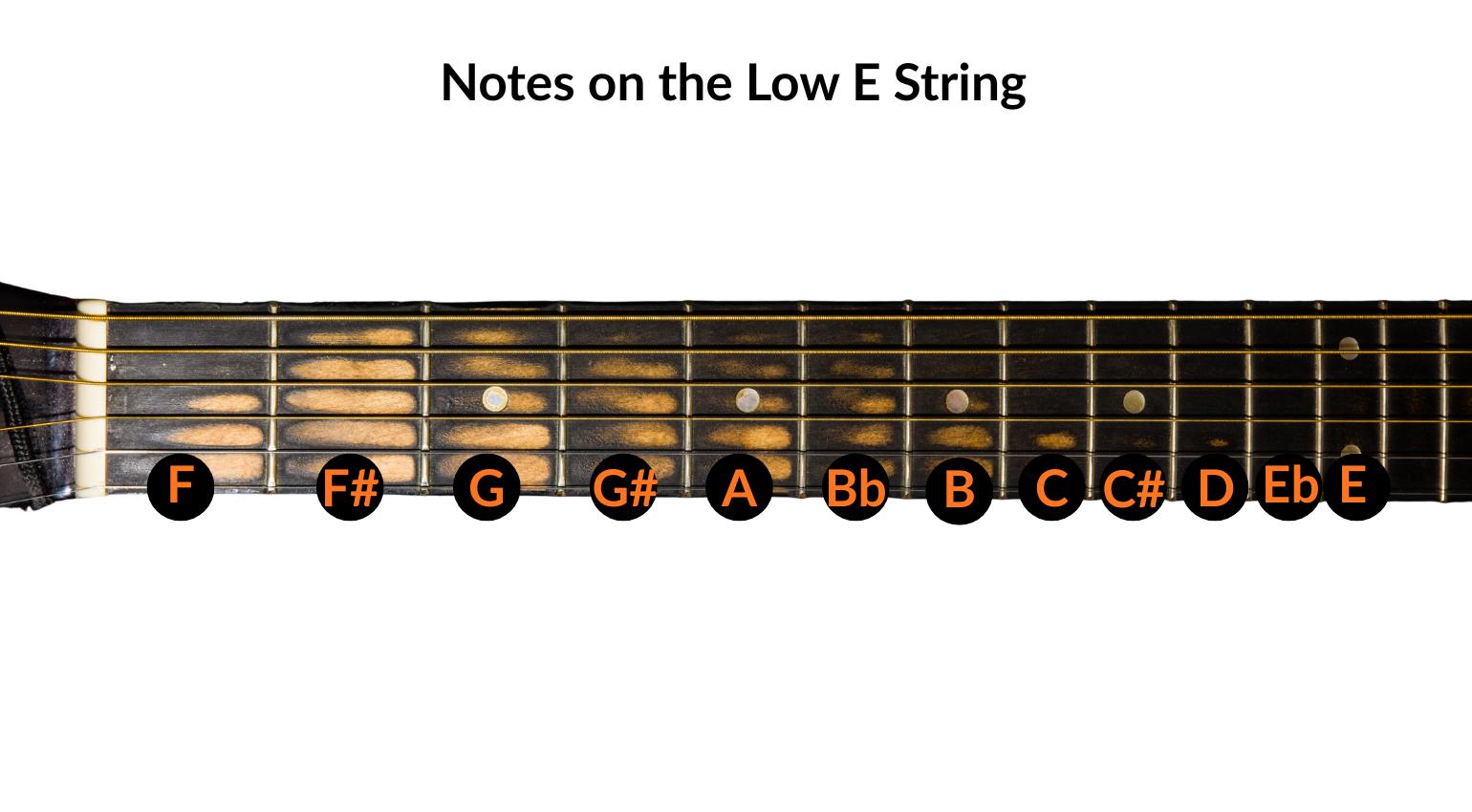
How can guitarists find all of the keys? Starting at the 1st fret of the low E string, we can identify them: F, F#, G, G#, A, Bb, B, C, C#, D, Eb, E. This order is worth remembering, as it replicates the fretboard on the guitar. When songwriting for guitar, we can only use chords that fall within a chosen key.
Each of these respective keys has 7 chords. Which is one for every note in the scale. Each harmonised chord in the scale follows a set order, and this determines which chords we’re allowed to use when writing a chord progression.
Finding the Chords in a Key
In terms of writing a chord progression, this is where we establish what chords we can use. We need to identify what chords are in our chosen key. Here, we’re going to select G major.
The harmonised chords of the major scale follow this order, starting from the route: major, minor, minor, major, major, minor, diminished. This categorisation refers to the type of chord and whether it is major or minor. Major chords sound happy, minor chords sound sad. Putting these together creates tension and release. Essential for songwriting.
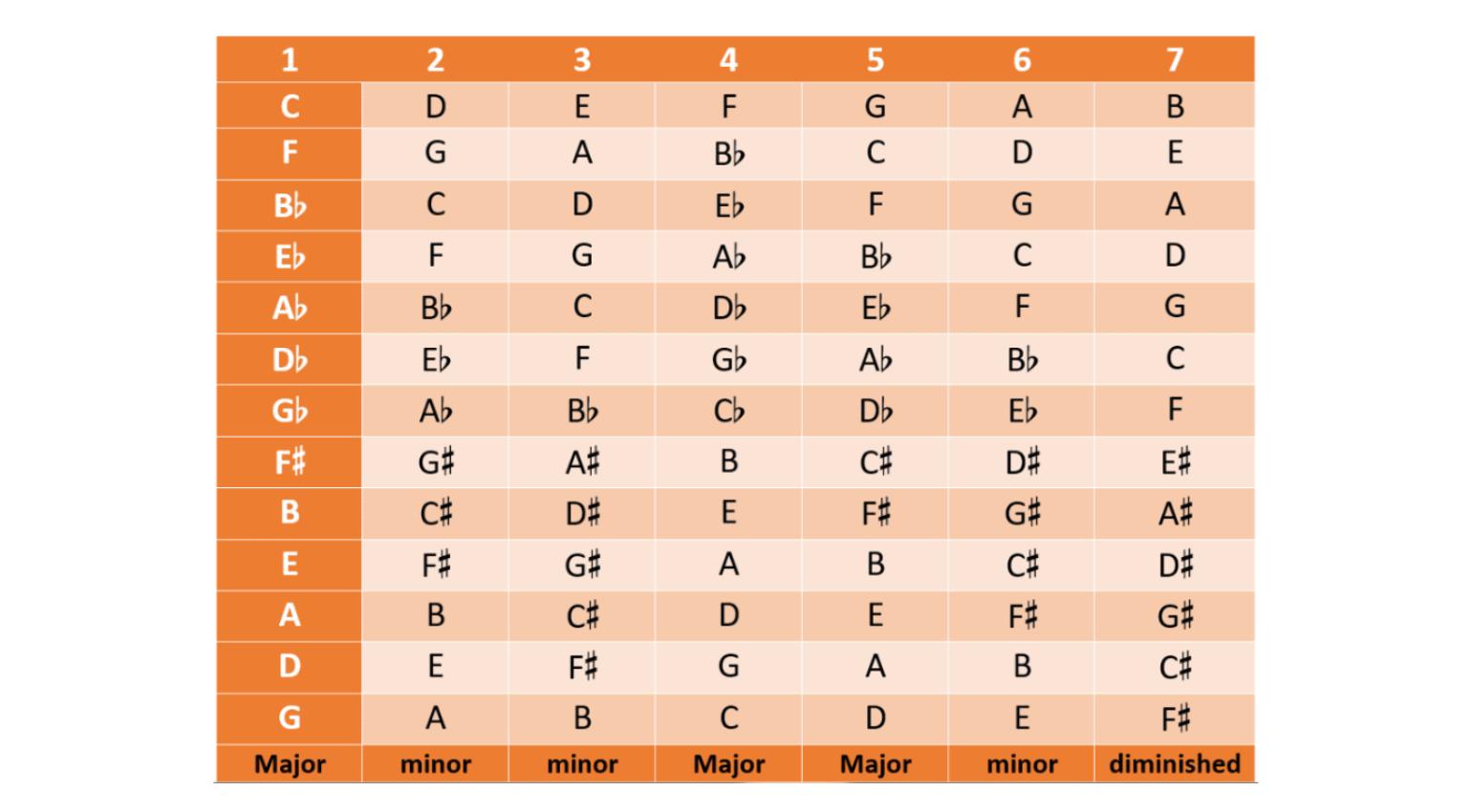
However, to be able to look at getting the correct order, we must first understand the intervals between the major and minor chords in the scale.
Tones and Semitones
These are the intervals between notes and chords. They are important for establishing the order of the chords in our progression.
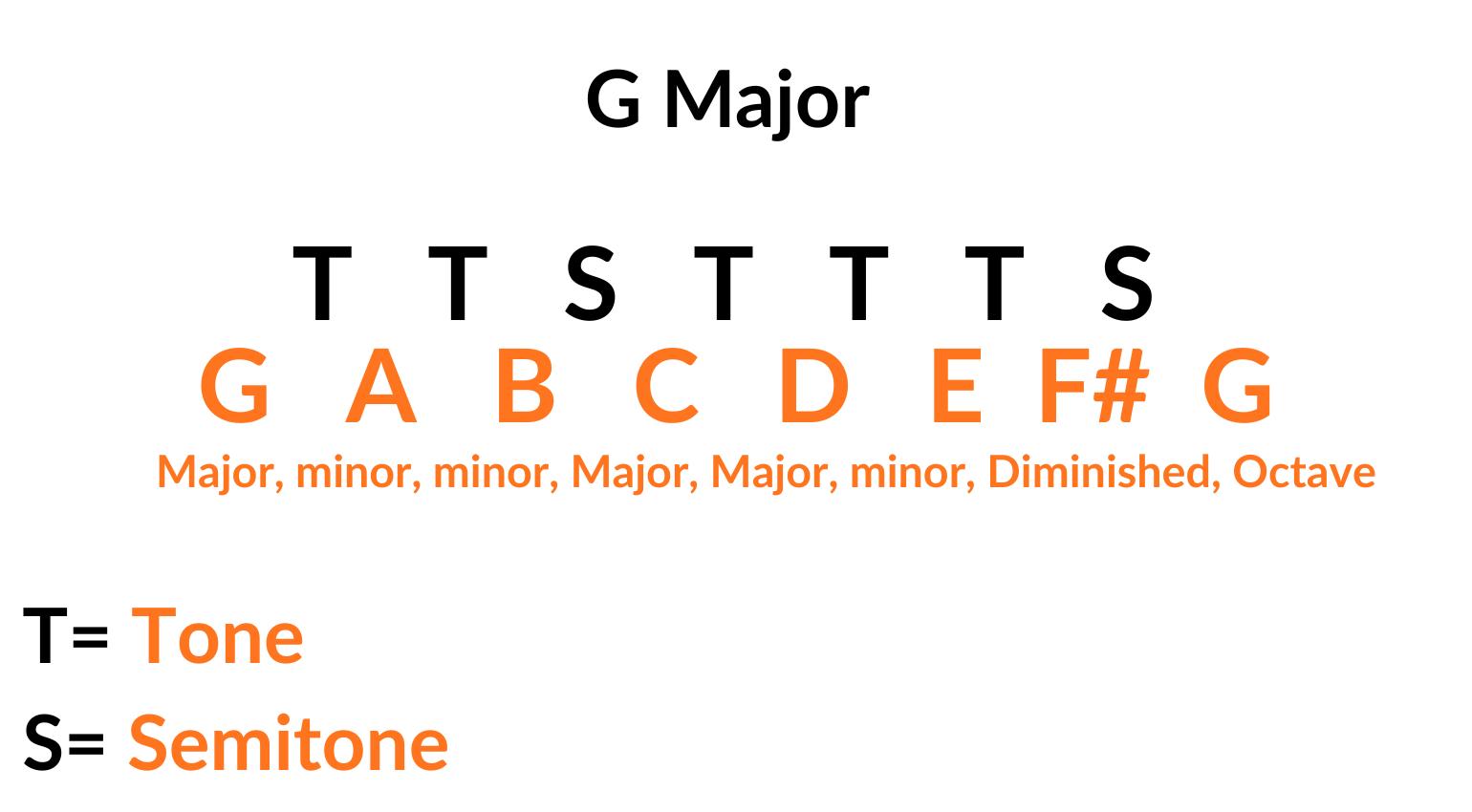
A tone is a distance of two notes, or on a guitar, two frets. Therefore, G – A, 3rd to 5th fret, would be one tone apart. Contrastingly, a semitone is half that distance, thus G – G#, 3rd to 4th fret, is the distance of one semitone.
When finding the chords in our key of G major, we need to space out the chords with the major and minor pattern, with the following intervals:
- Tone
- Tone
- Semitone
- Tone
- Tone
- Tone
- Semitone
Intervals
Great! Now, we’ve got a list of chords that we can choose from in our key of G major. In theory, all of these chords will work in any order. However, there are some orders that work better than others when we are looking at songwriting for guitar.
Each of these chords has its own number. For example, G is chord one, and D is chord five. We display these as Roman numerals. The order in which you place these chords has an overall effect on the feel of your chord progression.
Typically, a pop song has the order I, V, vi, IV. In our key of G, this progression would be G, D, Em and C. Moreover, a blues progression in G consists of G, C and D, I, IV and V. Generally, you can take any order you wish when songwriting for guitar.
Structures
Our final step for writing a chord progression is structure. This is the order our chords will go in throughout our composition. Now that we’ve got the relationship thanks to our intervals work, we need to decide where they’re going in our song.
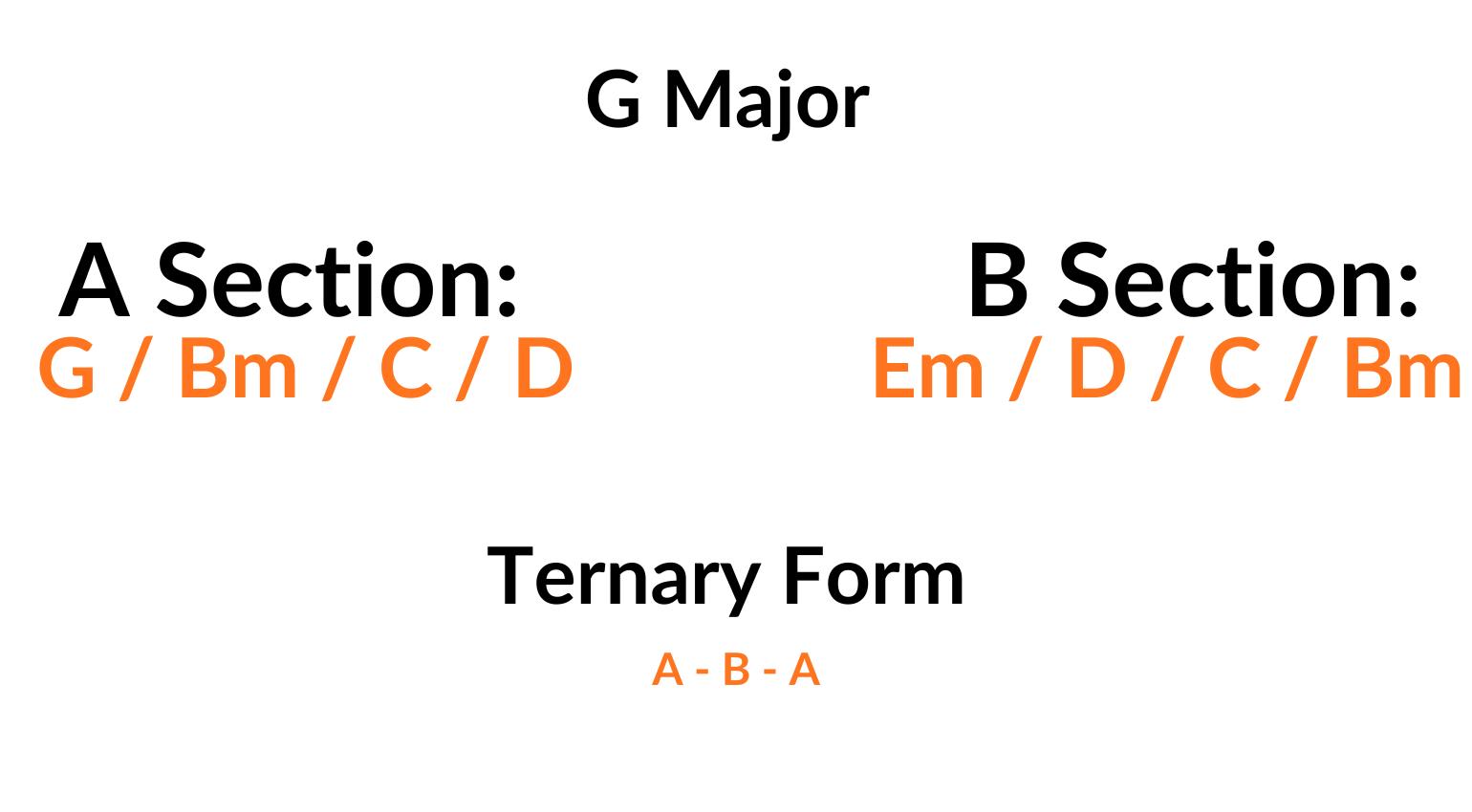
Usually, you need at least a verse and a chorus. We refer to this as a ternary form. Whereby, we have an A section, a contrasting B session, followed by another A section. Arguably, one of the simplest forms of composition.
Admittedly, there are plenty of other structures in a song. Such as with bridge sections. However, we’re just looking at the foundations of how to write a chord progression here. Nevertheless, in our key of G major, I have taken an order of chords to form the A and B sections of a theoretical composition. Take a look!
Conclusion
Knowing how to piece together a chord progression is vital for your guitar-playing journey! Whether you’re not interested in becoming the next Bob Dylan, knowing just some composition techniques is very important.
Overall, you’ve got the foundations to create some of your own chord progressions. So what if they just sit on a piece of paper for years? You never know, your creativity may just be a number-one hit!
Videos
Further Information:


This might also interest you




One response to “Writing a Chord Progression: Songwriting for Guitar”
Great