Beetronics Pollinator Hazee Delay: Available to order now!
8 Modes and no Tap Tempo - Embrace the Ambient Delays!

 4,5 / 5,0 |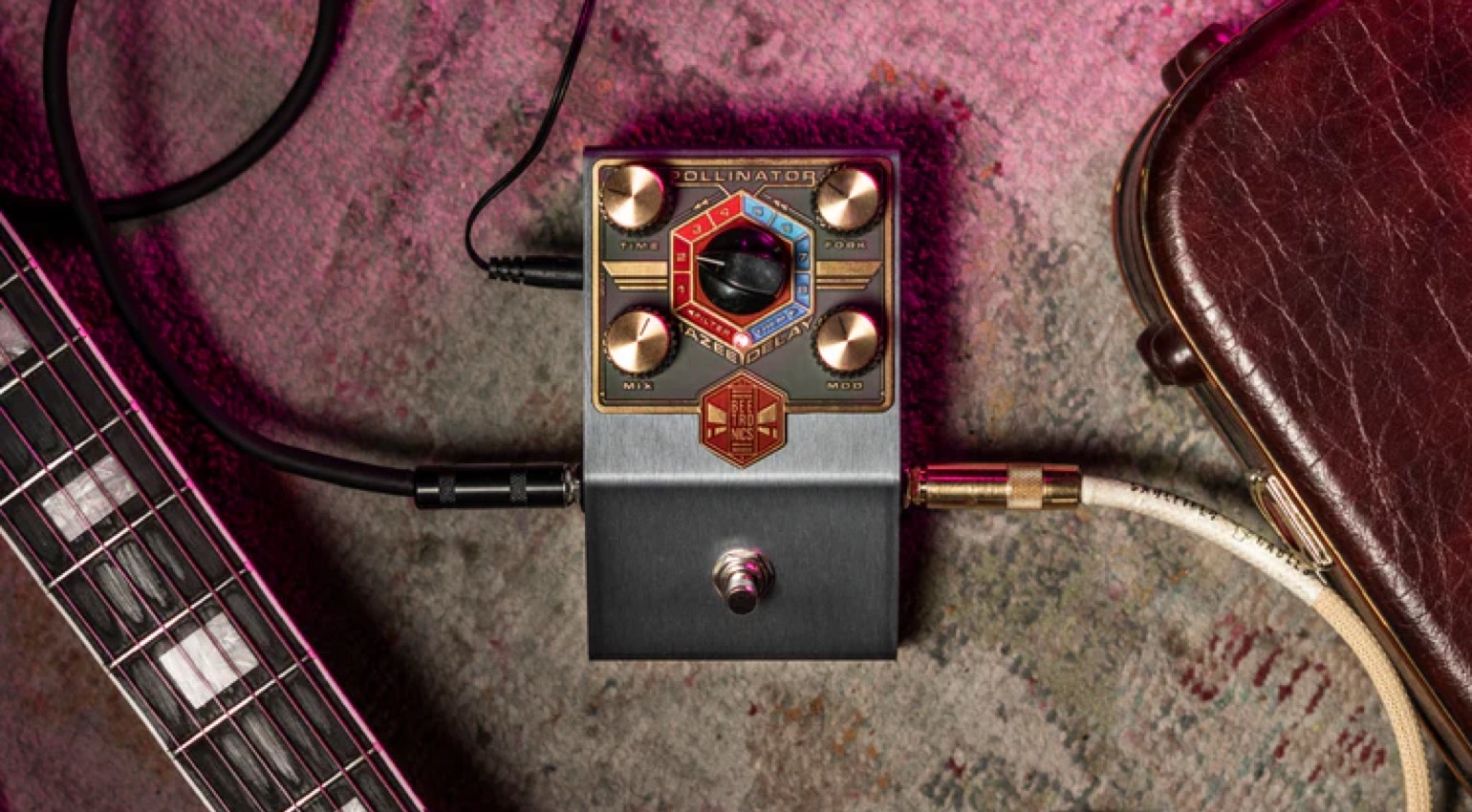

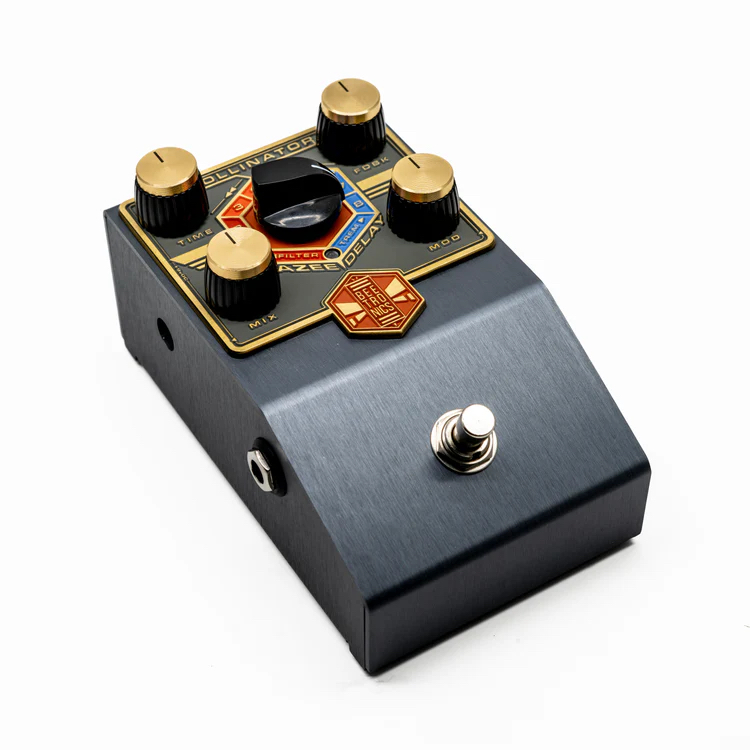
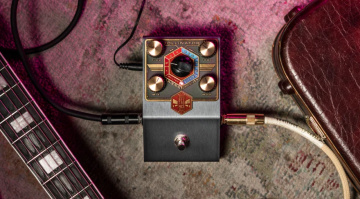
Beetronics FX has officially buzzed into the digital realm with the announcement of the Pollinator Hazee Delay. Departing from their traditional analog roots, the Hazee Delay marks the brand’s first fully digital signal processor, designed specifically for players who prioritise vibe and texture over metronomic precision.
The Beetronics Pollinator Hazee Delay is now available to order from Thomann* for €269!

Pollinator Hazee
The Pollinator Hazee Delay is the flagship release of Beetronics new Pollinator Series. Departing from their traditional analog roots, the Hazee Delay marks the brand’s first fully digital signal processor, designed specifically for players who prioritise vibe and texture over metronomic precision.
Textural Delay
Marketed with the tagline “Pollinated Repeats, Endless Textures,” the Hazee is a mono, modulated delay housed in the company’s signature boutique enclosure. Beetronics pedals always look stunning, and this newest release is no different.
While many modulated delays create wobble by fluctuating the delay time, the Hazee takes a different approach: it modulates the signal with a filter or tremolo before it hits the delay circuit. The result is a series of repeats that act as evolving copies of a moving sound, rather than simple echoes.
A Hive of Eight Modes
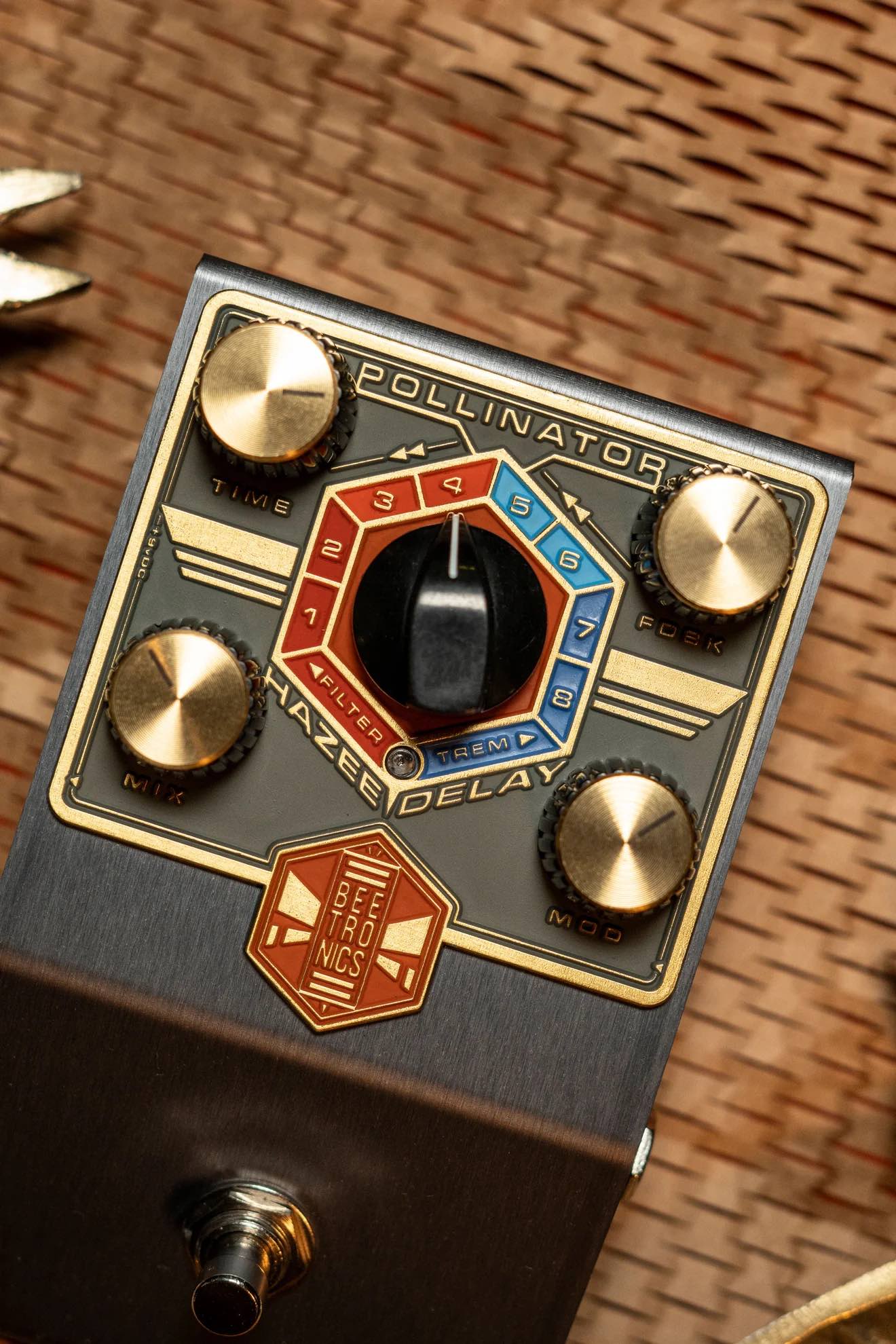
The heart of the pedal is a central eight-way rotary selector. The modes are split between filter and tremolo modulations, offering a mix of forward and reverse playback, as well as “Queen Bee” octave-up settings.
The available modes include:
- 1–4 (Filter): Forward, Forward Octave Up, Reverse, and Reverse Octave Up.
- 5–8 (Tremolo): Reverse Octave Up, Reverse, Forward Octave Up, and Forward.
Queen Bee
The Queen Bee octave modes are a standout feature for experimentalists. By reading the delay buffer twice as fast as it is recorded, the pedal generates musical, rhythmic artifacts.
Beetronics notes that when the delay time is pushed past the halfway point, the signal begins to blend between the original pitch and the octave layer in unpredictable, interactive ways.
Texture Over Timing
In a move that underscores the pedal’s focus on sound design, Beetronics has opted not to publish specific delay-time ranges. The company describes the unit as an “ambient textural tool” rather than a precision tool for rhythmic tapping.
“If you’re looking for locked-in repeats, this isn’t that,” the company stated in their release. “If you’re looking for movement and vibe, you’re home.”
So no tap-tempo and more go with the flow for this digital delay!
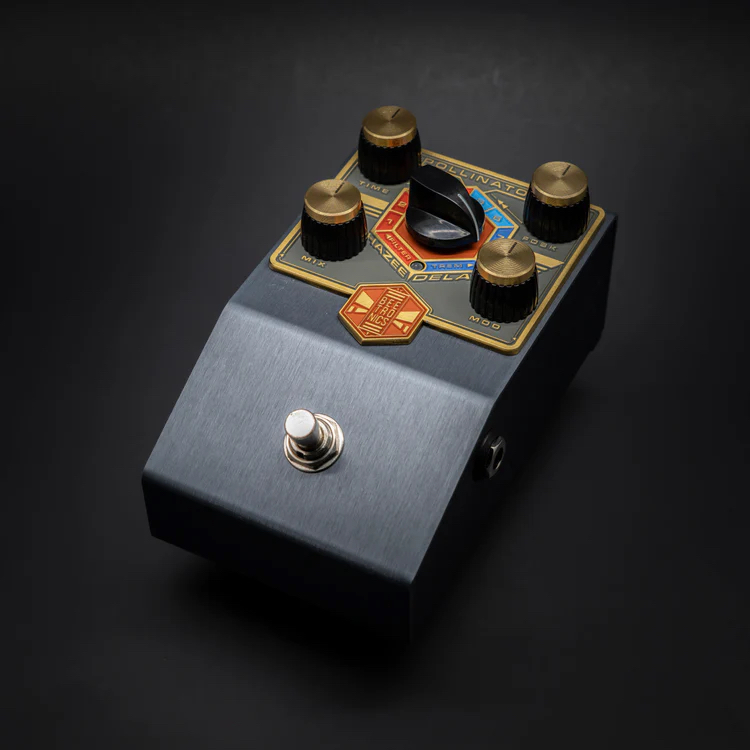
Despite the complex algorithms running under the hood, the control topology remains user-friendly. The interface features five primary knobs: Time, Feedback, Mix, Modulation, and the 8-way Mode selector.
I get the impression they want musicians to experiment with textures and soundscapes with this one, so be prepared for some chaos and creativity.
Pricing and Availability
The Beetronics Pollinator Hazee Delay is now available to order from Thomann* priced €269.
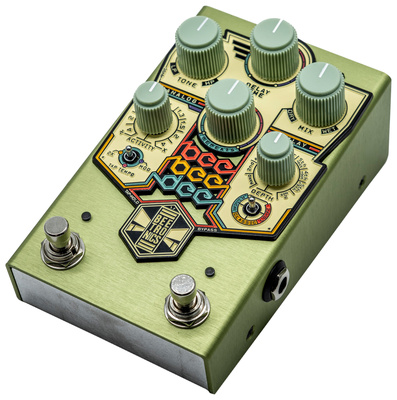
This positions the digital newcomer as a more affordable alternative to its analog sibling, the Bee Bee Dee, which retails for $299.
While the Hazee is a mono-only effect—a factor for some stereo-rig enthusiasts to consider — its unique ability to blur the lines between delay, modulation, and granular synthesis makes it a formidable contender for any pedalboard.

More Information

This might also interest you