Genki Instruments Katla – Review: Insanely Expensive or Insanely Good?
Lava Rock, a Living Sound, and Almost €5,000: Iceland's First Synthesizer Put to the Studio Test

 4,5 / 5,0 |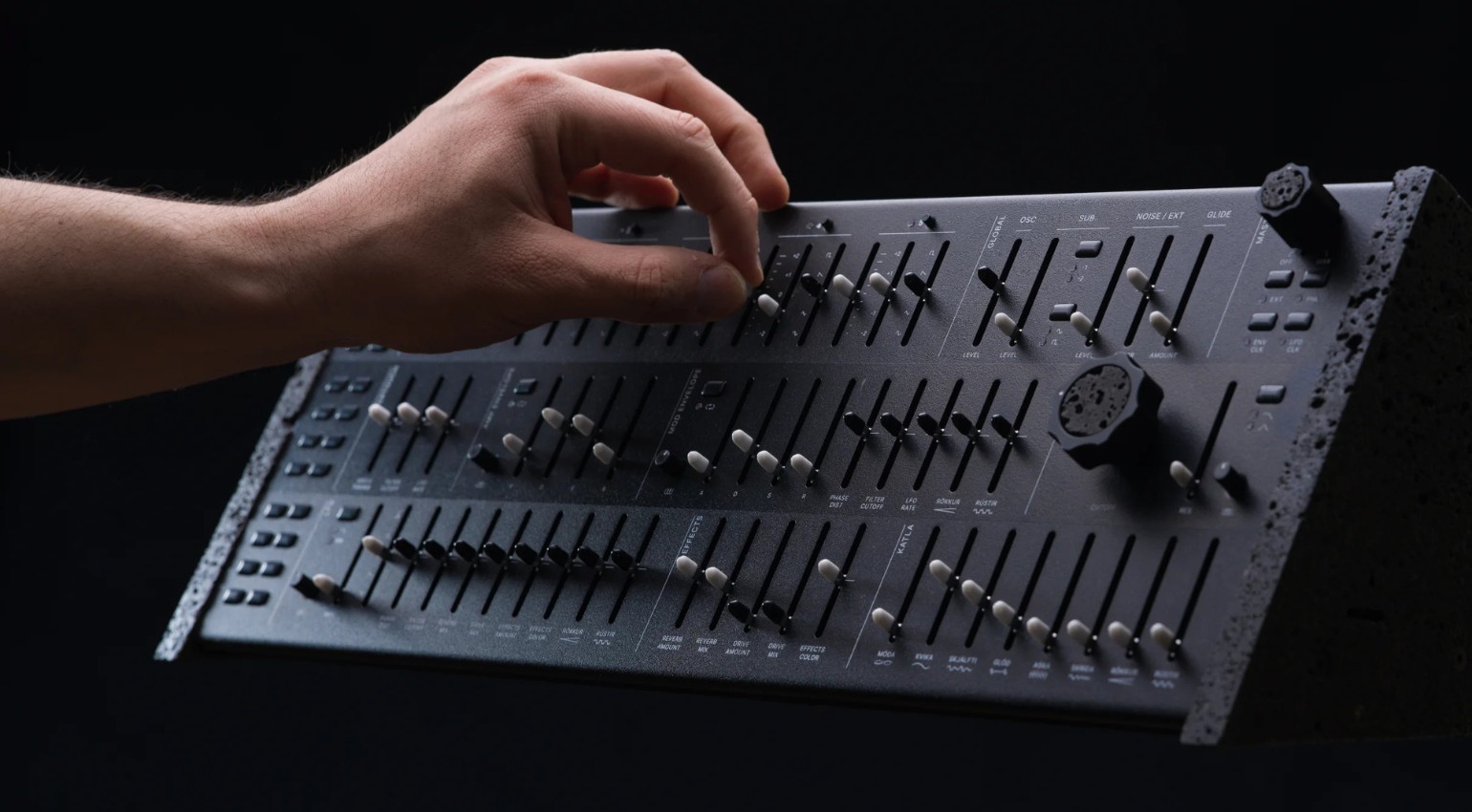
Genki Instruments Katla – Review: Insanely Expensive or Insanely Good? · Source: Genki Instruments

That price tag stops you cold. €4,990 for a desktop synth from a company most people know for a MIDI ring? Smells like concept art pricing. But then the package arrives, you unbox it, play the first chords and arpeggios, start turning knobs, and suddenly that number makes a different kind of sense. The Katla is Iceland’s first synthesizer, hand-assembled in Reykjavik, with genuine basalt side panels sourced from an Icelandic stonemason. And it sounds like someone went back to the drawing board on what “alive” actually means for a synthesizer. I took it into my studio to find out what’s really going on.
Genki Instruments Katla at a Glance
The Katla is the first synthesizer from Genki Instruments, the Icelandic crew behind the Wave MIDI ring. It’s their first move into analog hardware, and it’s a statement: no clone, no vintage homage, just an original concept built around voice rotation and controlled instability. Here’s the rundown:
- 5-voice polyphony, Digilog hybrid architecture: digital oscillators, fully analog signal path
- Voice Rotation: 6 allocation modes including Forward, Reverse, and Random Round Robin
- Katla Parameters: Wow, Flutter, Ducking, amplitude modulation per voice
- Per voice: oscillator, sub-oscillator, filter, amplifier, LFO, envelope generator
- Looping envelopes that reach into audio-rate modulation, full MPE support
- 5 external audio inputs, one per voice
- 4 independent distortion stages, stereo CMOS drive, 80s digital plate reverb
- MIDI DIN In/Out, 3x USB-C, clock sync, VST plugin (coming soon)
- Side panels and knobs made from authentic Icelandic lava rock, hand-assembled
- Price: $5,990/€4,990 including VAT and shipping
Genki Instruments Katla Review: Everything You Need to Know About Iceland’s First Synthesizer
From Iceland to the World: the Story of the Katla
Most people in the synth community know Genki Instruments for the Wave, a MIDI ring that translates hand gestures into control signals for Eurorack and DAW. A synthesizer was never part of the picture. Then at the end of 2024, a photo surfaced: a black desktop unit with basalt side panels called Katla, named after Iceland’s largest subglacial volcano. The community’s first reaction was skeptical. Marketing stunt? Vaporware? What even is this?
Genki didn’t let those questions linger. At Buchla & Friends 2025 in Los Angeles, they showed live demos, still prototype stage but audible. At Superbooth 2025 in Berlin came the official announcement with a price: €4,990, shipping Q4 2025. The response was huge, and the delays that followed weren’t marketing strategy, they were craft. Genki was waiting on parts from a stonemason.
My own review unit got held up because the stonemason’s cutting die for the side panels broke. The email from the team was short and apologetic: “Hey Marcus! We’re so sorry, still waiting on the side panels from the stonemason I’m afraid. He had issues with his cutout die breaking.” That one sentence tells you more about this instrument than any spec sheet. Nobody building a mass-market product sends that email.
March 31, 2026: first batch shipped and immediately sold out. The second batch of 100 units is available now, with around 60 still in stock as of June 2026.
Design and Feel: Lava Meets Studio Desk
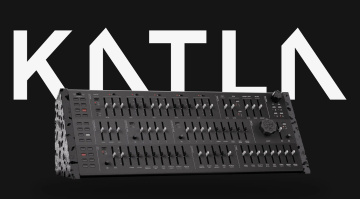
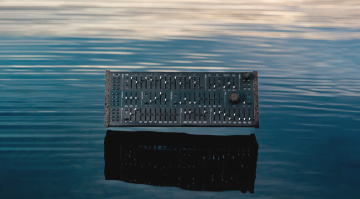
The Katla makes a strong first impression. The black enclosure with its dark gray to black basalt side panels and lava rock knobs has a presence that you’d expect at this price point but don’t always get. No two units look exactly alike because natural stone never is. That’s not marketing copy, that’s just geology.
The form factor is well thought out. The Katla sits comfortably on any studio desk, and thanks to the included black rack ears and matching screws, it drops straight into a 19-inch rack. Both options are in the box, no extra purchases needed. The interface is slider-heavy, with quality faders that include detents at their zero points and a satisfying, solid resistance. No cheap plastic feel, no wobble. CEO Ólafur Bjarki Bogason specifically called out the feel of the sliders when talking about the instrument, and it’s not an empty claim.
Visually, the Katla vaguely recalls something like Black Corporation’s Deckard’s Dream, but takes its aesthetics somewhere more original. Less nostalgic, more sculptural. And genuinely beautiful.
Unboxing: When the First Impression Is Already a Statement
The Katla ships in a premium black box you won’t immediately throw out. Unboxing it is a proper little ceremony, and that feels intentional. For nearly five grand, you’d expect that, and Genki delivers. It’s got that Apple or Teenage Engineering energy to it.
Inside: a power supply with an unusually long cable, which is a real quality-of-life win in a studio setting and a noticeable step up from the stubby cables you fight with on other gear. Plus a USB-C cable, the black rack ears, and the matching screws in a small plastic box. Everything black, everything cohesive. No random colorful packaging, no surprises. Just right.
The Digilog Engine: Digital Precision, Analog Soul
Genki calls their architecture “Digilog,” and that’s more than wordplay. The oscillators are digital, which means stable tuning and consistent waveforms. From the filter onward, the signal path is fully analog: filter, wavefolder, distortion, and amplifier all run in hardware. The result is a signal chain that pulls the best from both sides: digital reliability on the pitch end, analog warmth and character on the shaping end.
Each of the five voices gets its own oscillator with sub-oscillator, its own filter, amplifier, LFO, and envelope generator. That’s genuine five-voice polyphony with no shared resources, no compromises. Phase distortion and wavefolding expand the oscillator palette significantly. The four independent distortion stages, including a stereo CMOS drive that goes from warm and round to fractured and aggressive, mean the Katla is far from a one-trick pad machine. The sound is genuinely great. That sounds vague but it’s accurate.
The global level knobs are worth a specific mention: push them past the midpoint and the analog circuitry gently saturates the signal, adding harmonic overtones in hardware. That said, I do dial them back sometimes when the saturation starts coloring the sound more than I want.
Voice Rotation: the Heart of the Concept
Voice Rotation is what makes the Katla unlike any other polysynth on the market. Classic polyphony works like this: you play a chord, voices get assigned to notes, all voices run the same parameters. Katla does it differently. Notes rotate across the five voices according to one of six allocation modes: Forward Round Robin, Reverse Round Robin, Random Round Robin, and three unison configurations. The Korg Mono/Poly and multi/poly both do something in this territory, but neither comes close to how thoroughly Genki has thought this through and executed it.
What that means sonically: each note lands on its own voice with its own slightly different parameters. Play the same chord twice and it sounds slightly different because the notes fall on different voices. That’s not annoying randomness, it’s controlled variance that makes the sound breathe. Chords feel alive, sequences develop on their own. You get a polysynth that feels organic without drawing a single automation lane in your DAW. I really love that.
The Unison Grace Period is a detail you learn to appreciate over time. In unison mode, all voices get assigned to a single note. When you release a chord, one note naturally hangs on slightly longer and all five voices snap to it, which creates an abrupt, unnatural monophonic release. With Unison Grace Period enabled, a small timing offset gets introduced so all notes fade out smoothly and naturally instead of jumping to that last held note. It’s a small thing that makes unison mode actually musical.
The Katla Parameters: Controlled Chaos
The Katla Parameters are the section I initially thought was probably overhyped. Wow, Flutter, Ducking, amplitude modulation. Tape effects. Sounds like a nice add-on.
Then you start turning the knobs.
What the Katla Parameters generate isn’t a tape machine simulation. It’s a system that introduces subtle, irregular pitch and amplitude movement per voice, non-periodically, because it emerges from the combination of Voice Rotation and per-voice modulation. The result is a kind of aliveness that no chorus, no ensemble effect, and no LFO replicates. Seriously incredible movement. You nudge the Flutter knob and the chord starts breathing. You push up the Wow and the texture starts shimmering. This is more than randomness, it’s a sound system. The Katla lives.
Combine that with Voice Rotation and something hard to describe happens: each note develops slightly differently, and the sum of those developments creates a texture that continuously shifts without you doing anything. For ambient, film music, and slower melodic genres, this is gold.
Modulation and Envelopes: More Than Enough
The Katla’s modulation is complete and well considered. Each voice has its own LFO with min/max outputs that feed into stereo effects. That means the per-voice LFOs don’t just modulate pitch and filter, they also continuously shift the stereo position of each voice. The width of the sound is always moving.
The looping envelopes are one of the instrument’s underrated strengths. An envelope that repeats behaves like an LFO with an envelope shape instead of a sine wave. Quantize the timing to musical note values and you get rhythmic modulations that are distinctly different from what standard LFO shapes produce.
Keyboard Tracking adapts envelope timing, LFO speed, and filter cutoff to the pitch of each note. High notes get shorter envelopes and brighter filters than low notes, which just sounds more natural than static settings across the board.
The preset system is genuinely practical. Three rows of preset buttons, each row handling a specific section (oscillators, modulation, LFOs). That allows partial saves: swap an oscillator preset without touching your modulation settings. In live use and sound design, that beats full preset replacement. You can also save a complete full preset with a single button press.
Five External Inputs: the Katla as an Effects Processor
Five external audio inputs, one per voice. Sounds like a footnote in the spec sheet but it’s actually a complete second use case. External audio runs through the Katla’s full analog signal chain: filter, wavefolder, distortion, amplifier. That means another synthesizer, a drum machine, a field recording, literally anything, can run through the Katla engine and pick up its analog character, filtering, and distortion stages.
Even more interesting: you can sequence between the inputs, applying Voice Rotation not to MIDI notes but to external audio signals. That makes the Katla a serious performance effects processor that goes well beyond what you’d expect from a synthesizer. For sound designers and live performers, this is a significant extra dimension and a genuinely exciting concept.
Connectivity and Setup
MIDI DIN In and Out (5-pin) for classic hardware integration. Three USB-C ports with clearly separated functions: one for power, one for the computer (USB-MIDI and firmware updates), one as USB host for connecting MIDI devices like controllers or external sequencers directly, no computer needed. The USB host port is a thoughtful touch that isn’t a given at any price point.
A VST plugin for configuration and extended control from a computer is coming soon. Clock sync runs over MIDI or USB MIDI, and envelope and LFO timing can be quantized to note values. MPE is fully implemented: per-note pressure, pitch, timbre, and aftertouch.
The black rack ears and matching screws are in the box. No extra parts needed to go into a rack.
Who Is the Katla For? Genres and Use Cases
Ambient and Film Music
Voice Rotation and the Katla Parameters together generate textures that continuously evolve without any DAW automation. A held chord changes over minutes, each note moving slightly differently, the stereo field shifting, the filter breathing. For ambient, film music, and any genre where texture matters more than rhythmic precision, it’s hard to beat. That said, the Katla absolutely handles rhythm and groove too.
Melodic Techno and Progressive House
Chord structures that feel slightly different on every pass without drawing a single automation lane. That’s just a baseline feature of the Katla. Pair Clock Sync with quantized LFO timing and those organic movements lock tight to the groove without sounding mechanical. Genuinely a lot of fun to play.
Sound Design
MPE, wavefolding, four distortion stages, and five external inputs make for a sound design system that goes well beyond conventional synthesizer parameters. If you’re after unusual sources or want to run external signals through the Katla’s analog chain and see what comes out, this is a complete system.
A Tip from My Studio
Watch the tutorial first, no exceptions. After about half an hour, the Katla is fast and intuitive. The Voice Rotation concept and the Katla Parameters click much faster with a proper introduction than without. Especially if your Icelandic isn’t great. After that: set up a preset, dial in Voice Rotation, push the Katla Parameters up, and just listen. This synth rewards curiosity. Then you can jam, let go, and enjoy some genuinely spectacular sounds.
Verdict: What Even Is G.A.S.?
I was skeptical. The price stings, I mainly knew Genki as a MIDI ring company (one I actually thought was innovative and interesting back then), and the whole announcement had the feel of a project that would never ship. Then came the email about the stonemason. Then came the Katla.
But: If you’re looking for a synthesizer that sounds genuinely alive, is built to a phenomenal standard, and goes somewhere no other current instrument goes, you should be taking a close look at the second (and almost certainly the upcoming third) batch.
The hardware quality is phenomenal. The sound is genuinely great, especially for ambient, melodic genres, techno, sound design, and film music. The modulation concept seems familiar at first, but when you start dialing it in it produces movements that are more than random and more alive than anything I’ve heard from a synthesizer before. After the tutorial it’s fast and easy to use. The preset system works great in daily use. The form factor fits any studio desk and any rack.
What even is G.A.S.? The Katla is going in my studio.
Price and Availability
The Genki Instruments Katla costs $5,990/€4,990 including VAT and free shipping, available directly from Genki Instruments. 60 pieces of the second batch of 100 units is available now, but moving fast.
Pros and Cons
Pros
- Completely original sound concept, Voice Rotation is not a gimmick
- Katla Parameters generate movement no plugin can replicate
- Phenomenal build quality: sliders, enclosure, lava rock details
- True five-voice polyphony, every voice fully independent
- Five external inputs: a complete second life as an effects processor
- Quick to learn after the tutorial, preset system is genuinely practical
- Rack ears included, flexible form factor
- USB host port on board
Cons
- €4,990 is not an impulse buy, you have to really want this
- Limited production runs, working through second batch
- Not the first choice for classic Moog-style lead synthesis
FAQ: Common Questions About the Genki Instruments Katla
What is Voice Rotation on the Genki Instruments Katla?
Voice Rotation is the core concept: notes get routed across five independent voices according to one of six allocation modes. Since each voice can have slightly different parameters, every chord and every sequence sounds a little different from the last pass. The result is organic movement without external modulation or DAW automation.
What are the Katla Parameters?
Wow, Flutter, Ducking, and amplitude modulation. They add irregular, tape-style pitch and amplitude movement per voice that doesn’t repeat periodically. Combined with Voice Rotation, textures continuously shift without you doing anything.
Is the Katla analog or digital?
Both. Genki calls it “Digilog”: digital oscillators, fully analog signal chain from the filter onward (filter, wavefolder, distortion, amplifier). Precise tuning with genuine analog character.
What are the five external inputs for?
Each input maps to one voice. External audio from any source runs through the Katla’s full analog signal chain. You can use it as a stereo effects processor or sequence between external signals using Voice Rotation.
Is the Katla fully MPE compatible?
Yes. Per-note response to pressure, pitch, timbre, and aftertouch.
How long does it take to learn the Katla?
About half an hour with the tutorial and you’re up and running. The Voice Rotation concept clicks much faster with an introduction. Without the tutorial, the learning curve is steeper than it needs to be.
Does the Katla fit in a rack?
Yes. Black rack ears and matching screws are included in the box.
What genres is the Katla best suited for?
Ambient, film music, Melodic Techno, Progressive House, and sound design benefit most from Voice Rotation and the Katla Parameters. For classic lead synthesis or aggressive bass work it’s less the obvious first choice. But try it anyway.
Where do you buy the Katla and how long is the wait?
Directly from genki.is, €4,990 including VAT and free shipping. Second batch of 100 units available as of June 2026, around 60 still in stock. Hand-assembled, so factor in some lead time.
More Information
- Genki Instruments Katla official product page
- Genki Instruments
- All Genki Instruments coverage at Gearnews

This might also interest you