New Windows MIDI Services: Windows 11 Finally Brings MIDI 2.0, Multi-Client Support, and More Precise Timing to Your Studio
Enjoy Higher Resolution, Less Routing Chaos, and Stable Connections for Modern Hardware and DAW Setups

 4,3 / 5,0 |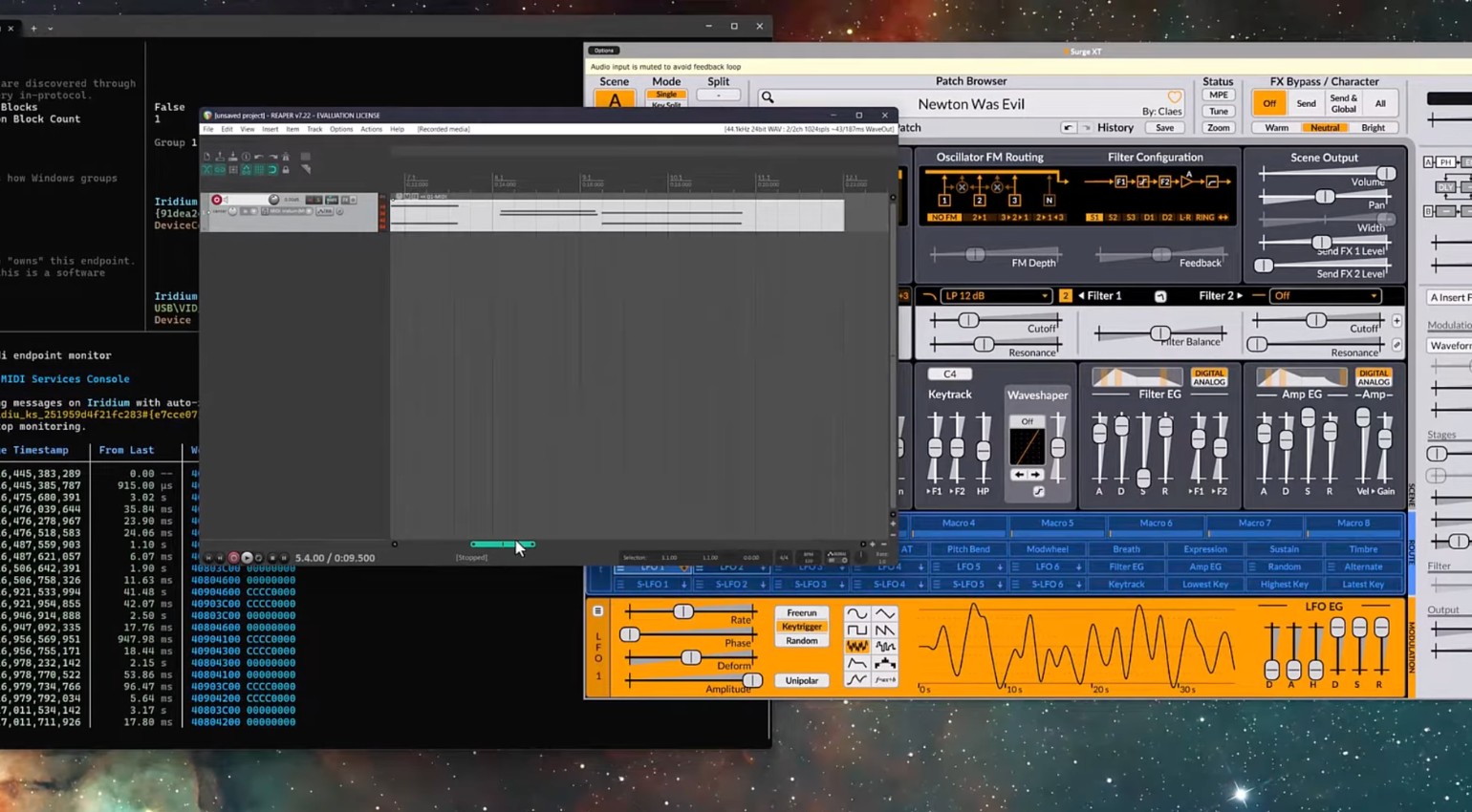
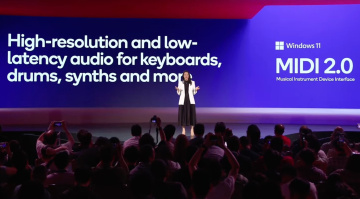
New Windows MIDI Services: Windows 11 Finally Brings MIDI 2.0, Multi-Client Support, and More Precise Timing to Your Studio · Source: Microsoft

With the new Windows MIDI Services, Windows 11 takes MIDI support to a level many music producers have been waiting years to see. For musicians, this means more stable connections, greater flexibility in studio setups, and less troubleshooting in day-to-day production. Windows now integrates MIDI 2.0 natively while also modernizing MIDI 1.0 support. With these updates, Windows 11 finally positions itself as a serious platform for modern music production.
All About Windows MIDI Services in Windows 11
Windows MIDI Services in Windows 11 Are Finally Ready for Musicians
Since 1983, MIDI has connected synthesizers, controllers, and software. However, MIDI 1.0 came with clear technical limitations: controller values were capped at 127 steps, device detection was manual, and multiple applications typically couldn’t access the same port simultaneously. Windows MIDI Services address these limitations. With MIDI 2.0, communication becomes bidirectional, device recognition is automatic, and resolution increases dramatically. For musicians, this translates into more precise control data, a wider dynamic range, and greater per-note expression — all without relying on DAW workarounds.
One of the most practical additions is the new multi-client support. Multiple applications can now access a single MIDI device at the same time. Your DAW, editor, and other tools can run in parallel without virtual ports or driver hacks. This functionality works system-wide for both MIDI 1.0 and MIDI 2.0. Loopback connections are built in, allowing applications to communicate directly with one another. Even WebMIDI can be integrated within the browser. As a result, complex routing setups become significantly easier to manage.
More Precision, Less Routing Stress: Windows MIDI Services Bring Order to MIDI Chaos
Things get even more compelling with modern MIDI 2.0 devices and high-resolution controllers such as MPE. Windows automatically scales incoming data for older MIDI 1.0 applications, while allowing newer software to use the full expanded resolution. You no longer have to worry about which protocol is active. The system handles translation in the background and ensures compatibility. Existing projects remain stable, while new ones benefit from increased precision.
Microsoft has also improved timing accuracy. Windows MIDI Services support timestamps with sub-microsecond precision. You can schedule outgoing messages with exact timing, which is especially valuable in synchronized hardware setups. Producers working with multiple drum machines, sequencers, or external synthesizers will notice tighter timing and reduced jitter. At the same time, MIDI 1.0 remains fully supported. Existing DAWs do not require updates to benefit from the new MIDI infrastructure.
Conclusion and Everyday Use Cases
In short, Windows 11 with Windows MIDI Services now provides a technical foundation that finally aligns with modern music production. Higher resolution, automatic protocol translation, multi-client support, and integrated loopback significantly simplify day-to-day studio work. For you, that means less troubleshooting and more control and expression in every performance.
This is exactly how a modern operating system should handle MIDI. But how does it perform in real-world use? Feel free to share your experience in the comments.
More Information

This might also interest you

2 responses to “New Windows MIDI Services: Windows 11 Finally Brings MIDI 2.0, Multi-Client Support, and More Precise Timing to Your Studio”
Great!☺️👍
The very next step would be to also allow the usage of multiple audio interfaces simultaneously, just like on a Mac by creating an aggregate device.
This feature is really missing in Windows and should be implemented ASAP. 🙂
Man – you’re right about that. That would make audio life on PC SO much easier.